Emancipation Day: A Canadian Celebration
From the team at Griffin House National Historic Site
Each year on August 1st, communities across the globe, including Hamilton, Ontario, celebrate Emancipation Day, which commemorates the Slavery Abolition Act of 1833. This act came into effect on August 1, 1834, officially ending the practice of chattel slavery across the British Empire. When many Canadians think of historical slavery, they think of other places – the United States, Africa, England. But Canada also played a role in the Transatlantic Slave Trade between the seventeenth and nineteenth centuries.
Slavery in Canada
Between 1629 and 1834, the country now known as Canada was an active participant in the Transatlantic Slave Trade. Over 12-million people were stolen from their homes in Africa, brought across the Atlantic Ocean on ships, and enslaved in the Americas and Caribbean. Hundreds of thousands of African people were enslaved in the British and French colonies that are now part of Canada. Generations of their descendants were born into slavery and endured hard labour and cruel treatment under the chattel slavery system. Many people did not survive the journey across the ocean, never mind the working and living conditions they endured upon arrival.
Chattel Slavery was a system of dehumanization and violence, rooted in racism, used to subjugate Black and Indigenous people. Those enslaved under this system were enslaved for life, generations of their children and their children’s children were born into slavery with little hope of freedom. Europeans who upheld this system viewed enslaved people as property to be bought and sold and were often only recorded for financial purposes. The names and stories of countless people have been lost to time, leaving many today searching fruitlessly for their ancestral roots.
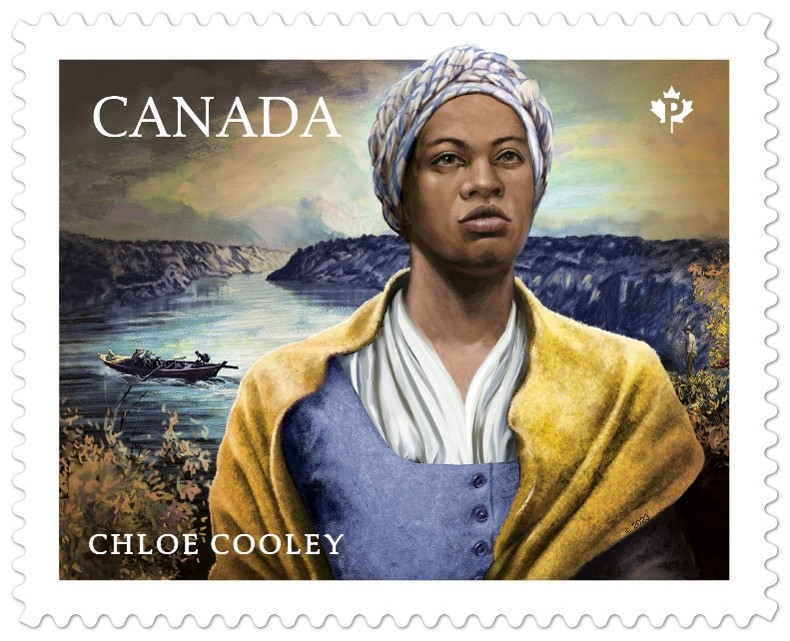
Chloe Cooley, Canada Post Black History Month Stamp, February 2023
The Emancipation Era
On March 14, 1793, Chloe Cooley, a Black woman enslaved by United Empire Loyalist Sergeant Adam Vrooman, was violently restrained by her enslaver and two other men and transported across the Niagara River to be sold in New York State. Her cries for help were heard by a free Black Loyalist named Peter Martin, who reported the situation to Lieutenant-Governor John Graves Simcoe.
With abolition (anti-slavery) sentiments growing through the British Empire, Simcoe used this incident to introduce new legislation that would eventually lead to the end of chattel slavery in Upper Canada. He could not end the practice entirely, as slavery was legal and encouraged by British law in the colonies. However, Simcoe was able to limit the practice by working with Attorney General John White to introduce the 1793 Act to Limit Slavery in Upper Canada.
Despite this new legislation, which outlawed the importation of enslaved people into Upper Canada, slavery remained legal and widespread across Canada for over 200-years. When the Slavery Abolition Act of 1833 was officially enacted on August 1, 1834, over 800,000 people were freed across the British Colonies, including in Canada.
Emancipation Day in Hamilton
Despite the many challenges faced by Canada’s Black community, they continue to persevere, prosper, and work toward a bright future for the next generation. In the years since Emancipation, Black communities across Canada have celebrated with events such as the Emancipation Day picnics at Auchmar and Christie Lake Conservation Area in Hamilton, Caribana in Toronto, and numerous other festivals, picnics, and celebrations across the country.
Another notable Emancipation Day celebration took place on August 1, 1859, when MPP Isaac Buchanan hosted an Emancipation Day celebration at his Auchmar Estate. According to reports, over 500 people attended to enjoy the festivities, complete with music, food, and dancing.
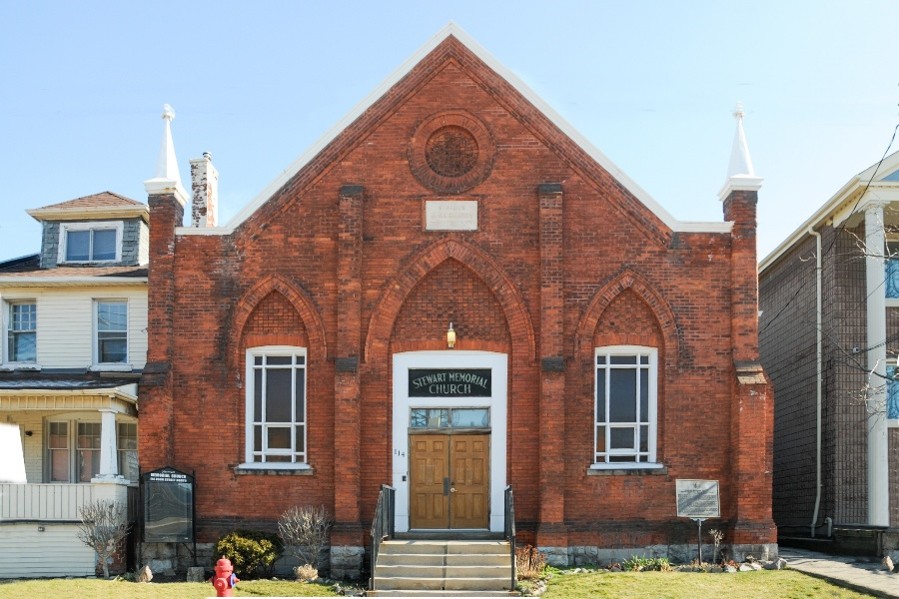
Stewart Memorial Church, Hamilton, Doors Open Profile
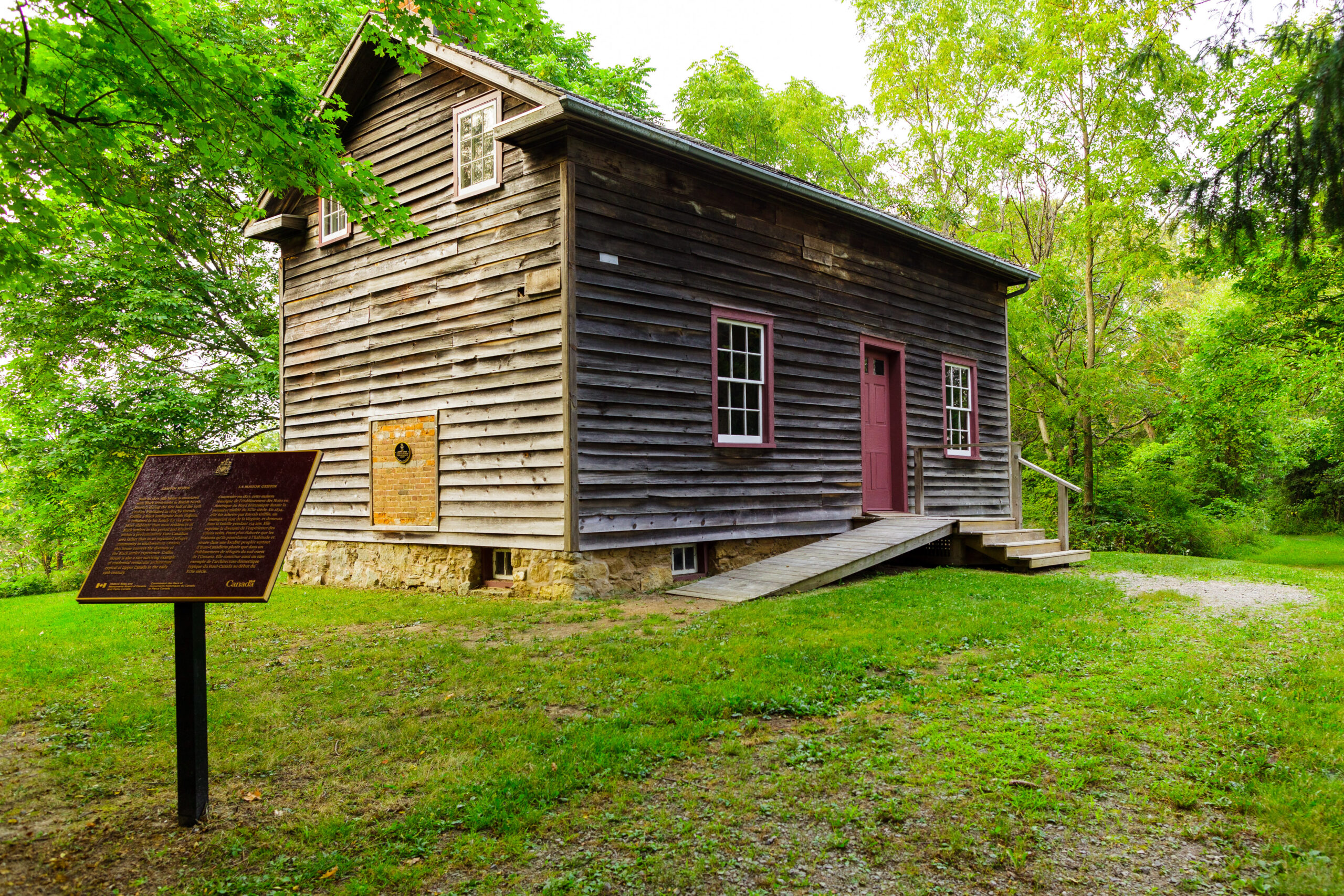
Enerals Griffin, who purchased a farm in Ancaster in 1834 with his wife Pricilla, was listed amongst a group of other Black community members who organized “a great gathering of coloured people” in Hamilton. We don’t know the details of this gathering, but it is possible it was part of an Emancipation Day celebration. Today, Enerals’ home is a National Historic Site in Ancaster, Ontario run by the City of Hamilton. Its history is celebrated and interpreted at neighbouring Fieldcote Museum while Griffin House undergoes restoration.
The two museums will host their annual Emancipation Day celebration on the seven-acre grounds of Fieldcote Memorial Park and Museum on the first Saturday of August, in memory of Enerals and his family and all those who paved the way for today’s Black community to thrive in Hamilton.
Celebrate Emancipation With Us
As Canada strives to move forward in a good way, repairing relationships with marginalized and oppressed communities, part of this journey includes acknowledging our country’s dark history. Despite the many challenges faced by Canada’s Black communities today – racism, discrimination, and social inequality – they continue to persevere, prosper, and work toward a better future for the next generation.
Emancipation Day is a time to gather as members of the Black community, friends, family, and neighbours to celebrate freedom. To acknowledge the dark history of our country, celebrate the resilience Black Canadians and look toward the bright future we all have together.
Emancipation Day is celebrated annually at Fieldcote Memorial Park & Museum and Griffin House National Historic Site with live music, food vendors, and family-friendly games and activities. We welcome all our neighbours and friends to join us in the festivities on the first Saturday of August from 4-7pm.