Edwardian Grapefruit Salad
The Mystery of the McQuesten Grapefruit
From the team at Whitehern Historic House & Garden
One of the delights of working at Whitehern is learning about the McQuesten family through their correspondence. When the family bequeathed their home to the City of Hamilton, they also donated the contents, including all papers and letters. This has given us generations of stories to tell to the public, but sometimes these letters ask more questions then they answer.
During a recent holiday season, the staff at Whitehern Historic House & Garden read an excerpt from a letter from Mary McQuesten to her son, Reverend Calvin McQuesten, describing her Christmas dinner in 1911:
During a recent holiday season, the staff at Whitehern Historic House & Garden read an excerpt from a letter from Mary McQuesten to her son, Reverend Calvin McQuesten, describing her Christmas dinner in 1911:
“We had a very nice dinner grapefruit first, which we all enjoyed, particularly it being a very mild day and the little cottage roasting, then tomato soup, then turkey &c. plum pudding, Charlotte Russe and nuts & raisins, coffee.”
This struct the team as odd, what is a “nice dinner grapefruit?" What did Mary mean by that? And were grapefruits a typical Christmas food in 1911? How are dinner grapefruits served? Thus began a research rabbit hole.
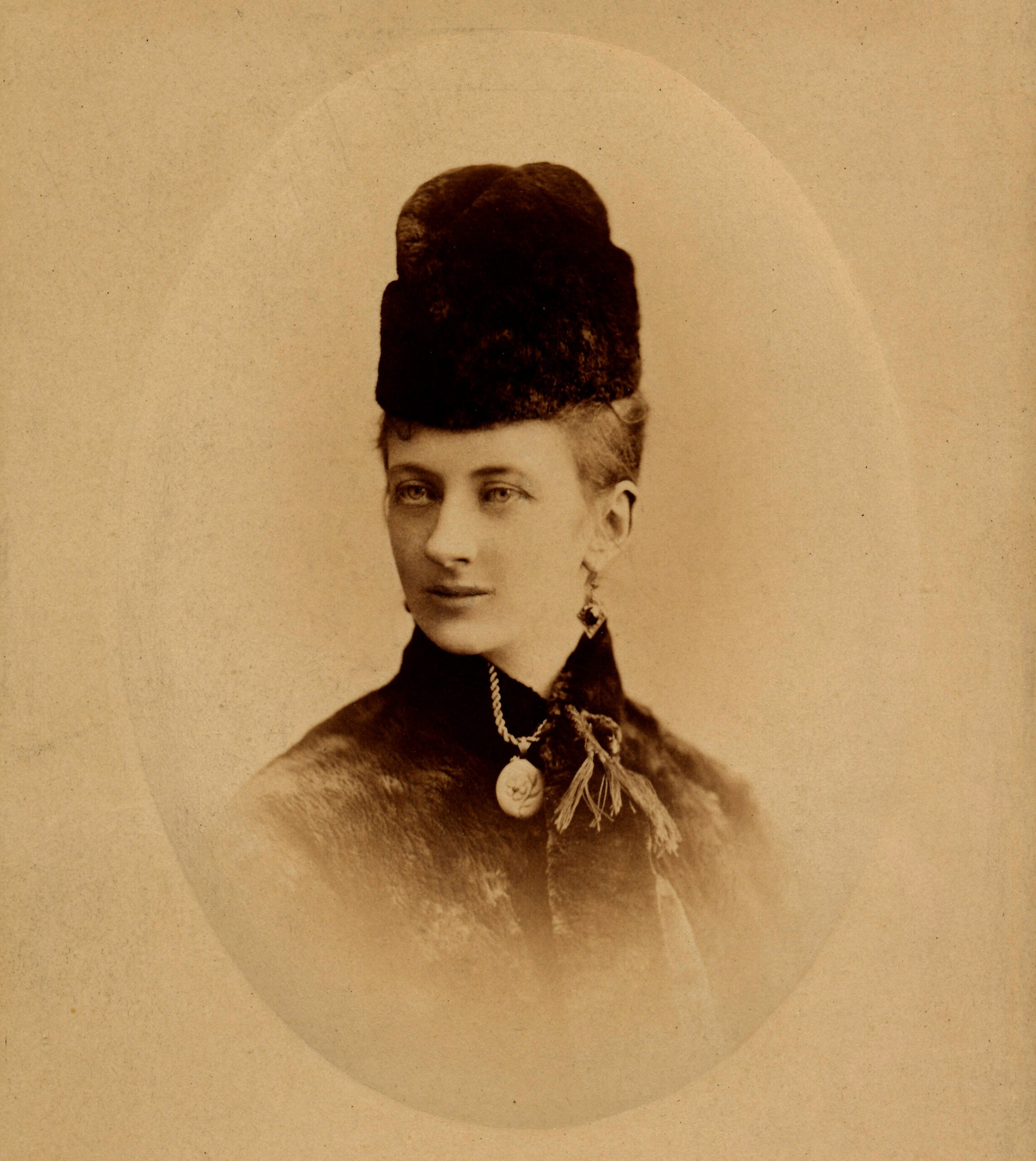
Mary Baker McQuesten. City of Hamilton.
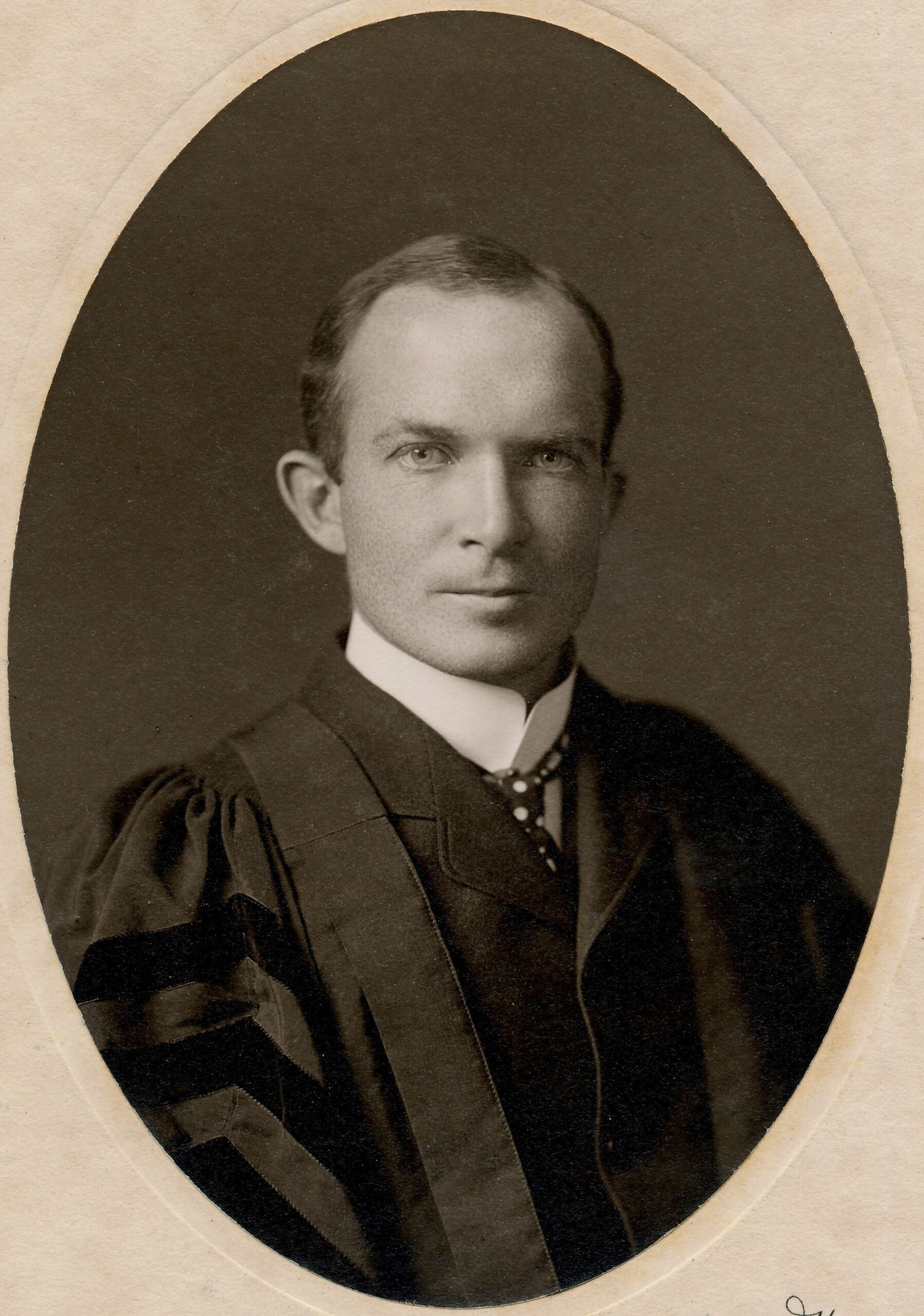
Reverend Calvin McQuesten. City of Hamilton.
Where Did the McQuestions Even Get Grapefruits in 1911?
While they were very new to Canadians, grapefruits would have been available in Hamilton by Christmas 1911. In The Canadian Grocer on the 6th of January 1911, the journal educates local grocers on the benefits of grapefruits to help them sell to the Canadian public.
“Besides being of food value the fruit is distinguished for its medicinal qualities. When eaten with sugar it makes a fine dessert fruit, and is winning favor as a breakfast food, owing to its mingled flavor of sugar and acid and because it is an excellent tonic.”
“While some are impressed with its flavor at first trial, it takes others a short time to acquire a taste for it. Therefore the grocer, in pushing its sale, should impress its medicinal qualities upon the customers so that they will use it, until the taste is acquired, when they generally continue without further prompting.
“Care should be taken that the customer be not turned against it on first trial, which is liable unless the proper method of preparing it for use is explained. They are likely to eat it as they would an orange.”
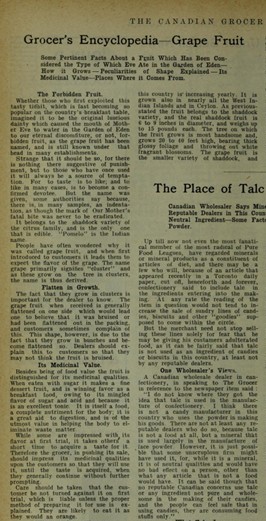
From The Canadian Grocer, 6 January 1911, p57
The idea that the McQuestens would be eating grapefruit at all on Christmas day was still curious. This was the same family that didn’t eat pasta until hiring an Italian cook in the 1930s. The McQuestens were not famous for their culinary curiosity. So why try a fancy new fruit?
The next stop was finding the rest of the letter to Calvin. The letter itself is fairly lengthy, over 1000 words. Calvin was living in Alberta, and Mary was updating her son about who visited the family and what presents did they bring. Calvin’s younger sister, Ruby, was ill, so many guests brought flowers for her, but a Mrs. Bell and Herbert brought a fruit basket:
“a most beautiful basket with various kinds of fruit arranged in the most artistic manner, the basket must have been 18 by 10 like a large work basket and there were grape fruit lemons oranges bananas tomatoes grapes figs dates, all laid in paper and red and gold paper shavings.”
But What's a Dinner Grape Fruit
It sounds like the McQuestens potentially served their grapefruit without sugar at dinner, which may not have been suggested by The Canadian Grocer, but they seemed to enjoy it either way.
Mary does not describe how dinner grapefruit is served, and the term “dinner grape fruit” doesn’t appear in recipes or grocery journals in Canada. We’re left with the best guess that they were served fresh and simply cut in half. However, there were recipes in 1911 for fruit salads that contained grapefruit.
While we don’t necessarily recommend you try this recipe at home, we hope it amuses you, nonetheless.
From The [Canadian] Home Journal in July 1911:
Mary does not describe how dinner grapefruit is served, and the term “dinner grape fruit” doesn’t appear in recipes or grocery journals in Canada. We’re left with the best guess that they were served fresh and simply cut in half. However, there were recipes in 1911 for fruit salads that contained grapefruit.
While we don’t necessarily recommend you try this recipe at home, we hope it amuses you, nonetheless.
From The [Canadian] Home Journal in July 1911:
For the celery and grape fruit salad, cut the inner and crispest stalks of celery into half-inch lengths. Ski one banana and cut it into neat cubes. Do the same with a tender tart apple. Have ready two halves of grape fruit, from which you have removed all the pulp so carefully that you have not torn the skin of either half. Cut the pulp taken from one of the halves into small pieces, in size corresponding to the apple and banana dice. Put all these into a chilled bowl and set on the ice or in a very cold place for half an hour. Chill the mayonnaise and serve a tablespoonful on each portion of salad. It is a pretty idea to use the empty half skins of the grape fruit as a receptable, which should lie on ice until serving time. The addition of whipped cream and a little sugar to the mayonnaise is an improvement on the ordinary.
Maybe try swapping the mayo for some yogurt?