The Story Behind Hamilton's Unique Decoration Day Ceremonies
From the team at the Hamilton Military Museum
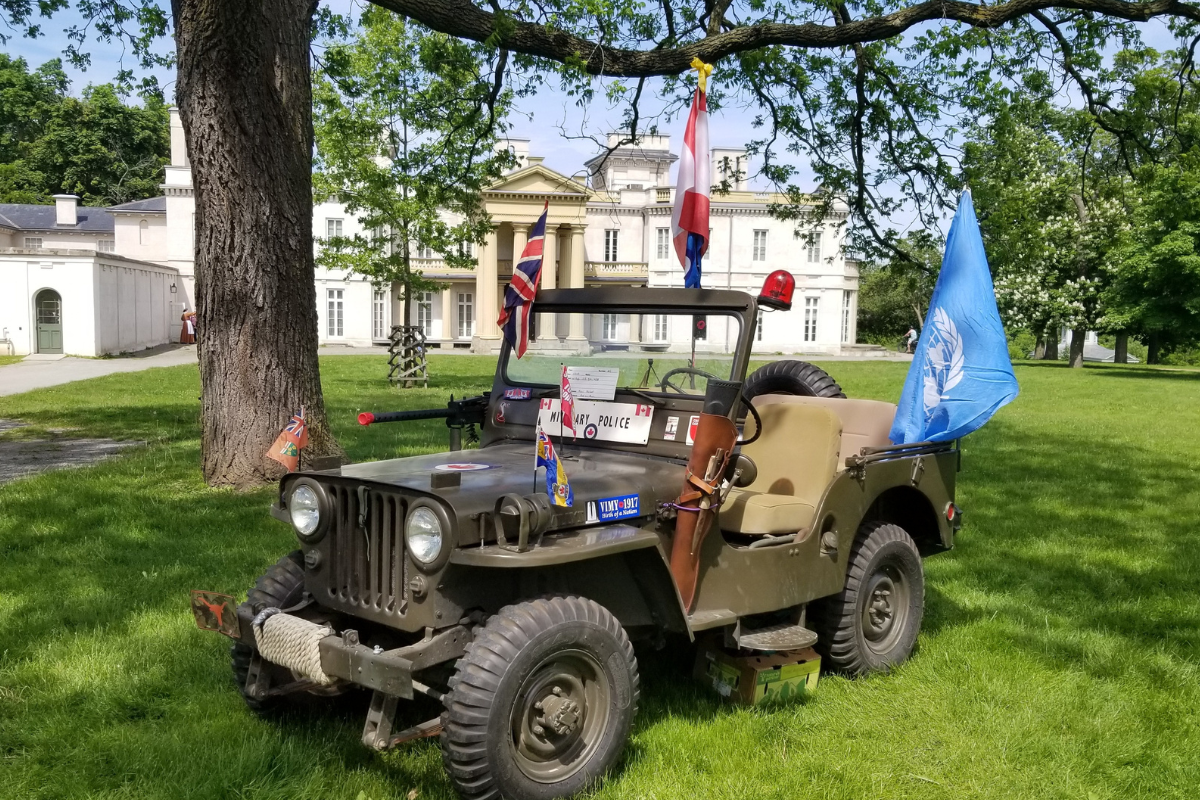
Visitors to Military Heritage Day in Dundurn Park can military vehicles up close. City of Hamilton.
Decoration Day is a Canadian tradition that began on June 2nd, 1890, to mark the sacrifice of Canadian Militia members killed at the Battle of Ridgeway during the Fenian Raids of 1866. Families would gather and place living floral tributes on veterans’ graves and on war memorials as a symbol of respect and of hope.
In 1931, the Government of Canada proclaimed November 11th as the national “Remembrance Day”. However, the tradition of Decoration Day - Canada’s first day of remembrance - has been maintained in our city thanks to the efforts of the Hamilton Veterans Committee and the local branches of the Royal Canadian Legion. Every year in memory of those Hamiltonians who paid the ultimate price, veterans' graves in Hamilton Cemeteries are decorated as a sign of respect for their sacrifice and the hope that it was not in vain.
Decoration Day was not the only first to come from the Battle of Ridgeway. It was the first battle fought by Canadian soldiers under Canadian command without British assistance, and the first-time soldiers fought under the banner of the Irish Republican Army. It was the first and largest of the Fenian Raids, a struggle that shaped Canadian Confederation. It was also Canada's first military disaster.
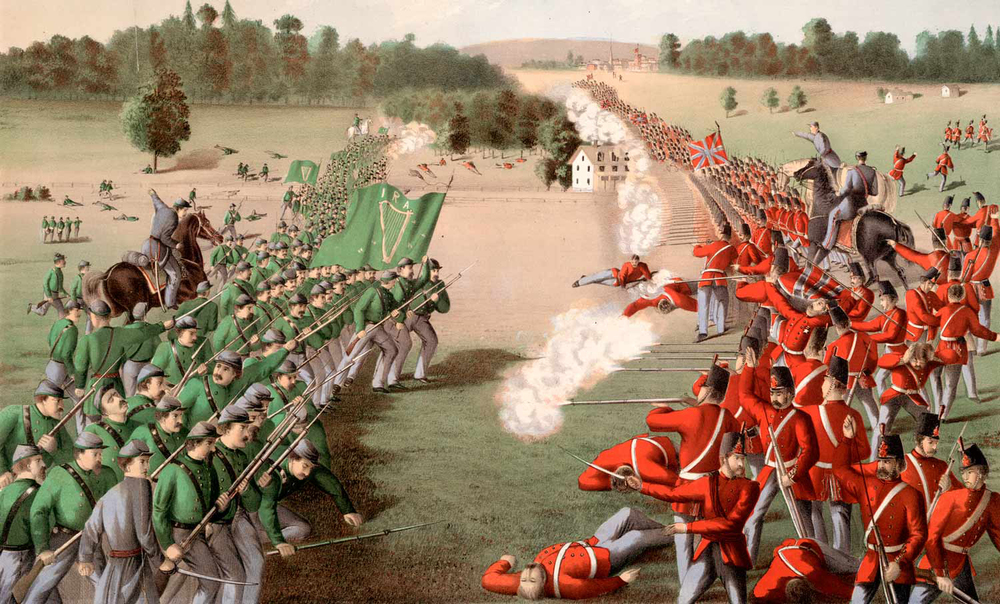
Illustration by The Sage, Sons & Co. Lithographer - Library and Archives Canada, CC BY-SA 4.0
Fenian Raids of 1866
The Fenians were an international movement seeking to end British imperial rule over Ireland and create an independent Irish Republic. As Ireland was tightly controlled by Britain, many efforts to organize and fund the movement were carried out by the Irish diaspora in the United States, where the importance of Irish voters led Washington to unhappily tolerate it. Although most Irish Canadians opposed the movement, some supported it, with delegates from Toronto and Hamilton known to have attended Fenian gatherings and conferences prior to the outbreak of hostilities.
The Battle of Ridgeway
Mistakenly believing that the Fenians possessed cavalry, the Canadians, who had initially seemed to be winning the battle, were ordered to abandon cover and “form squares” – a common defense against a cavalry attack. Though quickly countermanded, the order caused the Canadian formation to descend into chaos, and following a Fenian bayonet charge the militia retreated in disarray. Although victorious, Fenian leadership realized that British and Canadian forces would soon overwhelm their position. After successfully attacking Fort Erie, the invaders returned to the American side of the border and surrendered their arms to the US military, which had rushed to the scene to attempt to prevent a broader war from breaking out.
An official inquiry placed the blame for Ridgeway on the soldiers who fought it and dubiously exonerated the officers responsible for leading and supplying them. After decades without acknowledgement, on June 2nd, 1890 the Veterans of ’66 Association began a series of annual protests in Queen’s Park. In 1899 the government finally issued the surviving veterans medals and land grants, but rather than ending, the protests had evolved into a Decoration Day, an annual rite of remembrance where Canadians decorated soldiers’ graves with flowers.
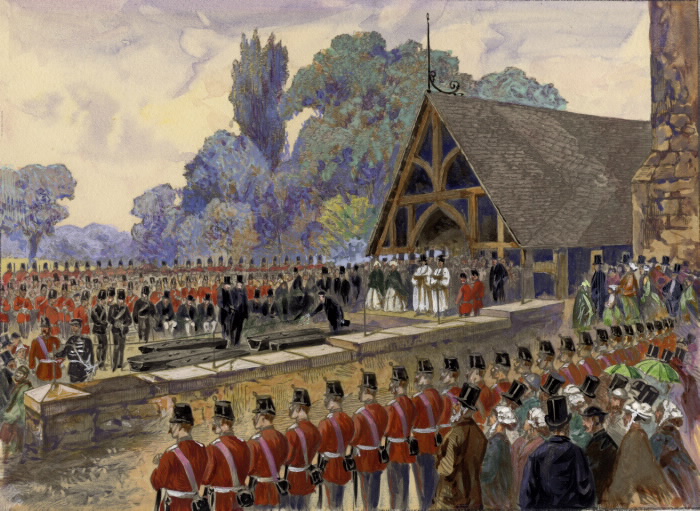
Funeral for Canadian militiamen at St. James Cemetery in Toronto. Fuller, Charles (Canadian, 1836-1894)
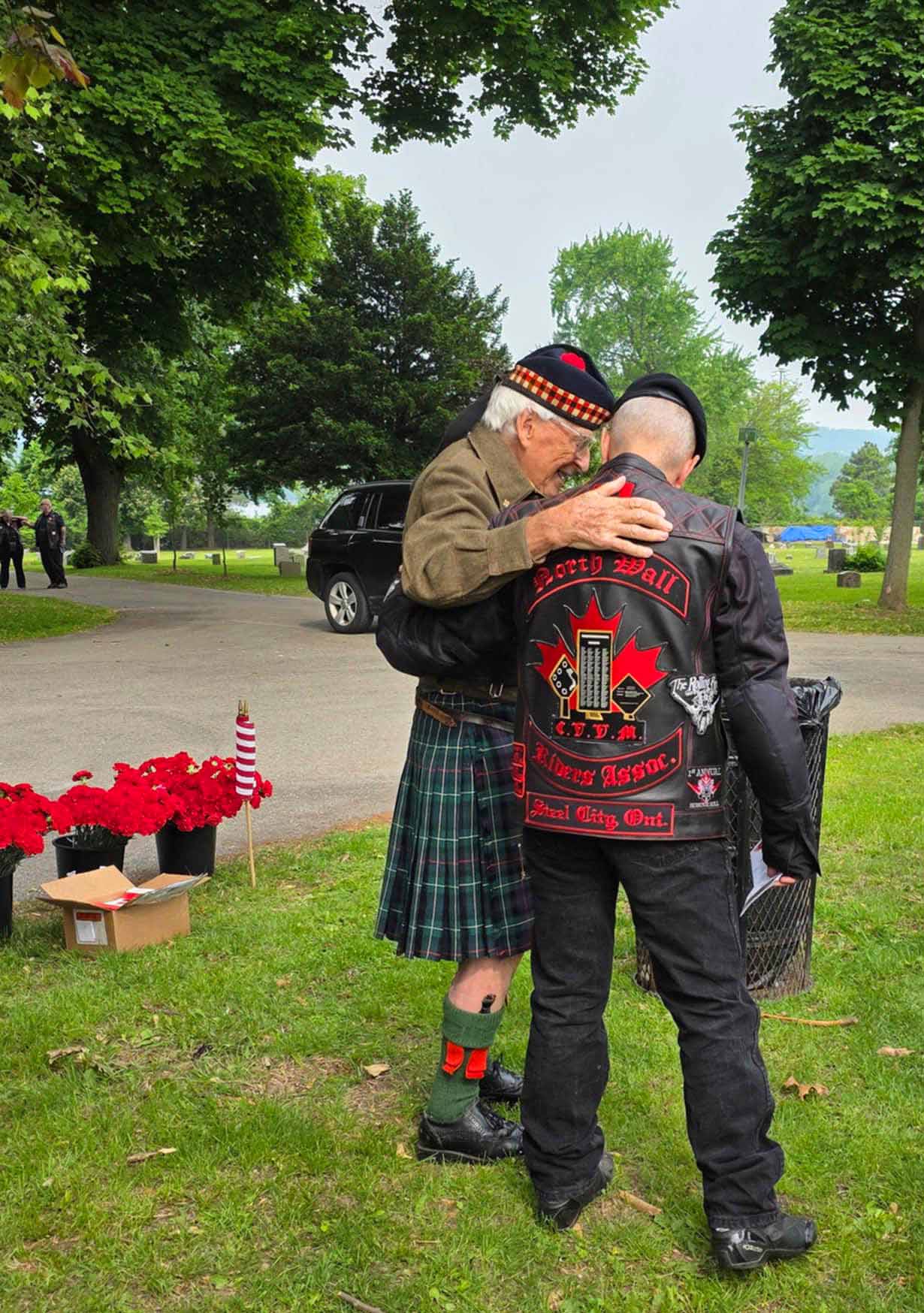
Decoration Day ceremonies are organized by the Hamilton Veterans Committee and include local cadets in the service. City of Hamilton.
Decoration Day Continues
Today the commemoration of Decoration Day continues in the City of Hamilton. On the Sunday immediately preceding June 2nd, the Hamilton Veterans Committee holds an annual Decoration Day service in a local cemetery. As part of the ceremony, local cadets continue the historic practice of decorating graves. The tradition continues at Dundurn Park from 12 - 4 pm where The Hamilton Military Museum holds a free family-friendly Military Heritage Day in honour of Decoration Day. Get up close to authentic military vehicles, meet soldiers dressed in period uniforms, explore captivating displays, partake in hands-on activities and enjoy historic presentations. Don't miss out on this afternoon of remembrance, laughter, learning, and unforgettable experiences with a perfect blend of history and family fun!
Read on to see what's in store at Military Heritage Day in Dundurn Park. We hope to see you there!
• Enjoy free admission to the Hamilton Military Museum
• Displays from the Canadian Guild of Antique Arms Historians in the Coach House
• Participate in hands-on activities from the Vintage Signals Team
• Get up close to authentic vehicles from the Ontario Military Vehicle Association
• Displays courtesy of Canadian Expeditionary Forces Re-enactors
• Demonstrations by the Royal Newfoundland Regiment 1812 Re-enactors
• Displays courtesy of the Waterdown Museum of Hope
• Live music performed by the Royal Hamilton Light Infantry Band
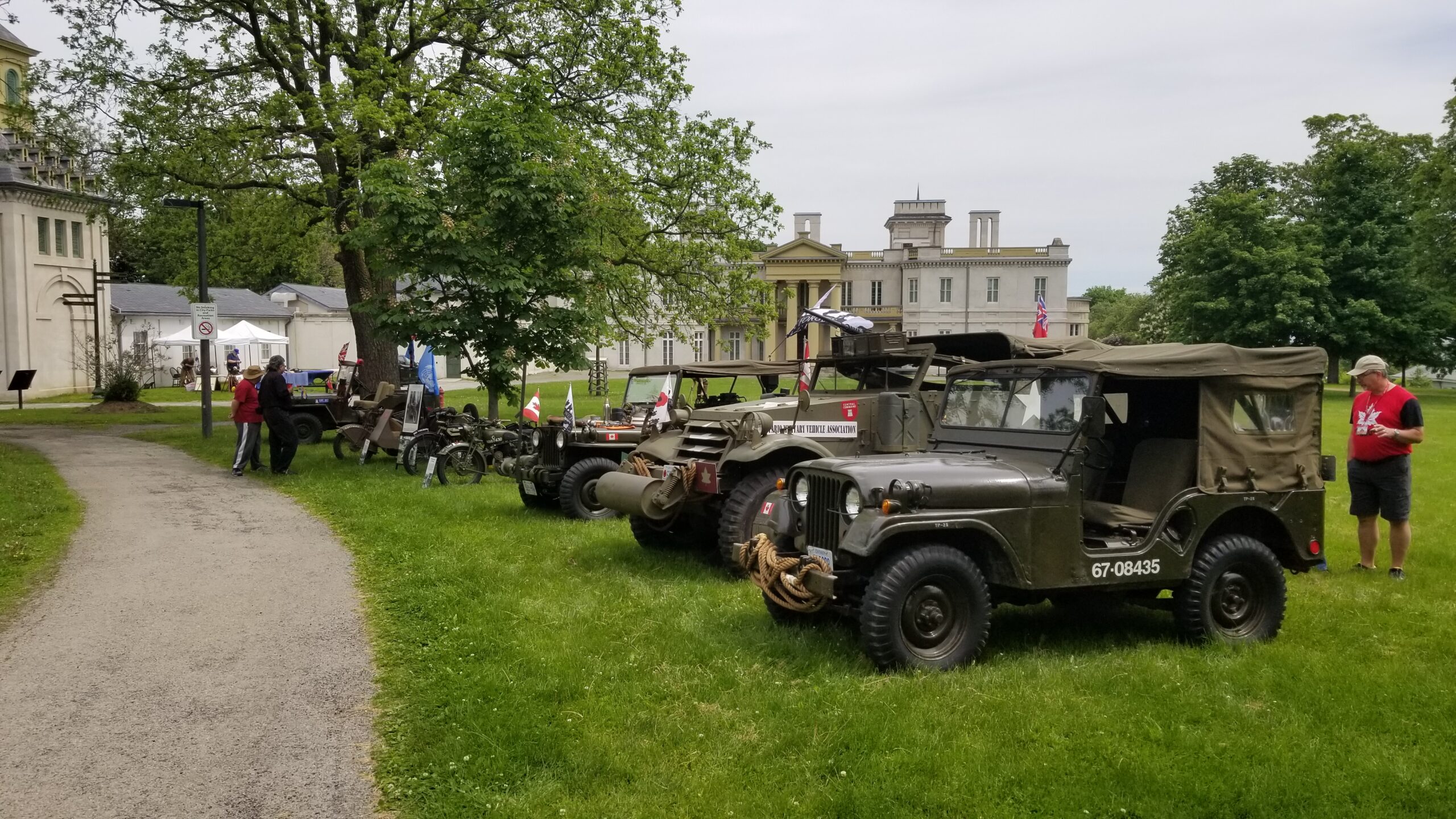
Some of the displays at Military Heritage Day in Dundurn Park in honour of Decoration Day. City of Hamilton.