Daisy French: Granddaughter of Dundurn
Much is known about the storied history of Sir Allan Napier MacNab, original resident of Dundurn Castle in Hamilton. However, the life of his granddaughter, Daisy French, has been a great mystery…until recently. As it turns out, her life was incredibly eventful, marked by world travel, scandal, and even wartime service during the First World War!
Daisy and Her Family
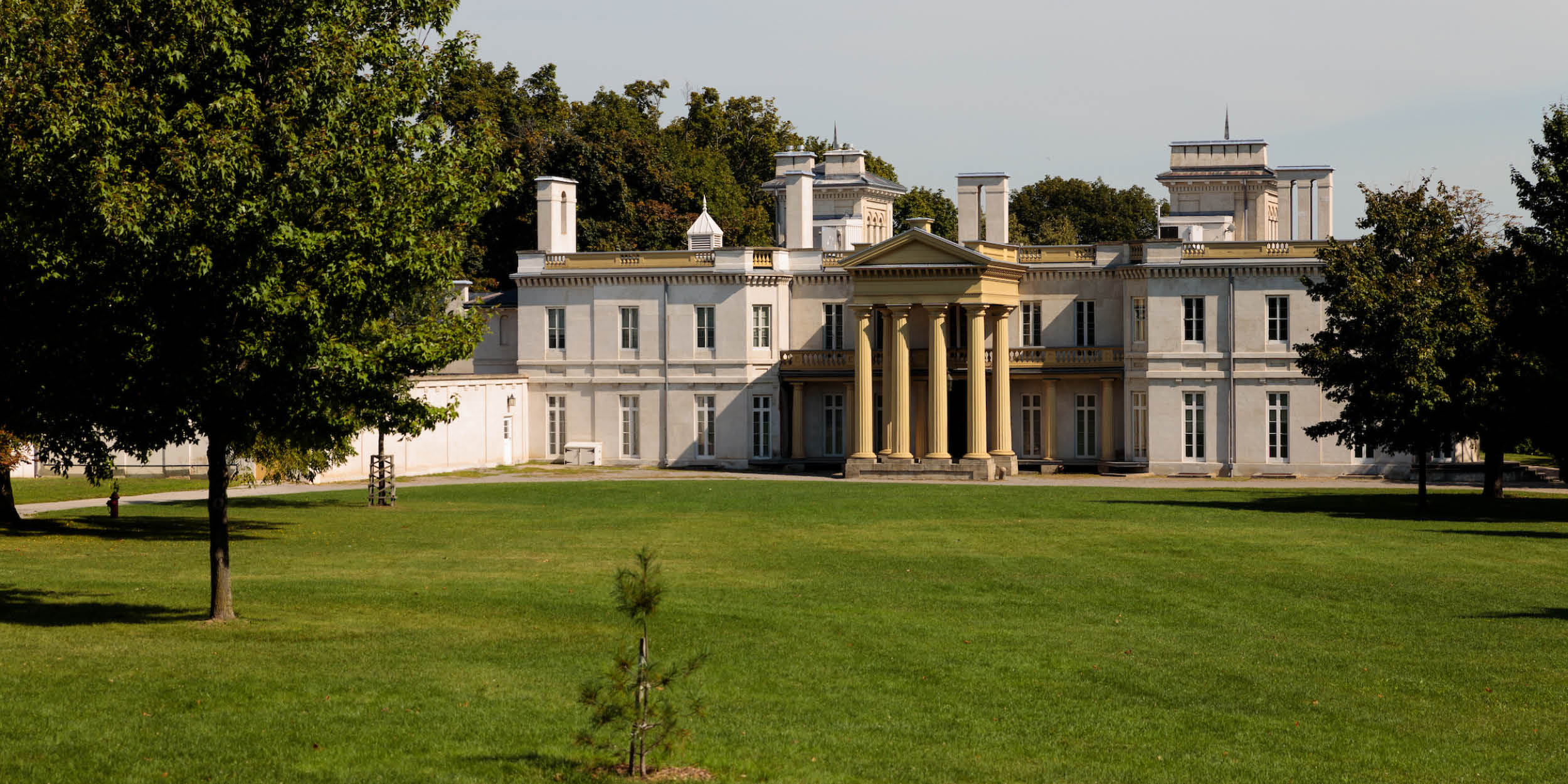
Dundurn National Historic Site was originally the home of Sir Allan Napier MacNab and his family, including his daughter, Minnie. City of Hamilton.
Daisy French was born Caroline Sophia Daly in Hackney, South-Australia in 1868, the second surviving child of Minnie (Mary Stuart Daly) and John George Daly. Minnie was the third daughter of Sir Allan Napier MacNab, who built Hamilton landmark Dundurn Castle in the 1830’s.
John George Daly passed away in 1888 while he was an Immigrant Agent-General for British Guinea (now part of Guinea-Bissau). A widowed Minnie and her two children, Daisy and son Allan, eventually moved back to Canada. Of note - they briefly lived with Minnie's Aunt Sophia (MacNab’s Sister-in-law) in a small apartment on Gould Street in Toronto. You can learn more about Minnie and her Aunt Sophia on tours of Dundurn National Historic Site.
A Brief Marriage, a Child, and a New Name in Canada
In 1898, Daisy married Herbert Cumming French, a Surgeon-Captain in Bombay, India. Wedding guests of note included the Countess of Albemarle, (Daisy's aunt), her brother Allan Daly, and many of her husband's military associates and acquaintances.
The marriage was short-lived as French divorced her in 1903, accusing her of adultery. A court document shows he claimed that her son Allan Desmond French, born in 1900, was not his child. In 1905, Daisy's mother left London on March 23rd with four-year-old Allan Desmond and arrived in New York on April 3rd on their way to Hamilton Ontario. It is unclear whether Daisy is already in Canada or if she joins them at a later date.
After moving to Canada, she starts using the name Daisy French. It is not clear where this name originated. However, upon moving to England in the late 1910’s, she came to be known as Mrs. French or Mrs. Caroline Sophia French, although she is still occasionally referred to as Daisy.
The Re-Burial of Sir Allan Napier MacNab
Daisy was also involved in making arrangements for the final resting place of her grandfather Sir Allan MacNab. Initially, MacNab and other family members were buried in a family plot on the grounds of Dundurn Castle, called Inchbuie, until they were moved in the early 1900s. Inchbuie was named after the historic burial grounds of Clan MacNab in Perthshire, Scotland.
In May 1909, she personally responded to an article in The Globe and Mail to complain about incorrect information they had printed about the re-burial of family remains. The Globe and Mail stated that the remains were moved because the negotiations between the Parks Board and the family heirs to care for and build a tombstone at the family plot could not be resolved. Daisy (the only surviving member of the MacNab family in Canada) had grown uncomfortable with her family's remains staying at Inchbuie now that it had become part of a public park, not because of negotiations with the Parks Board.
She made the decision to move her grandfather along with the Catholic members of the family to the Holy Sepulchre Cemetery in Burlington. That group included Daisy's grandmother, Mary Stuart, her aunt Sophia and her mother Minnie. The Presbyterian family members were moved to Hamilton Cemetery, which includes Sir Allan MacNab’s father, mother, and brother David.
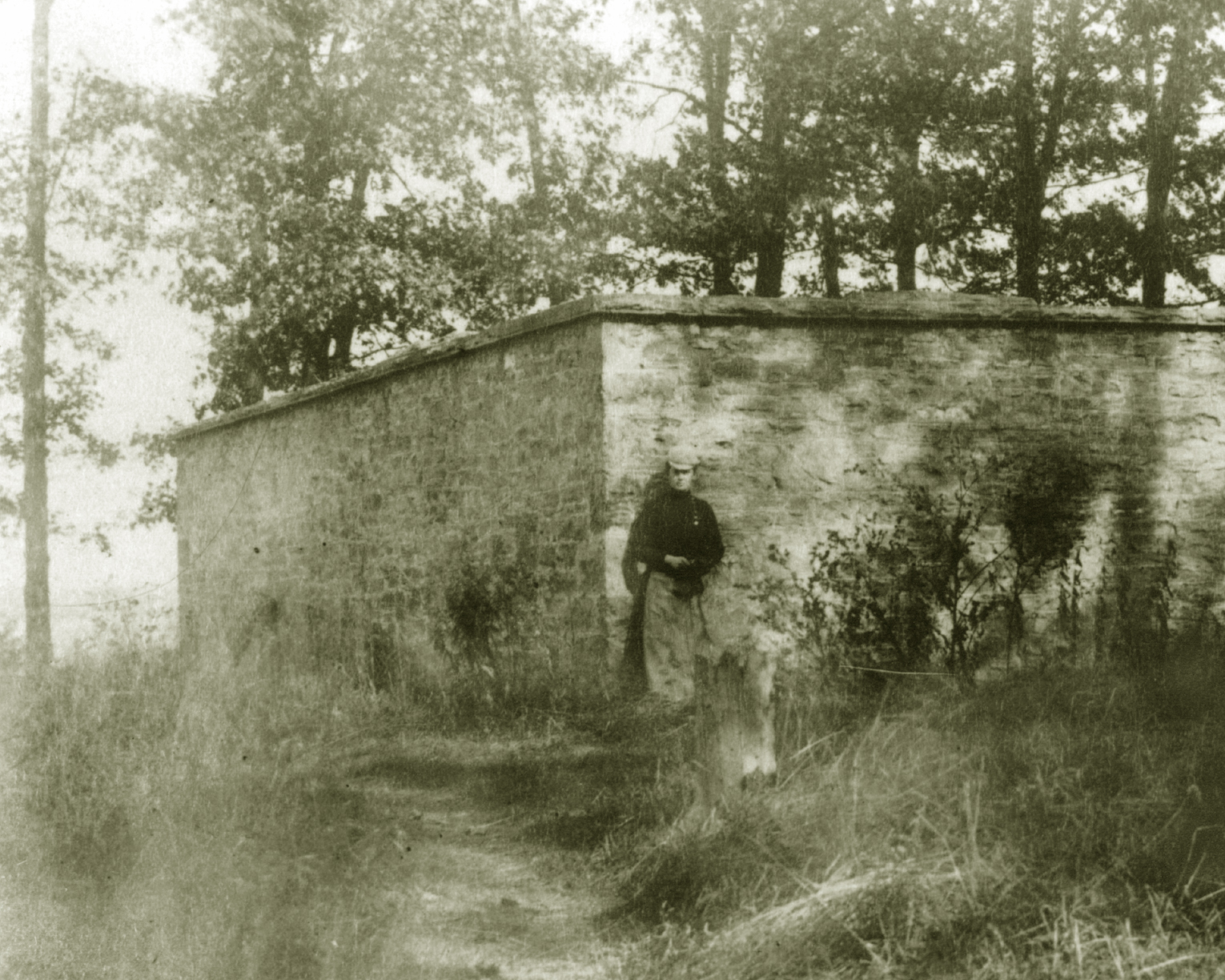
The original MacNab family burial grounds in what is now Dundurn Park. City of Hamilton.
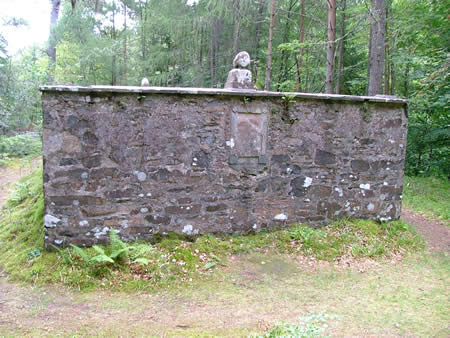
The historic burial grounds for clan MacNab in Perthshire Scotland. City of Hamilton.
National and Wartime Services
Daisy then relocates to England and The National Archives (London) holds a large file of documents describing her work and personal life through hundreds of pages of letters. These documents show she was employed as a private secretary in the Ministry of National Services in England and had short-term service in the Woman’s Royal Naval Services (WRNS) and the Women’s Royal Air Force (WRAF).
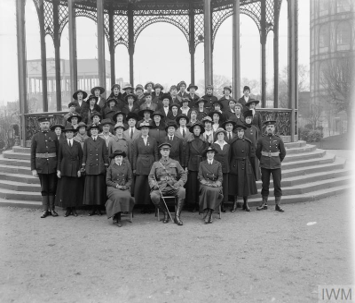
THE ROYAL NAVY ON THE HOME FRONT, 1914-1918. A group of officers, ratings and instructors of the Women's Royal Naval Service (WRNS) at Crystal Palace, London. 1918. IWM (Q 18707).
The WRNS and the WRAF were women’s branches of the Royal Navy and Royal Air Force, formed during the First World War. Initially the WRNS were created as a way to allow more men to return to active service - with women performing clerical and other homeland duties. By the Second World War women’s duties and responsibilities in these divisions greatly increased. The WRAF was officially formed when the new Royal Air Force (RAF) was created in 1918. This was to account for women who were already working at air bases as WRENS (and other women’s groups). This means women like Daisy, who happened to be working at an air station as a member of the WRNS was transferred to the WRAF (see below).
The following list is an overview of some of Daisy’s many postings discovered in the National Archives records right up to her last known position in the Military:
February 1918, 6 Cheyne Row, Chelsea
The location Daisy was living in when she moved to England. This seems to be her address at the time she was working in the Ministry of National Services. Her cousin, Sir Derek Keppel, C.M.G., had written a letter of recommendation for her, which was given to Sir Richard William Bulkeley, commander of the Royal Naval Depot at Crystal Palace, to send to the Director of W.R.N.S., Katharine Furse on Daisy’s behalf.
18 March - 9 April 1918, Station Crystal Palace
This is where she did her training. Her rank was Assistant Principal in the WRNS. Many women and officers had to complete training at Crystal Palace in London. A letter to Daisy from the Assistant Director of the WRNS mentions that she would be paid an officer’s rate of £120 with board and quarters during training, but upon the successful completion of training she could earn a senior post of £175 or £200 per year.
10 April - 14 May 1918, H.M. Coastguard, Harwich, & Shotley
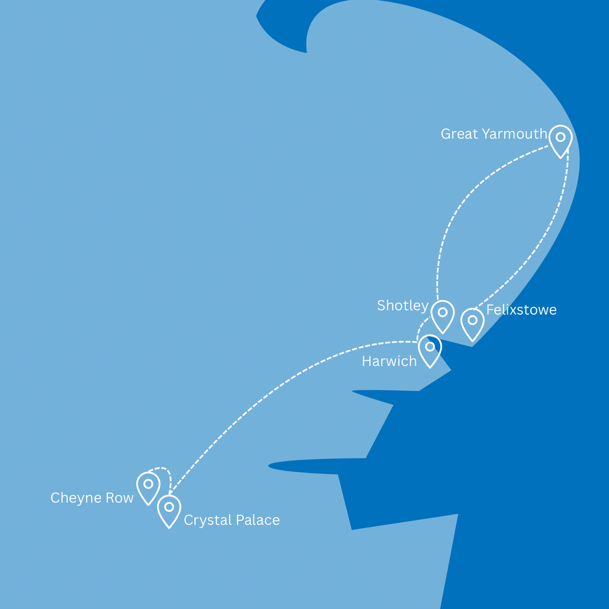
A map of Daisy's service record. City of Hamilton.
Daisy’s rank during this time was as the Deputy Principal. She was provided a pay of £170 annually for this post. At Dovercourt in Harwich, she stayed at Alexander Hotel with Mrs. Beckett, the Deputy Divisional Director of WRNS. This time seemed to be difficult financially for Daisy, as she had to stay in a hotel for two months where the cost was greater than her income. There were no other places available that were more affordable, and apparently, Mrs. Beckett provided no instructions on how to proceed in matters of approved lodgings for officers. Records show she owed the hotel £20 and had already paid £10 of her debt. During her stay at the hotel, documents also indicate she performed Quarters Supervisor Work.
15 May - 11 July 1918, Coast Defense Station, Gt. Yarmouth
She was a Deputy Principal from 15 of May to 16 of June, and the Principal from 17 of June to the 11 of July. During this time, archival letters are mostly about her claims for lodging allowance. Daisy caught influenza and was off work for a time but would soon recover. She then left for the Air Station at Felixstowe where she initially met with Colonel Samson, who was in charge of the Station, for her new appointment. Records show there were 170 women at the C.D. Station in Great Yarmouth.
12 July - 5 Nov 1918, Maybush, Felixstowe
This is the last recorded post as a principal of the WRNS, and she was in charge of the Air Station. Daisy stayed at Maybush before transferring to the WRAF on the 8th of November. The Times newspaper mentions she was an Assistant Commander, 2nd class in the Administration Branch in the Royal Air Force.
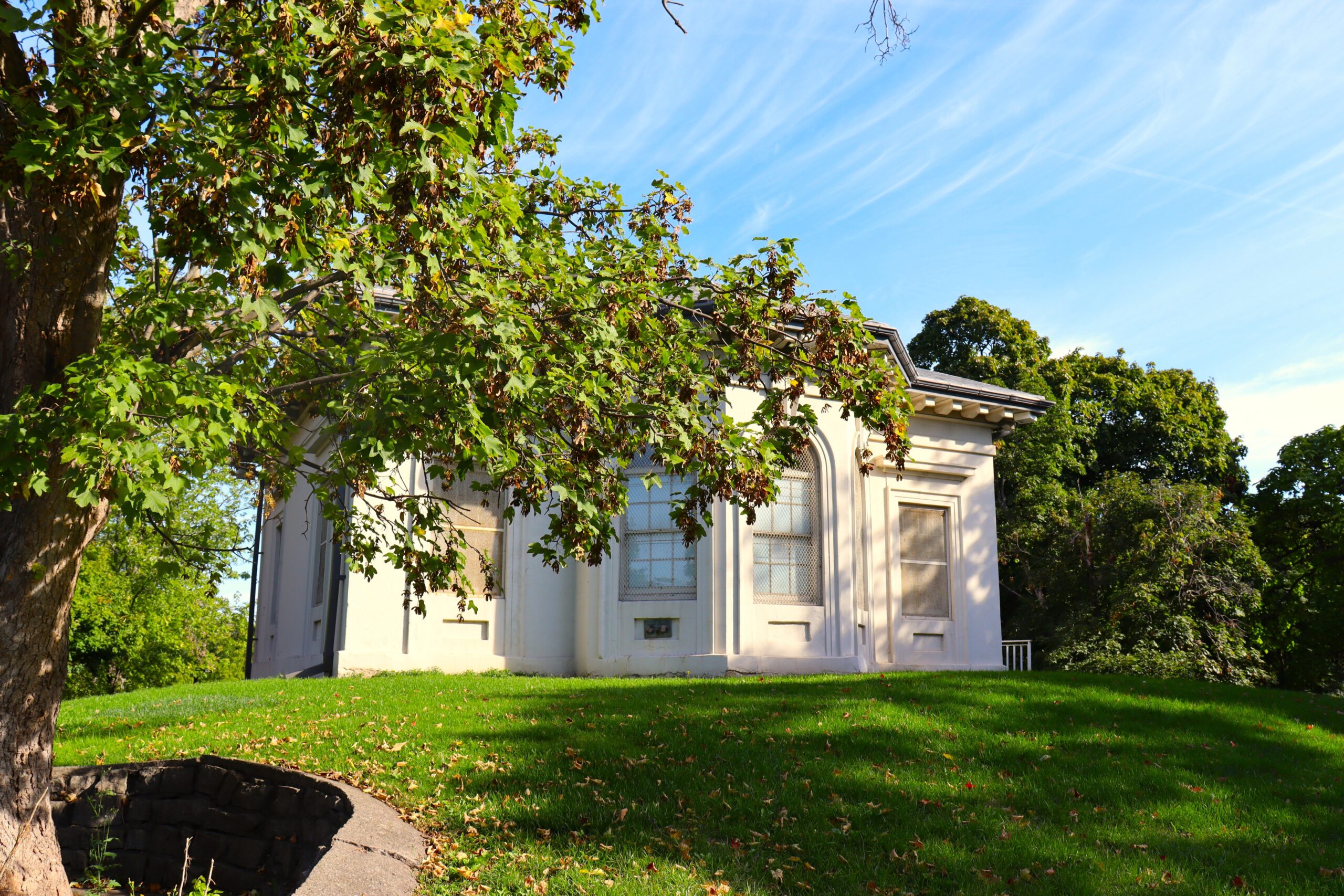
The Hamilton Military Museum. City of Hamilton.
Daisy remained in England for the rest of her life, living in London. She passed away on June 11, 1946, and is buried in Ealing.
This research is conducted by the Hamilton Military Museum and is ongoing as we continue to fill in some gaps in the family tree of Sir Allan MacNab. If you have questions about Daisy or our research, please email [email protected] or visit us at the Hamilton Military Museum, open Tuesday-Sunday, 12-4pm.