Behind the Scenes of Hamilton's Collections at Dundurn
From the Collections and Conservation team
What’s going on at Dundurn National Historic Site?
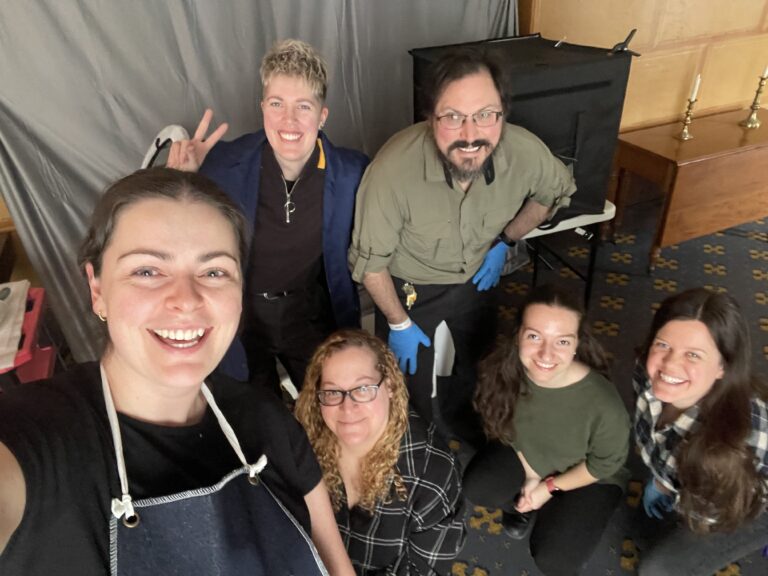
If you’ve visited Dundurn National Historic Site recently, you may have turned a corner and seen some very *not* historic people and equipment. The City of Hamilton’s Collections and Conservation team is currently working on an inventory project of all the artifacts inside of Dundurn, the former home of Sir Allan Napier MacNab. You might be wondering, why do we need an inventory? What does an inventory of artifacts inside of a historic house museum actually involve? Read on to find out how we are caring for the beloved “” and the Hamilton history inside!
Building Back Better
On February 25, 2024, the City of Hamilton was the target of a deliberate and aggressive cybersecurity attack. Twenty-one City services were impacted and as a result of this attack the City’s museum collections management database and digital files created or saved by the City’s museums since computerization disappeared. While some of the digital files have been recovered, none of the collections management database could be salvaged. This inventory project is the start of our effort to build back better and not only create a comprehensive inventory for internal use but to also craft an accessible, engaging public facing portal for you to use!
An Insightful and Invaluable Inventory
In order to successfully rebuild the database, staff must regain both physical and intellectual control of the collections and their associated records.
- Intellectual control = units research and ownership paperwork. Staff are working on digitizing that information and entering it into the collections management database.
- Physical control = locating each artifact and recording their location within the database for easy access and accountability.
The best way to achieve this work is through an inventory. Staff must inventory the paperwork and the entire contents of the Castle.
What does physically inventorying a museum look like?
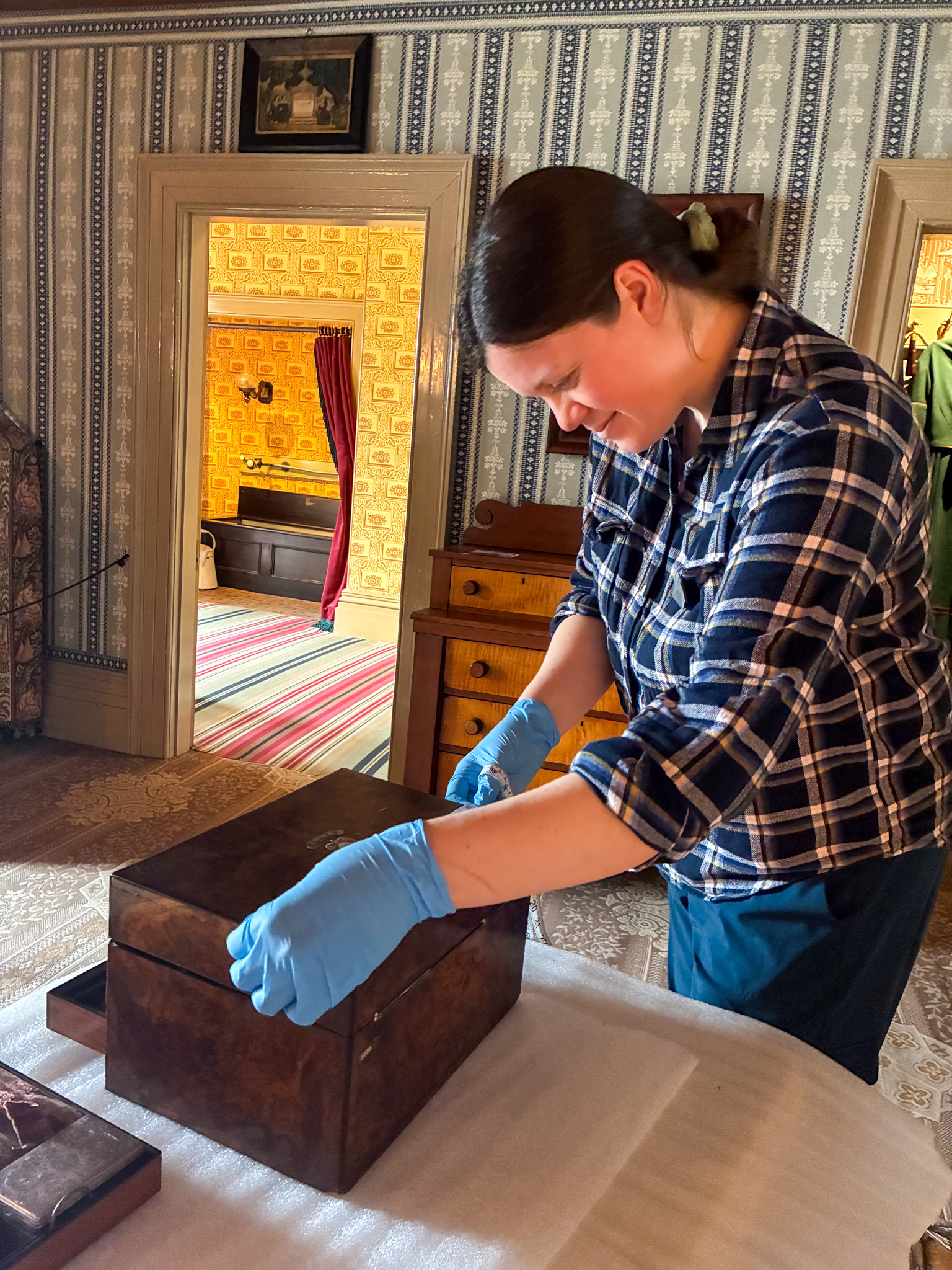
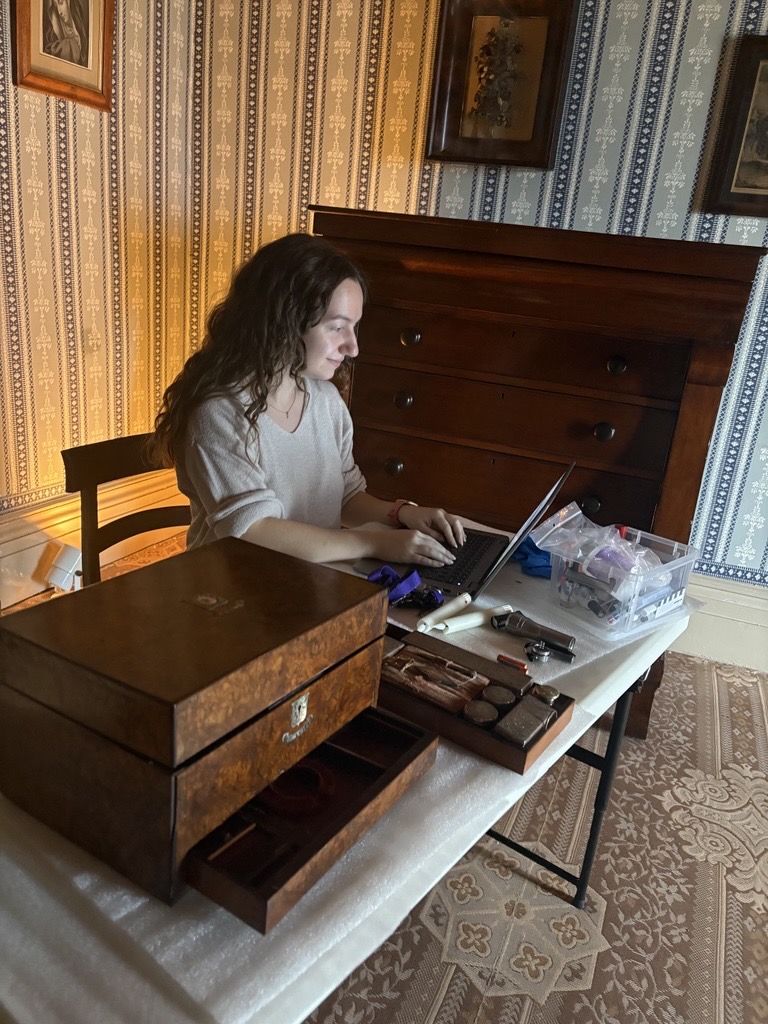
Collections staff working inside the Castle on the inventory for “Aunt Sophia’s Bedroom”. City of Hamilton.
Step 1 – Pick a room, any room – Collections staff must head into the Castle and review every room. This means identifying every artifact inside that is a part of the Dundurn Collection (anything from a small inkwell to a large armoire), writing down important information about it, and recording where it lives in the room. This information will be added to our new Collections Management System (CMS), which is a digital database system that catalogues, manages, and preserves information about our collection.
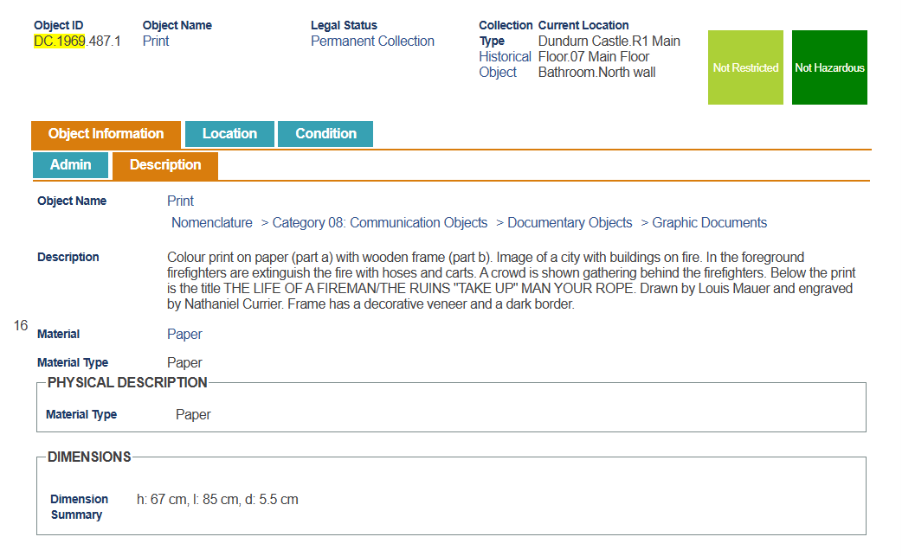
A screenshot of our new content management system, Argus, showing the item description view. City of Hamilton.
What is the most important information to capture about an artifact?
- The object’s name. The name comes from a “controlled vocabulary” called Nomenclature. We use nomenclature to make sure anyone accessing the information in the database is speaking the same language. Examples of object names are chair, inkwell, painting, and cabinet.
- The object’s ID number. Every artifact has a unique object number that is written somewhere on the object itself and identifies it from all the other items in the collection. It is a coding system that outlines when an object came into the collection (but that’s a deep dive for another post...).
- A brief description of the item that gives enough detail to recognize the artifact without a picture.
- The condition: is it in good condition, or is it in need of some conservation care?
- The measurements.
- Its location in the home and its location in the room.
Any significant information about its history or previous owner.
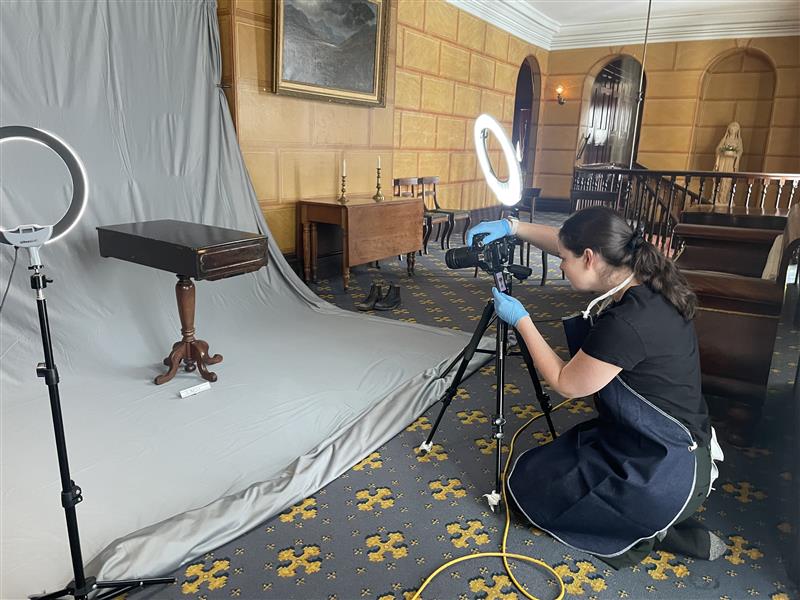
The temporary photo studio set up in the Upper Hall of Dundurn Castle. City of Hamilton.
Step 2 - Every artifact also needs a glamour shot. Each artifact is photographed and then the image is uploaded to the collections database. Digitization is a great way to make the collection accessible and is also a great tool for monitoring the condition of an object. We take photographs from several angles, and over time, we can compare these photos to the artifact at present and identify any damage, dirt, or deterioration that has built up over time.
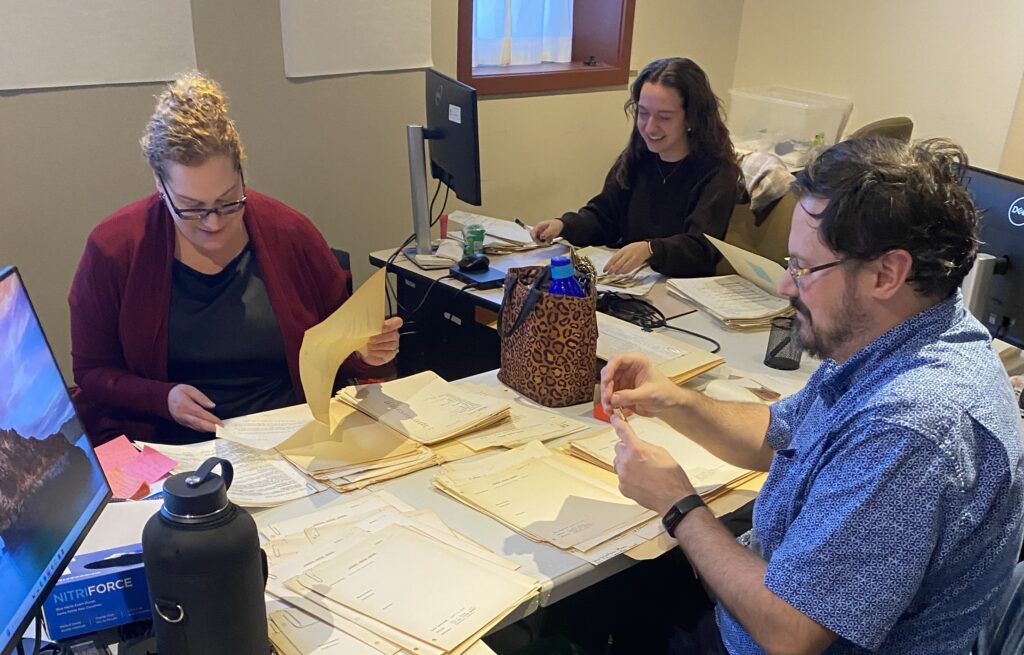
Staff working through a small portion of the paper records. City of Hamilton.
Step 3 – Scan the records. To regain intellectual control, we also need to scan and upload any records about the artifact into the database. That way staff will have a full understanding of the who, what and why someone donated the artifact.
As you might imagine, completing this process for every object takes time. From picking up an object, identifying its number, and writing out all the required information, to setting up a temporary photography ‘studio’ in the historic house (which can be squishy!), photographing the object, and editing the photos, and associating it with its paperwork… that is a monumental task! At the time of this blog post, the Collections team has inventoried over 2,000 artifacts since November 2025.
Recording this data for every artifact in the Castle will ensure we have a complete and consistent record of the collection at Dundurn. This leads to better tracking, better conservation and care, and more accessibility for you, the public!
Preserving Local History
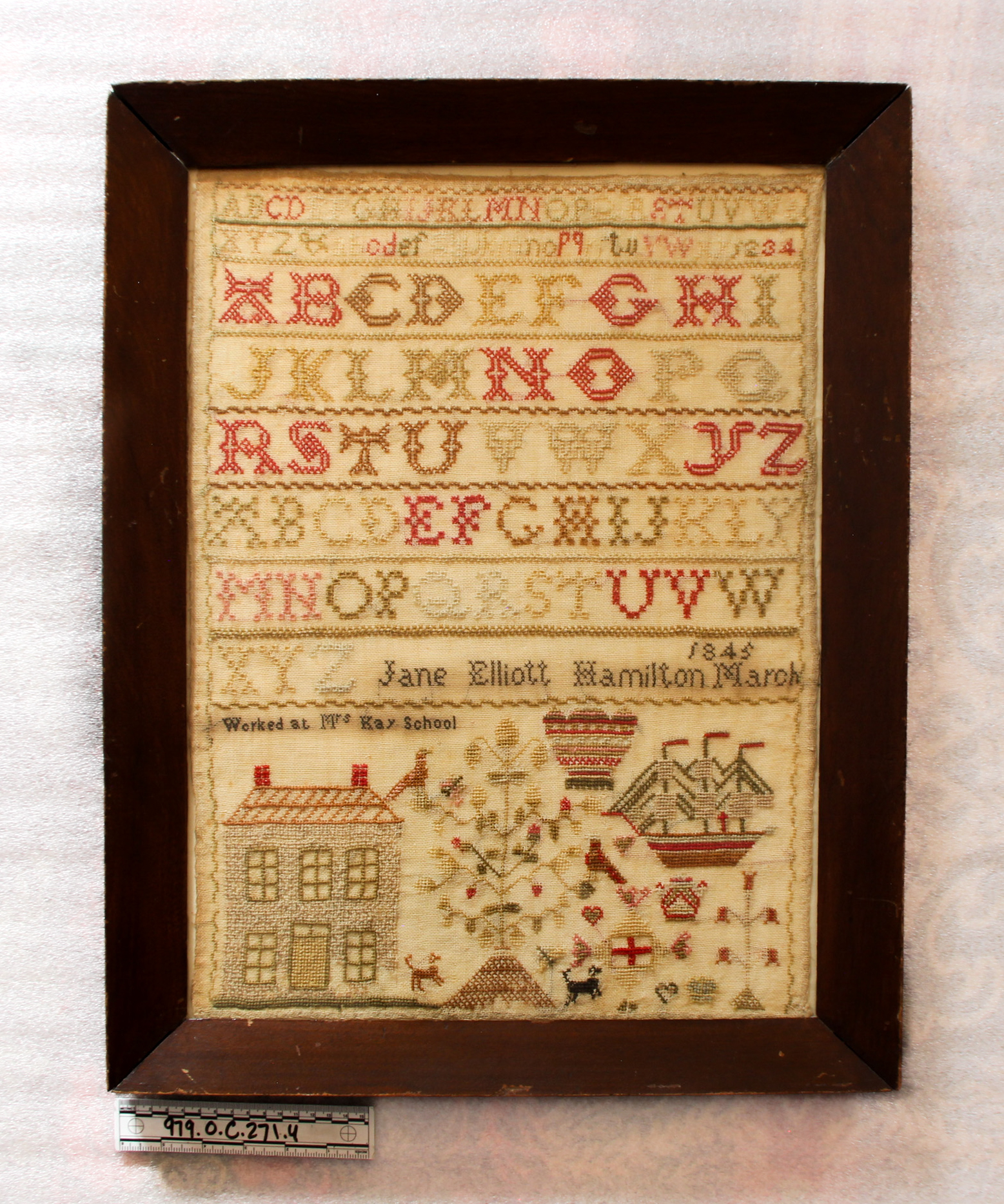
An artifact in Dundurn Castle that was made by a local Hamilton resident, Jane Elliott, in 1845. City of Hamilton, 979.O.C.271.4.
During the major restoration work that happened at Dundurn Castle in the 1960s, local residents rose to the occasion and generously donated their beloved furnishings and antiques to the restoration effort. The restoration project culminated in 1967 for the Canada Centennial. Many of the objects you can see on display at Dundurn were donated by the community, and some artifacts were even made by the donor’s family members. These donations forever tied residents to local Hamilton history and gave Dundurn a legacy beyond its original owners that cements its place as a local community gem. As the Collections team tracks these artifacts, we are cross-referencing the objects to their paperwork and gift forms that describe how the object came to us. We are uncovering many heartwarming stories about their origins as we go.
Sharing is Caring
Soon, we are excited to bring our Hamilton Civic Museum collections so that anyone can browse our artifacts and learn about Hamilton history and beyond! Until then, we hope to see you at Dundurn National Historic Site and our other Hamilton Civic Museums.
We are open from Tuesday through Sunday, 12pm-4pm, and we also run special workshops and events throughout the year. A Hamilton Public Library Card will get you free admission to our museum guided tours (one free admission per card holder). We can’t wait to see you soon. You may even see our Collections team working hard to inventory our museums, one artifact at a time!