5000 BC
Neutral/ Attawandoron history
Archaeological evidence has proven that the first known inhabitants of Hamilton (and surrounding area) were the Neutral Nation, also known as the Attawandaron -…
- Indigenous
- Life
Digital exhibition
An infinitely expandable timeline to explore the multifaceted history of the land we now call Hamilton, from long before the city existed to today.
Scroll through time, jump to an era, or filter by theme. Select any entry to read the full story.
Show entries about any of these themes. Select a theme again to remove it.
5000 BC
Archaeological evidence has proven that the first known inhabitants of Hamilton (and surrounding area) were the Neutral Nation, also known as the Attawandaron -…
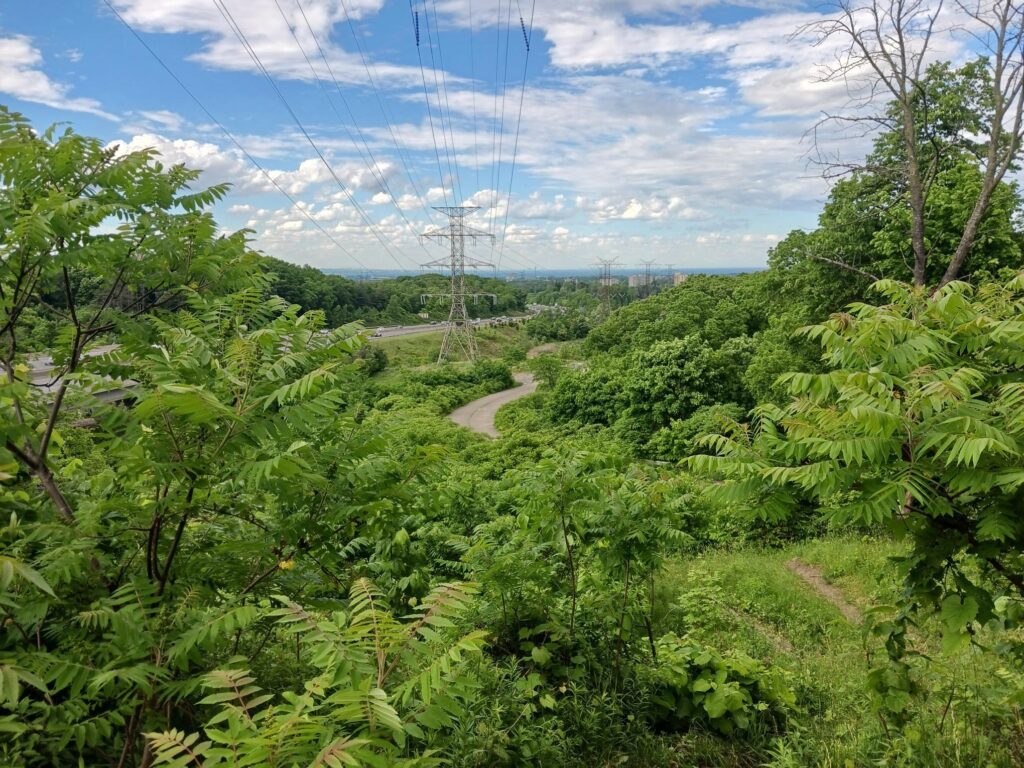
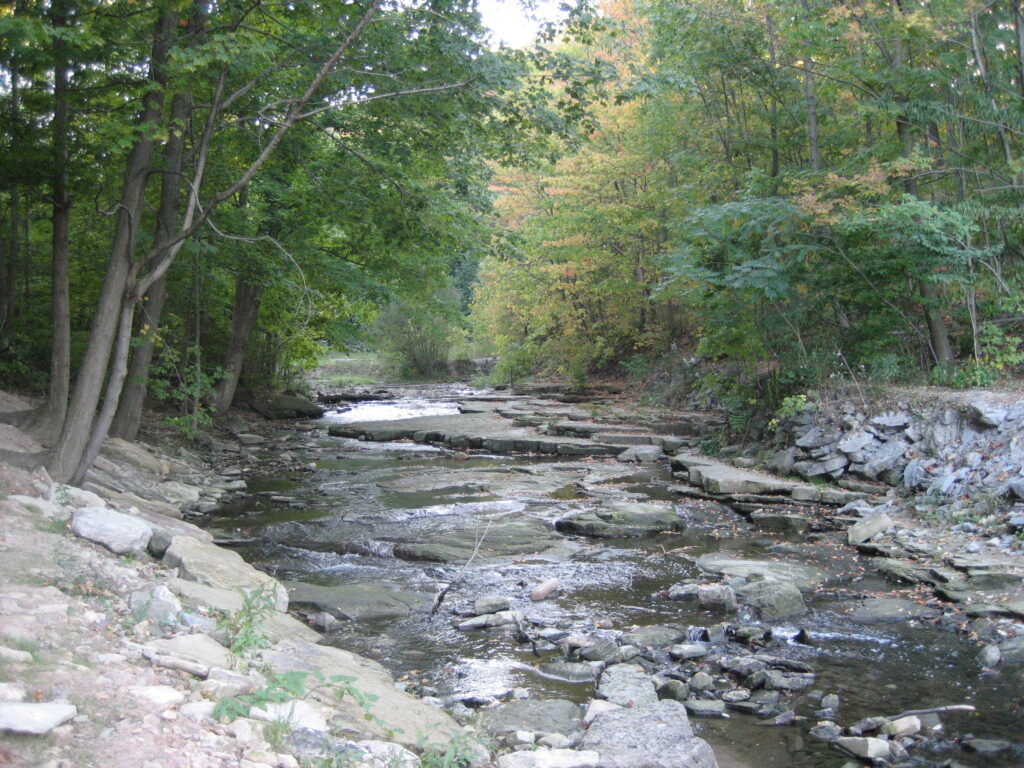
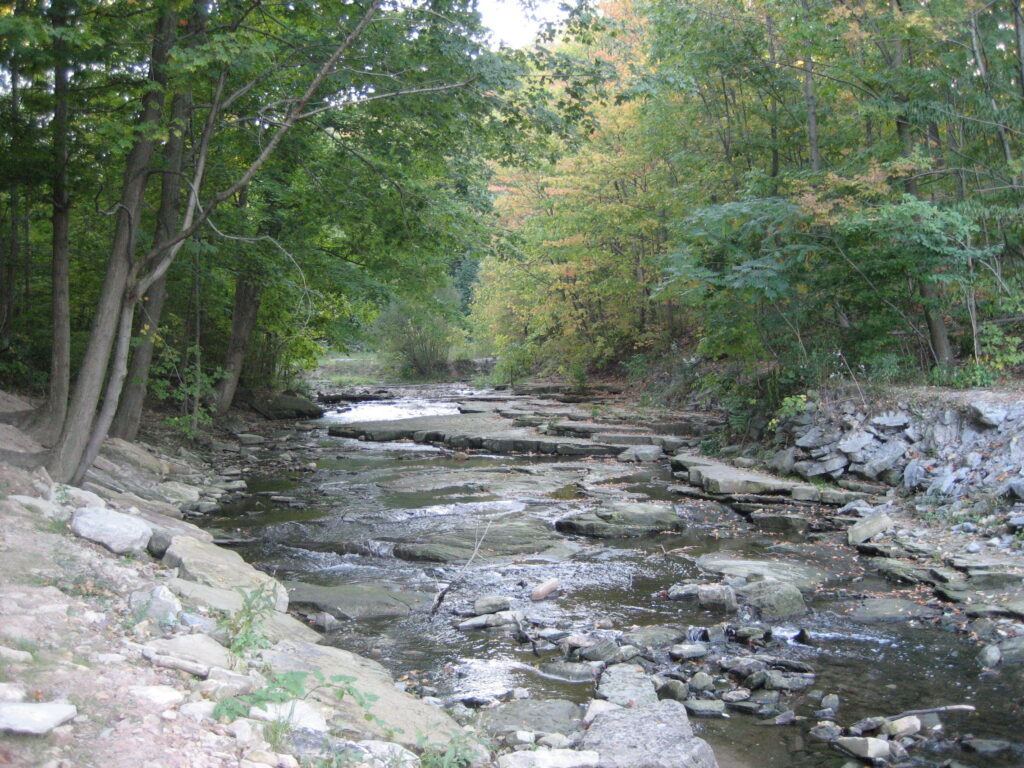
Archaeological evidence has proven that the first known inhabitants of Hamilton (and surrounding area) were the Neutral Nation, also known as the Attawandaron - “they speak awry” or “people of slightly different language”. Tools and a settlement were uncovered near the Red Hill Valley dating back 13,000 years. Recent results of tests performed on blood protein residue found on these tools confirm they were used for hunting and butchering mastodons. In Dr. Ron Williamson’s book, History and Archaeology of the Iroquois du Nord, Neutral occupation near present-day Burlington Bay is speculated as the first village site in the area, known as Outinaouatoua. Over the course of time, this area has also been home to the Haudenosaunee and Anishnaabe

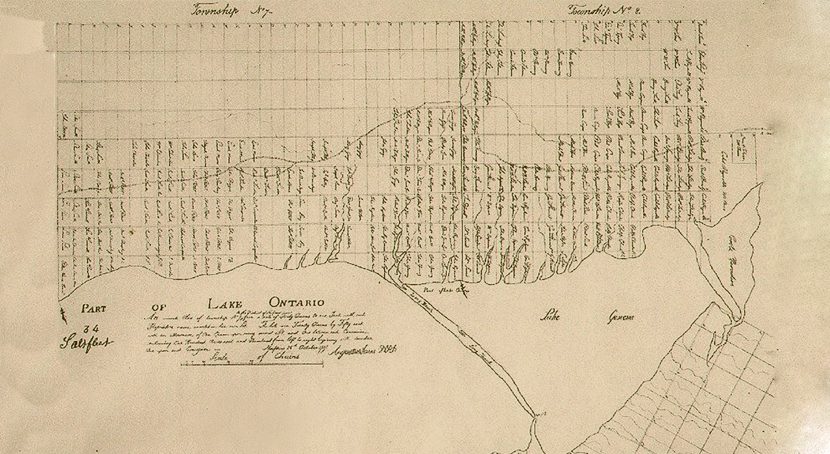
From 1788 - 1794 crews of Deputy Surveyor General Augustus Jones surveyed most of what is now Hamilton, including Saltfleet, Flamborough, Beverley, Ancaster, Glanford…
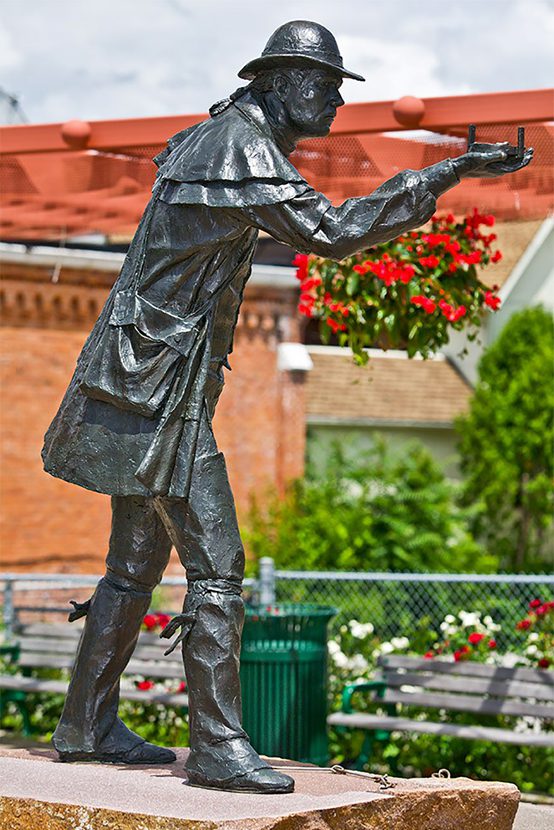
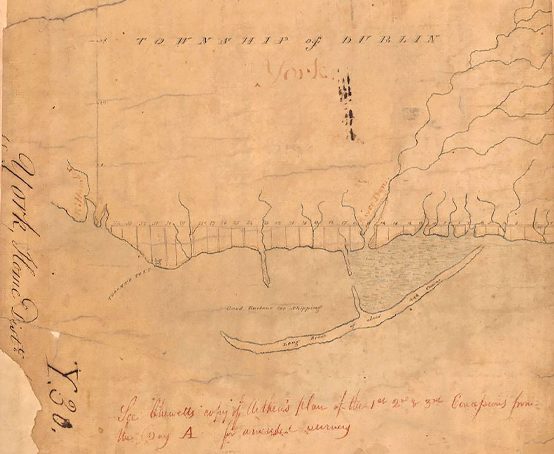
From 1788 - 1794 crews of Deputy Surveyor General Augustus Jones surveyed most of what is now Hamilton, including Saltfleet, Flamborough, Beverley, Ancaster, Glanford and Binbrook. These crews laid out major roads still in use today and formalized the boundaries of the Six Nations Tract along the Grand River. Jones is regarded as the outstanding surveyor in Upper Canada’s early history. His home overlooked a lagoon near present-day Confederation Park, close to the residence of his friend Thayendanegea (Joseph Brant). In 1817, Jones moved to the Grand River, where Brant provided him with 1200 acres along the Governor’s Road. Jones, whose children by two marriages had Indigenous ancestry, became involved with local Indigenous issues. He died in 1836. (Content courtesy City of Hamilton; Ontario Ministry of Natural Resources, Office of the Surveyor General.)
biographi.ca
spatialsolutions.maps.arcgis.com
flickr.com
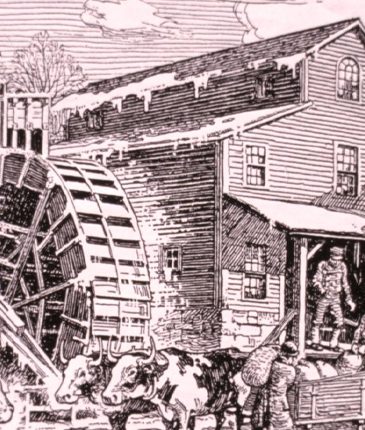
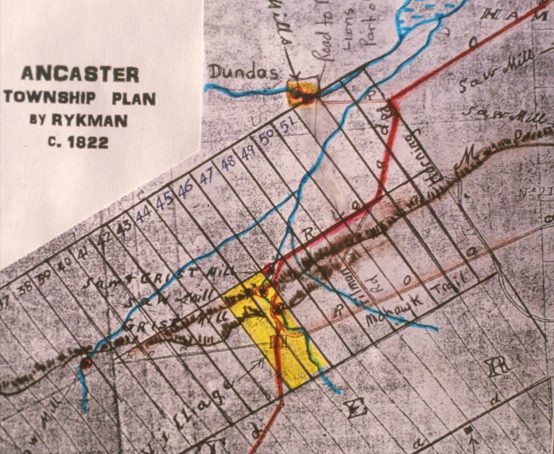
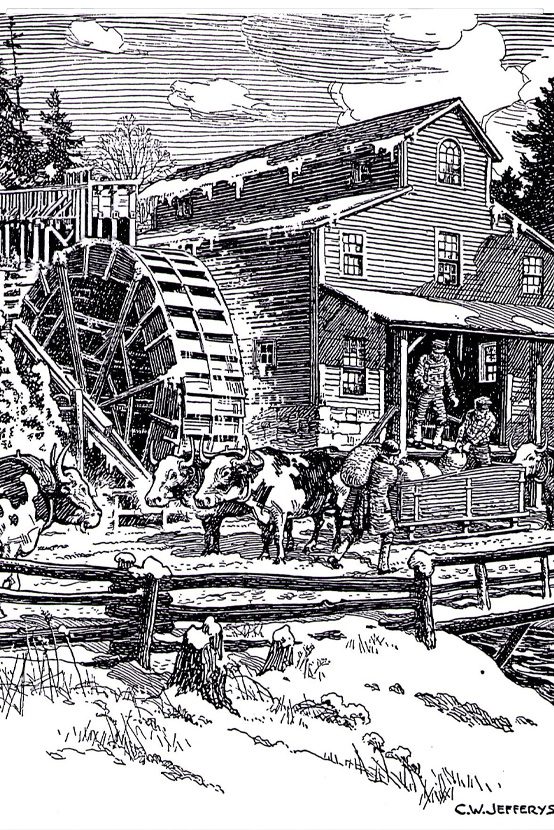
The first mills built at the head of Lake Ontario were erected by Millwright James Wilson in 1791–92, with the financial support of entrepreneur…
The first mills built at the head of Lake Ontario were erected by Millwright James Wilson in 1791–92, with the financial support of entrepreneur Richard Beasley. Original documents describe the gristmill as being built at the foot of a rock precipice over which water poured on the head of an overshot waterwheel beside the road leading to the Mohawk Village (Brantford). The mills burned down at the onset of the War of 1812, providing a stimulus for reconstruction of a more substantial stone mill. This investment scheme established a settlement named Ancaster in 1793 by Lieutenant Governor Simcoe. (Content courtesy Fieldcote Memorial Park and Museum.)
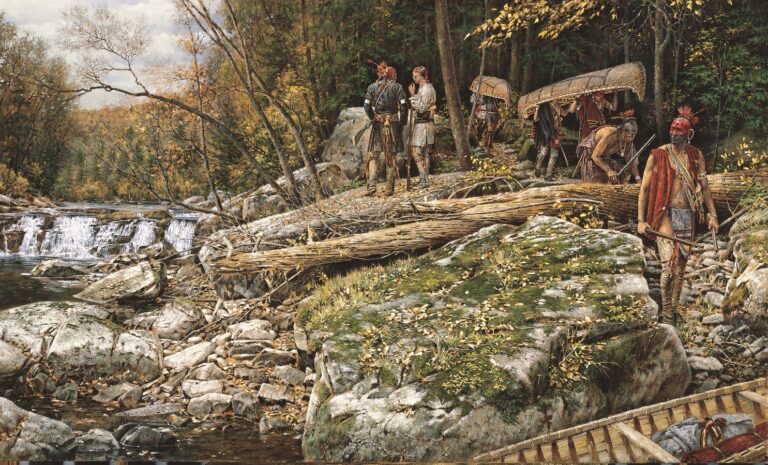
Following the American Revolution (1765-1791), the British and their allies left the United States. The Haudenosaunee (Six Nations, Iroquois), Anishnaabe and other allied Indigenous…
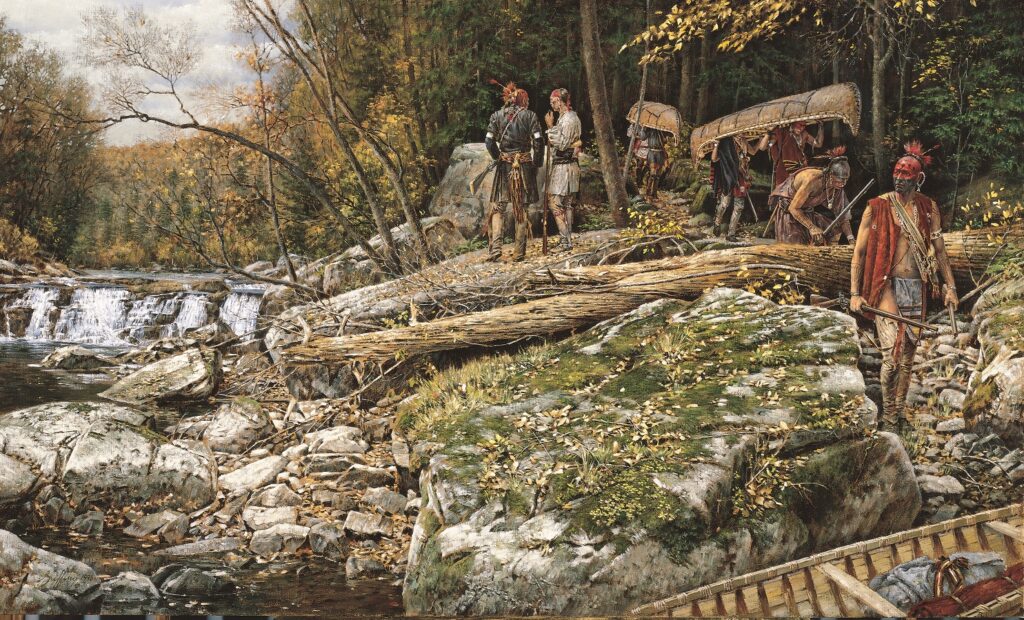
Following the American Revolution (1765-1791), the British and their allies left the United States. The Haudenosaunee (Six Nations, Iroquois), Anishnaabe and other allied Indigenous Nations moved across the Niagara River and re-settled in old traditional areas commonly known today as Niagara and York regions. A group of Haudenosaunee, predominately Kanyen'kehà:ka (Gah-nyen-geh-heh, Mohawk) nation, re-settled further down to the eastern part of Lake Ontario in an territory bordering the provinces of Ontario and Quebec and the state of New York. (Content courtesy of City of Hamilton; T Hill; Robert Griffing)
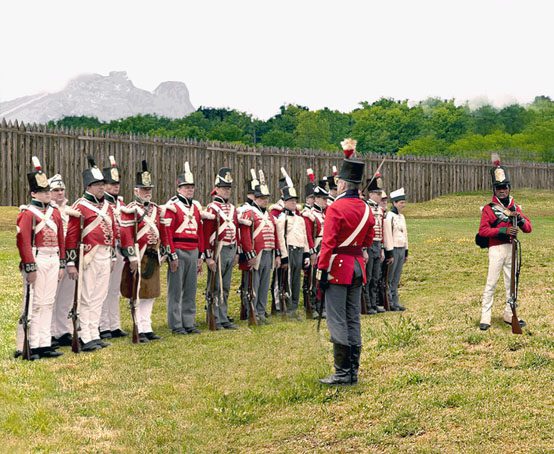
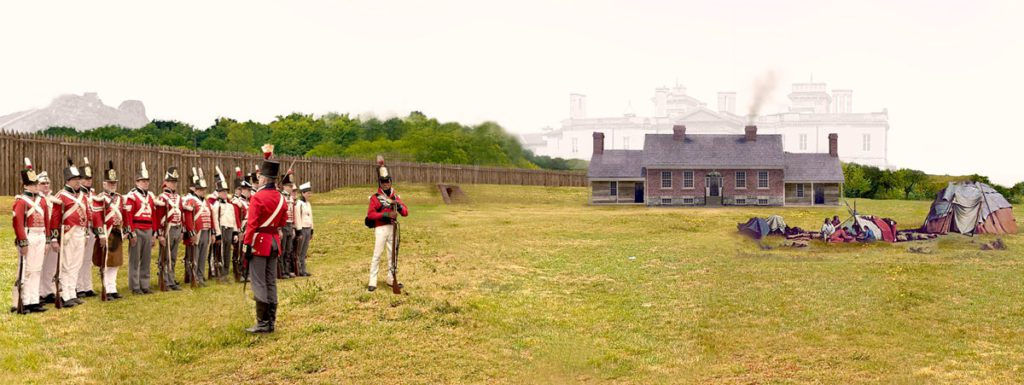
Between 1813 and 1815, Burlington Heights was occupied by British troops, indigenous allies, their wives and families, and refugees displaced by war. The British…
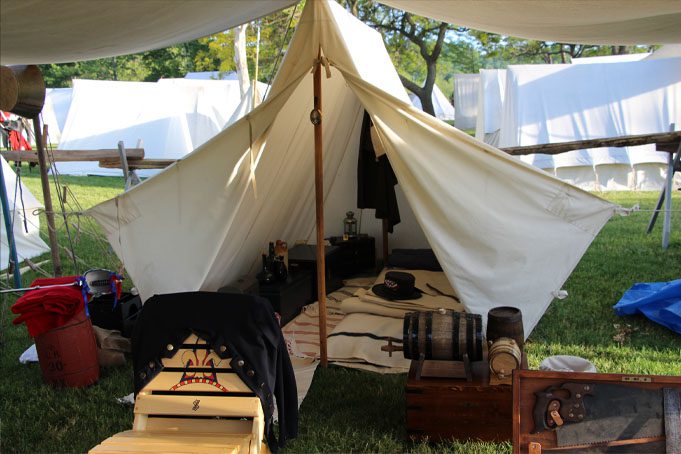
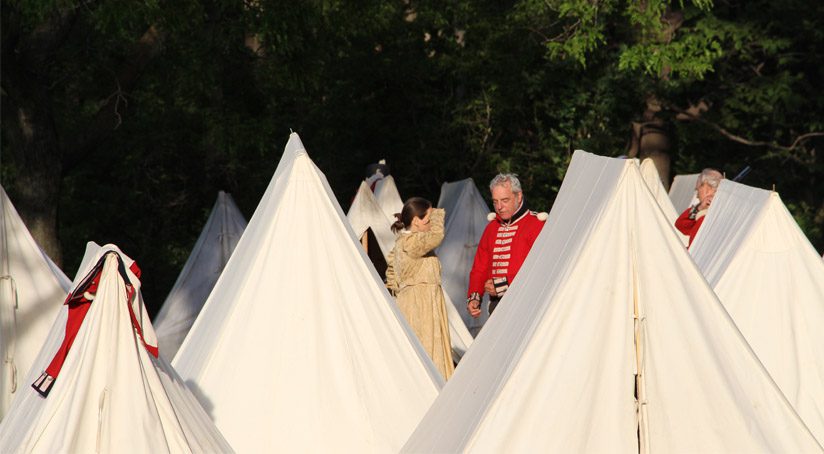
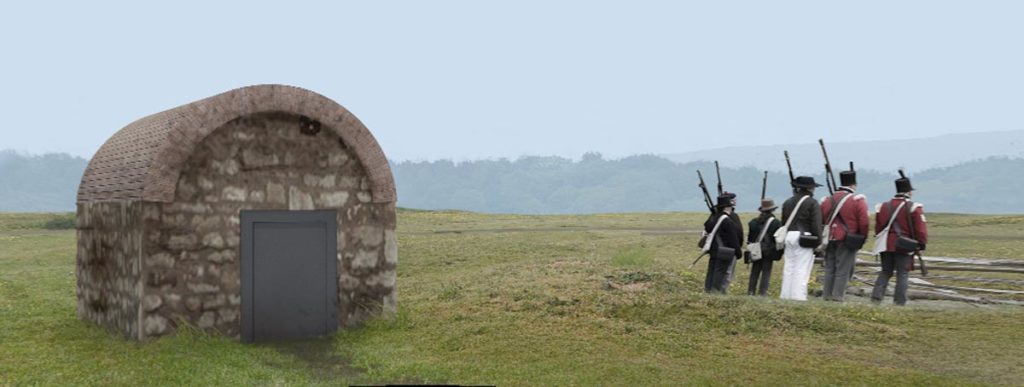
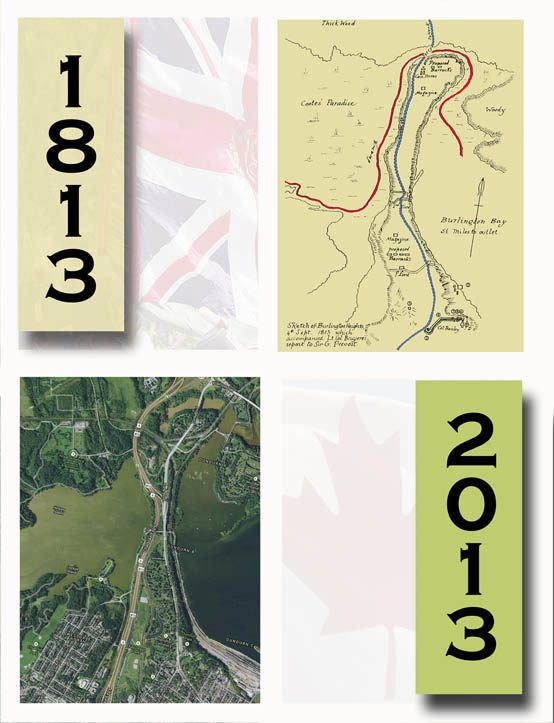
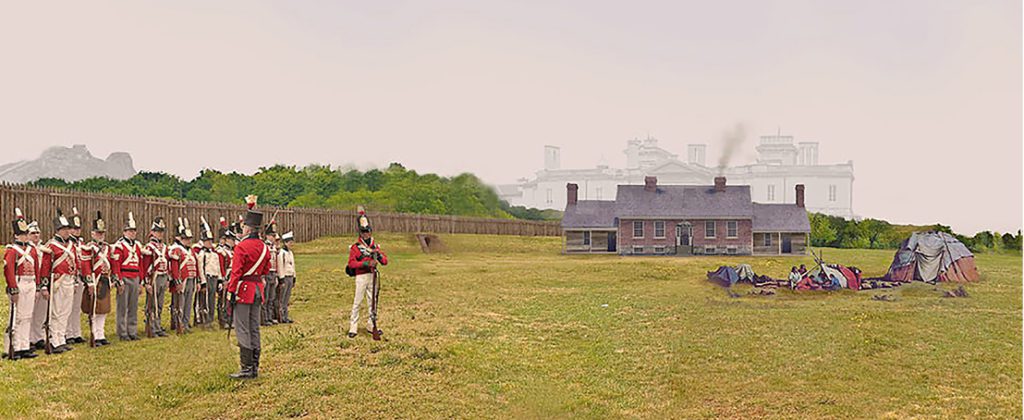
Between 1813 and 1815, Burlington Heights was occupied by British troops, indigenous allies, their wives and families, and refugees displaced by war. The British constructed three lines of earthen defenses as well as gunpowder magazines and barracks. Natural features of the landscape and existing buildings were used as the basis for building the fortifications on Burlington Heights, including the home of early colonist Richard Beasley. Looting and the mistreatment of civilians occurred as a consequence of the occupation and process of fortification. By war’s end the British army and allies were responsible for approximately fifty percent of all damage caused to local properties. Nonetheless, the British were able to successfully carry out raids on Stoney Creek and Fort Niagara from the Heights at the Head of the Lake. And the land continued to serve as an important place of defense, resupply and rest for the army for the duration of the war. (Content courtesy City of Hamilton; Hamilton Military Museum; C. Redford.)
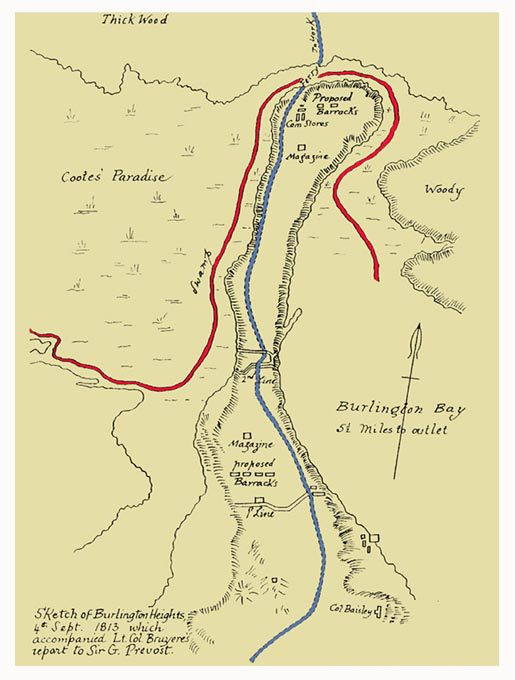
An American force invaded Upper Canada in May, 1813. The force of 3500 took Fort George and marched in pursuit of the British who…
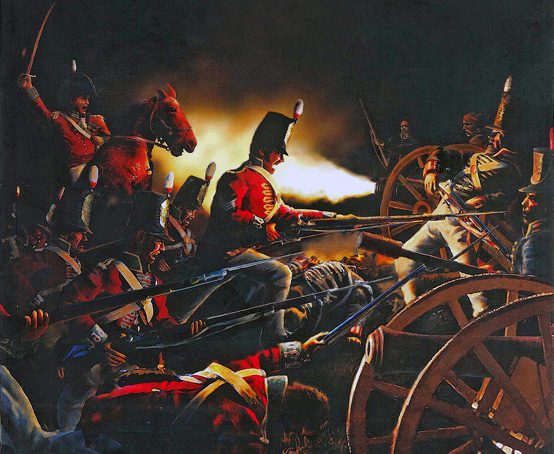
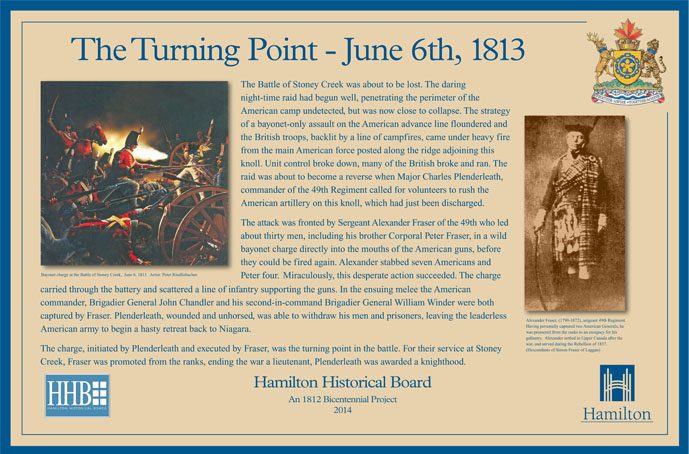
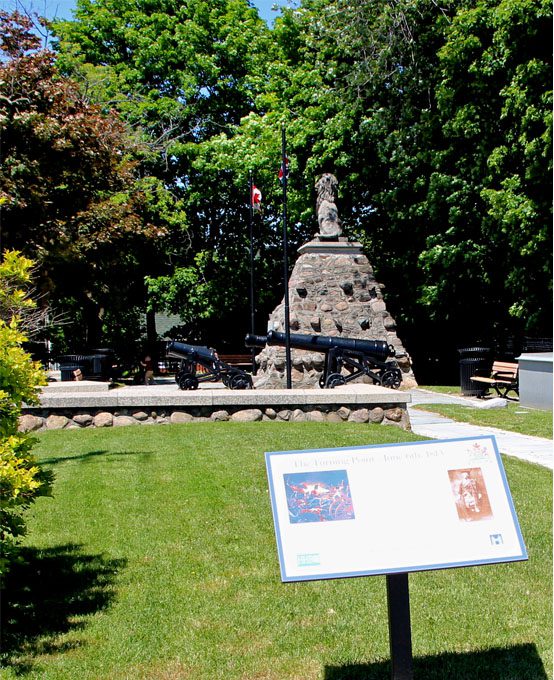
An American force invaded Upper Canada in May, 1813. The force of 3500 took Fort George and marched in pursuit of the British who retreated to Burlington Heights. Fearing an imminent American assault, the decision was taken to mount a night raid by 700 British regulars under Lt.-Col. John Harvey against the Americans encamped by Stoney Creek. The raid penetrated the American camp, but the strategy of a bayonet-only assault on the American line floundered. The British came under heavy fire from the American force. Many of the British broke and ran. Major Charles Plenderleath called for volunteers to rush the American artillery. Sergeant Alexander Fraser led about thirty men, including his brother Corporal Peter Fraser, in a bayonet charge directly into the mouths of the American guns. This desperate action succeeded. The charge scattered a line of infantry supporting the guns. The American commander, Brigadier General John Chandler and his second-in-command Brigadier General William Winder were both captured by Fraser. The leaderless American army began a retreat back to Niagara. The charge was the turning point in the Battle of Stoney Creek. For their service at Stoney Creek, Fraser was promoted from the ranks, and Plenderleath was awarded a knighthood. (Images courtesy Peter Rindlisbacher, Descendants of Simon Fraser of Laggan, C. Redford.)
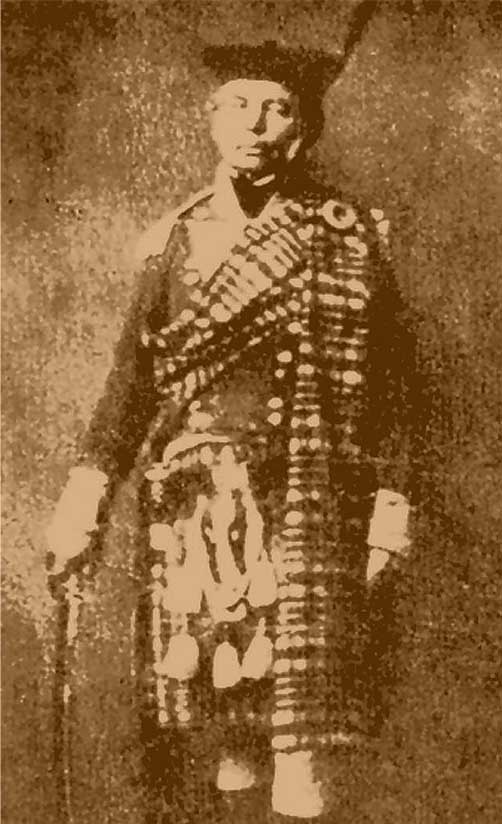
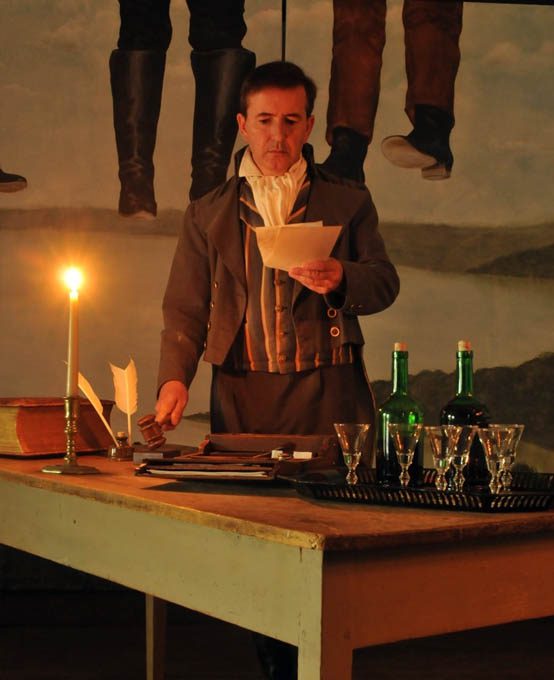
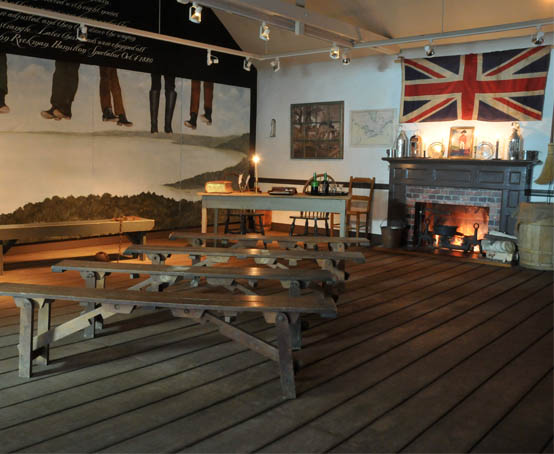
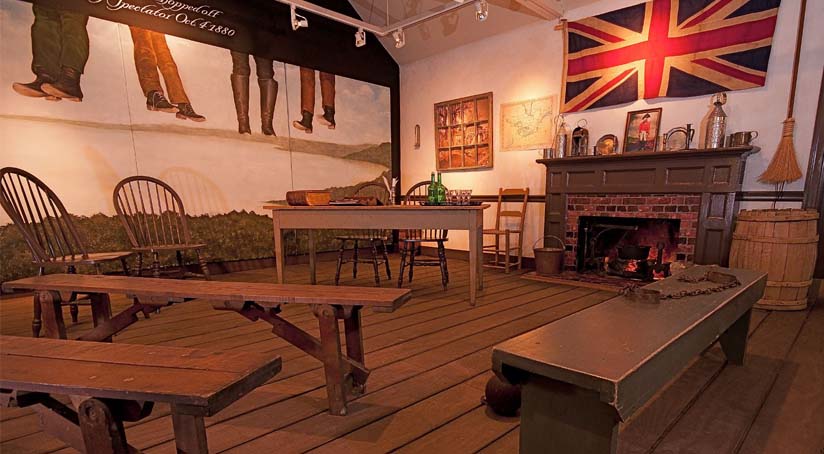
In the spring of 1814, a special court (assize) in Ancaster convicted 15 men of high treason for aiding the invading American forces during…
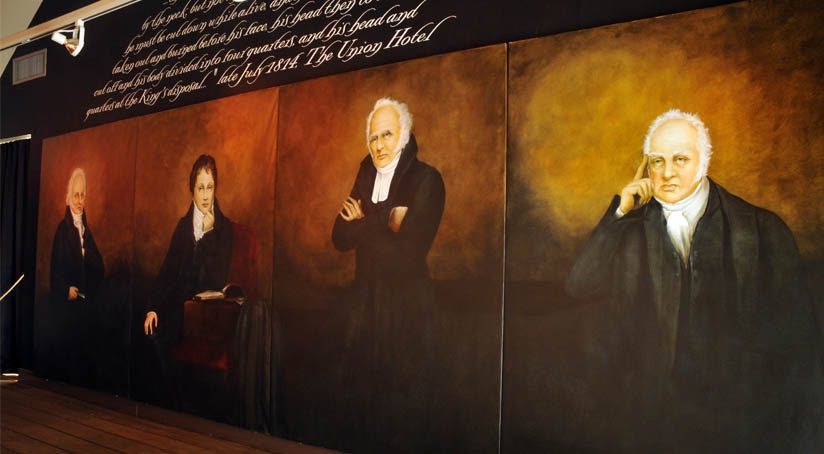
In the spring of 1814, a special court (assize) in Ancaster convicted 15 men of high treason for aiding the invading American forces during the War of 1812. These trials became known as the “Bloody Assize”. Presiding over the trials was Prosecutor and Acting Attorney-General, John Beverley Robinson, Chief Justice Thomas Scott, and Judges William Dummer Powell and William Campbell. In June 1814 the harshest of sentences against these fifteen men was read aloud to a hushed courtroom at the Court of Assize in Ancaster, Upper Canada:
`You are to be drawn on Hurdles to place of execution, hanged by the neck but not until dead, cut down while alive and your entrails taken out and burnt before your faces, your heads cut off, bodies divided into four quarters, heads and quarters to be at the King ‘s disposal.”
Royal Mercy was invoked and the final sentence reduced. On July 20, 1814, eight men were hanged at the British fortifications at Burlington Heights, the future site of Dundurn Castle. The remainder were exiled. (Content curtesy Fieldcote Memorial Park and Museum.)

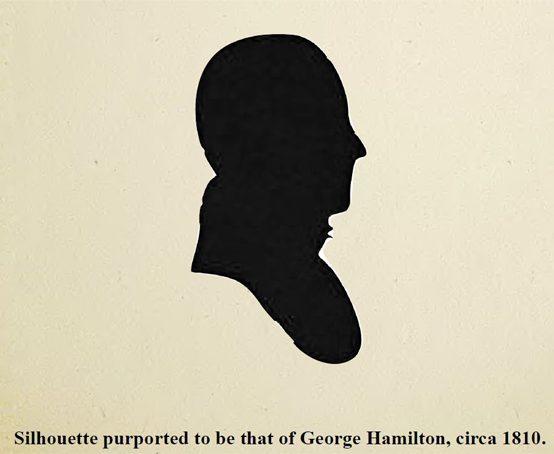
George Hamilton arrived at the Head of the Lake in 1815 after his Niagara home had been destroyed in the War of 1812. Hamilton…
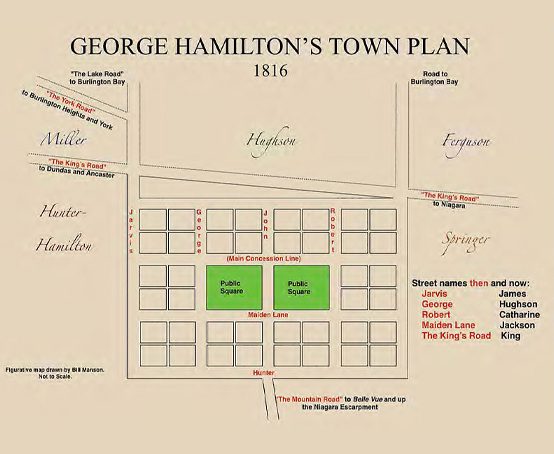
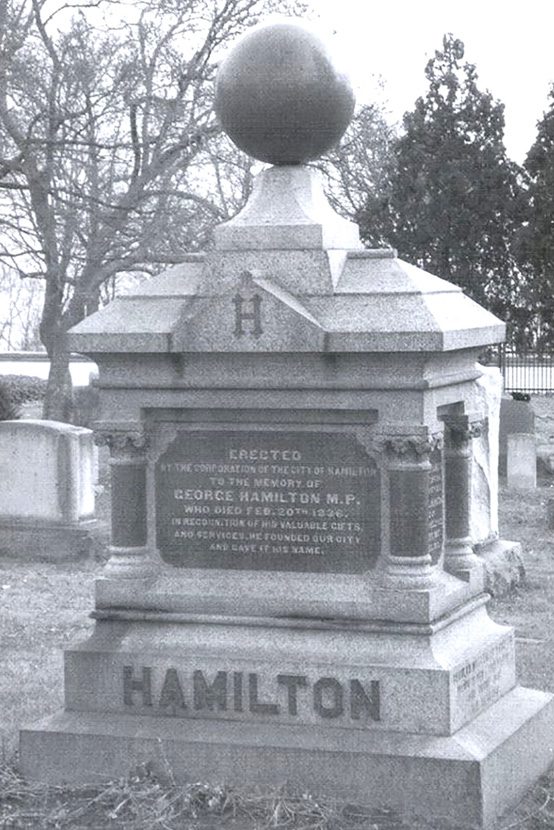
George Hamilton arrived at the Head of the Lake in 1815 after his Niagara home had been destroyed in the War of 1812. Hamilton was aware of the Provincial Assembly’s pre-war plans to create a new District of Gore, and of Nathaniel Hughson and James Durand’s attempts to create an administrative centre for the County of Wentworth. Hamilton purchased 257 acres and the Belle Vue estate from Durand, and with his bride Maria Lavinia and son Robert, moved from Queenston. Hamilton soon reached an agreement with Hughson to resurrect the pre-war plan of creating a new town. The two convinced Durand to lobby the Assembly for the new Wentworth County administrative site to be situated in Barton Township. Durand was successful. Hamilton made an offer that the Assembly could not refuse. He promised to personally finance the development of a town. With Durand’s help, the legislation passed on March 22, 1816, and the administrative centre of Wentworth County was born. It is today the City of Hamilton. (Content courtesy David Ricketts; City of Hamilton; Bill Manson.)
biographi.ca
hamilton.ca
heritagetrust.on.ca
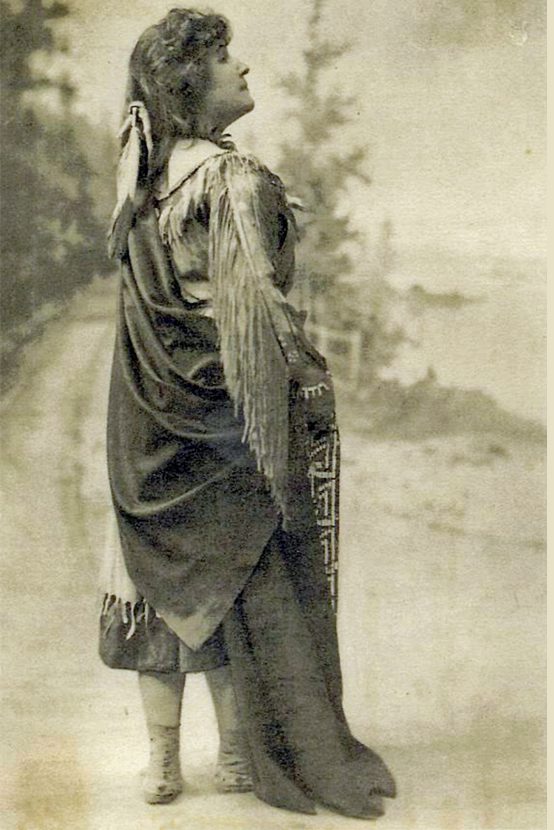
April 27, 1815, indigenous leaders came to Burlington Heights to hear word of the Treaty of Ghent, which ended the War of 1812, .…
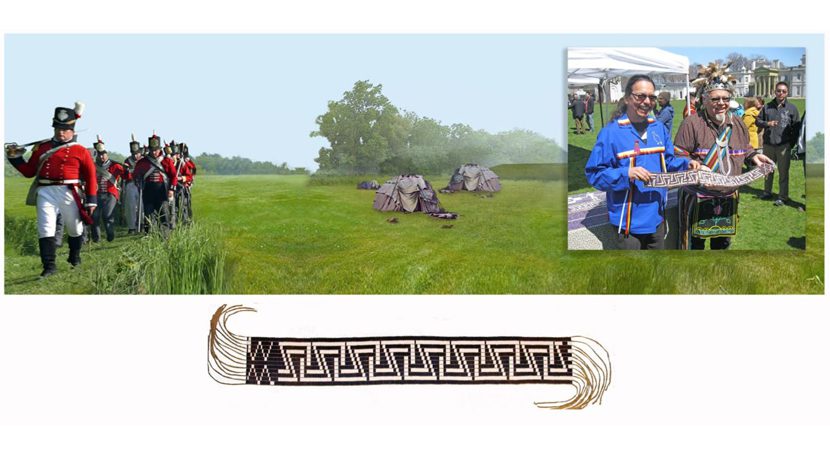
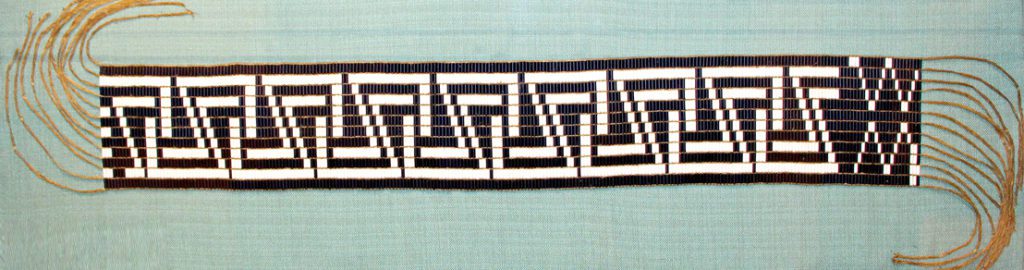
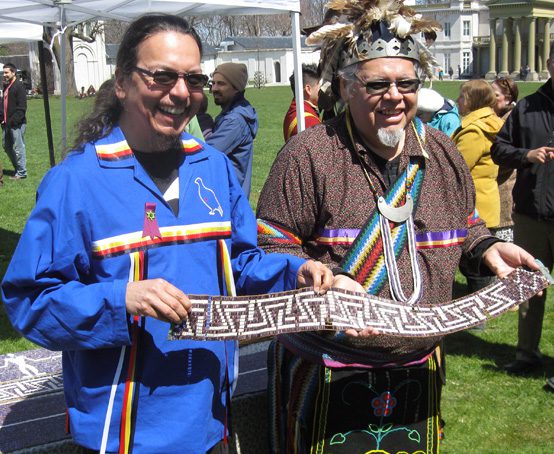
April 27, 1815, indigenous leaders came to Burlington Heights to hear word of the Treaty of Ghent, which ended the War of 1812, . From the transcript of that event, Henry Tekarihó:ken, first among nine Mohawk Chiefs, said to William Claus, Deputy Superintendent of Indian Affairs for Upper Canada: “At the commencement of the war, you told us that you would not consent to a renewal of Peace with the Big Knives [USA] until they would restore the ancient boundary line. Now we have Peace but you have not told us where the line is fixed…. Last fall at your council fire at Dundas you presented to us the King’s good wishes wherein he particularly recommended to his agents the care of the Indians who have suffered in his cause. We hope you will now comply… We request that you will not allow any whites to come among us as we wish to be free and independent…” (Content courtesy City of Hamilton; Chiefswood National Historic Site; Hamilton Military Museum.)
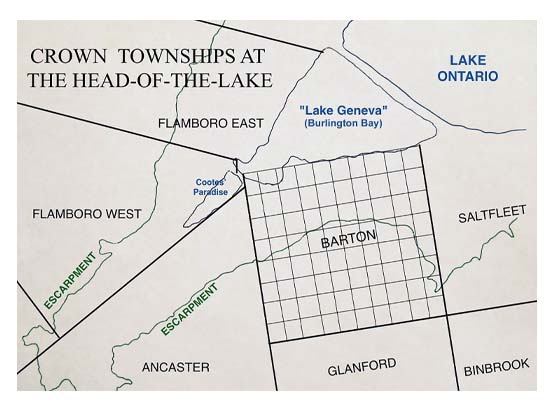
Accurate statistics for the District's population are difficult, and for some years impossible to find. Originally Hamilton's population was recorded with the Township of…
Accurate statistics for the District's population are difficult, and for some years impossible to find. Originally Hamilton's population was recorded with the Township of Barton. This system of combining community and township populations continued for several years. In 1816 the population of Barton Township including Hamilton was 668. The following year, 1817:
Inhabited Houses 130
Number of People 800
Churches or Places of Worship 1
Medical Practitioners 0
Schools 5
Stores 5
Taverns 4
Grist Mills 1
Saw Mills 4
(Content courtesy Bill Manson.)
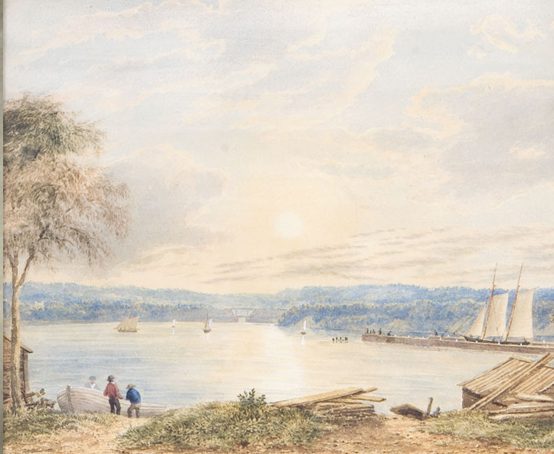
Before 1826, ships with goods for Hamilton, Dundas, and Ancaster had to unload cargo onto the lakeside of the Burlington Bay beach strip. Goods…
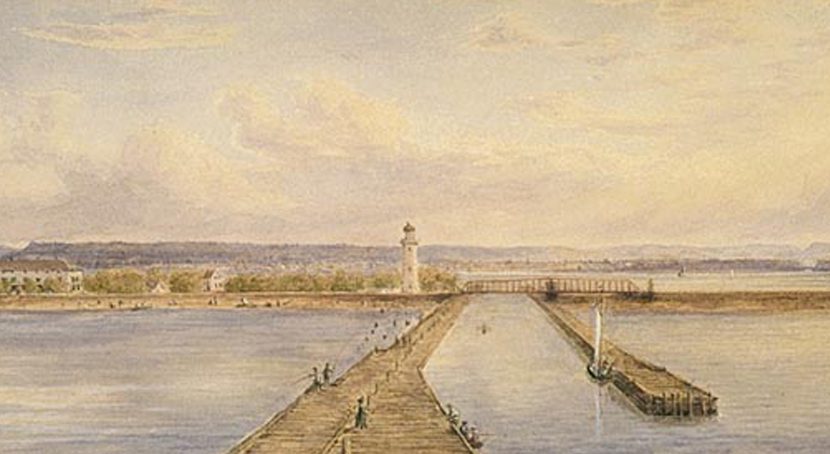
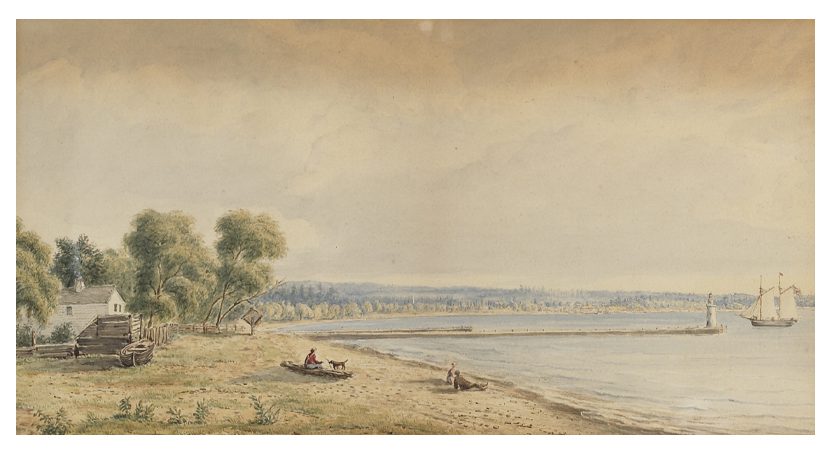
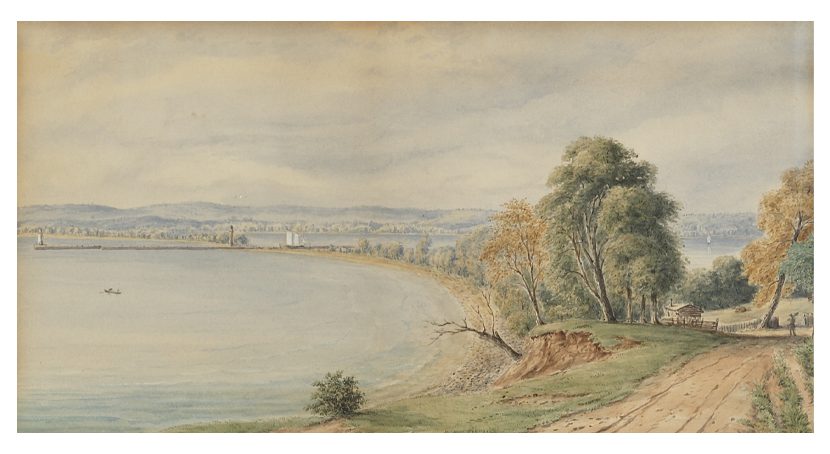
Before 1826, ships with goods for Hamilton, Dundas, and Ancaster had to unload cargo onto the lakeside of the Burlington Bay beach strip. Goods were portaged across the beach and reloaded onto smaller vessels on the bayside. The portage across the sandbar was called "Carrying Place". The smaller boats transported cargoes to "The Lake Road" (James Street N) where they were put on carts for transport to town. A slow, labour-intensive process. Construction of a canal through the sandbar began in 1823 and was completed in 1826. With the opening of the canal, wharfs and warehouses sprang up around the foot of The Lake Road, and Port Hamilton was born, today’s `North End’ neighbourhood. (Content courtesy City of Hamilton; Hamilton Museum of Steam and Technology.)
hamilton.ca
kids.kiddle.co
en.wikipedia.org
Enerals Griffin was an African-American, likely born enslaved in Virginia, who crossed into Canada with his wife Priscilla ca. 1830. The Griffins were refugees…
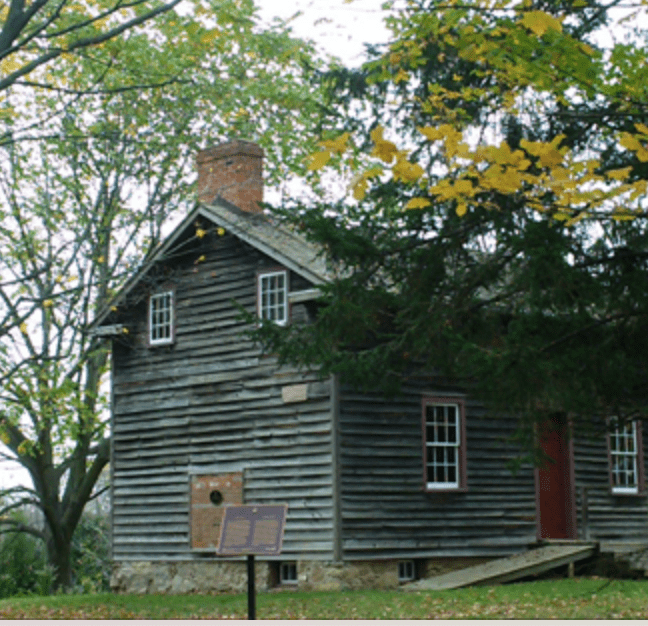
Enerals Griffin was an African-American, likely born enslaved in Virginia, who crossed into Canada with his wife Priscilla ca. 1830. The Griffins were refugees from Cincinnati in the `Free’ State of Ohio, where he had been ‘in the service of General Findlay’ (likely Cincinnati Mayor James Findlay). But by 1829, poor Ohio whites were furious at free Blacks willing (forced) to work for lower wages. `Black Laws’ which required free Blacks in Ohio to post bonds of $500 and prove they were free persons were not enforced until this white fury of 1829. Black people were told to post the money or leave the state. The Black community asked for a delay and sent a delegation to Canada to assess emigration. But the mob would give no time, and proceeded to riot, burn, loot and assault Black people. Half of Cincinnati’s Black population left. Enerals and Priscilla crossed at Niagara and settled in Ancaster. (Content courtesy Griffin House National Historic Site; C. Redford.)
Location: 733 Mineral Springs Rd, Dundas, ON L9H 5E3
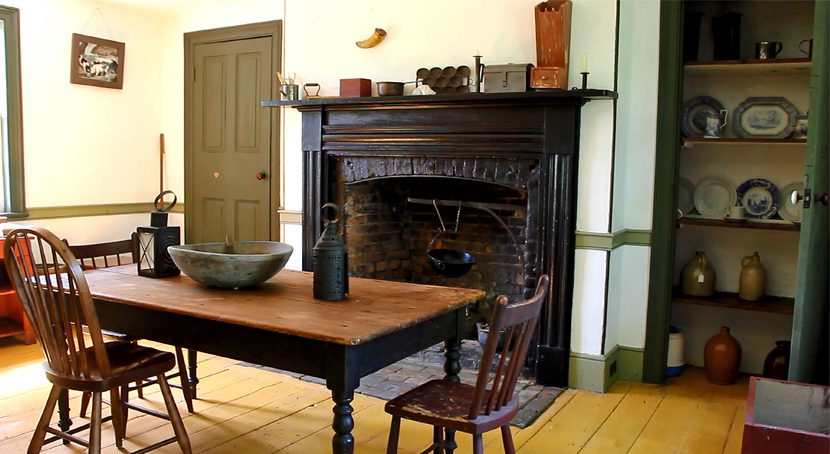
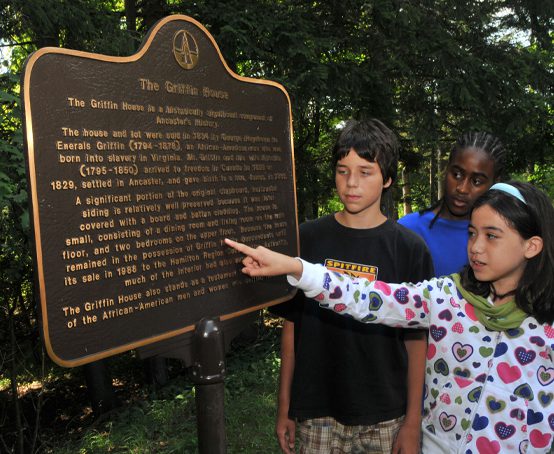
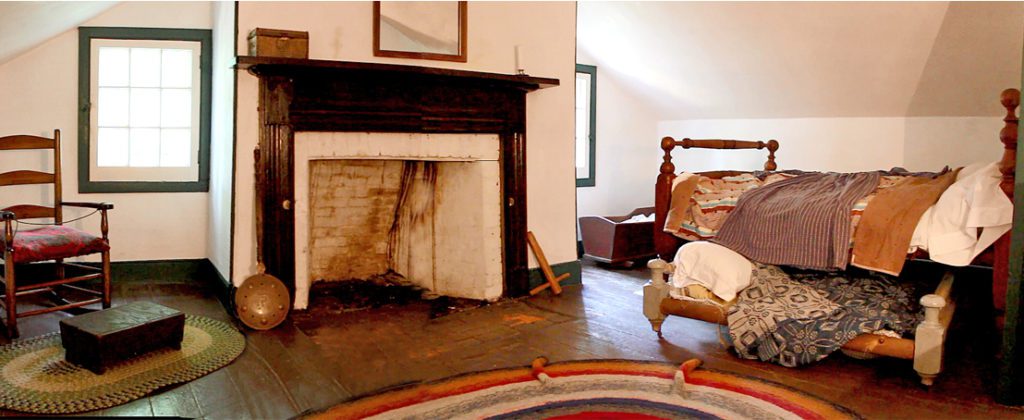
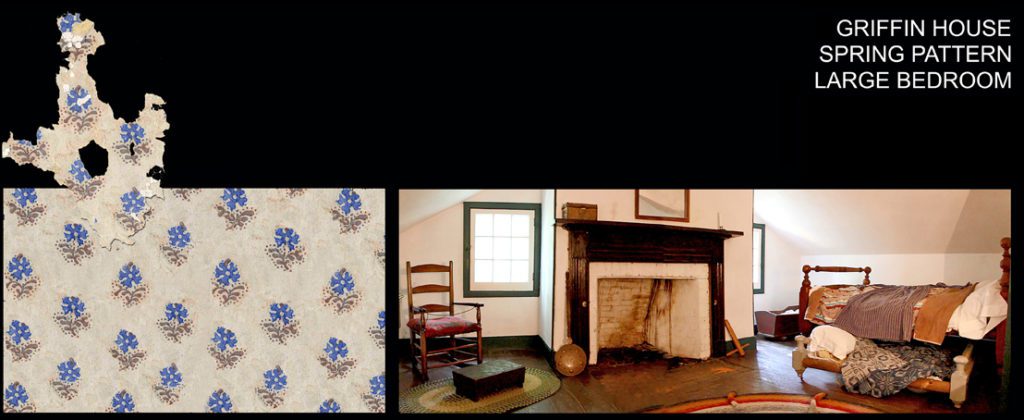
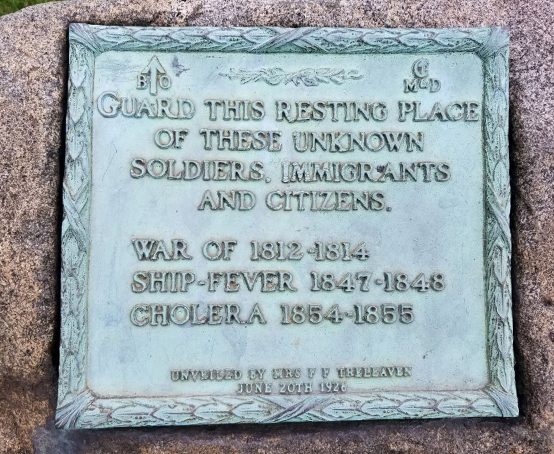
Immigration in Upper Canada from the British Isles increased dramatically in the 1820s and 1830s. The ships bringing immigrants were crowded and unsanitary, providing…
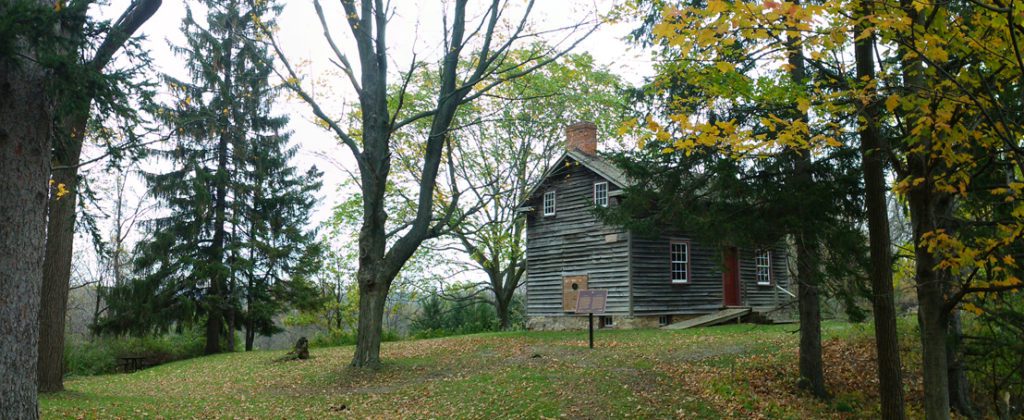
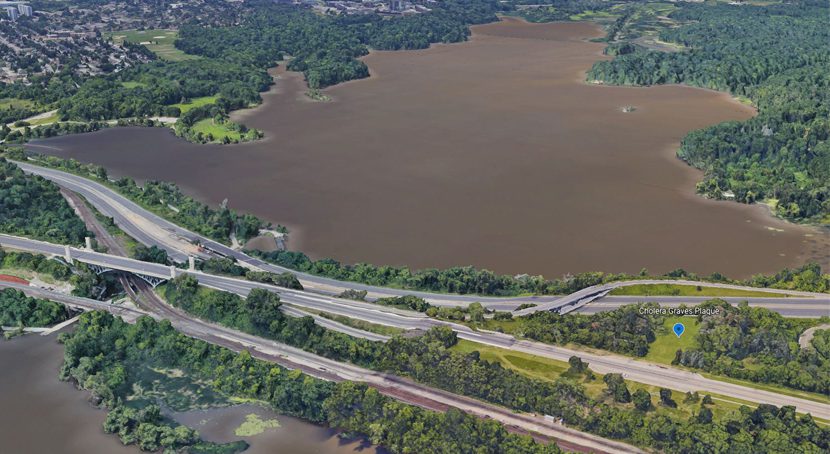
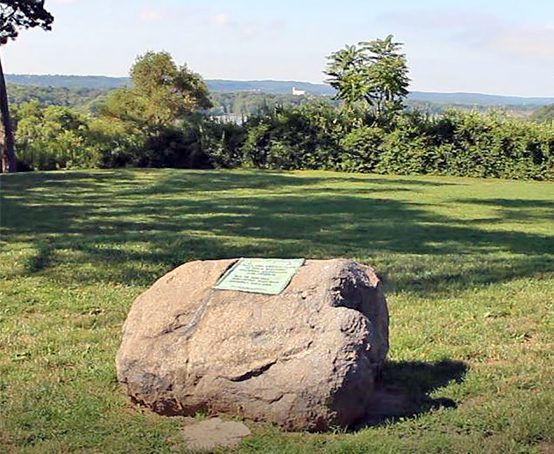
Immigration in Upper Canada from the British Isles increased dramatically in the 1820s and 1830s. The ships bringing immigrants were crowded and unsanitary, providing a perfect environment for the spread of cholera among the passengers. Cholera then travelled with new arrivals, spreading to the populations of their new destinations. Hamilton was at that time both a destination and a port of transit to other parts of Upper Canada and the United States. In the summer of 1832 cholera arrived in Hamilton, and took with it as many as 142 individuals, out of a population of approximately 800 inhabitants. Another wave of cholera would plague the city in 1854, providing impetus for the construction of a new municipal waterworks in 1859 to ensure a safe supply of drinking water. (Content courtesy City of Hamilton; Hamilton Museum of Steam and Technology.)
macsphere.mcmaster.ca
thespec.com
en.wikipedia.org
Lawyer, soldier, business person Allan Napier MacNab retained architect Robert Charles Wetherell to construct for him a grand country home on Burlington Heights, which…
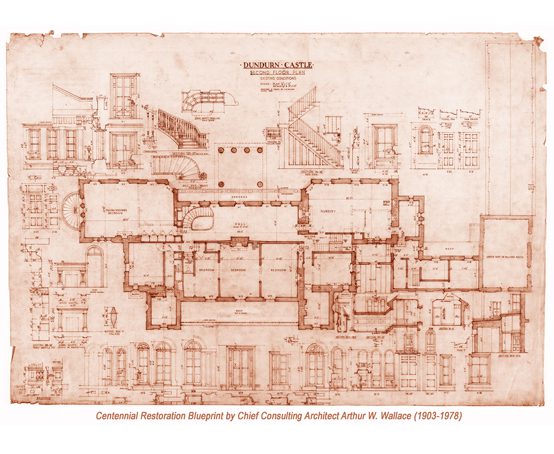
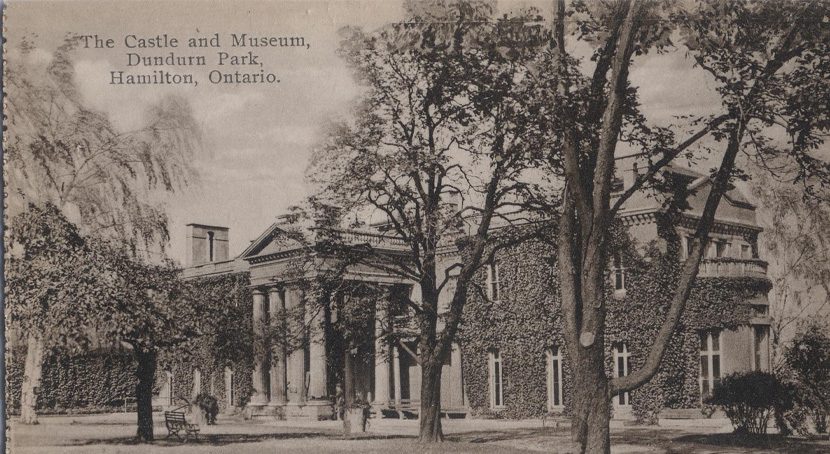
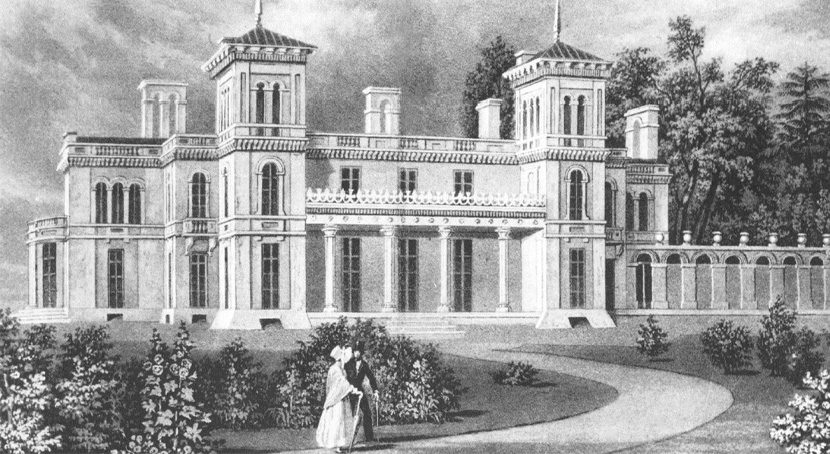
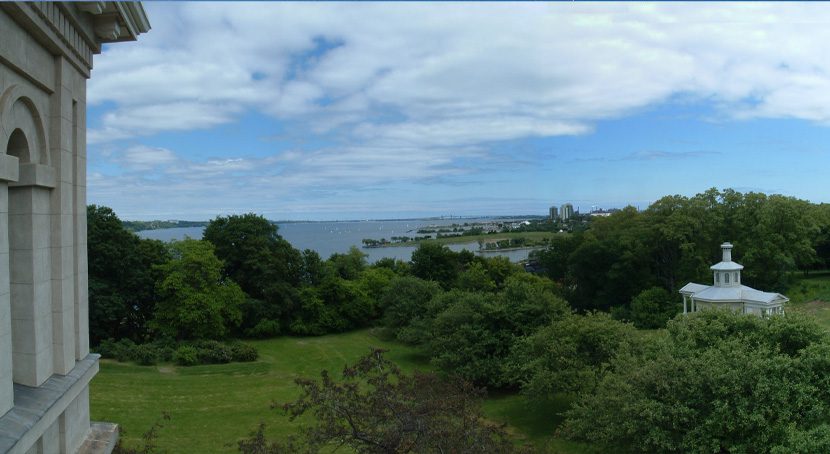
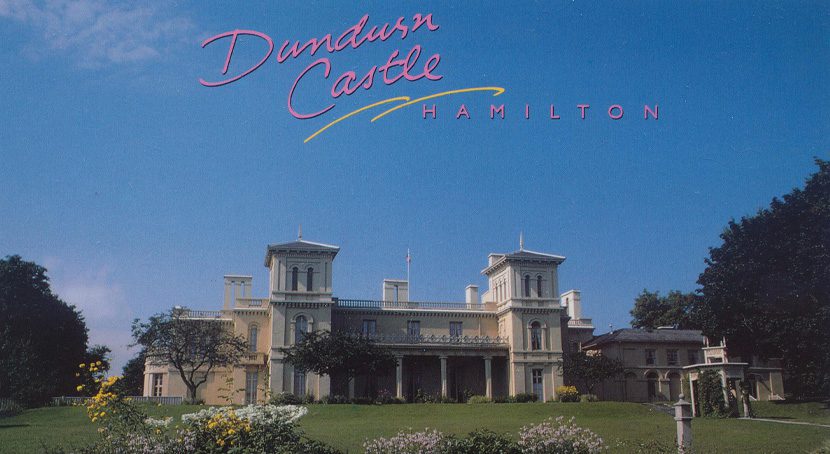
Lawyer, soldier, business person Allan Napier MacNab retained architect Robert Charles Wetherell to construct for him a grand country home on Burlington Heights, which he called Dundurn. MacNab had purchased the property from early colonist Richard Beasley, and walls of Beasley’s farmhouse were incorporated within Dundurn. Remnants of the War of 1812 fortifications were incorporated into the landscape, and a gunpowder magazine and `sallyport’ (tunnel for moving ordinance) from that war were integrated into the new basement. The Italianate Villa is constructed of brick covered in stucco and sports French windows, verandas, two towers, slate roofs and a pillared portico. The grounds and outbuildings include a dovecote, coach house, stables, cockpit and gardener's cottage. Dundurn was completed in 1835. (Content courtesy Dundurn National Historic Site; hamiltonpostcards.com.)
museumshamilton.com
craigsims.ca
heritagetrust.on.ca
biographi.ca
npg.org.uk
The conviction report for the Police Village of Hamilton in the year 1835-36 provides a window on public behaviour in Upper Canada at the…
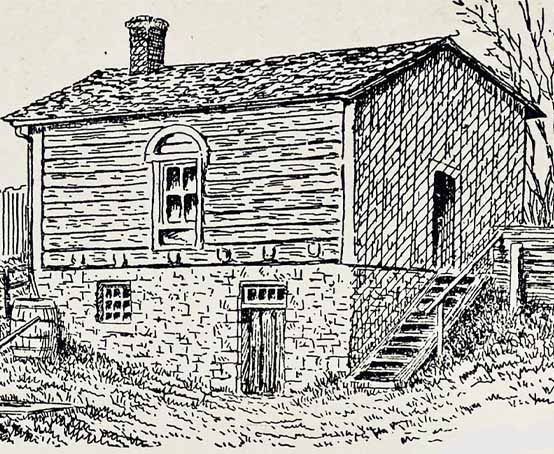
The conviction report for the Police Village of Hamilton in the year 1835-36 provides a window on public behaviour in Upper Canada at the time. Susanna Moodie would shortly describe the province as a paradise for drunkenness, and this is reflected in the Hamilton convictions. Indecent, unruly and riotous conduct, drunkenness, and gambling account for almost 40% of convictions.
1. Indecent, unruly, and riotous conduct 14
2. Breaking various by-laws (chimneys, licences) 9
3. Assault 9
4. Furious and improper driving 8
5. Drunkenness 7
6. Keeping a disorderly house 5
7. Fighting 5
8. Obstructing the police 2
9. Keeping a gambling house 1
10. Giving prisoners whiskey in the gaol contrary to gaol regulations
(Content courtesy HPL Local History and Archives.)
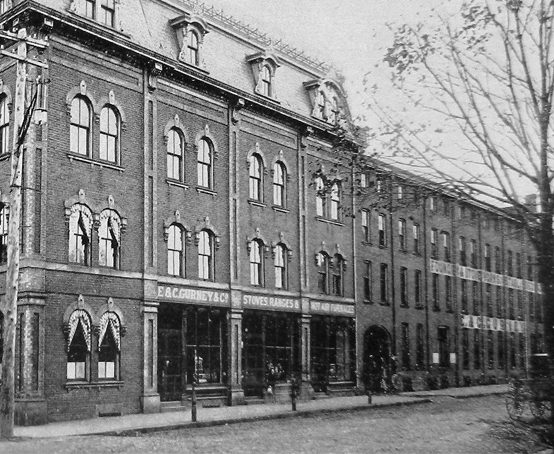
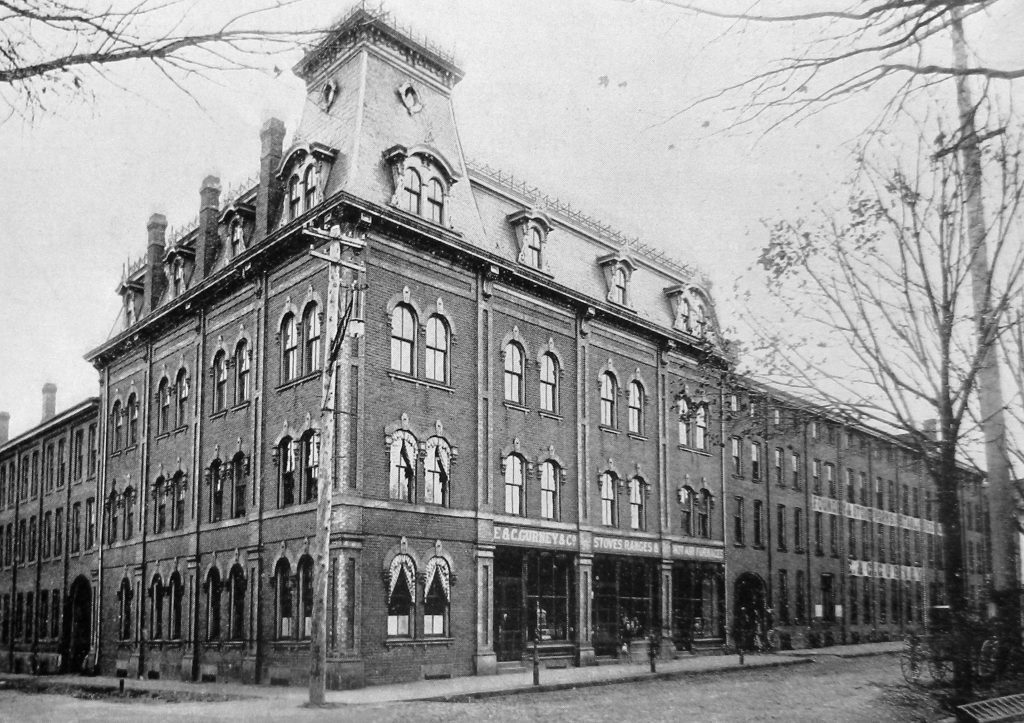
As the first major metal producer in Hamilton, the Gurney Brothers’ shop produced a wide variety of iron products. The establishment of the Gurney…
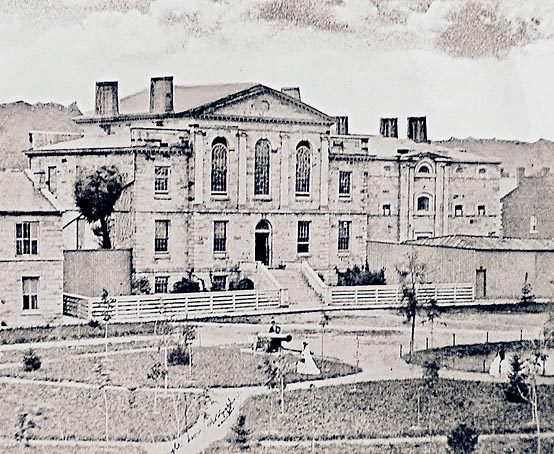
As the first major metal producer in Hamilton, the Gurney Brothers’ shop produced a wide variety of iron products. The establishment of the Gurney Foundry was followed in rapid succession by other similar small, emerging metal producers, which grew quickly to establish Hamilton as a centre of industry. These small businesses often began as artisan shops, with work being done by hand by the owners themselves and only a few employees. Growing markets led these operations to expand over the next couple of decades and many of these larger plants adopted steam power. However, their expanded workforces were still largely made up of highly skilled craftsworkers. (Content courtesy of Workers' City.)
workerscity.ca

Milestone
Hamilton’s population tripled during the 1840's (from ~3300 to ~10,200). Irish, Scots and free slave populations grew in Upper Canada. Some found employment and…
Hamilton’s population tripled during the 1840's (from ~3300 to ~10,200). Irish, Scots and free slave populations grew in Upper Canada. Some found employment and made the Head of the Lake community their home, but others used Hamilton as a temporary stop on the way to other areas of what is now southwestern Ontario. The growth required a change in governance, and in 1846 Hamilton made application for city status, becoming Upper Canada’s second city. Colin Ferrie was elected the first mayor, who set about promoting both the economic and social growth required to meet the needs of the growing town. (Content courtesy of City of Hamilton; Hamilton Museum of Steam and Technology.)
By 1846 Hamilton boasted a wide range of services.
Hamilton, 1846 - Professions and Trades
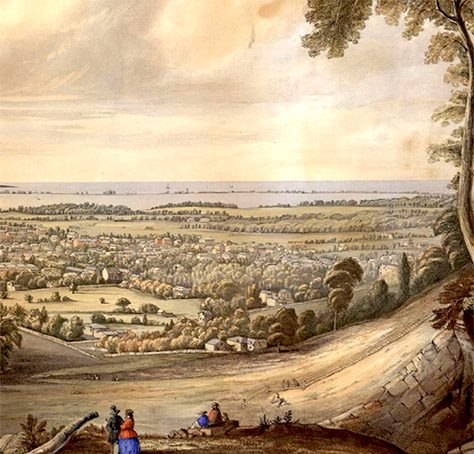
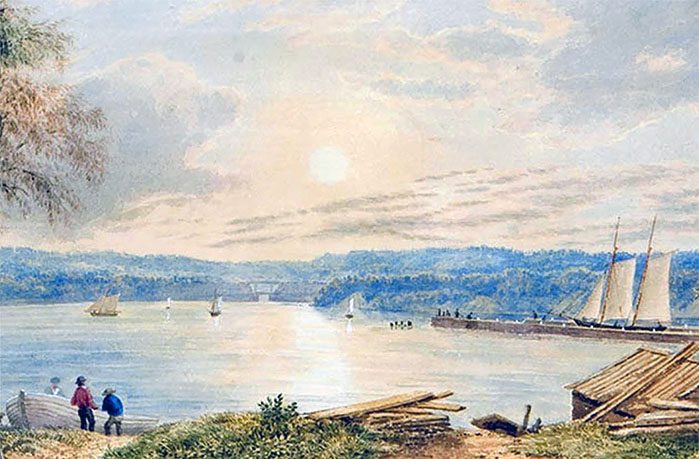
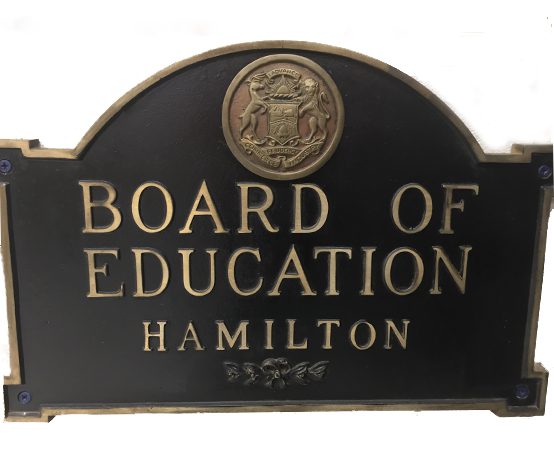
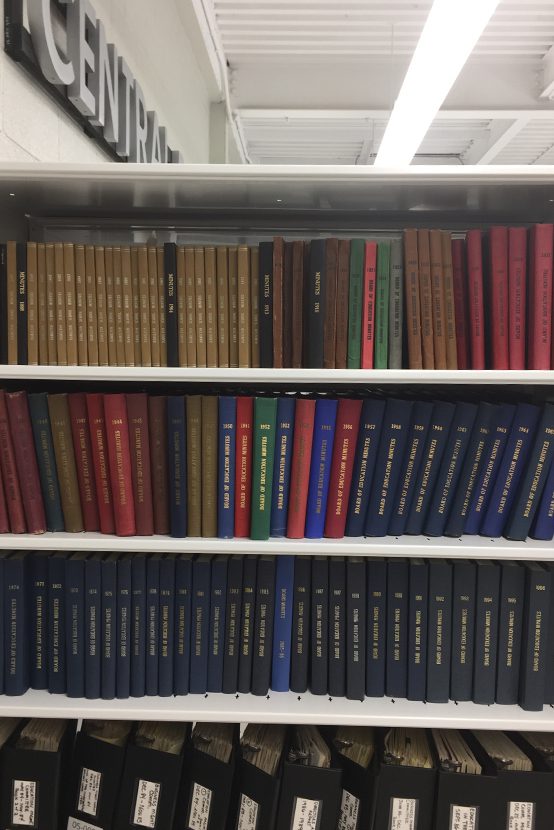
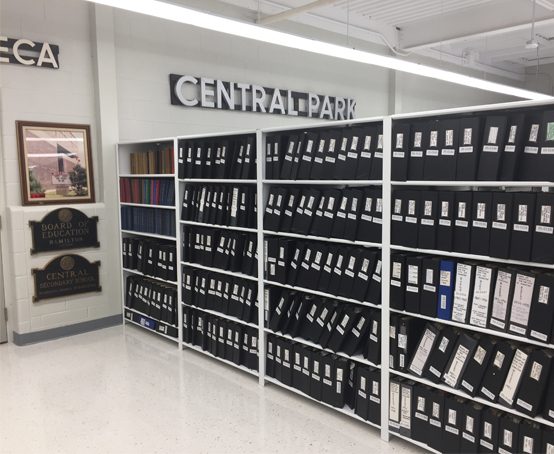
On November 25, 1847, the Hamilton Board of Education formally came into being with the organization of a first group of Trustees. Mayor Colin…
On November 25, 1847, the Hamilton Board of Education formally came into being with the organization of a first group of Trustees. Mayor Colin Campbell Ferrie was the first chairman. The formation came about as a result of the Common School Act 1846, which was the first major education law passed in Upper Canada. At the time, Hamilton had six schools with a total accommodation of 360 students, but none of the properties were owned by the Board and were described in later years by staff as being "mere educational shacks," lacking proper ventilation or playground areas. (Content courtesy of the Hamilton-Wentworth District School Board.)
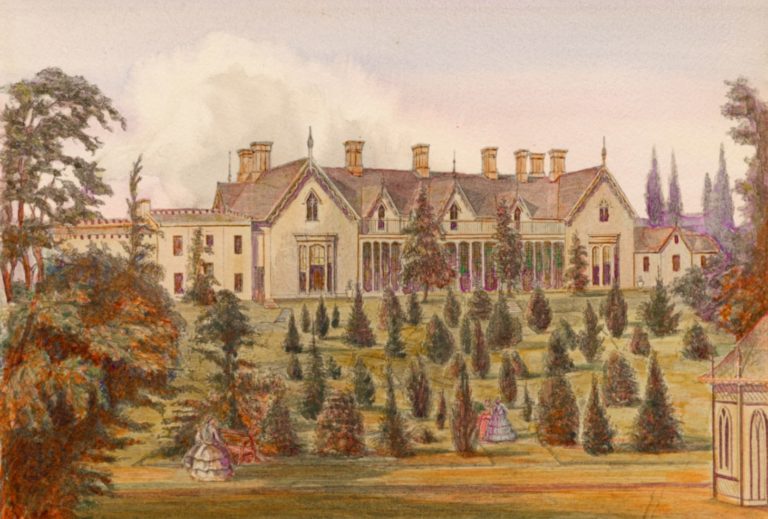
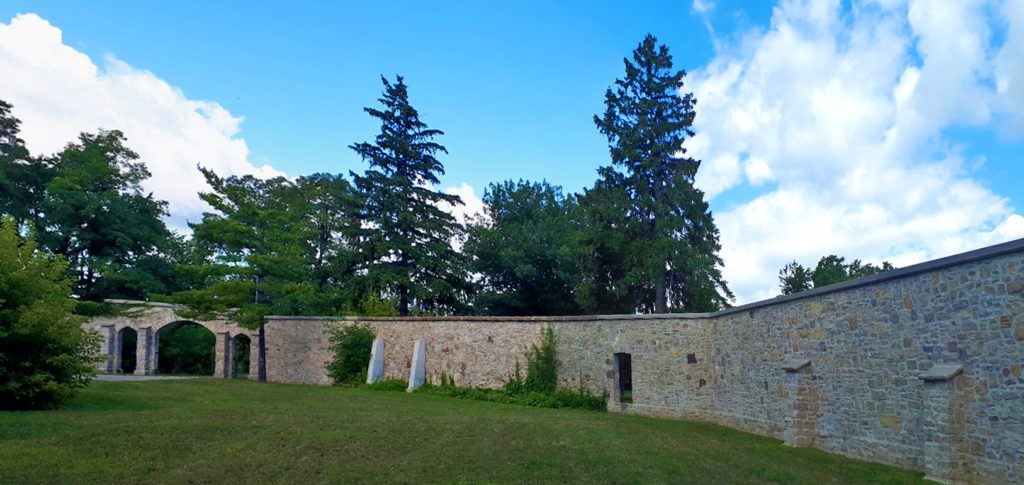
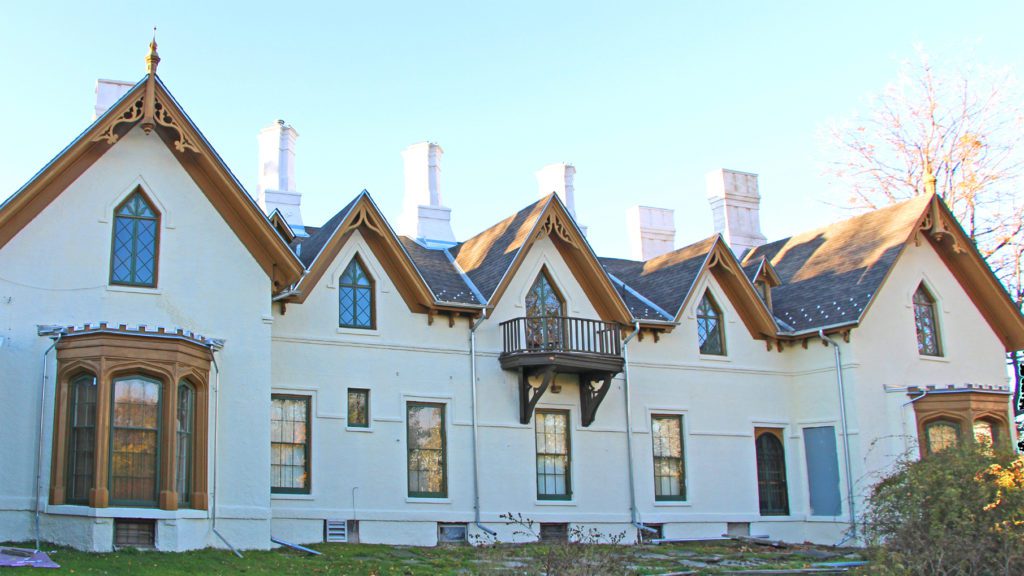
From 1852-1855 Isaac Buchanan built an estate on Hamilton Mountain named Clairmont Park. His house came to be known as Auchmar. With arched windows,…
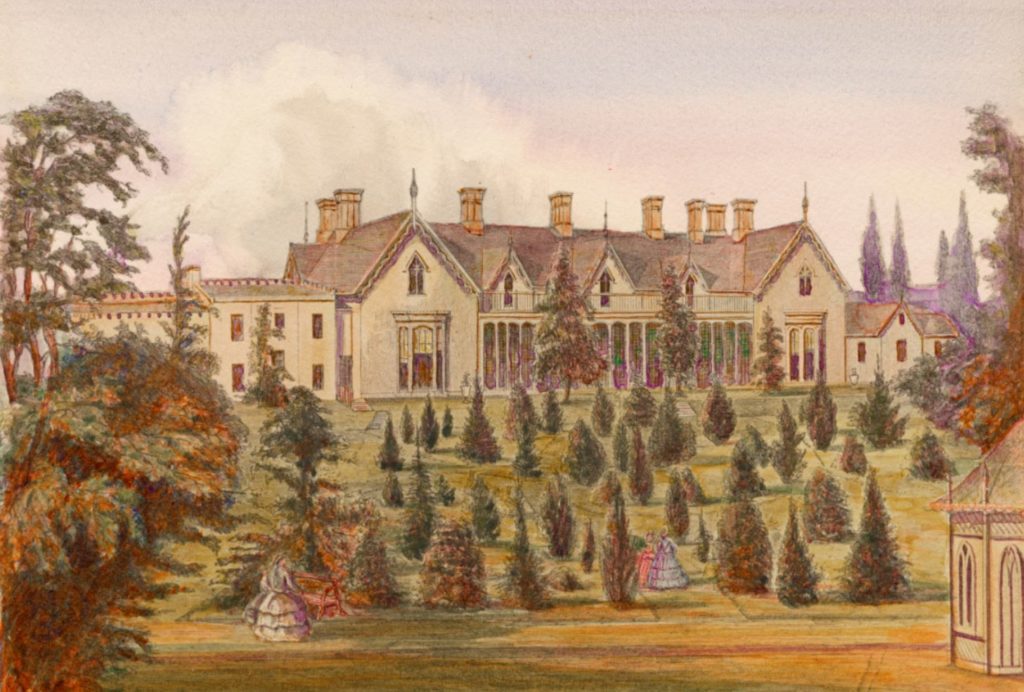
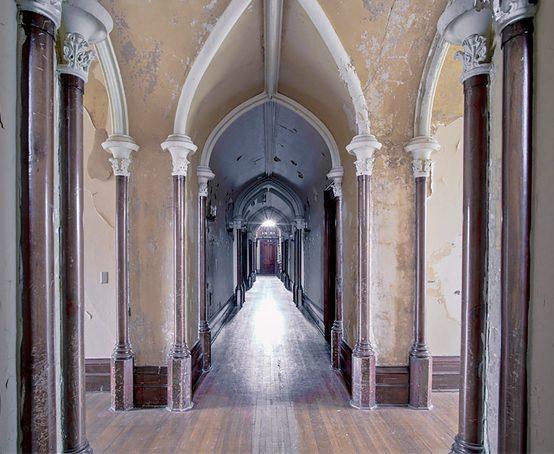
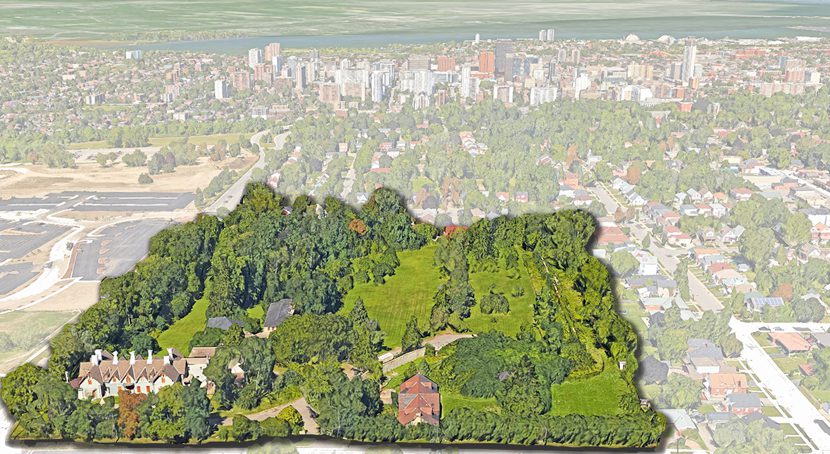
From 1852-1855 Isaac Buchanan built an estate on Hamilton Mountain named Clairmont Park. His house came to be known as Auchmar. With arched windows, 11 chimneys, gables, and French doors, it is a remarkably intact example of vernacular Gothic Revival architecture. The house, outbuildings, architectural follies, and park setting form the last, pretty much intact example of Hamilton’s great mountain brow estates. Guests would have approached in carriages, travelling a treed lane, passing fields, orchards and the imposing enclosure wall, catching glimpses of the house. The wall still runs more than 400 metres today. You can visit and catch your own fleeting glimpses of the house, archway, coach house and dovecote. Auchmar is a Hamilton original. An integral landscape. (Content courtesy City of Hamilton; Toronto Public Library; C. Redford.)
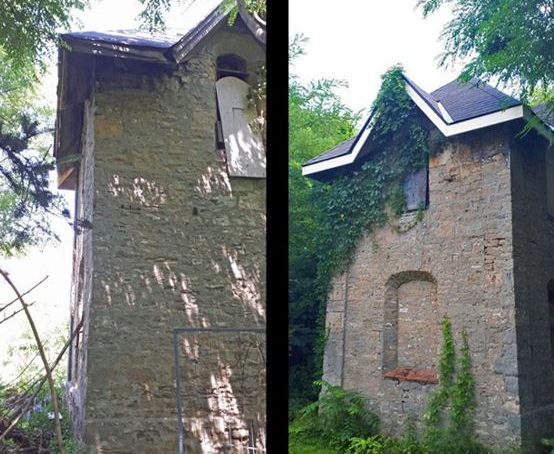
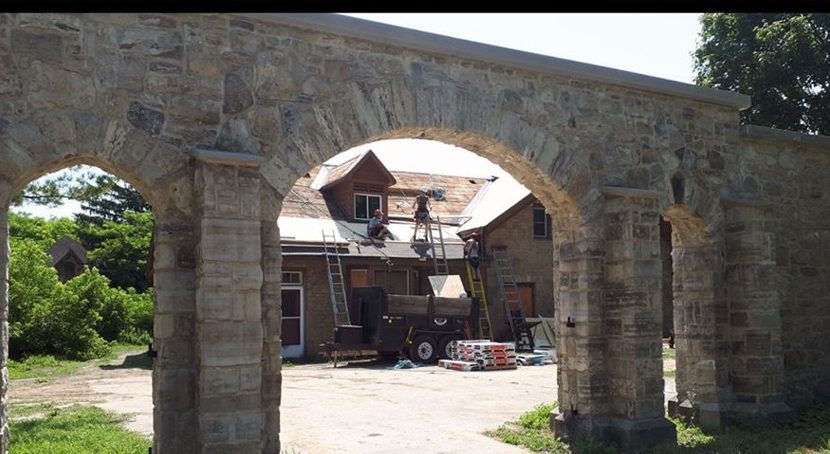
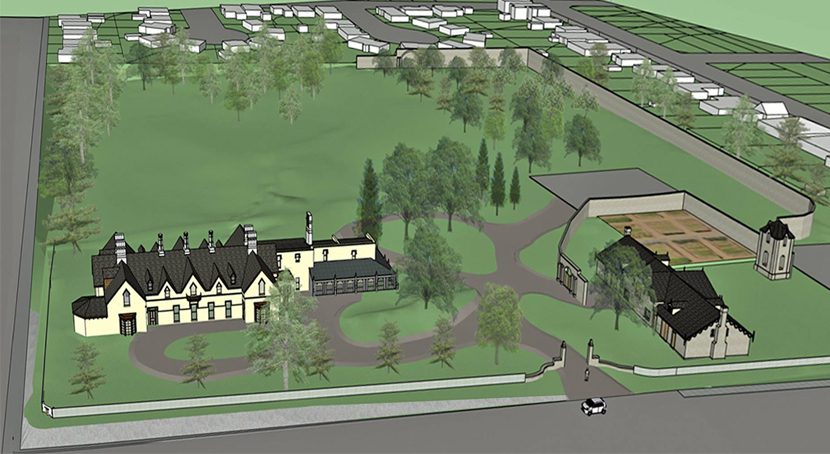
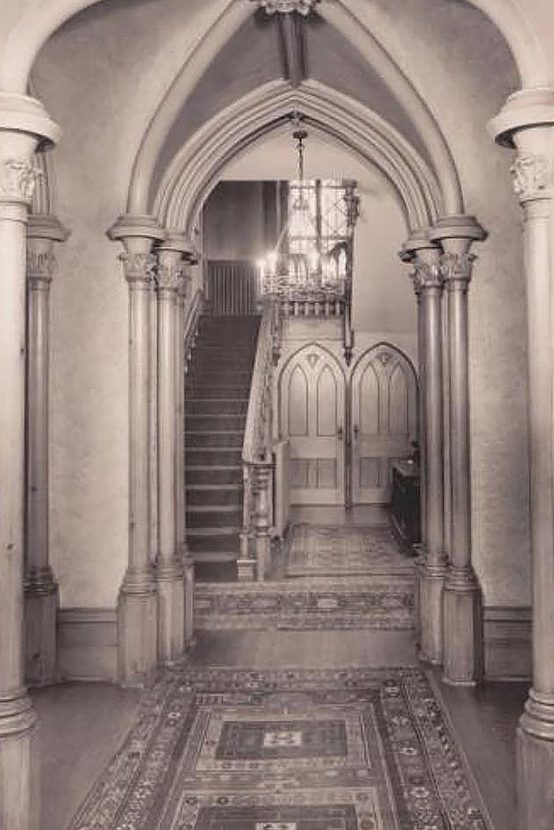
The by-law document stating this.
spatialsolutions.hamilton.ca
A merchant, politician, and pamphleteer
biographi.ca
friendsofauchmar.ca
youtube.com
Ancaster was established as a Police Village in 1852. A Police Village is a now-defunct form of municipal government where a crossroads or hamlet…
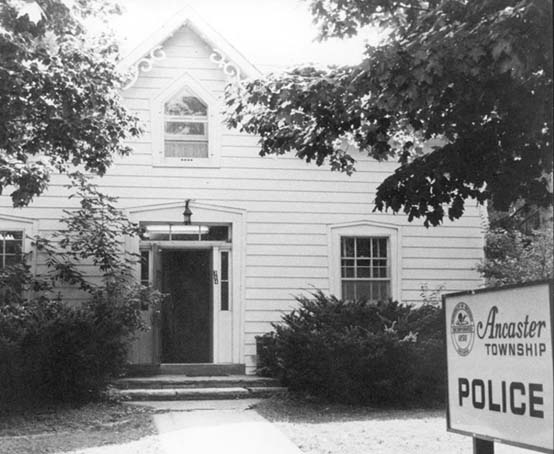
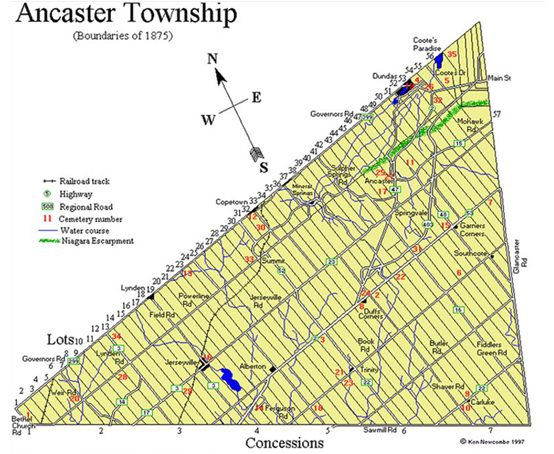
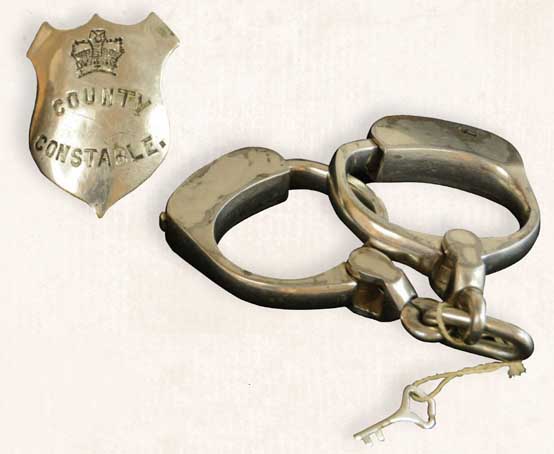
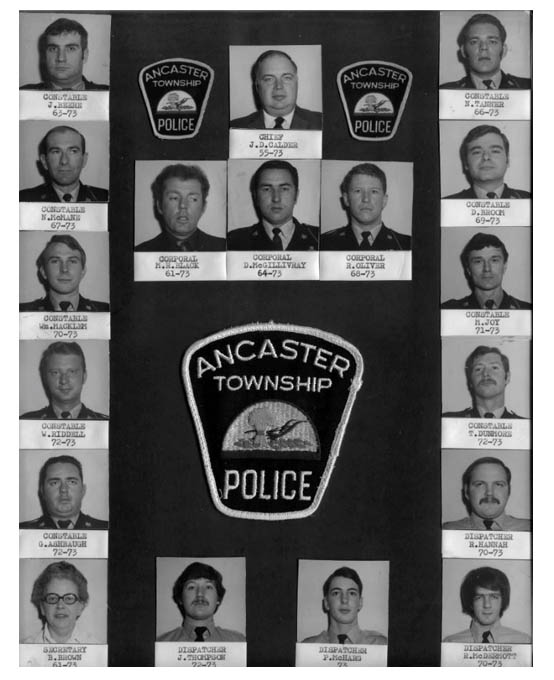
Ancaster was established as a Police Village in 1852. A Police Village is a now-defunct form of municipal government where a crossroads or hamlet was large enough to require service but where the population or finances did not permit the creation of a municipal council. Residents elected three trustees to oversee fire protection, garbage collection, sidewalks, streetlights, road repairs and grass cutting. John Heslop (Reeve), Moses Howell (Deputy) and George Rousseau were elected. A police constable kept the peace. A street sign on Mohawk Road designated Ancaster as a Police Village. It informed travellers and neighbouring communities without police, that Ancaster had a constable if required. Ancaster was a Police Village from 1851 through 1973, when the regional police force took over. (Content courtesy Fieldcote Memorial Park and Museum; Hamilton Police Service)
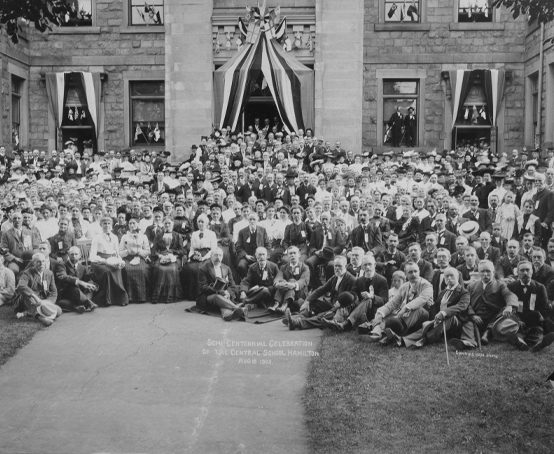
On this date, the first centralized school was opened by the Hamilton Board of Education. Named Central Public School and located at 75 Hunter…
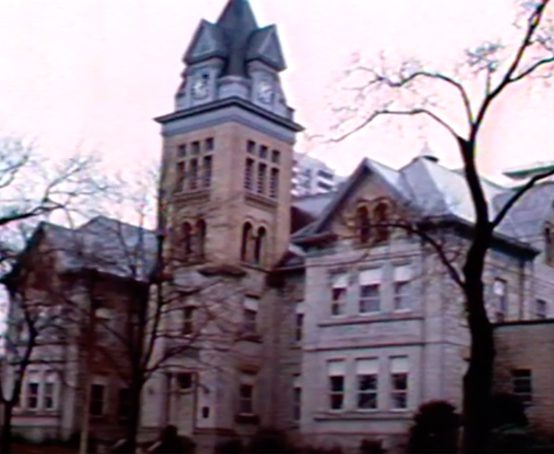
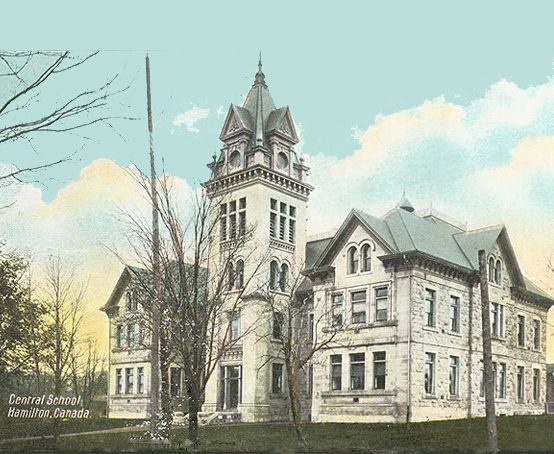
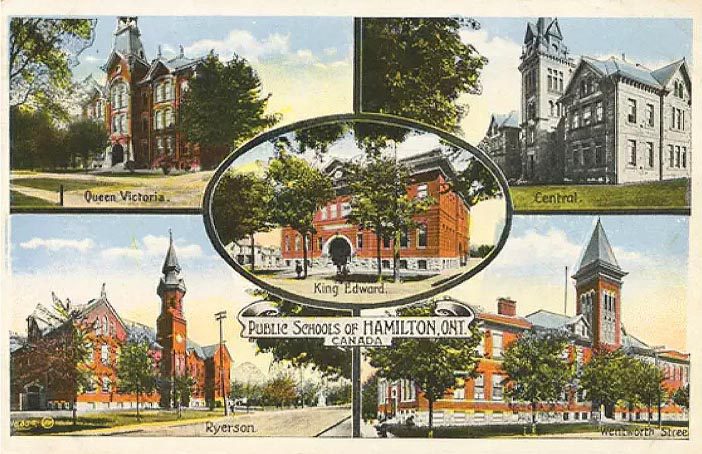
On this date, the first centralized school was opened by the Hamilton Board of Education. Named Central Public School and located at 75 Hunter Street, Central was designed by the Toronto architectural firm Cumberland & Ridout. It was then the largest graded school in Upper Canada and the average student enrollment was about 900. In 1856, students from the District Grammar High School were amalgamated into Central, which resulted in reduced classroom space and general overcrowding. An extensive renovation by Hamilton architect James Balfour took place in 1890, which added a Victorian style to the building. In 1979, the student enrollment had dropped to less than 200 students, and was set to close, until a deal was struck with the Dalton Insurance Ltd to rent the second floor for 10 years. Today the school continues to operate as an elementary school, which celebrated its 150th Anniversary in 2003. (Content courtesy of the Hamilton-Wentworth District School Board, Toronto Public Library; hamiltonpostcards.com)
Location: 75 Hunter St W, Hamilton, ON L8P 1P9
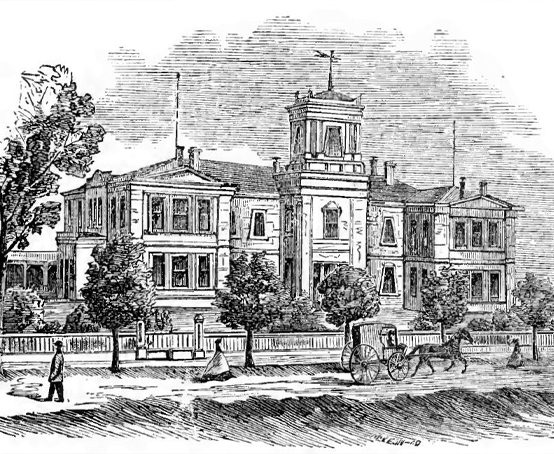
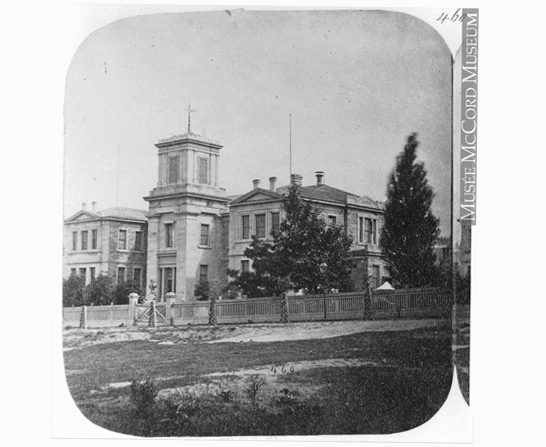
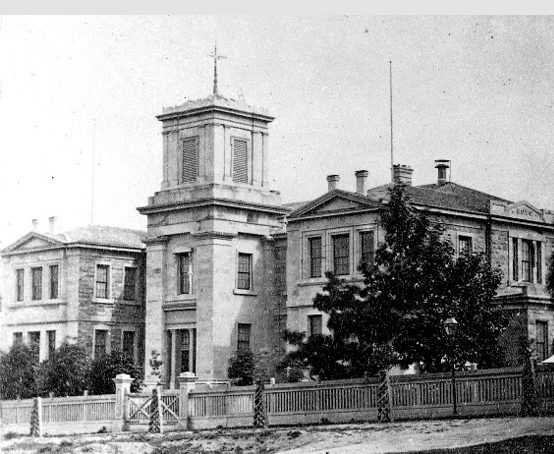
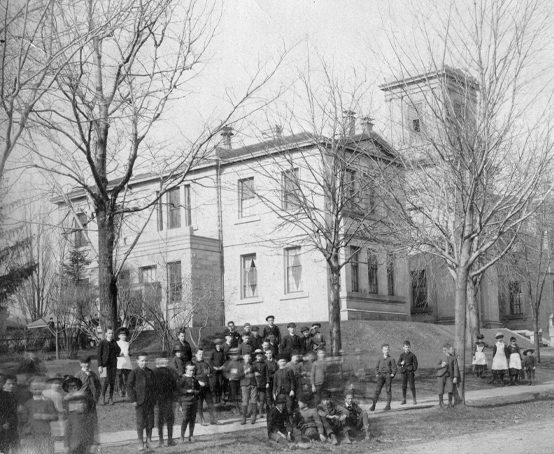
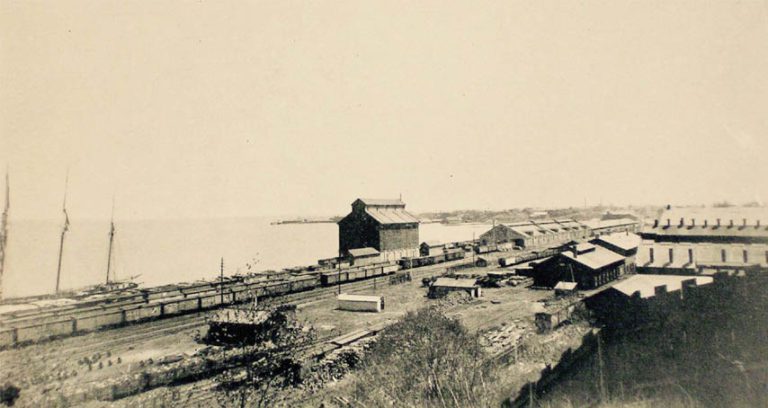
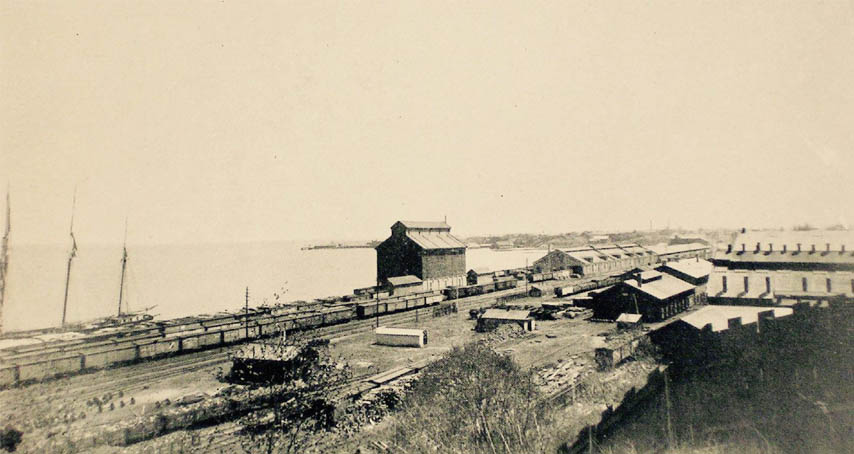
By the 1840s it was clear to Hamilton's business community the age of water transport would be eclipsed by rail. If Hamilton wanted to…
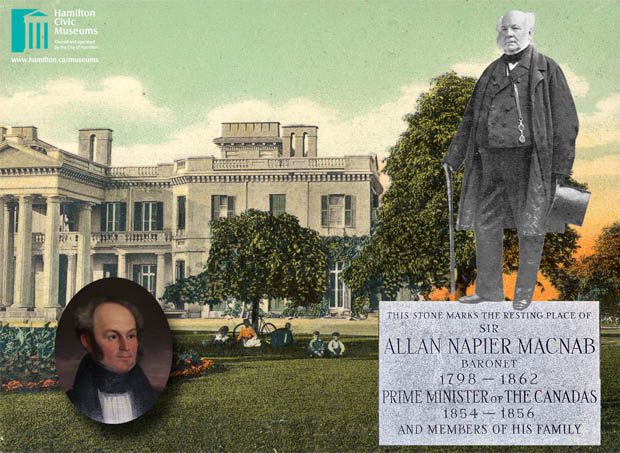
By the 1840s it was clear to Hamilton's business community the age of water transport would be eclipsed by rail. If Hamilton wanted to succeed as a trade centre, the rail line must run west of Toronto to Hamilton. No one promoted the growth of railways more than Allan MacNab, either in his capacity as Speaker of the House or as Hamilton's elected representative in Parliament. His motto "Railways are my Politics" reflected his determination to bring the Great Western Railway to Hamilton. For several years MacNab was president of the Great Western, and during the 1840s, he travelled twice to Britain to secure financing. MacNab joined the boards of 5 other railway companies including the Grand Truck Railway, which eventually bought out the Great Western. After more than a decade of financing and some scandal, on January 19, 1854, the first Great Western train stopped in Hamilton on its way from Niagara Falls to Windsor. A large crowd gathered at Dundurn to cheer on a 21 gun salute. There was another reason to celebrate in 1854. Allan MacNab who distinguished himself as a contractor, promoter and lawyer, was elected Prime Minister of the United Provinces of Canada. (Content courtesy Dundurn National Historic Site; HPL Local History and Archives.)
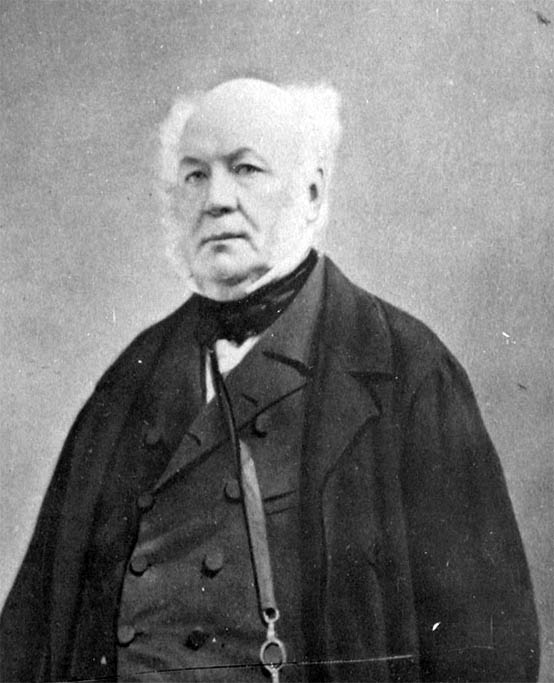
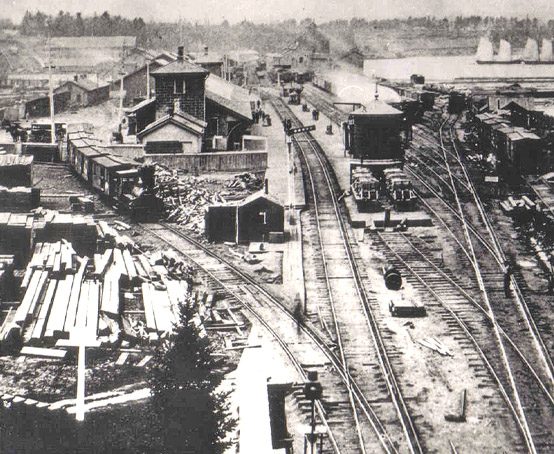
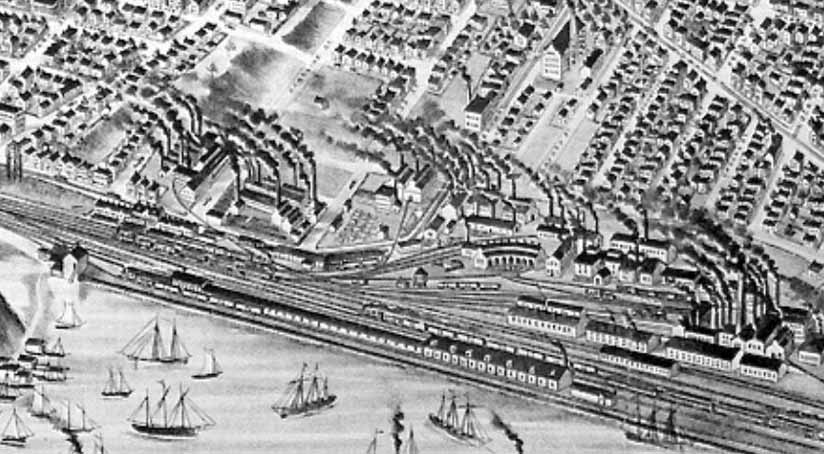
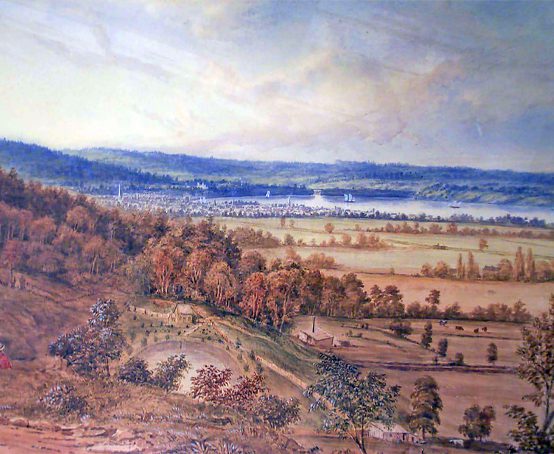
The summer of 1854 saw 552 Hamiltonians die of cholera in eight weeks. That is more than 3% of the population in one summer.…
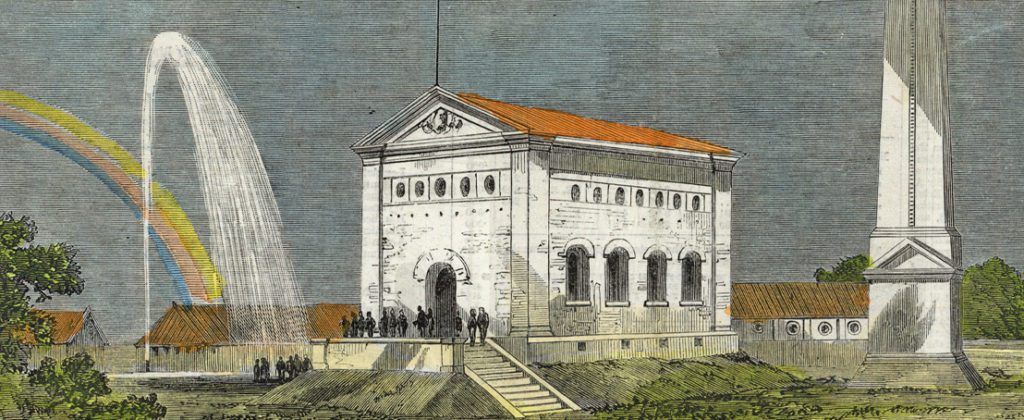
The summer of 1854 saw 552 Hamiltonians die of cholera in eight weeks. That is more than 3% of the population in one summer. Cholera came to the city with immigrants arriving by boat from Britain. The cause of cholera was unknown, but many thought it was caused by filth and a lack of sanitation. Many people left the city for other communities. Farmers stopped delivering produce. ‘Dead wagons’ picked up corpses left on doorsteps. People became aware of the importance of cleanliness in their city. The City provided public wells and baths, and cleared the streets of garbage and dead animals. It was recommended that “stagnant water and other filthy nuisance” be drained from homes and streets. The epidemic of 1854 provided the motivation for the creation of a waterworks and an adequate sewer system. (Content courtesy City of Hamilton; Hamilton Museum of Steam and Technology.)
macsphere.mcmaster.ca
thespec.com
en.wikipedia.org
Sir William Osler was one of the' founding four' doctors at Johns Hopkins School of Medicine. Creator of the residency system used in hospitals…
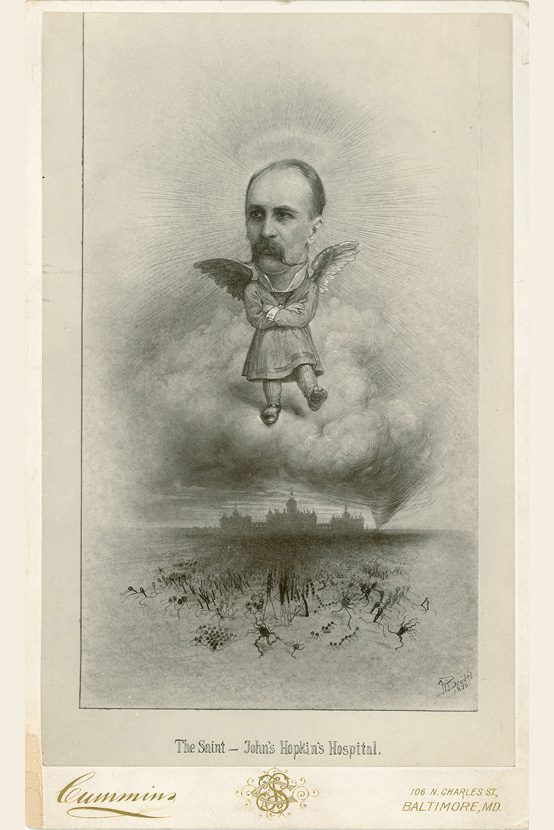
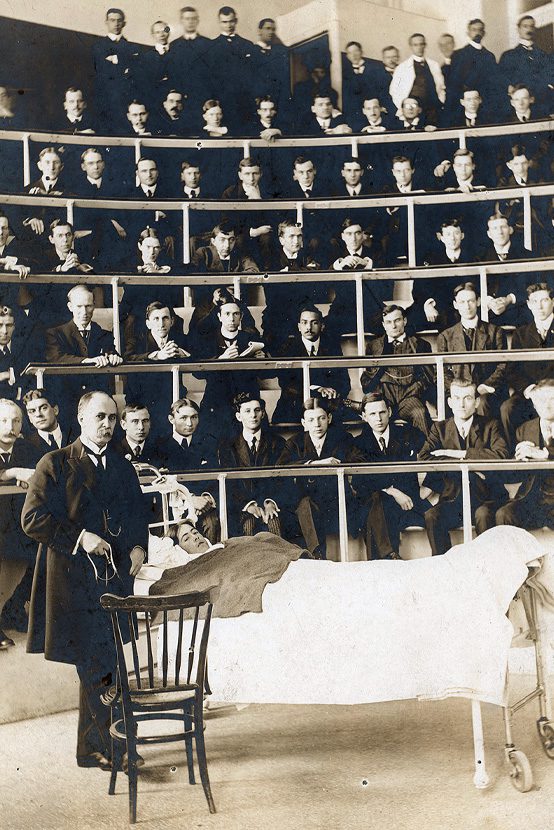
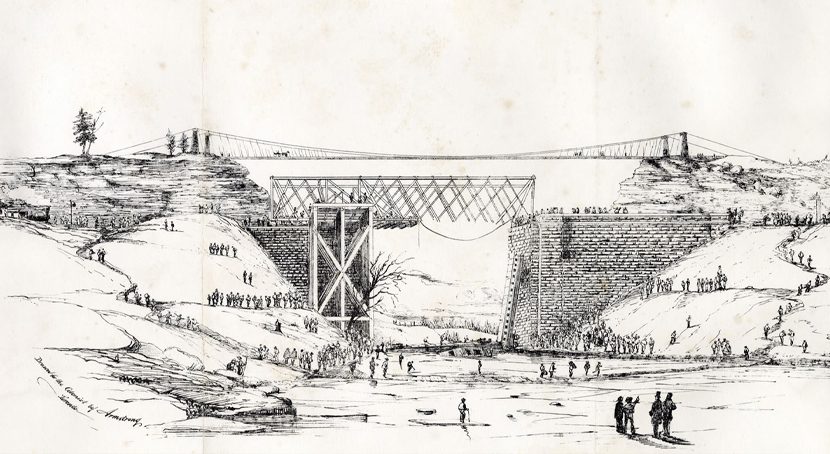
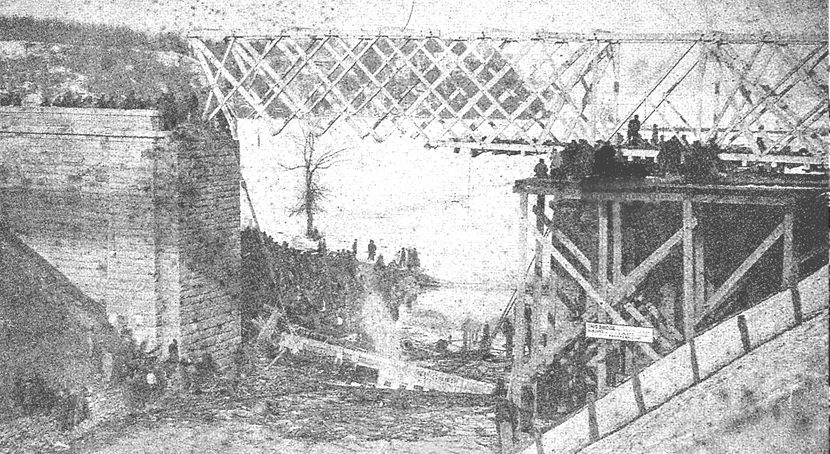
Sir William Osler was one of the' founding four' doctors at Johns Hopkins School of Medicine. Creator of the residency system used in hospitals around the world, he is perhaps the most accomplished Hamiltonian. But he nearly died before he could do any of that. William was just 3 when the Osler family moved from the Barrie area to Dundas. On the day that his mother, two siblings and he were to make the journey to Hamilton on the Great Western Railway, March 12 1857, William had an acute respiratory infection, so they didn't travel. That day the train collapsed the trestle bridge into Hamilton in what is known as the Desjardins Rail Disaster. 59 people died in what remains the second deadliest train accident in Canadian history. But the child who was destined to become the 'father of modern medicine' was not among them. (Content courtesy Library and Archives Canada, PA-135158; Toronto Public Library; McGill Library Osler Collection.)
britannica.com
cmaj.ca
hpl.ca
At the beginning of the 1850s, schools were not easily accessed or well attended. In 1851 only 50% of children aged five to sixteen…
At the beginning of the 1850s, schools were not easily accessed or well attended. In 1851 only 50% of children aged five to sixteen attended school. Most attending children went to one room schools. More prosperous parents were likely to send their children to small private schools, or to hire a tutor. As children got older they were even less likely to attend. Only 36% of boys aged eleven to fifteen went to school. Since just 18% worked, this meant that 46% of boys in this age group roamed the city. Even fewer girls of that group attended school, as many were employed in domestic service. By age 13, thirty percent of all girls were resident servants. By age 17, forty per cent were. When Central Public School in Hamilton opened with six hundred students in 1853, it was the first graded, public school in Canada. By 1860, the city's school attendance in the 11-15 year old group had increased to 76%.
Edward, Prince of Wales, the future King Edward VII, made the first official state visit of British royalty to Canada, and Hamilton was the…
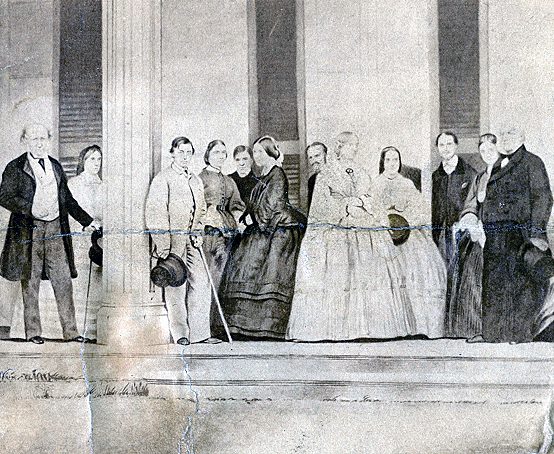
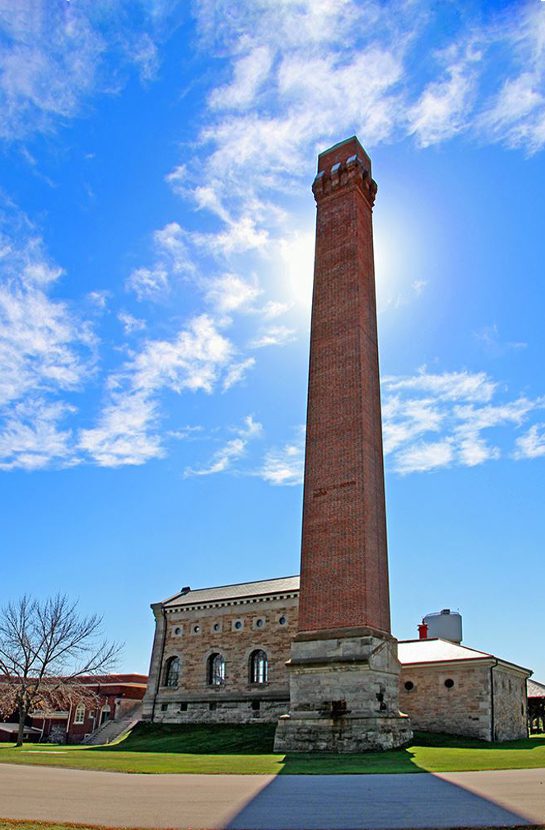
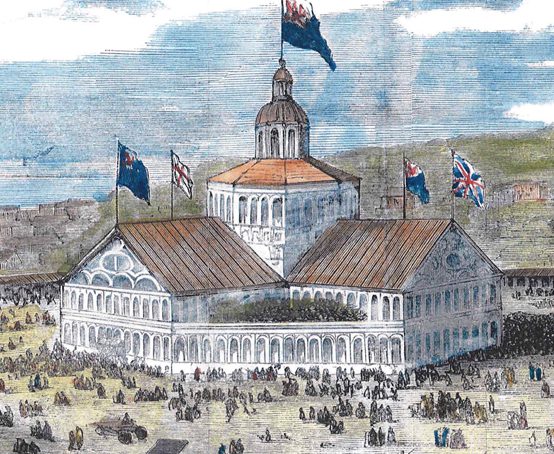
Edward, Prince of Wales, the future King Edward VII, made the first official state visit of British royalty to Canada, and Hamilton was the last stop on the tour. He was welcomed by thousands of Hamiltonians with a 21 gun salute at the Great Western Railway station. Prince Edward toured Hamilton's cutting-edge Central Public School, officially opened the new Hamilton Waterworks (now Museum of Steam & Technology), and opened the Crystal Palace in Victoria Park for the 15th season of the Agricultural Association of Upper Canada. Then lunch with Sir Allan MacNab at Dundurn. History came full circle on November 5th, 2009 when Edward's descendent, Charles, Prince of Wales and his wife, Camilla, Duchess of Cornwall, great-great-great-granddaughter of Sir Allan MacNab, included Dundurn National Historic Site on their royal tour of Canada. (Content courtesy City of Hamilton; Dundurn National Historic Site; C. Redford.)
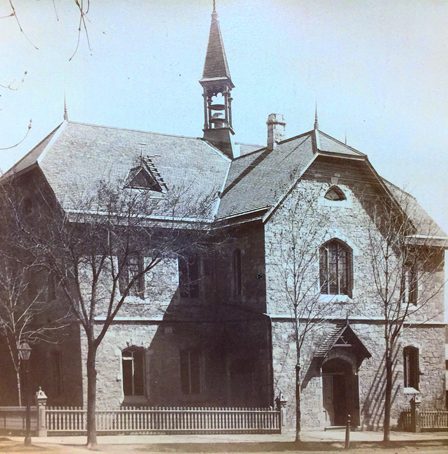
After the opening of Central Public School in 1853, the student population grew to unprecedented levels, particularly after the introduction of classical and language…
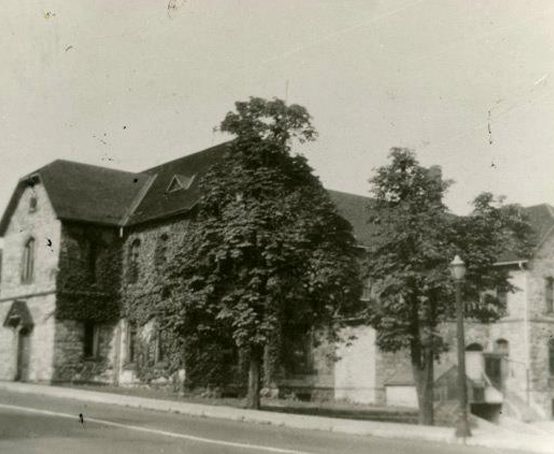
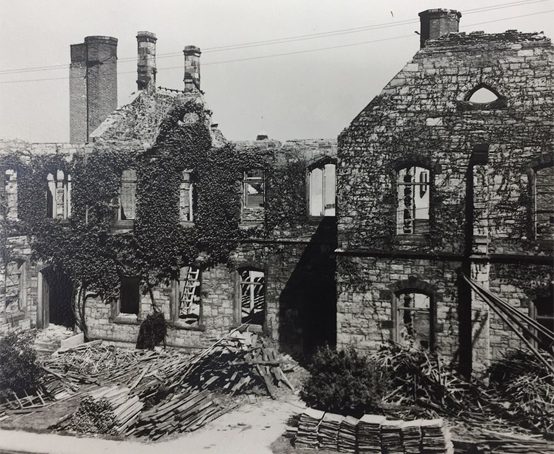
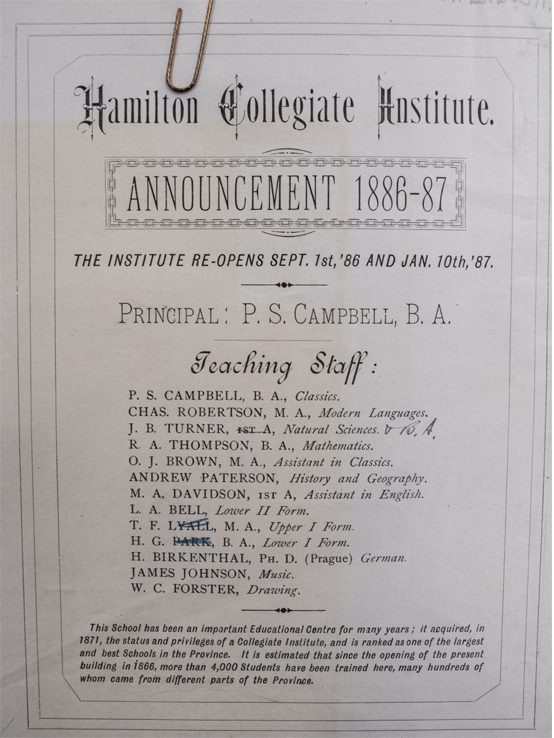
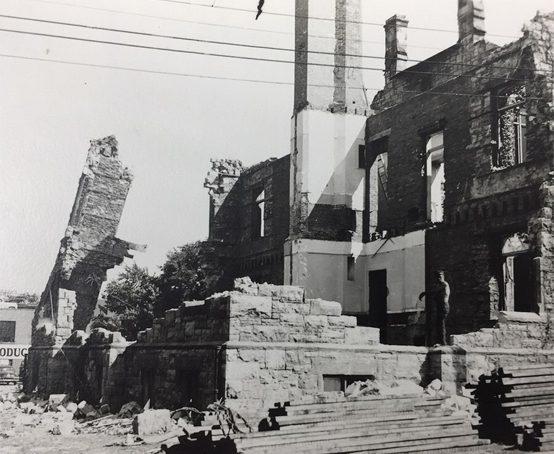
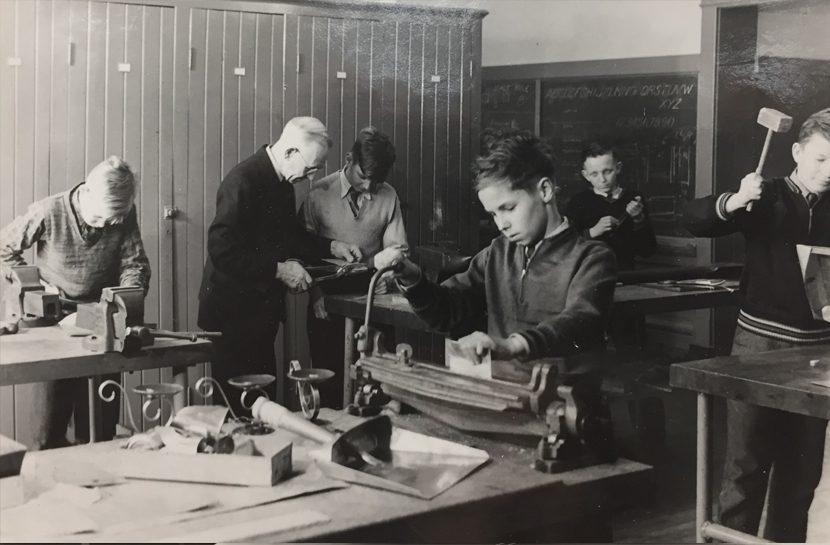
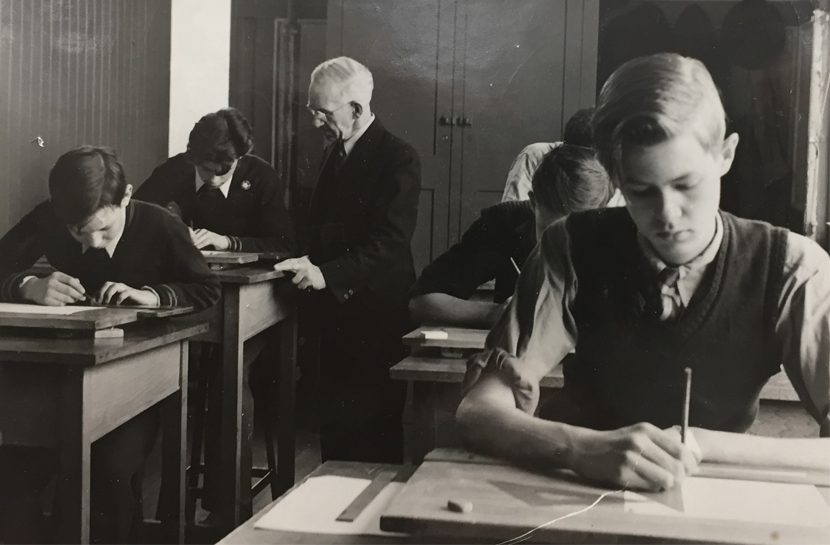
After the opening of Central Public School in 1853, the student population grew to unprecedented levels, particularly after the introduction of classical and language classes for older pupils. Although secondary classes were first offered in the 1930s at the Gore District School, it was not until 1866 that a dedicated school under the guidance of the modern Board was created. Based on the corner of Caroline and Main Streets, the school was called the Hamilton Collegiate Institute. Hamilton Collegiate eventually moved to a much larger building near Victoria Avenue and Hunter Street in 1896. The former site was subsequently turned into the Caroline Street Elementary School, then a Grade 9/10 HCI Auxiliary, before its final use by the Board as the F. W. MacBeth Boys Handicraft School. The property was sold by the Board in 1948. (Content courtesy of the Hamilton-Wentworth District School Board.)
Most early roads connecting Hamilton to surrounding communities were tolled. Private companies were commissioned to construct them, and charging tolls was the only way…
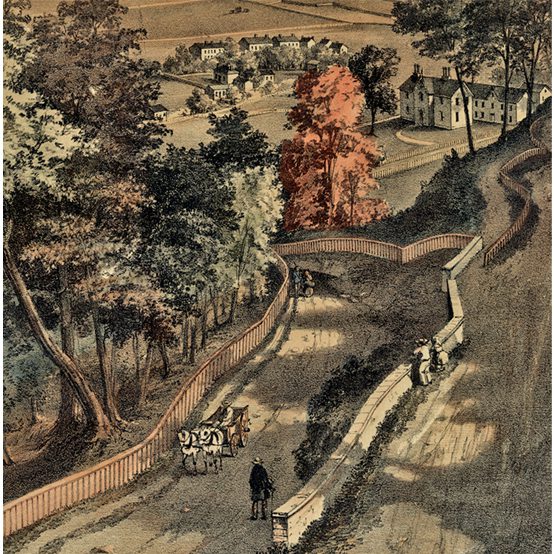
Most early roads connecting Hamilton to surrounding communities were tolled. Private companies were commissioned to construct them, and charging tolls was the only way to make a profit. By 1872, it was impossible to enter or leave Hamilton without paying a toll. Free travel in and around Hamilton was complicated by no fewer than 13 toll roads. Despite the toll roads being badly maintained, the real bone of contention lay with farmers and manufacturers who had to pay to bring their wares to Hamilton. Frustrated users would take the law into their own hands, attacking toll-keepers, breaking the barriers, and vandalizing toll houses. This situation was not resolved until the late 1890s, when the province and municipalities began assuming responsibility for roads and their maintenance. (Content courtesy City of Hamilton; Dundurn National Historic Site; HPL Local History Archives.)
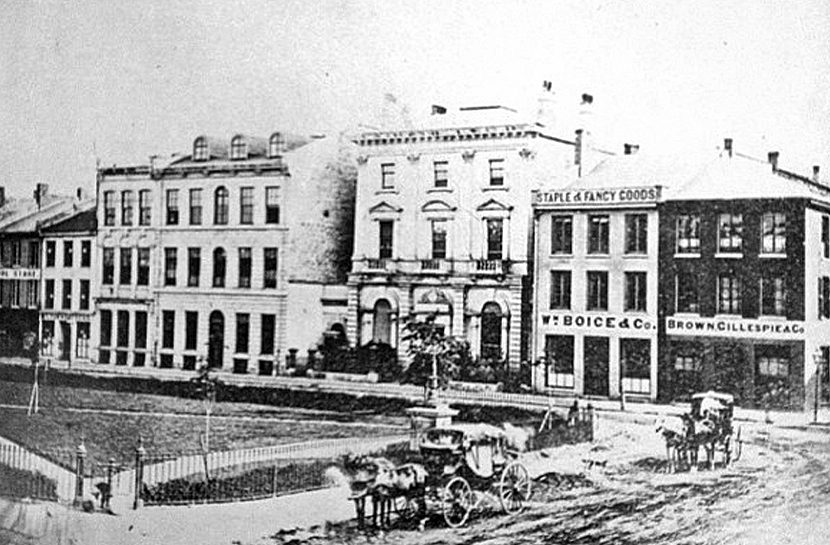
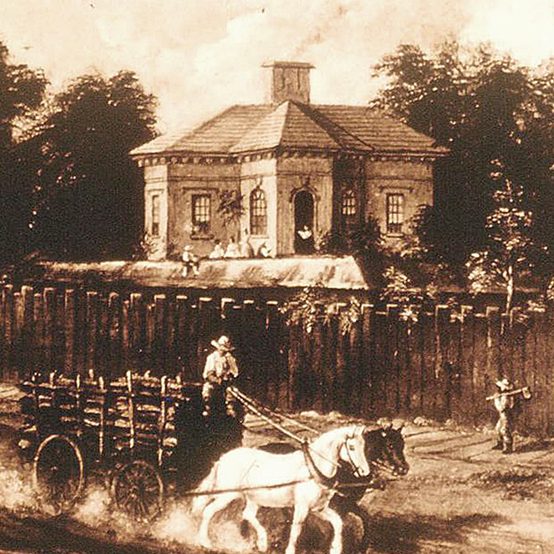
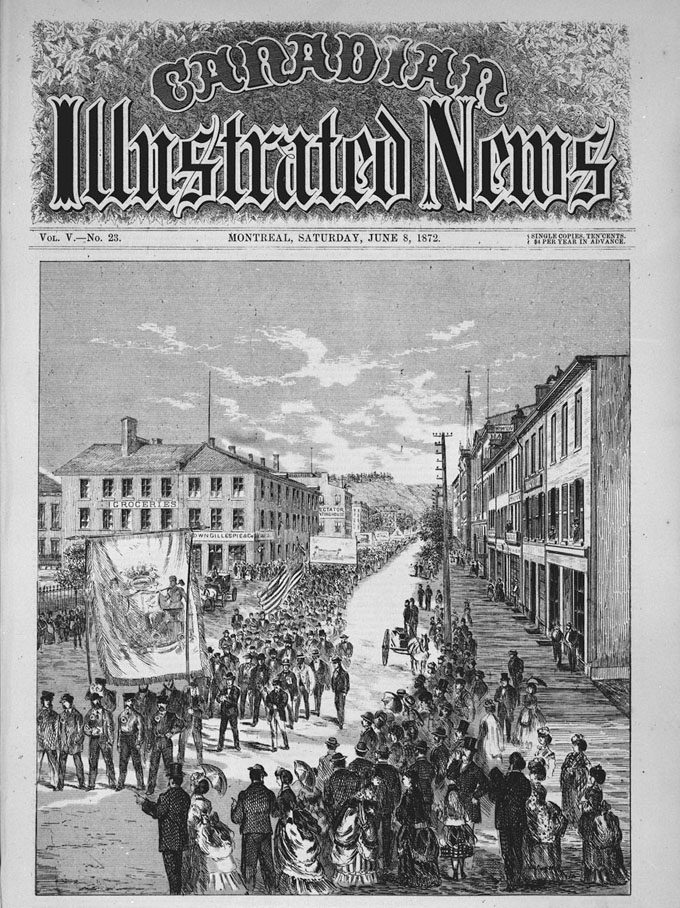
On May 15, 1872, over 1500 workers across Hamilton stopped work and marched together to demand a reduction in working hours – from 10-14…
On May 15, 1872, over 1500 workers across Hamilton stopped work and marched together to demand a reduction in working hours – from 10-14 hours a day to 9. Hamilton was the centre of this movement, but its reach extended across Southern Ontario and Quebec where workers set up Nine Hours Leagues in a number of communities. In Hamilton, over 1,500 workers marched together in giant parade that wound its way past many factories before ending in a celebration at the Crystal Palace grounds (today’s Victoria Park). While the goal of a nine-hour workday was not achieved, it did mark the beginning of the country’s first regional labour movement with the establishment of the Canadian Labour Union (many of whose leaders later helped create the Trades & Labour Congress of Canada). The movement also motivated the passage of the Trade Unions Act, which gave unions the opportunity of legal recognition but with a number of restrictions. (Content courtesy of Workers' City.)
thecanadianencyclopedia.ca
communitystories.ca

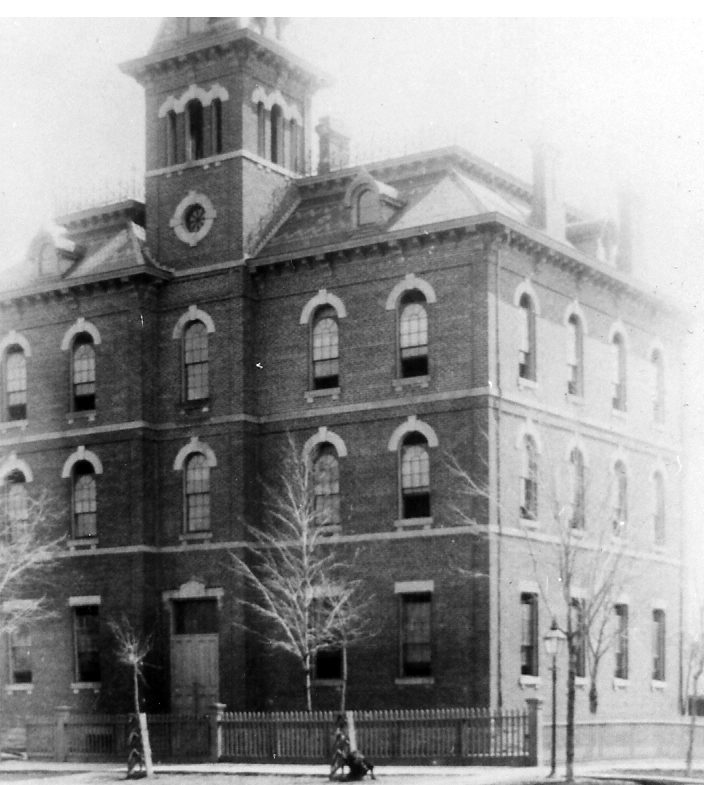
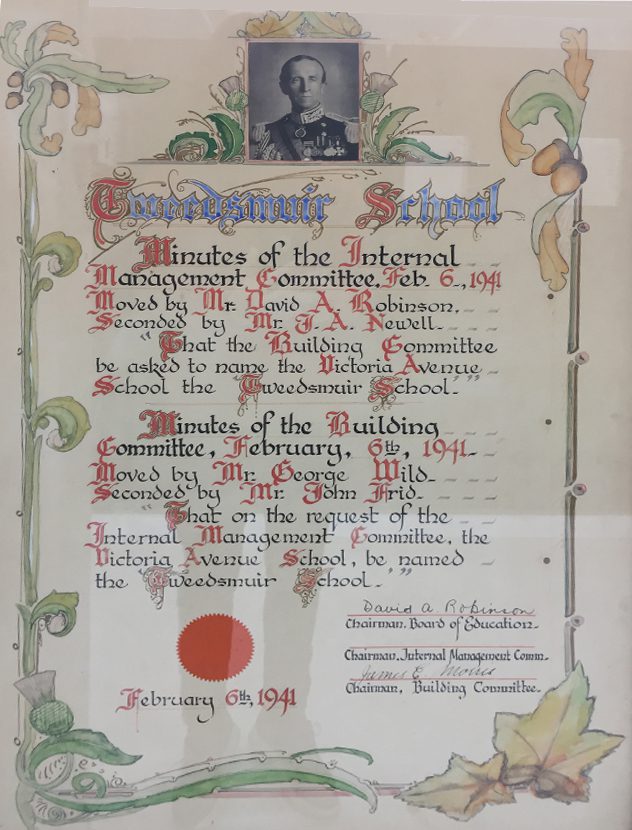
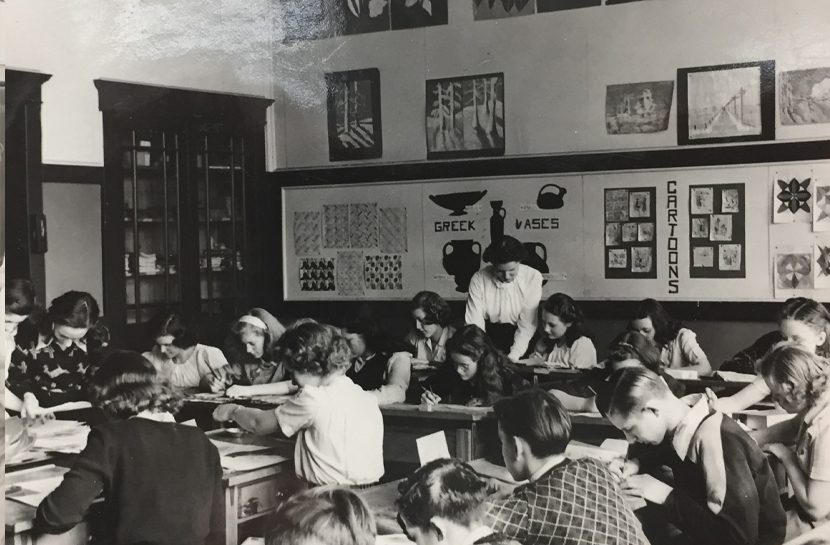
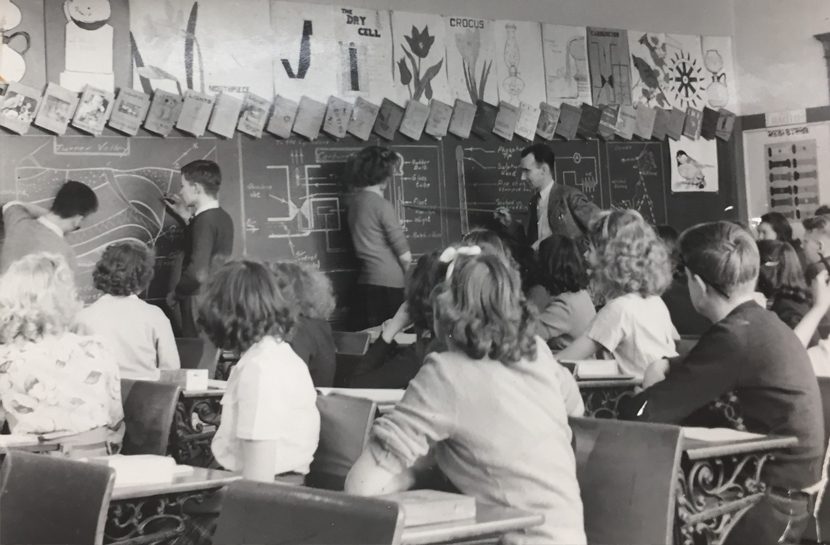
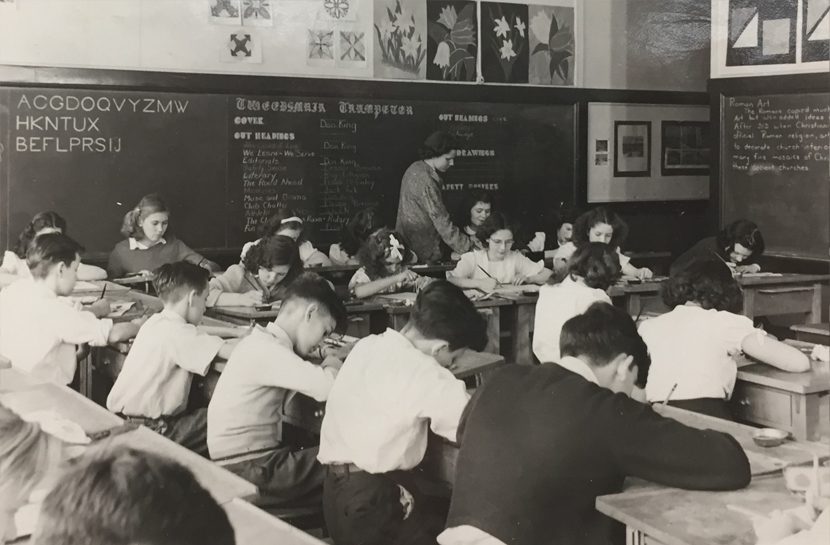
The late 1800s saw the introduction of many new school buildings, such as Victoria Avenue in September of 1873. Located at the northeast corner…
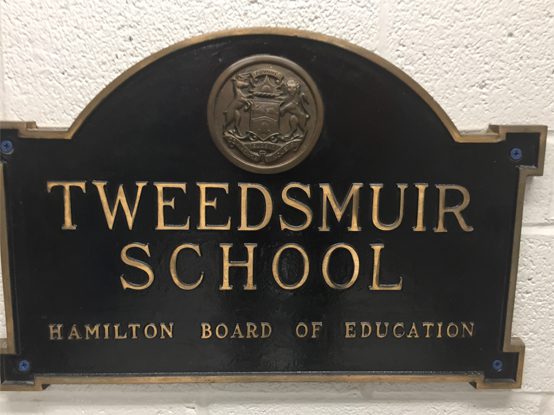
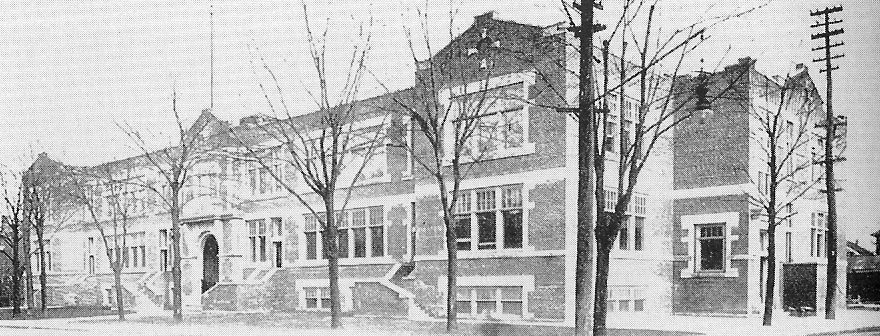
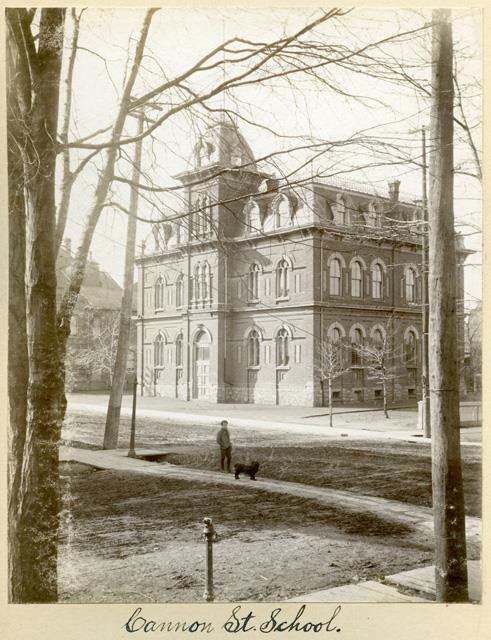
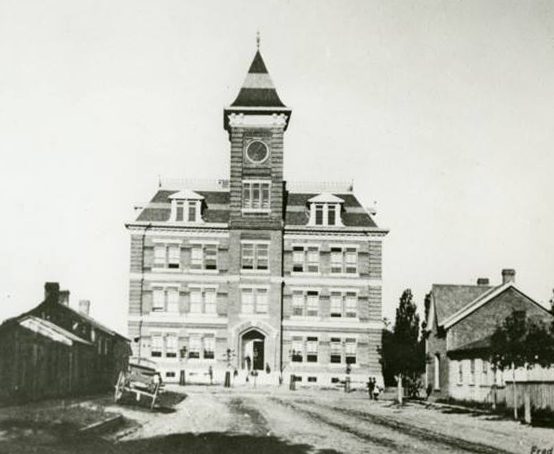
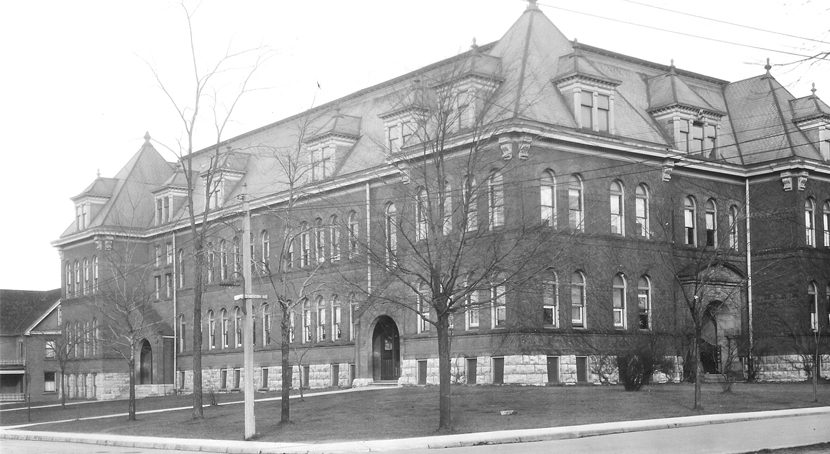
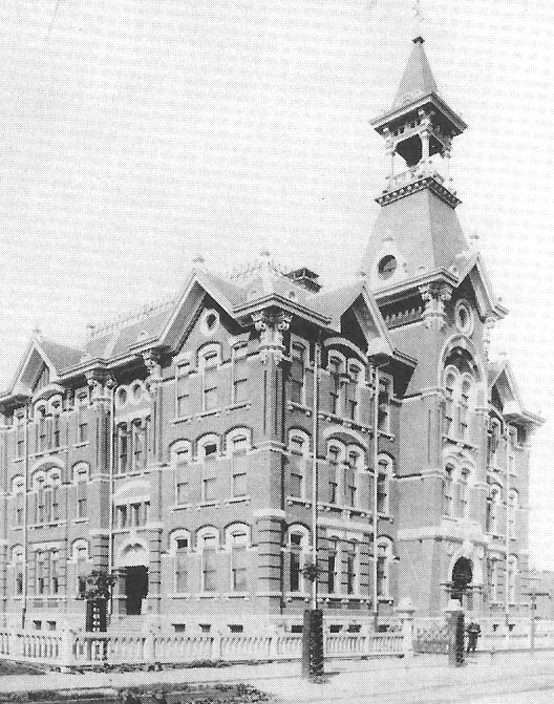
The late 1800s saw the introduction of many new school buildings, such as Victoria Avenue in September of 1873. Located at the northeast corner of Victoria Avenue and King William Street, the school was later partially re-built and renamed Tweedsmuir in 1941 and became a Senior level school until closing in 2004. Other schools that began around this period include West Avenue, Cannon Street, Murray Street, Wentworth Street, Queen Victoria, Ryerson, Stinson and Hess Streets. These buildings were large and relatively ornate affairs, featuring steeples, bell towers and multiple stories. Their introduction signified the promise and prospect of Hamilton as a growing and forward-thinking community, with a student population to match. (Content courtesy of the Hamilton-Wentworth District School Board.)
Location: 349 Tweedsmuir Ave, London, ON N5W 1L5
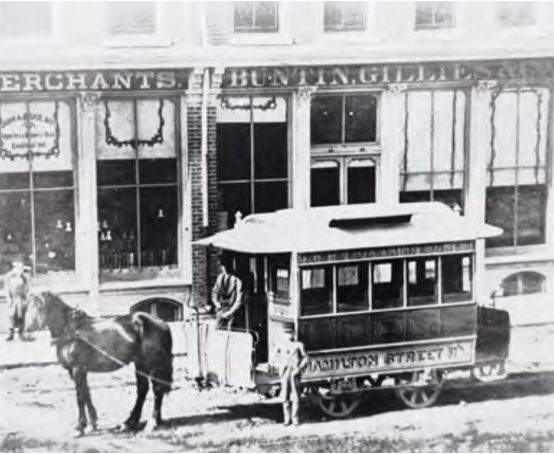
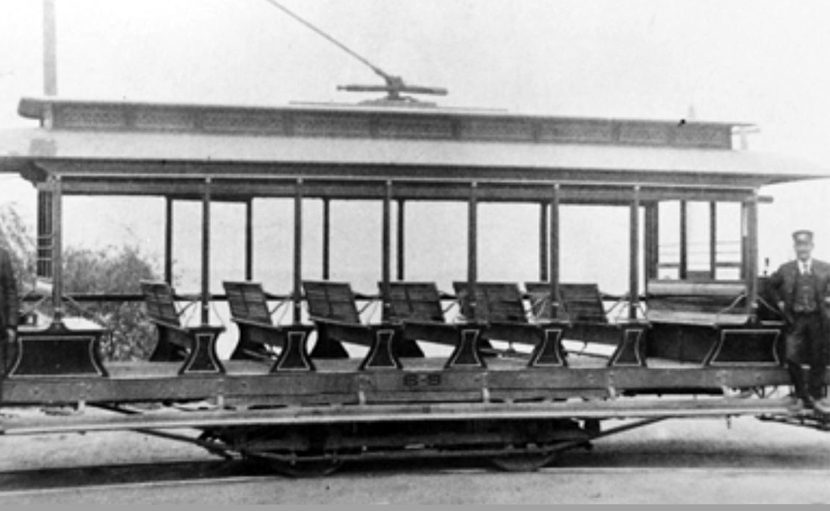
On May 11, 1874 the first horse-drawn Hamilton Street Railway (HSR) tram left the Grand Trunk Railway Stuart Street Station and traveled south along…
On May 11, 1874 the first horse-drawn Hamilton Street Railway (HSR) tram left the Grand Trunk Railway Stuart Street Station and traveled south along James where a turntable was used to swing the horse and car around onto King. It then traveled east to Wellington, where the horse was unhitched from the "front" of the tram and re-hitched to the "back" for a return journey. A year later, the service fleet expanded to 10 cars and 22 horses. Colour-coded cars distinguished each route. 1876, this main line was extended further west to Victoria Park and the Crystal Palace. By 1890, the HSR had 12 miles of track, 160 horses, 45 trams and 9 sleds, which in winter replaced the trams to carry passengers through snow-clogged streets. (Content courtesy HPL Local History and Archives.)
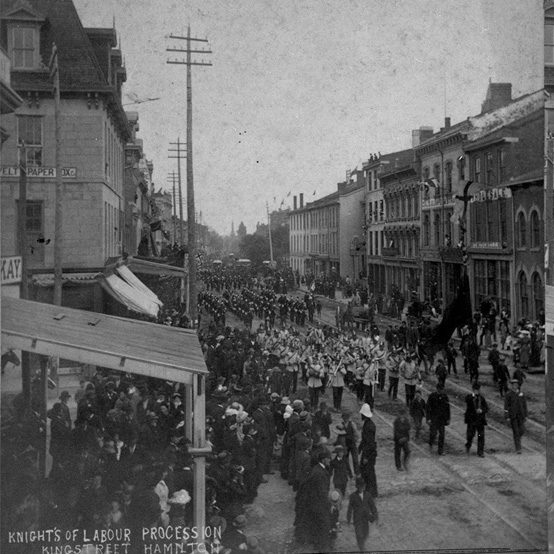
The Noble and Holy Order of the Knights of Labor (KOL) was a labour reform organization established in Philadelphia in 1869. Hamilton workers founded…
The Noble and Holy Order of the Knights of Labor (KOL) was a labour reform organization established in Philadelphia in 1869. Hamilton workers founded the first Canadian local assembly of the KOL in 1881, marking the beginning of an upsurge of labour organizing that continued through that decade. Earlier craft unions organized highly skilled men into separate crafts. The Knights were more inclusive, welcoming both men and women, skilled and unskilled workers into the union’s ranks. The Knights ran their meetings based on ritual and ceremony adapted from Freemasonry. They focused on a wide variety of issues that confronted working people as a result of the developing economic system. They even ran a cooperative grocery store in Hamilton. By the 1890s, the Knights of Labor movement was declining, replaced by the craft-based American Federation of Labor in the United States and the Trades & Labour Congress in Canada. (Content courtesy of Workers' City.
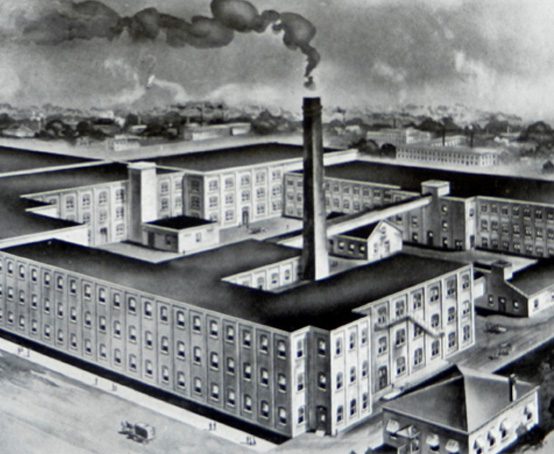
For the first half of the 20th century, Hamilton was Canada’s third largest textile centre, owing to the presence of companies like the Ontario…
For the first half of the 20th century, Hamilton was Canada’s third largest textile centre, owing to the presence of companies like the Ontario Cotton Company (which later became Canadian Cottons). By 1886, the company employed over 250 women and 150 men in the production of cottonades, shirting, awnings and ducks. The City’s textile mills, including the Imperial Cotton Co. Ltd. and Glendale Spinning Mills, were one of the few places women could find factory work in the City. Hundreds of often young, unmarried women found employment in the city’s textile mills through the late 19th and early 20th century. (Content courtesy of Workers' City
workerscity.ca
In the early 1850s, a small group of German Jewish families settled in the city of Hamilton. In 1853, they banded together to form…
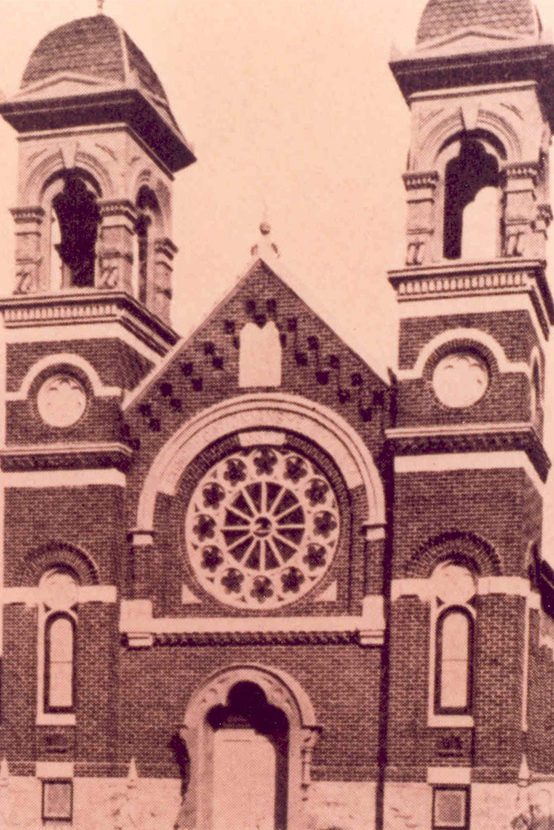
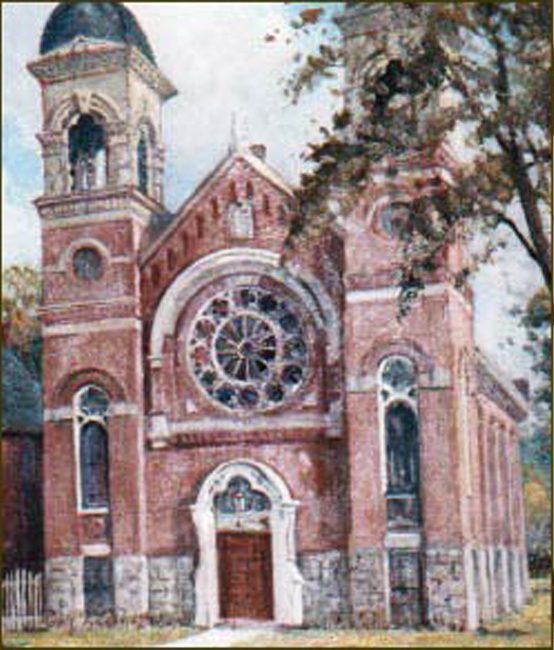
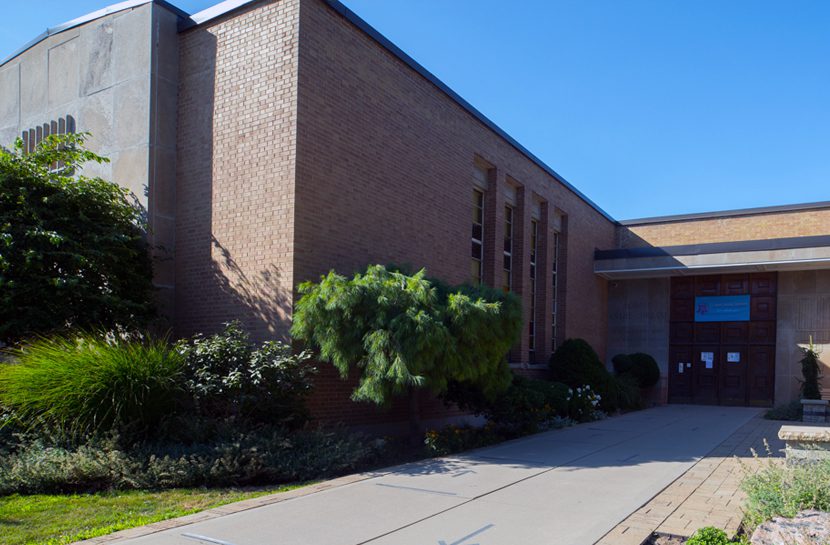
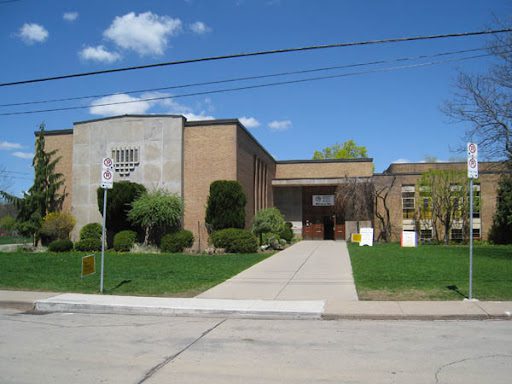
In the early 1850s, a small group of German Jewish families settled in the city of Hamilton. In 1853, they banded together to form the Hebrew Benevolent Society Anshe-Sholom of Hamilton. Early meetings were held in members’ homes, with religious services, at first, largely restricted to the High Holy days. In 1866, a room was rented above a leather goods shop in downtown Hamilton; this was the first formal synagogue location for Temple Anshe Sholom. Less than 20 years later, a site was chosen and the necessary funds were raised to construct a synagogue. Often referred to as the Hughson Street Temple, this building was dedicated in 1882. It served as the congregation’s home for almost 70 years before moving to its current location on 215 Cline Ave. N. (Content courtesy of the Hamilton Jewish Federation.)
Location: 215 Cline Ave N, Hamilton, ON L8S 4A1
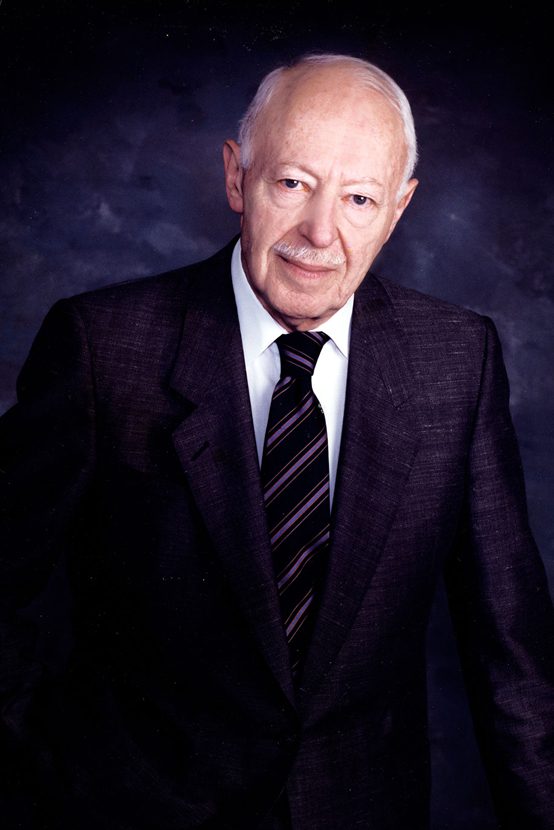
anshesholom.ca
“The information and complaint of Alexander David Stewart, of the City of Hamilton, in the Province of Ontario, in the Dominion of Canada, Chief…
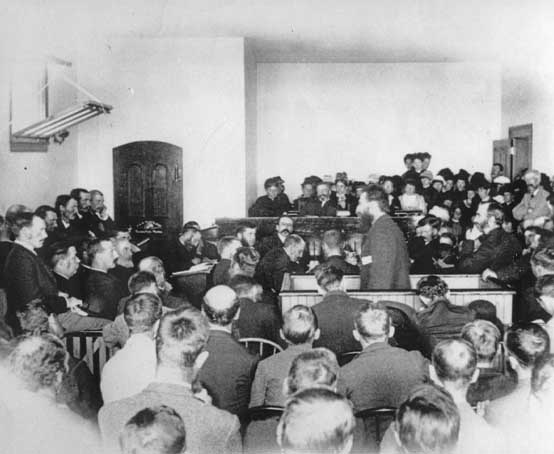
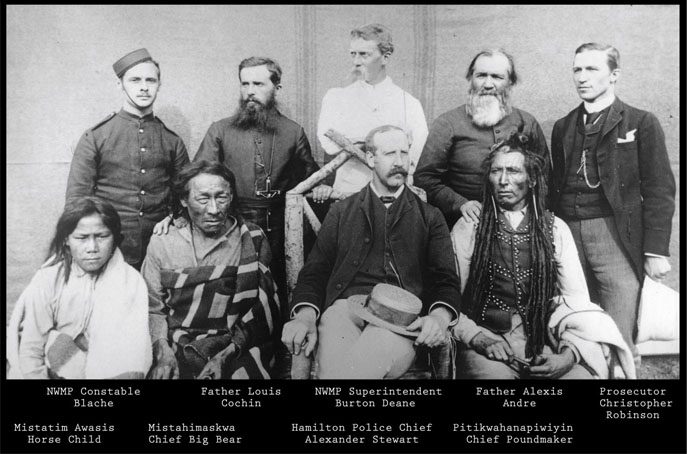
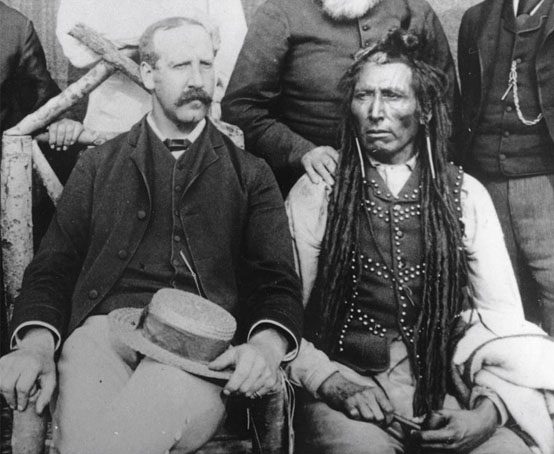
“The information and complaint of Alexander David Stewart, of the City of Hamilton, in the Province of Ontario, in the Dominion of Canada, Chief of Police…” So begins the indictment of Louis Riel, 20 July 1885. The Hamilton Police Chief (later Hamilton Mayor) swore out the indictment which sent Riel to the gallows. Stewart attended the trial, providing security. The indictment continues… “Alexander David Stewart further saith: That the said Louis Riel, being a subject of our Lady the Queen, not regarding the duty of his allegiance, nor having the fear of God in his heart, but being moved and seduced by the instigation of the devil as a false traitor…” Stewart is seen staring at Riel in the docket at trial, and with participants at the trial in 1885. Stewart is at centre (with hat and moustache) next to Pitikwahanapiwiyin, Cree Chief Poundmaker (with vest), namesake of Poundmaker Cree Nation, Saskatchewan. Poundmaker’s peaceful entreaties for food and land prior to the Battle of Battoche were overlooked, and he was charged and convicted of treason along with Riel. Poundmaker was granted a posthumous pardon by Prime Minister Justin Trudeau in 2019. Alexander Stewart died of scurvy in the Yukon, hunting for gold in 1899. (Content courtesy Hamilton Police Service; Fieldcote Memorial Park and Museum.)
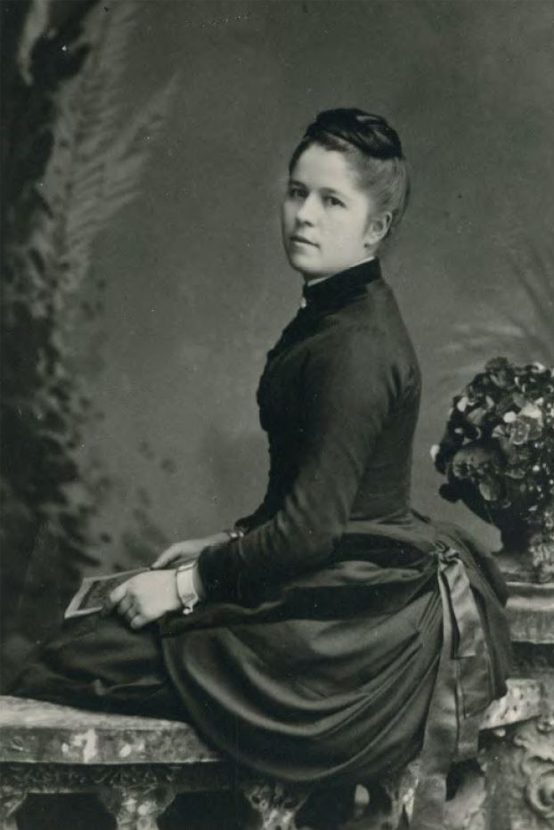
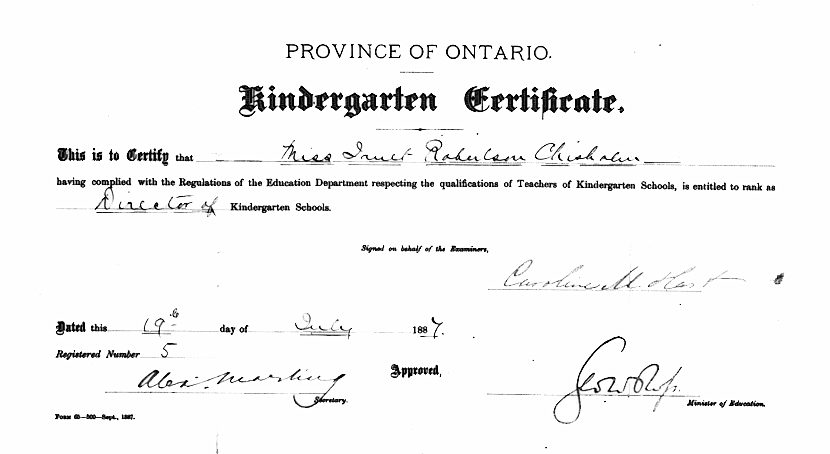
In 1887, the Ministry of Education adopted formal regulations for licensing Kindergarten teachers in an effort to introduce the program province-wide. Janet Chisholm was…
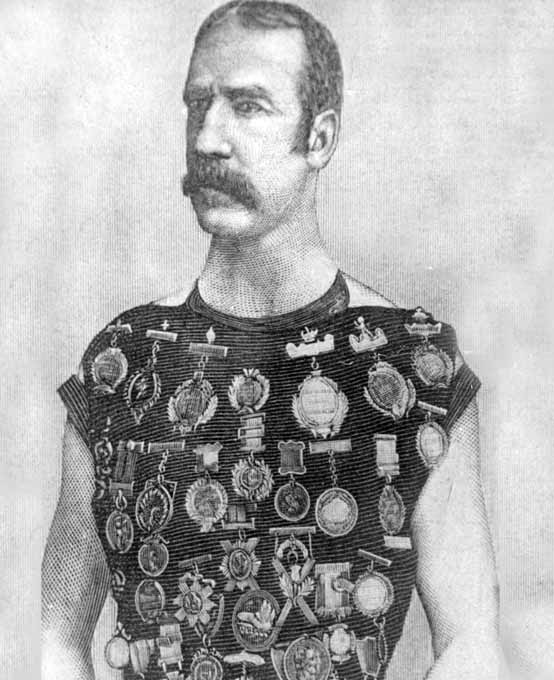
In 1887, the Ministry of Education adopted formal regulations for licensing Kindergarten teachers in an effort to introduce the program province-wide. Janet Chisholm was chosen as one of the teachers to undergo the training program in Toronto. She attended two years of training and passed an examination, which gave her the title of “Director” within the Kindergarten program.. Following her training, Janet was one of three Kindergarten teachers to bring the program back to Wentworth. She was the first Kindergarten teacher in the City of Hamilton, a pioneer of an educational program that exists to this day. (Content courtesy Erland Lee Museum/Federated Women’s Institutes of Ontario; Toronto Public Library.)
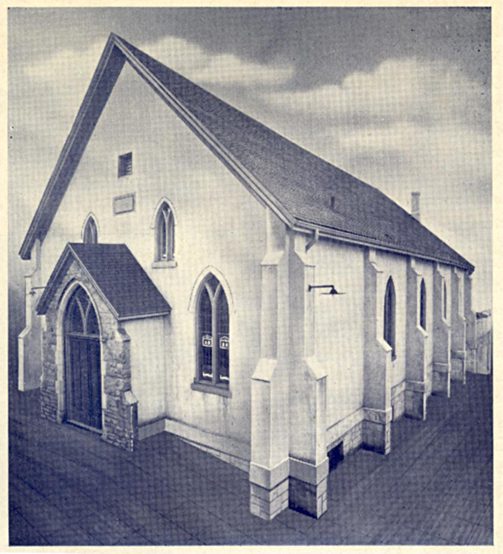
The Beth Jacob story begins in 1883 when a group of 20 Russian-born immigrants broke away from Temple Anshe Sholom to form a more…
The Beth Jacob story begins in 1883 when a group of 20 Russian-born immigrants broke away from Temple Anshe Sholom to form a more Orthodox community. In 1888, the growing congregation moved into its first real home: a Gothic-windowed white stucco edifice that had previously housed the St. James Reformed Episcopal Church. The Hunter Street Shul’s design, similar to other Orthodox synagogues of the same period, had its bimah located in the centre of a prayer space, surrounded by wooden pews. It had a women’s gallery, vestry rooms and a basement that housed a communal kitchen, a meeting place and a mikvah. From these humble beginnings, the Hunter Street Shul evolved over the decades to become a beautifully appointed house of worship that served as a home away from home for a hard-working immigrant community. Those old enough to remember the old shul speak of its beauty, its warmth, its colourful characters and the camaraderie that eased the burdens of making it in the new world. (Content courtesy of the Hamilton Jewish Federation.)
Location: 375 Aberdeen Ave, Hamilton, ON L8P 2R7
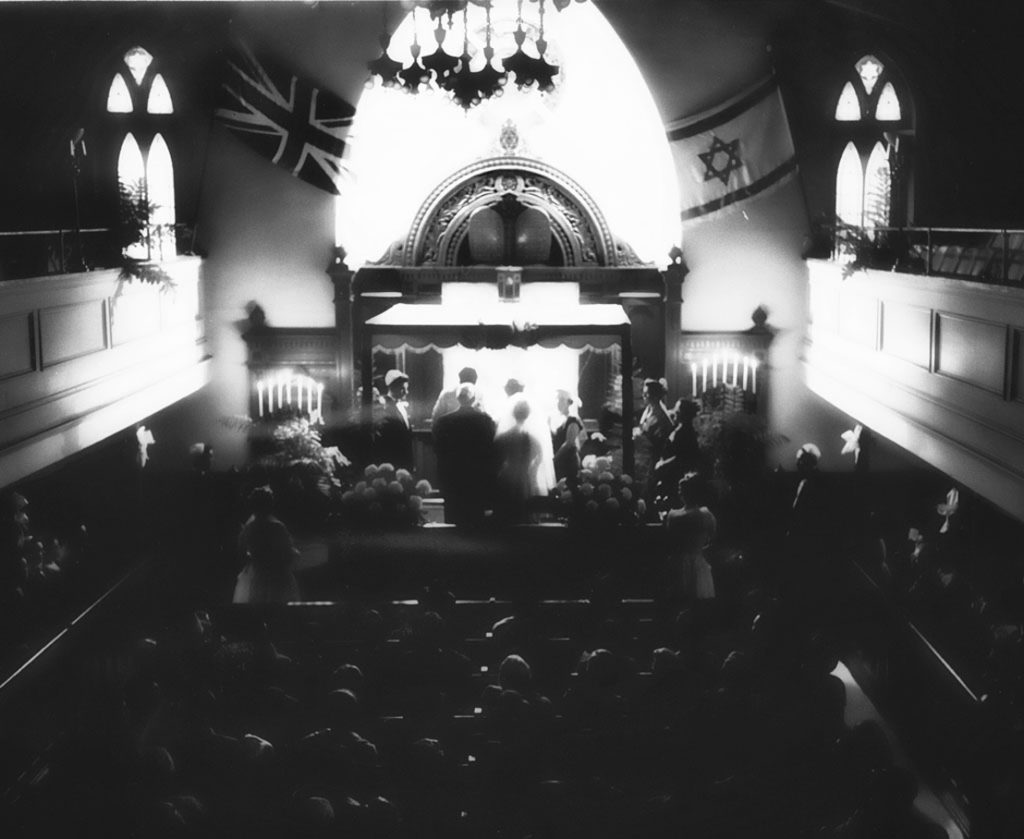
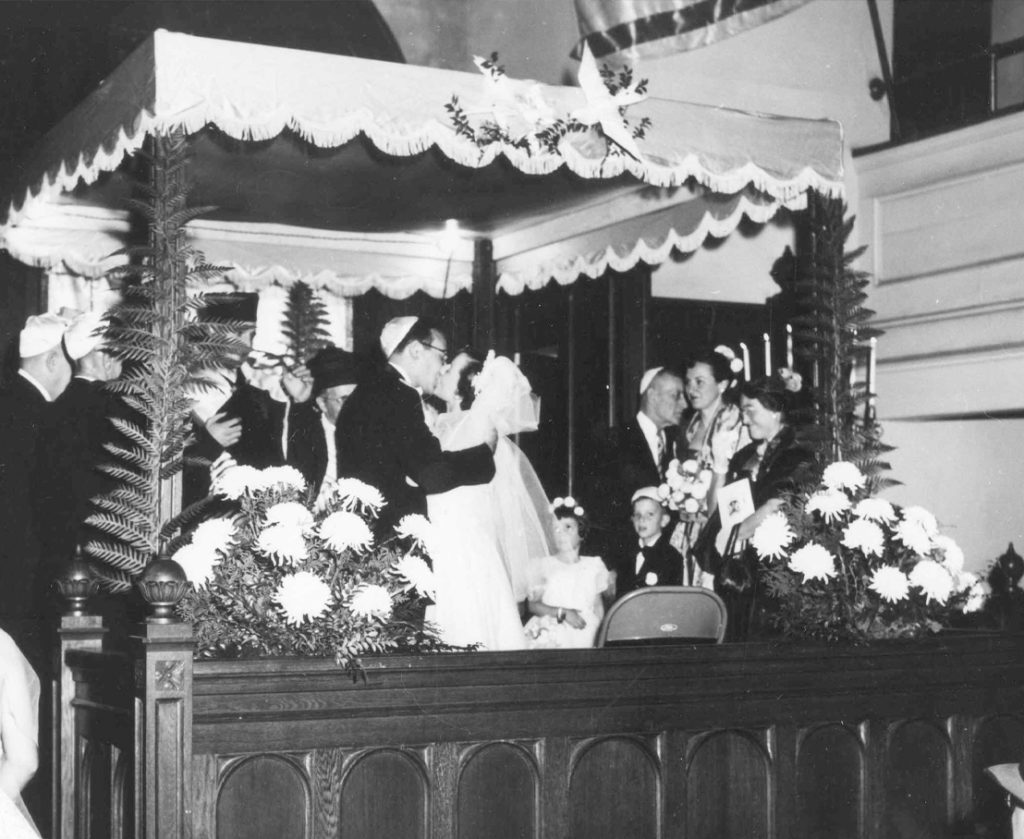
bethjacobsynagogue.ca
youtube.com
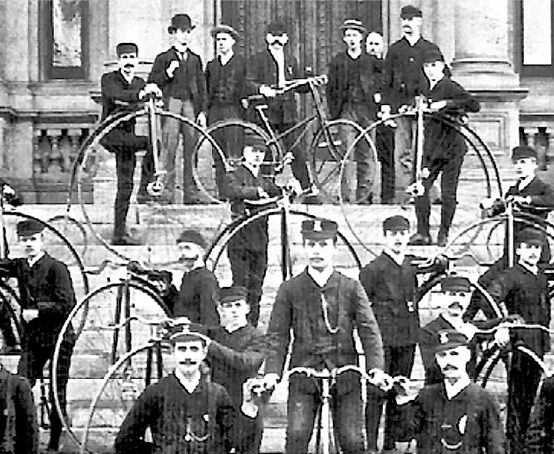
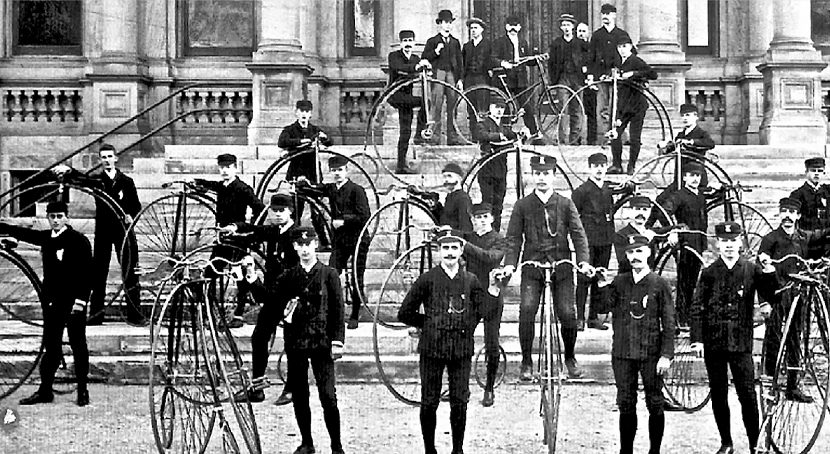
The Hamilton Bicycle Club was founded in 1881 and by 1889, had raised over $6,000 to build a cycling track at the base of…
The Hamilton Bicycle Club was founded in 1881 and by 1889, had raised over $6,000 to build a cycling track at the base of the escarpment just east of Wentworth Street. Cycling was still a relatively new sport but Hamilton already had hundreds of “wheel men and wheel women”. In 1889, Hamilton was to host a Summer Carnival to advertise its position as a progressive city. The Club bought land, built the new track and grandstand, and held their first races and parades. Over 200 cyclists participated, cycling through the town to the track for races. They then rode through the streets in the evening, with torches and `Chinese lanterns’, ending up at Dundurn Castle. (Content courtesy Dundurn National Historic Site; Fieldcote Memorial Park and Museum; HPL Local History Archives.)
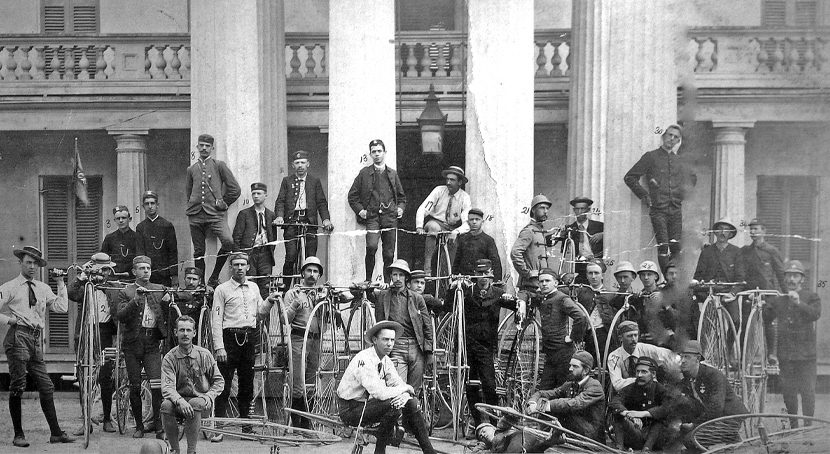

thecanadianencyclopedia.ca
canadiana.ca
facebook.com
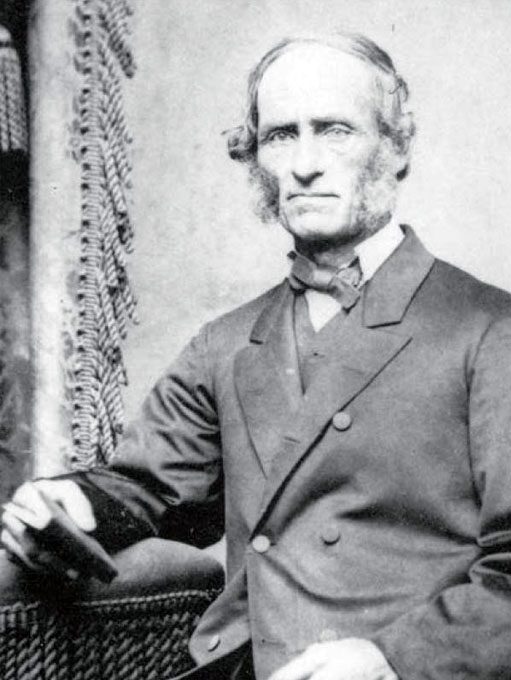
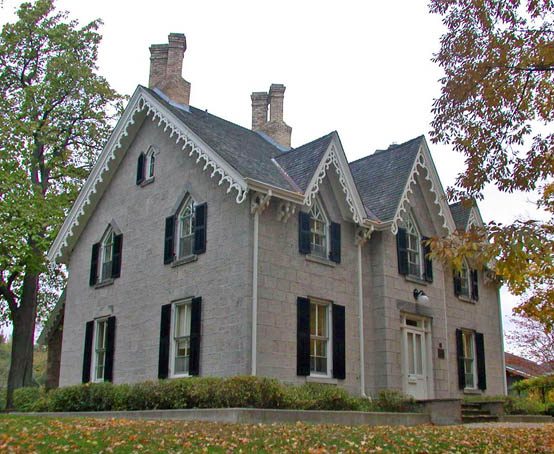
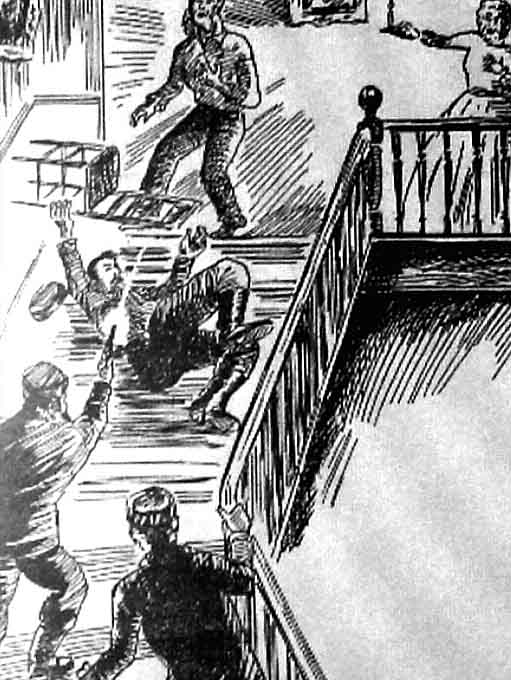
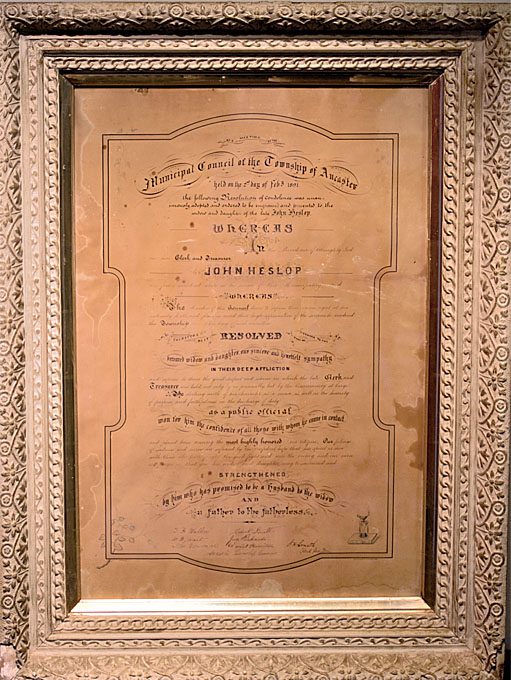
John Heslop purchased an Ancaster farm in 1842, became the towns’ first Reeve in 1851, and later it’s treasurer. On January 26, 1891, the…
John Heslop purchased an Ancaster farm in 1842, became the towns’ first Reeve in 1851, and later it’s treasurer. On January 26, 1891, the 79-year old Heslop was murdered. Thieves broke into his home on Mineral Springs Road demanding the town’s funds, but the tax money had been safely deposited in the bank. After Heslop smashed a chair over one of the intruders, he was shot point blank in the chest. His wife Elizabeth, and daughter Sarah, witnessed the crime, but could not identify the suspects at trial. Four men were tried for the crime of murder, two white men and two indigenous men. The two indigenous men were freed after allegations the police had plied them with liquor during questioning were accepted at trial. Conflicting evidence and numerous alibis lead the jury to a verdict of not guilty on the murder charge against the other two, who were found guilty of unrelated offences. The murder remains unsolved. Heslop’s home, Woodend, is now headquarters to the Hamilton Conservation Authority. (Content courtesy Fieldcote Memorial Park and Museum; City of Hamilton.)
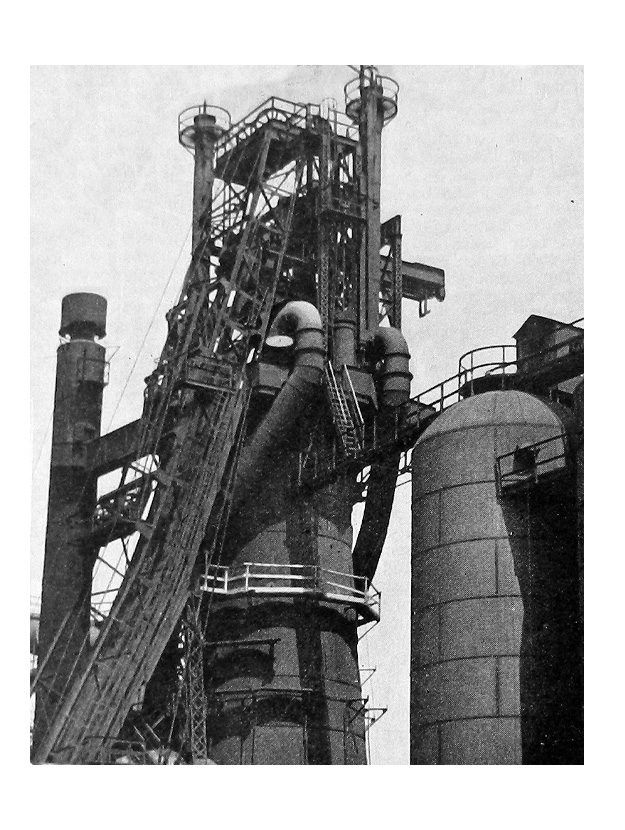
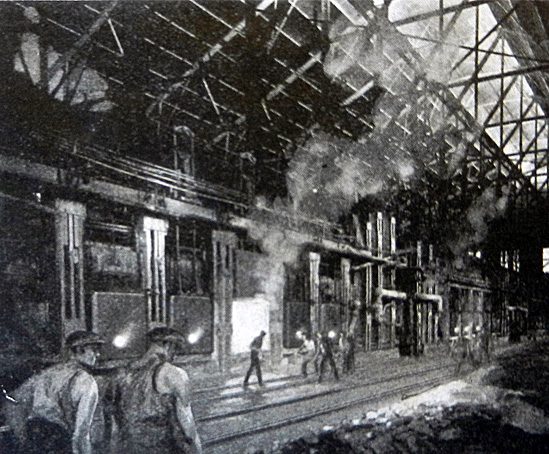
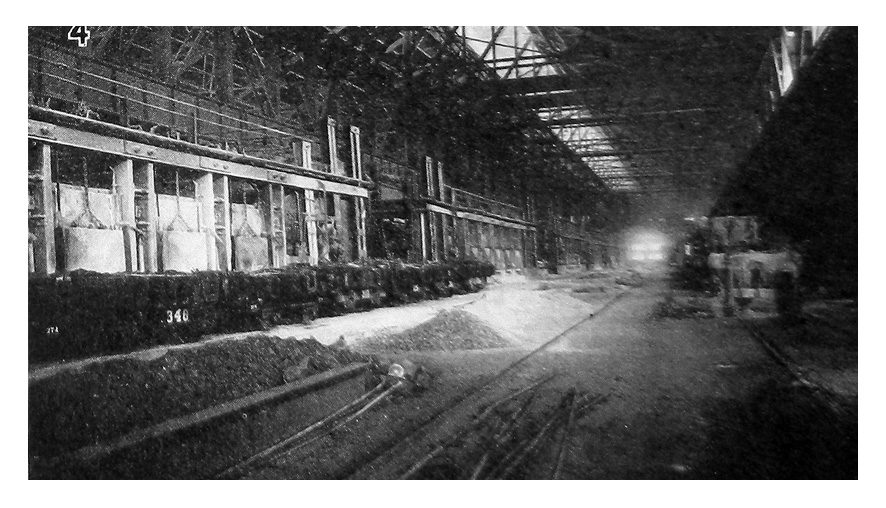
December 30, 1895, the date Hamilton Iron and Steel Co. “blew in” the City’s first blast furnace at Huckleberry Point on Hamilton Harbour, marked…
December 30, 1895, the date Hamilton Iron and Steel Co. “blew in” the City’s first blast furnace at Huckleberry Point on Hamilton Harbour, marked the beginning of large-scale industrial steel production in the City. This event was a game-changer for the industry, transforming the nature of the workforce and attracting new businesses to Hamilton, who relied on the ready supply of iron and steel the City offered. Through a series of mergers, the Hamilton Iron and Steel Co. eventually became Stelco in 1910, which continued to operate the original 1895 blast furnace until 1968. (Content courtesy of Workers' City)
workerscity.ca
In January, 1897, 14 women headed to Hamilton Bay to play a relatively new game - hockey. From the Spectator: “An intensely exciting and…
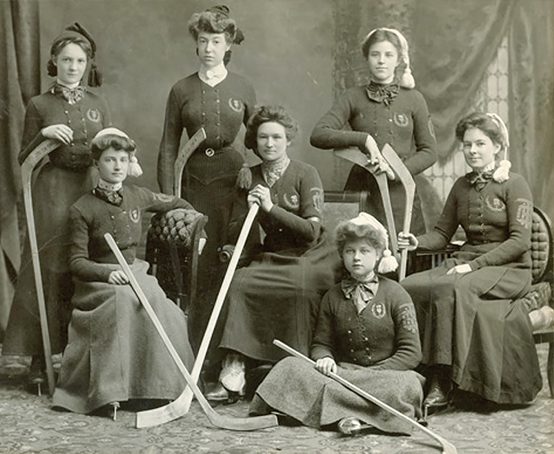
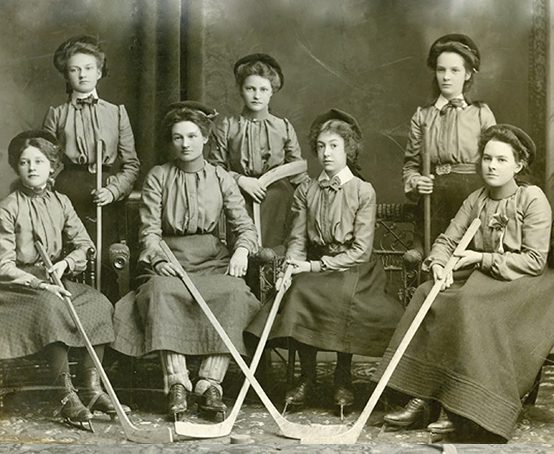
In January, 1897, 14 women headed to Hamilton Bay to play a relatively new game - hockey. From the Spectator: “An intensely exciting and interesting game of hockey was played on the bay between some of Hamilton’s leading society ladies, and though the spectators were few, they were treated to a surprisingly scientific game by the fair skaters.” Organized women’s hockey in Hamilton began ca. 1900 at the Ontario Normal College: “A sport which gives evidence of becoming popular among us is hockey, and the formation of a club has already been considered. To carry this out it will be necessary to secure special hours and rates at the covered rink.” Women have been fighting for equal ice time ever since. (Content courtesy Dr. Christine Lei; HPL Local History and Archives.)
thediscoverblog.com
en.wikipedia.org
womenshockeylife.com
Erland Lee, Secretary of the local Farmers’ Institute, invited Adelaide Hoodless to speak to the wives of farmers in February 1897. Hoodless highlighted the…
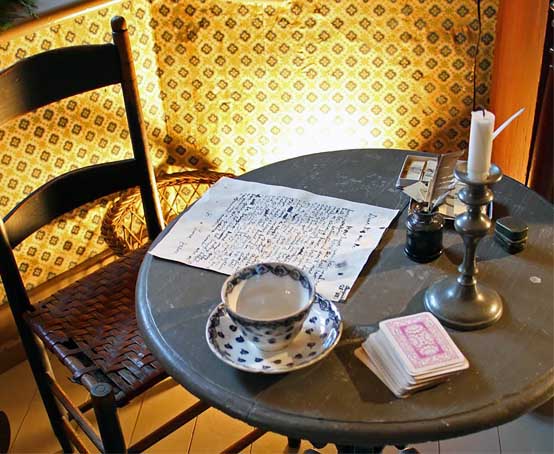
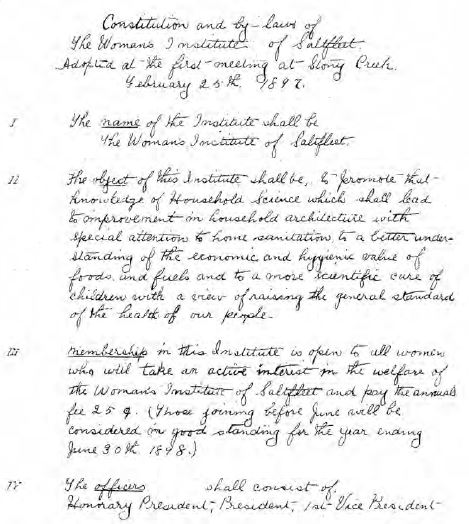
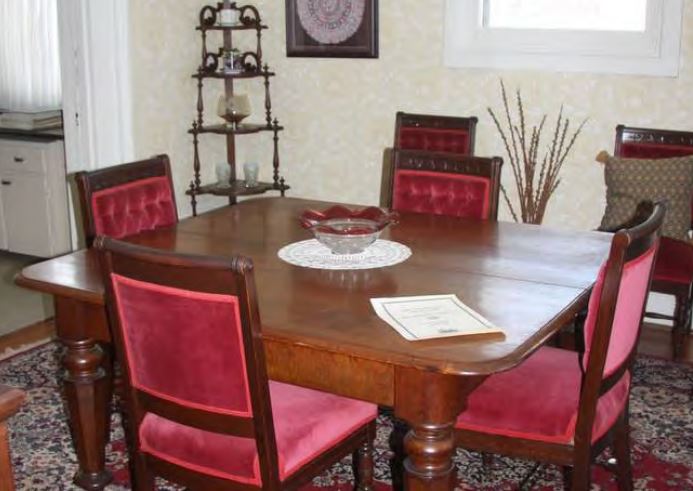
Erland Lee, Secretary of the local Farmers’ Institute, invited Adelaide Hoodless to speak to the wives of farmers in February 1897. Hoodless highlighted the discrepancy between the education that farmers received through the Farmers’ Institute, and the lack of education that women received as wives and mothers running households. She advocated for the founding of a “Women’s Institute” to be developed as an offshoot of the Farmers’ Institute. Following this meeting, Erland and Janet Lee (nee Chisholm) drafted a Constitution and By-Laws for the Women’s Institute. Janet Lee wrote the final draft on her Dining Room table, and the first Women’s Institute was formed. (Content Courtesy Erland Lee Museum/Federated Women’s Institutes of Ontario.)

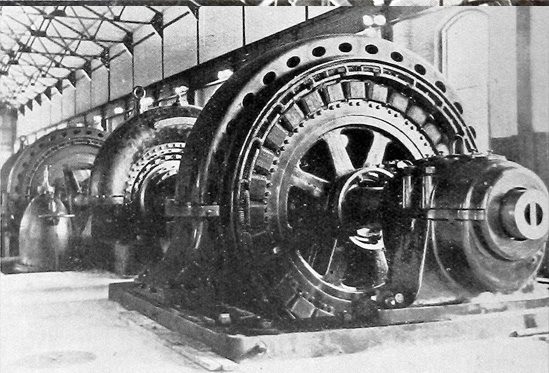
In 1896 five Hamilton businessmen known as "The Five Johns" (John Dickenson, John Gibson, John Moodie Sr., John Patterson and John Sutherland), invested in…
In 1896 five Hamilton businessmen known as "The Five Johns" (John Dickenson, John Gibson, John Moodie Sr., John Patterson and John Sutherland), invested in the new concept of hydro-electric generation and transmission. Backed by the Bank of Hamilton and with technical advice from the Royal Electric Company, they formed the Cataract Power Company. Starting in 1898, water from the Welland Canal was used to generate inexpensive hydro-electric power at DeCew Falls. The power was transmitted 43 kilometres to a power sub-station on Victoria Avenue. Hamilton became the foremost electrified city in Canada and achieved world leadership in electrical power development. (Content courtesy of Workers' City, HPL Local History and Archives; hamiltonpostcards.com; archives.org; C. Redford)
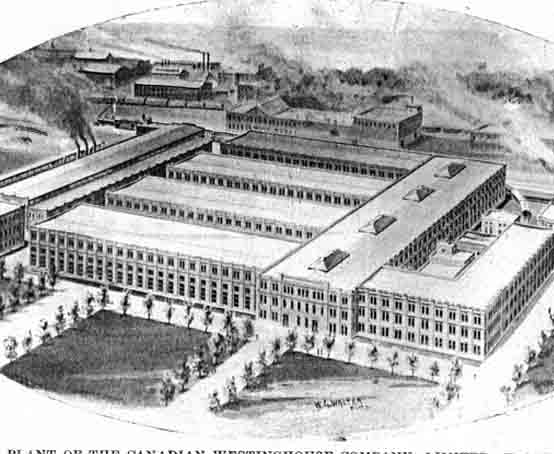
Westinghouse was the first of many American branch plants to be established in Hamilton, greatly expanding industry in the City with large scale mechanized…
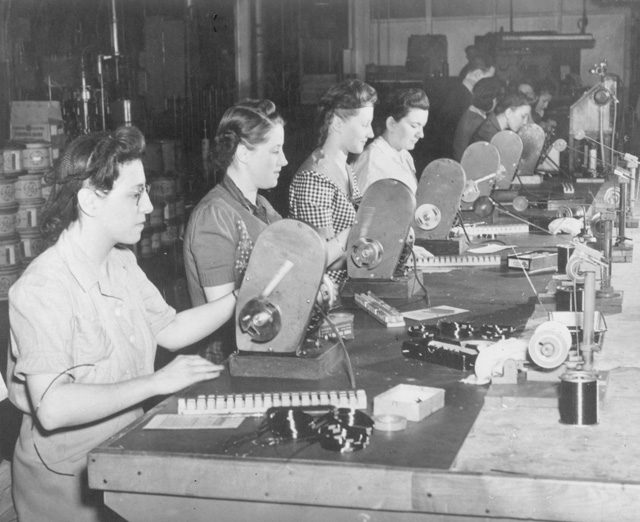
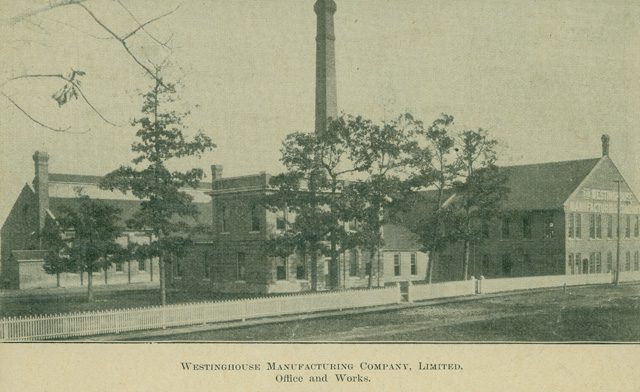
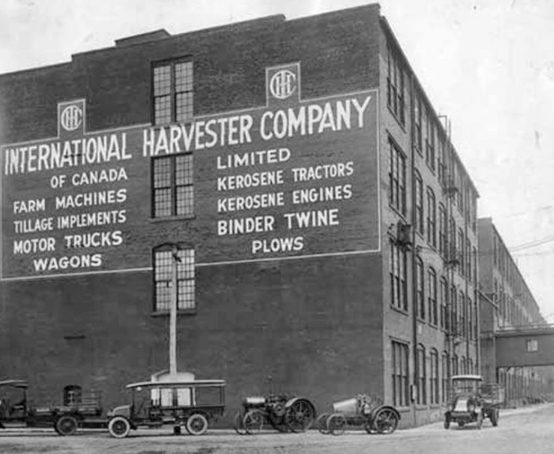
Westinghouse was the first of many American branch plants to be established in Hamilton, greatly expanding industry in the City with large scale mechanized factories. Branch plants like Westinghouse and International Harvester together with large domestic producers like Stelco recruited a vast new workforce, many of whom were newcomers to Hamilton from countries in southern and eastern Europe. Many of these new workers settled in newly built neighborhoods surrounding the new industrial plants concentrated in East Hamilton. The new settlers brought traditions from their respective homelands to Hamilton and established churches, businesses and community centres in and around Barton and Sherman, resulting in a more diverse community in and around Hamilton’s industrial hub. (Content courtesy of Workers' City.)
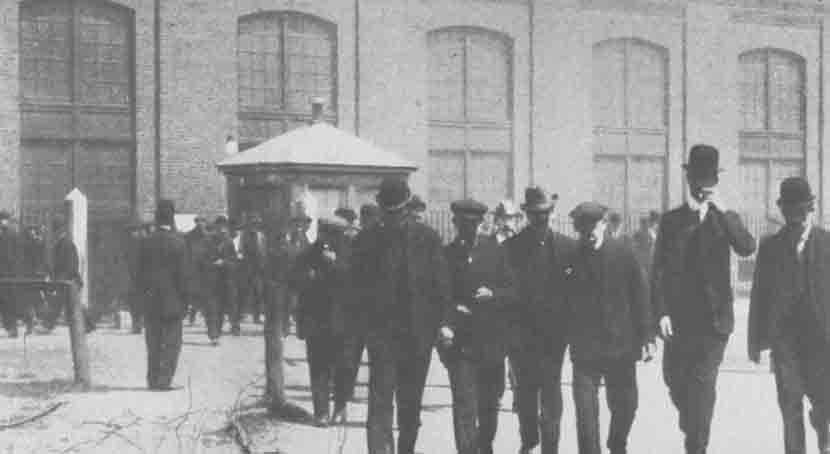
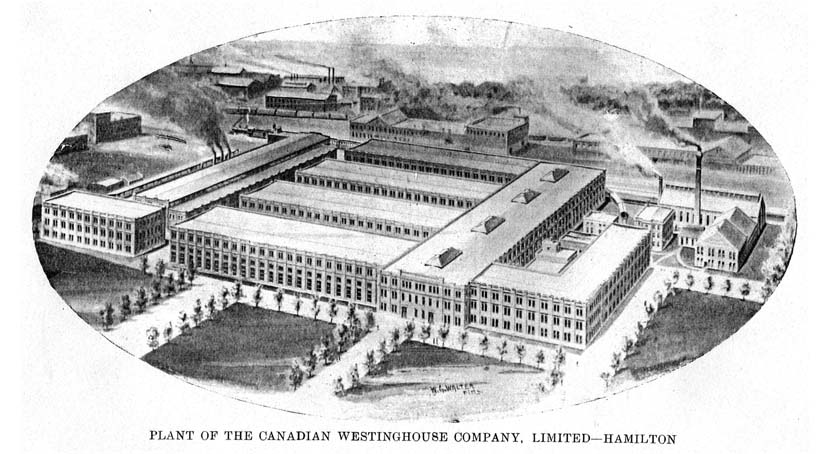
workerscity.ca
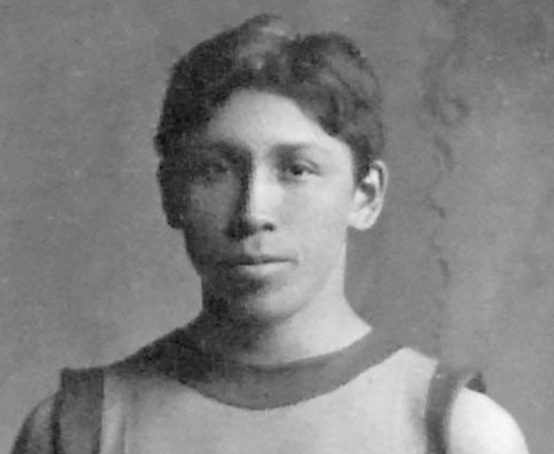
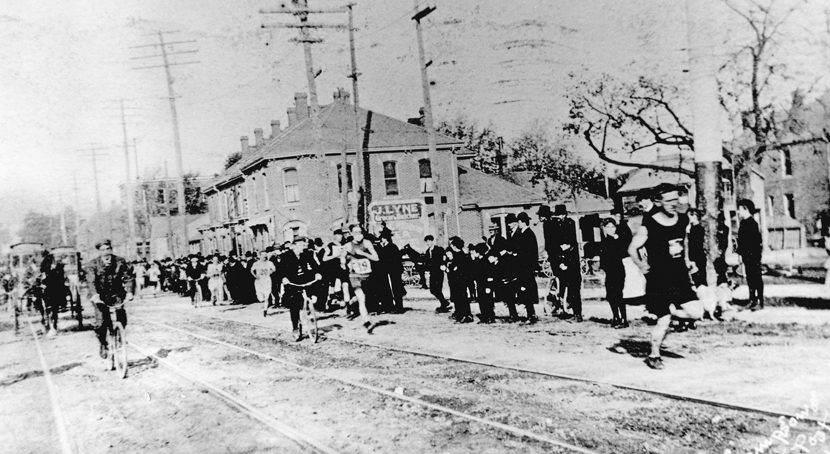
Haudenosaunee Onondaga runner Cogwagee (Tom Longboat) attended the Mohawk Institute Residential School in Brantford as a child. He twice escaped the school to shelter…
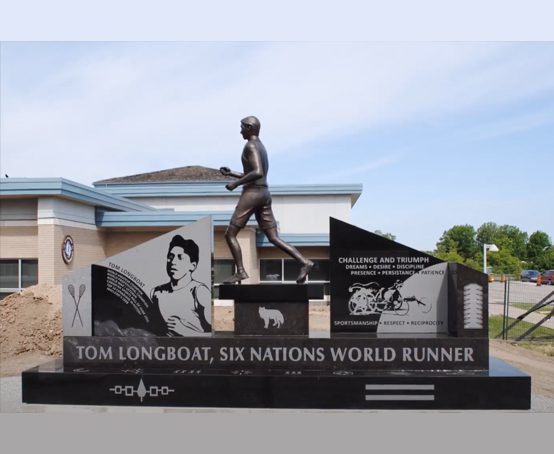
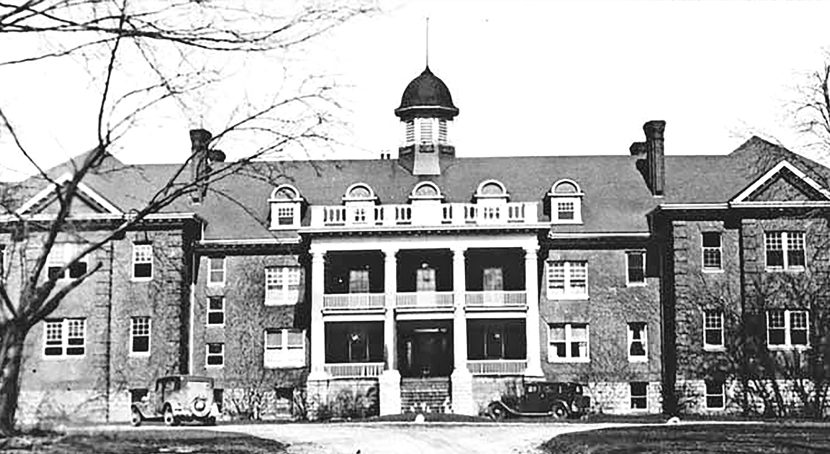
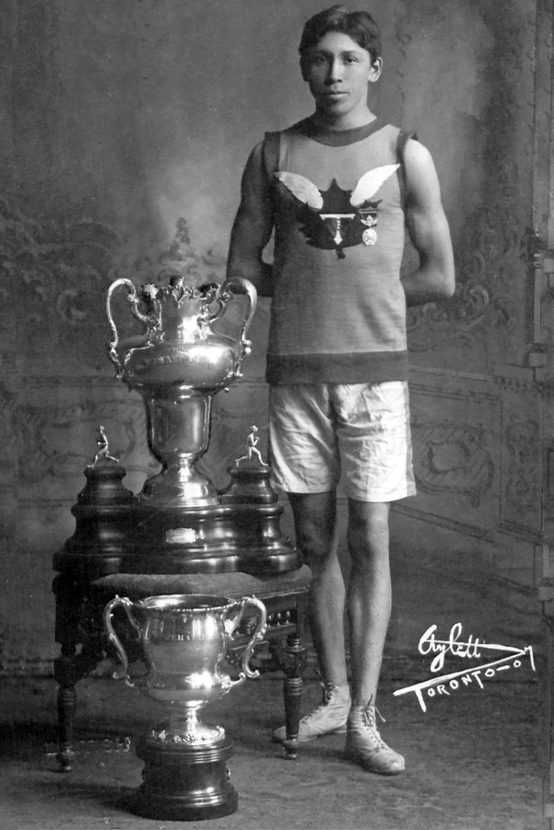
Haudenosaunee Onondaga runner Cogwagee (Tom Longboat) attended the Mohawk Institute Residential School in Brantford as a child. He twice escaped the school to shelter with family, the second time succeeding in not having to return. He would soon become the most famous distance runner in the world. He won Hamilton’s Around the Bay Road Race in 1906, shattering the previous record, and in 1907 did the same at the Boston Marathon. He had victories at Toronto’s Ward Marathon in 1906, 1907 and 1908. In 1909 he was named “Professional Champion of the World” when he won the world professional marathon at Madison Square Garden in New York. After becoming world-famous, Cogwagee was asked by the Anglican authorities if he would return to speak at the Mohawk Institute Residential School. He declined, stating “I wouldn’t even send my dog to that place.” June 4 was officially declared Tom Longboat Day in Ontario in 2008. (Content courtesy Around the Bay Road Race; Library and Archives Canada; British Library; Algoma University Archives.)
tomlongboat.ca
bac-lac.gc.ca
bayrace.com
The Hamilton Health Association opened the city’s tuberculosis hospital on the west mountain known as the Sanatorium in 1906. At the turn of the…
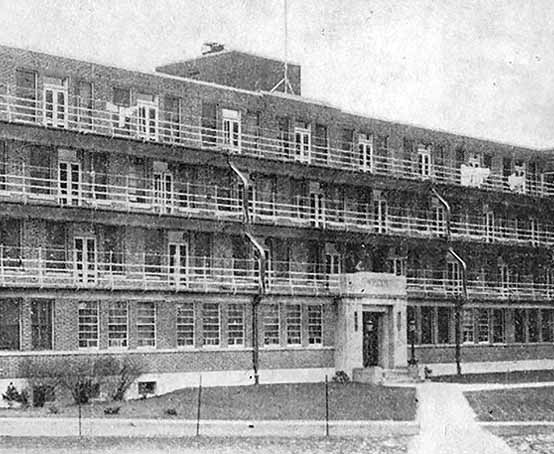
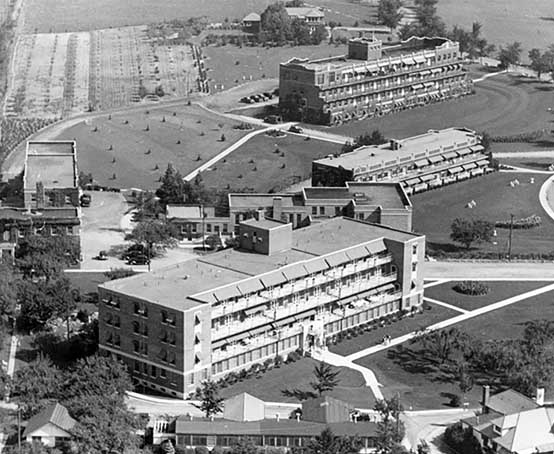
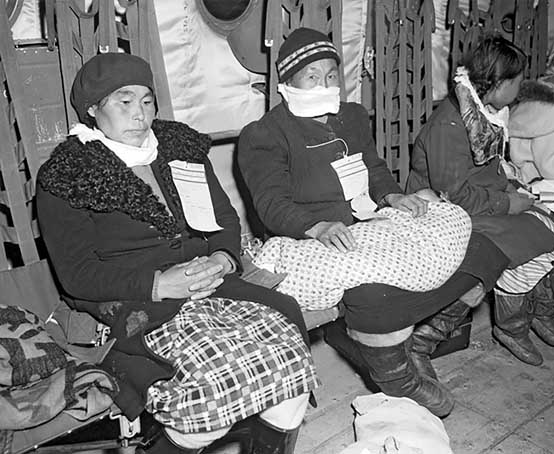
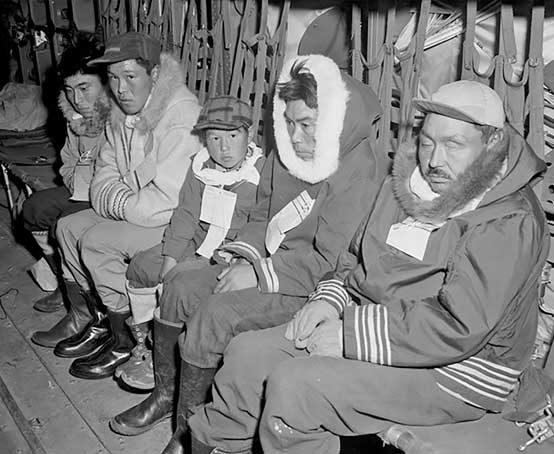
The Hamilton Health Association opened the city’s tuberculosis hospital on the west mountain known as the Sanatorium in 1906. At the turn of the 20th-century tuberculosis was a disease of pandemic proportions. For over fifty years the “San” as it was known, was one of the largest tuberculosis hospitals in the British Commonwealth and was highly regarded for its treatment programmes. In the 1950s and 1960s, the Sanatorium became a treatment centre for more than one thousand Inuit and Cree with tuberculosis who were forced from their homes in the Eastern Arctic to be treated in unfamiliar territory, far from family and those who could speak their languages. The Sanatorium became Chedoke General Hospital in 1961. In 1979 it was subsumed within Hamilton Health Sciences. (Content courtesy of HPL Local History and Archives.)
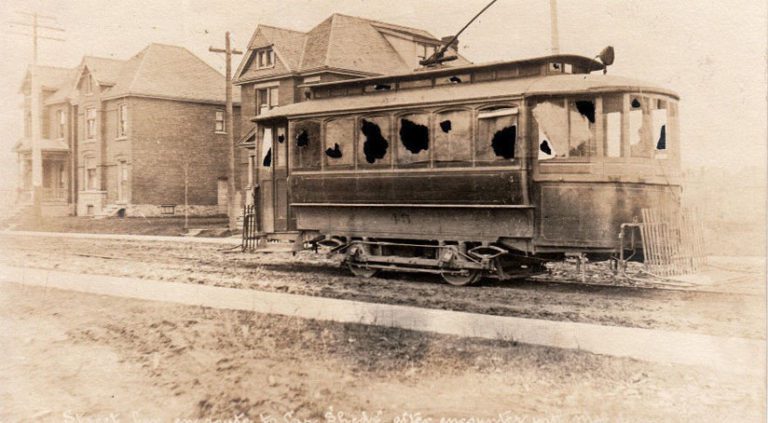
On November 4, 1906, Hamilton Street Railway (HSR) drivers and conductors walked off the job in protest over the company’s refusal to shorten hours…
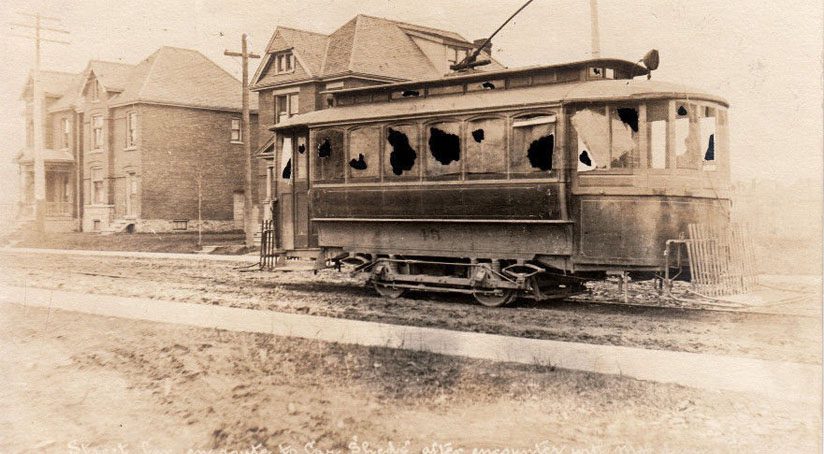
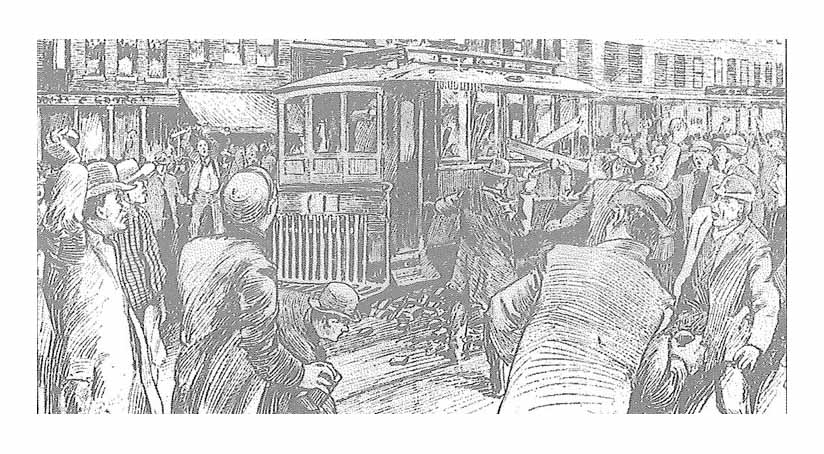
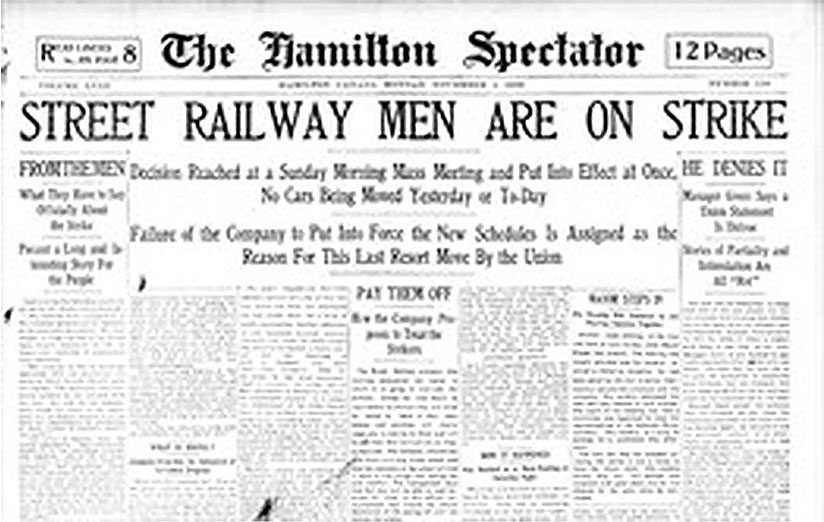
On November 4, 1906, Hamilton Street Railway (HSR) drivers and conductors walked off the job in protest over the company’s refusal to shorten hours and raise wages, as well as the HSR’s plan to staff their new lines with non-union workers. This strike, which at times turned violent, was the culmination of 19th century worker efforts to organize take a collective stand for what they believed was fair and right. Ultimately, the strikers succeeded in winning union recognition, but were unsuccessful in their demands for higher wages shorter working hours. However, out of this strike came greater political organization of the labour movement, signaling the importance of worker concerns to the greater Hamilton community. [Only four days following the end of the strike labour candidate Allan Studholme was elected to Provincial office and a number of other labour candidates were voted in the following month in the municipal election.] (Content courtesy Courtesy of Workers' City, HPL Local History and Archives; City of Hamilton.)
workerscity.ca
In September of 1908, the first Hamilton Normal School opened its doors to 207 students. Although the Ontario Teachers College program operated out of…
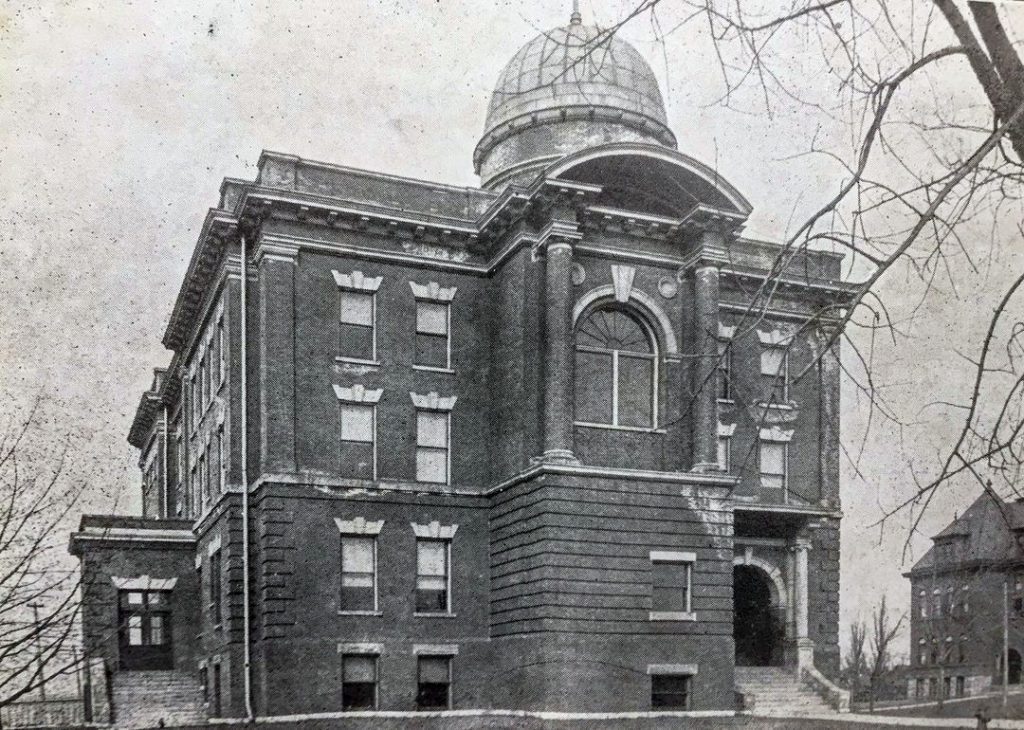
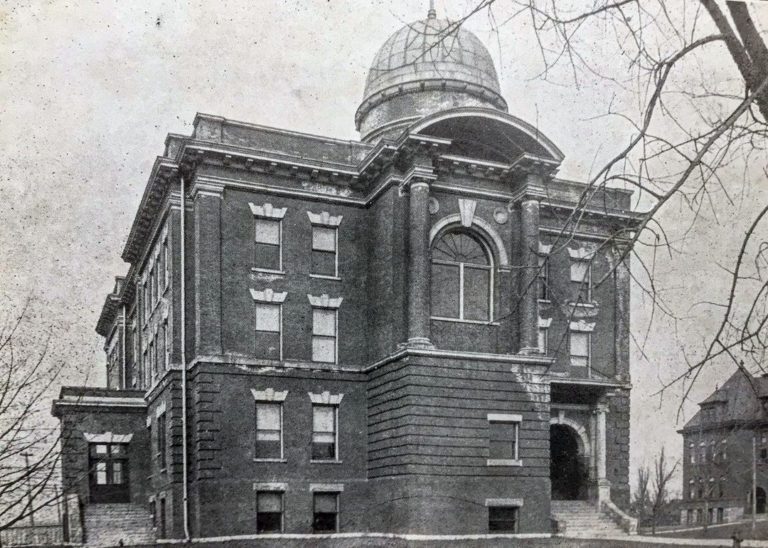
In September of 1908, the first Hamilton Normal School opened its doors to 207 students. Although the Ontario Teachers College program operated out of the Hamilton Collegiate Institute for a period, this was the first building entirely dedicated towards the training of new teachers. The school was located at 47 Strathcona Avenue North, next door to Strathcona Elementary School (at that time still named Sophia Street). Teachers-in-training were often found in Strathcona observing classes and trying their hand at daily tasks. The school operated until 1953, when a fire on New Years Day resulted in its closure and demolition. In 1957, the new Teachers College opened at 1280 Main Street, near McMaster University. (Content courtesy of the Hamilton-Wentworth District School Board.)
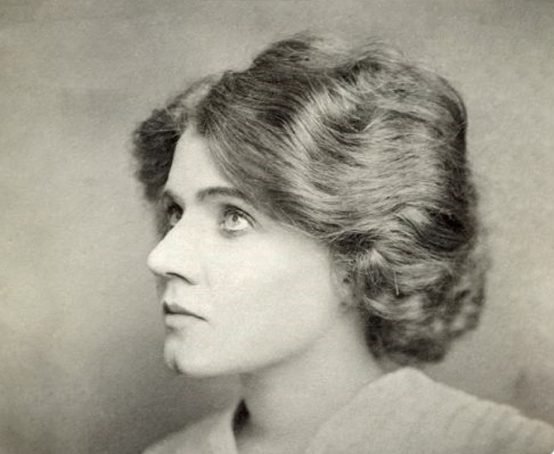
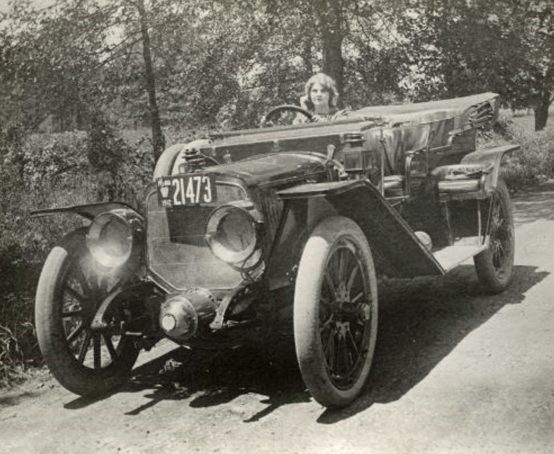
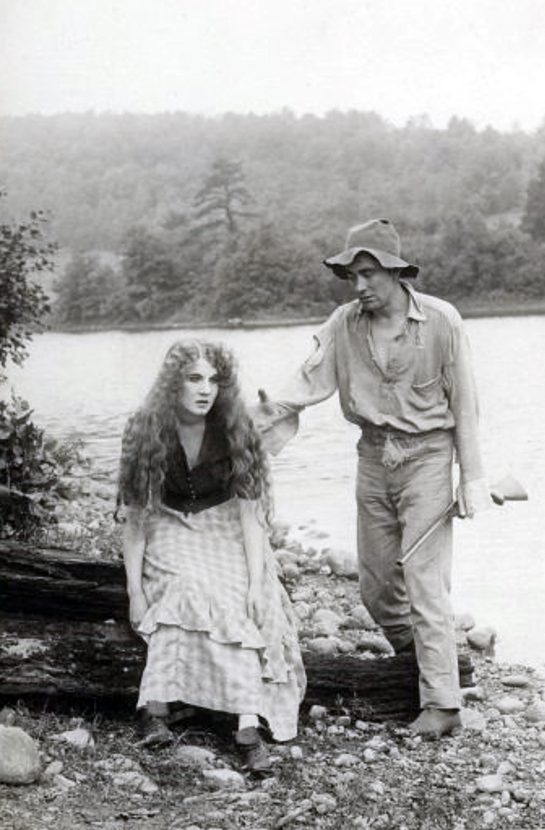
Florence Lawrence was the first actress to be named in the promotion of a film. Born Florence Bridgewood, in Hamilton in 1886 to vaudevillian…
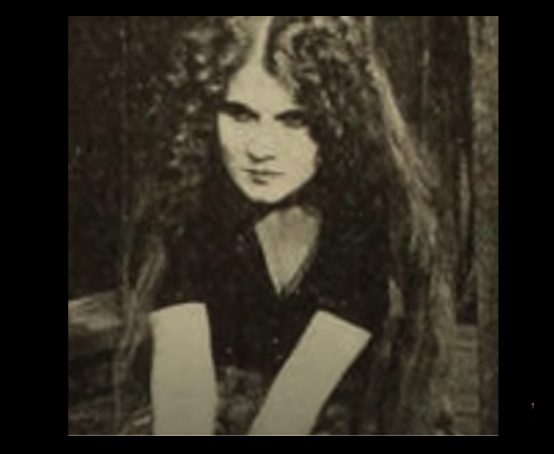
Florence Lawrence was the first actress to be named in the promotion of a film. Born Florence Bridgewood, in Hamilton in 1886 to vaudevillian actress “Lotta Lawrence”. Hamilton’s theatre scene fostered her talent, and by 6 she was called “Baby Flo – Child Wonder”. She moved to the USA and pursued work in film as Florence Lawrence. Her athletic nature was an asset, as Westerns were becoming fashionable. She was hired by the Biograph Company in 1908 to work with legendary director D.W. Griffith, who required a leading lady capable of stunt riding. Her first assignment had her charging on horseback with a pistol. Florence’s fearlessness earned her fame, but only as `The Biograph Girl’, not as Florence Lawrence. Films did not yet list actor credits for fear the larger salaries of stage actors would be sought by silent film stars. But fans and distributors wanted to know names. Florence changed to the Independent Motion Picture Co., and in January 1910 the company placed an ad in Motion Picture World magazine referring to `Miss Lawrence’, the first time an actress’s name was ever used in the promotion of a film. (Content courtesy Wisconsin Center for Film and Theatre Research.)
youtube.com
youtube.com
hamiltoncivicmuseums.ca
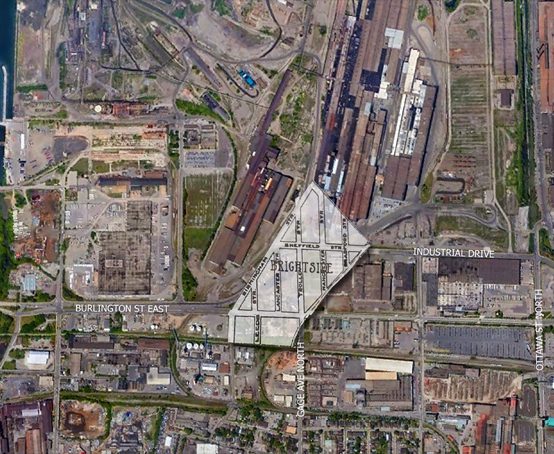
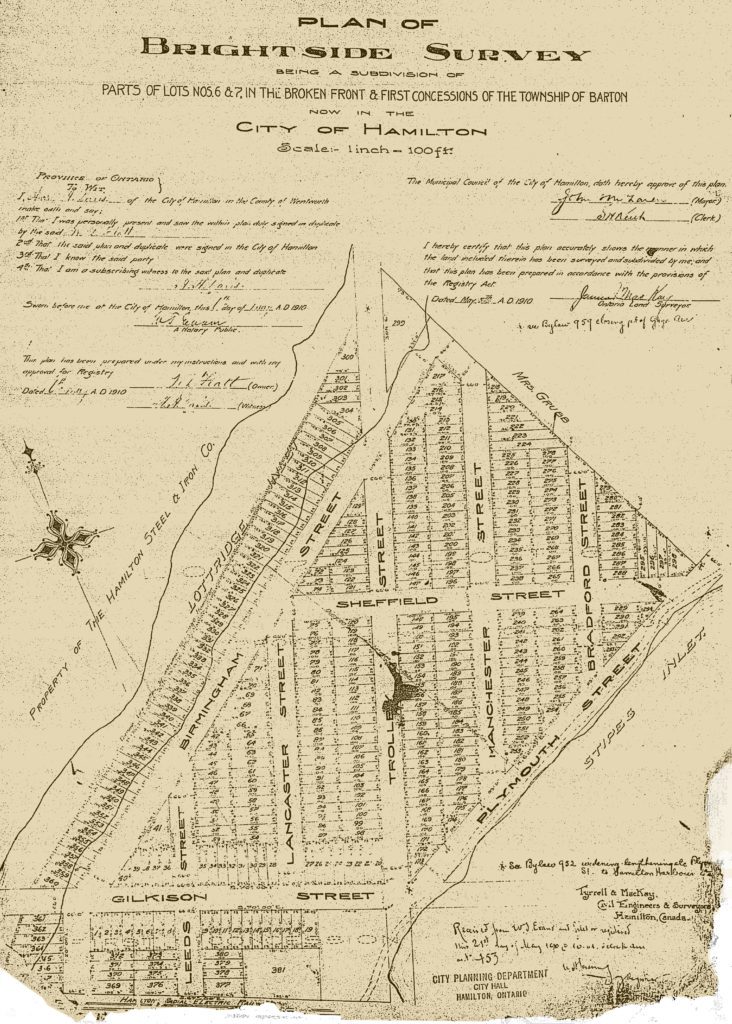
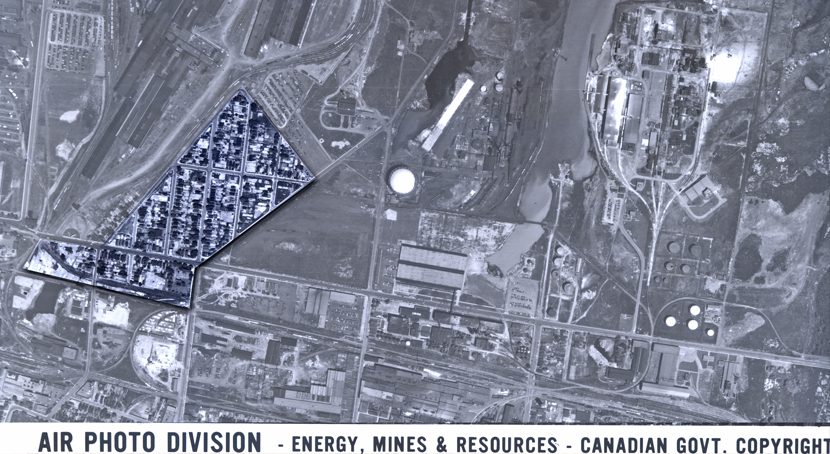
The Brightside Subdivision brought into being a discrete working-class neighbourhood to house a growing industrial workforce. The unique shape of the survey was dictated…
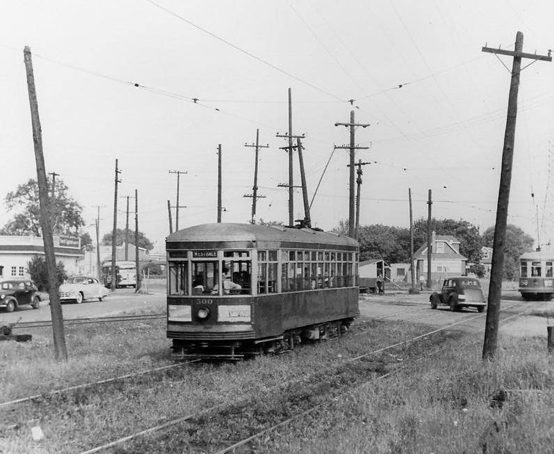
The Brightside Subdivision brought into being a discrete working-class neighbourhood to house a growing industrial workforce. The unique shape of the survey was dictated by constraints of the shoreline of Hamilton Harbour and by the Hamilton Radial Electric and Grand Trunk Railway tracks. From 1890 there had been a massive industrial expansion along the waterfront, with new firms including Westinghouse, Hamilton Blast Furnace, Hamilton Steel and Iron Co., Grasselli Chemical, Cataract Power, International Harvester, the Steel Company of Canada, and Dominion Steel. During the same period, immigration brought a labour force requiring affordable housing. The Brightside Survey was submitted to the City on International Workers Day, May 1st, 1910. Each property was to have trees for shade on graded streets with cement sidewalks. Brightside was small, but had most retail amenities at hand. (Content courtesy City of Hamilton; International Harvester; McMaster University Library Map Collections; trainweb.org.)
facebook.com
thespec.com
ccena.ca
z-m-www.facebook.com
Victorian dynamo Sara Calder waged a 20-year battle to see her vision of an imposing battlefield monument constructed to mark the site of the…
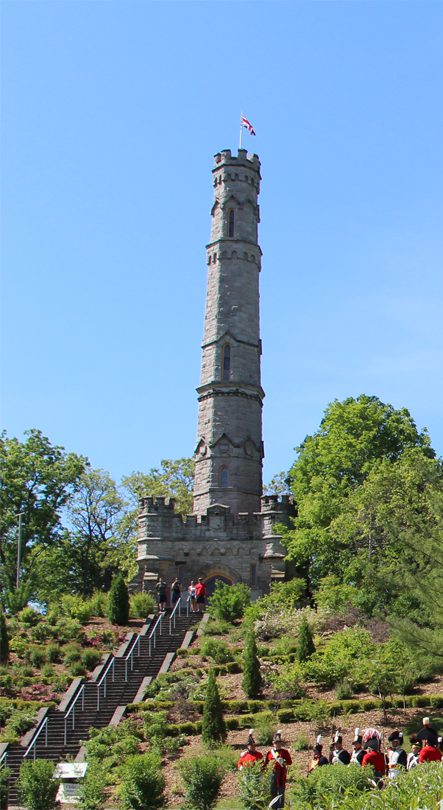
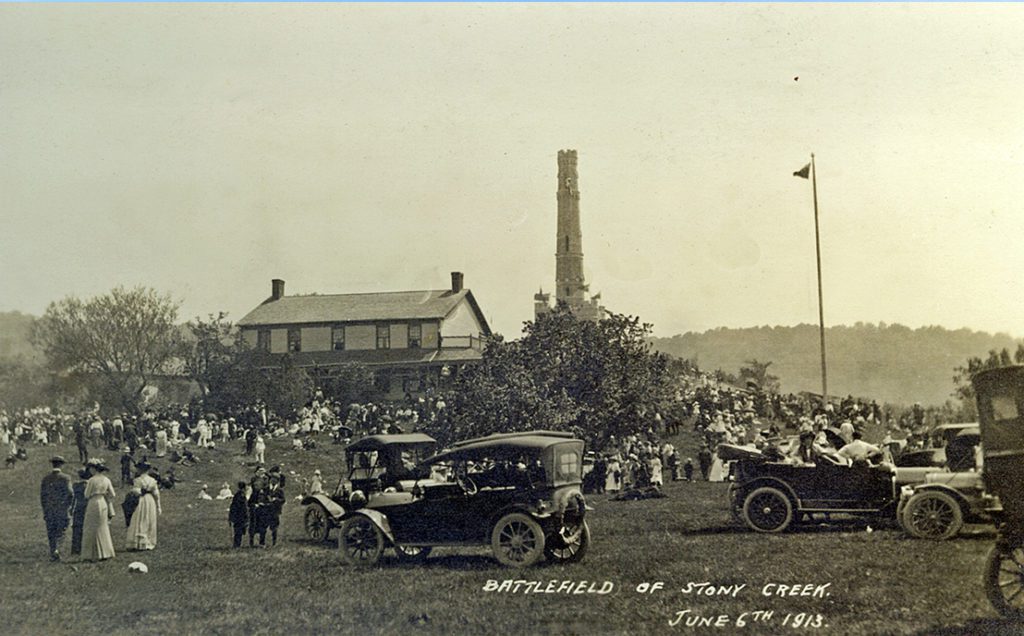
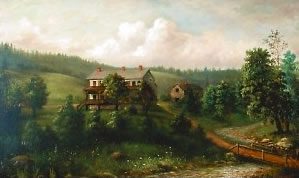
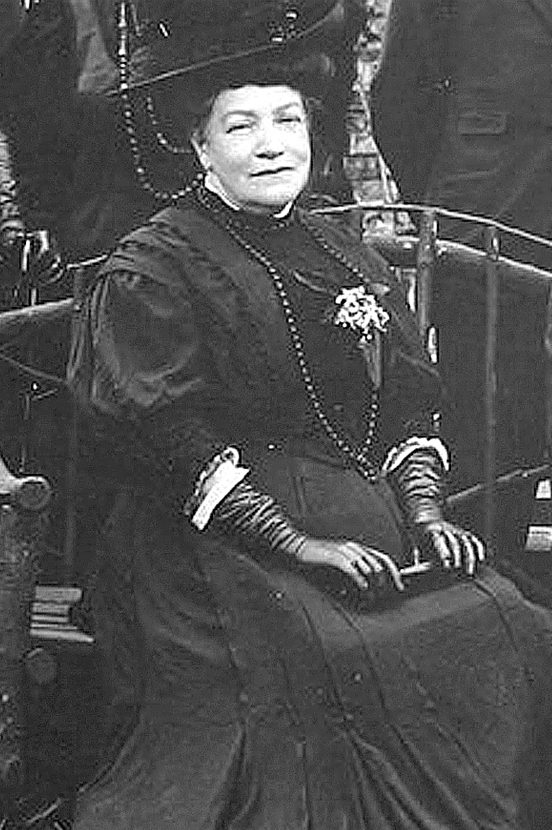
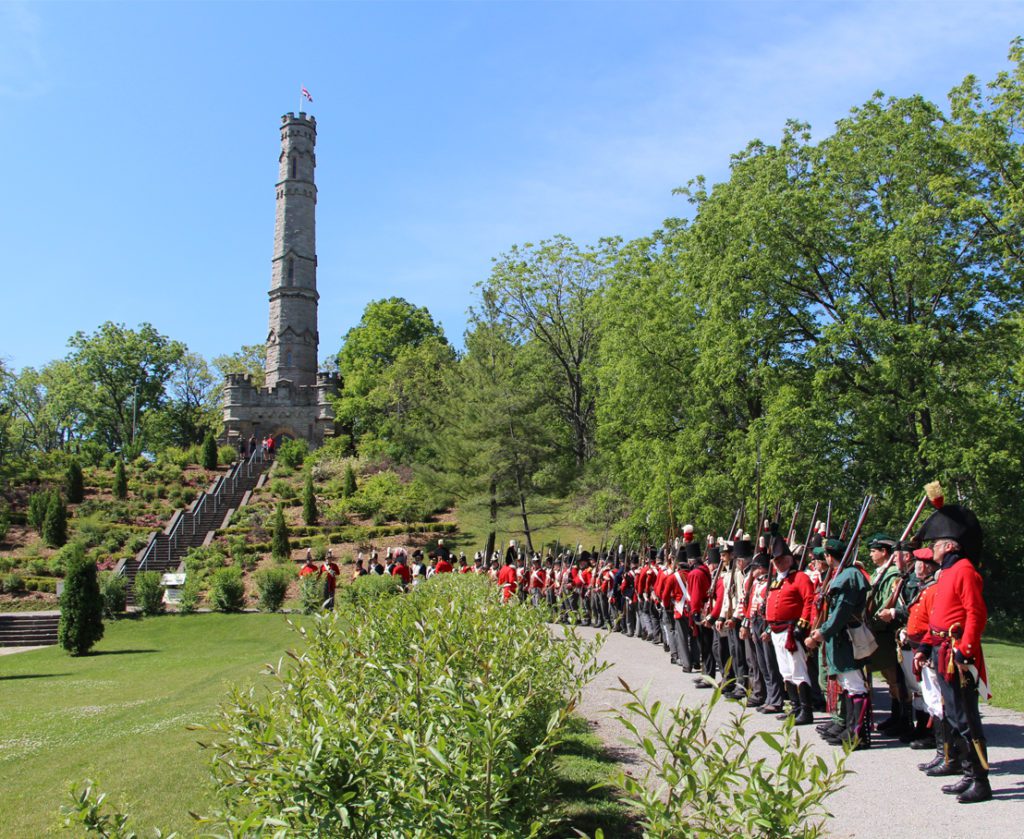
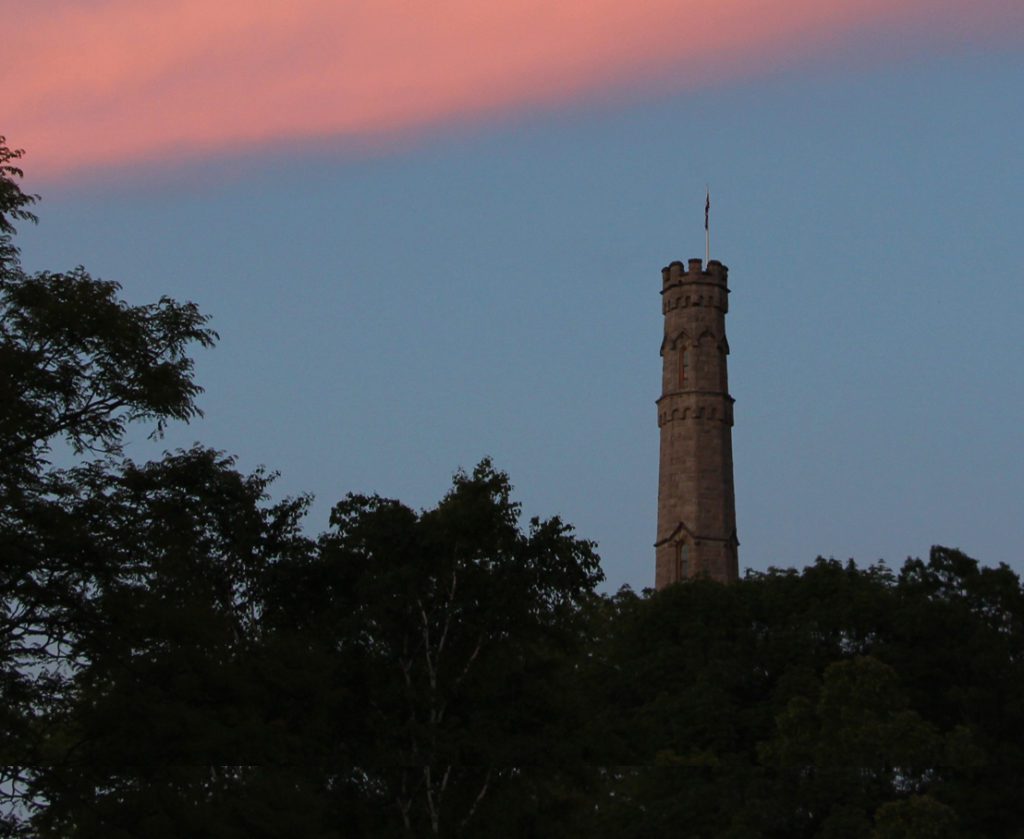
Victorian dynamo Sara Calder waged a 20-year battle to see her vision of an imposing battlefield monument constructed to mark the site of the Battle of Stoney Creek. The Wentworth Historical Society had campaigned for a monument, but the choice for a site was split between the hilltop site behind the Gage House, and Smith’s Knoll, on King Street. Calder formed the breakaway Women’s Wentworth Historical Society in 1899 and purchased the Gage homestead. In 1909, after two decades of negotiating with the Wentworth Historical Society and the federal government, Calder’s vision won out. On the 100th anniversary of the 1813 battle, the 33-metre Gothic Revival tower was unveiled before a crowd of 15,000. (Content courtesy Battlefield House Museum & Park; HPL Local History and Archives; C. Redford.)
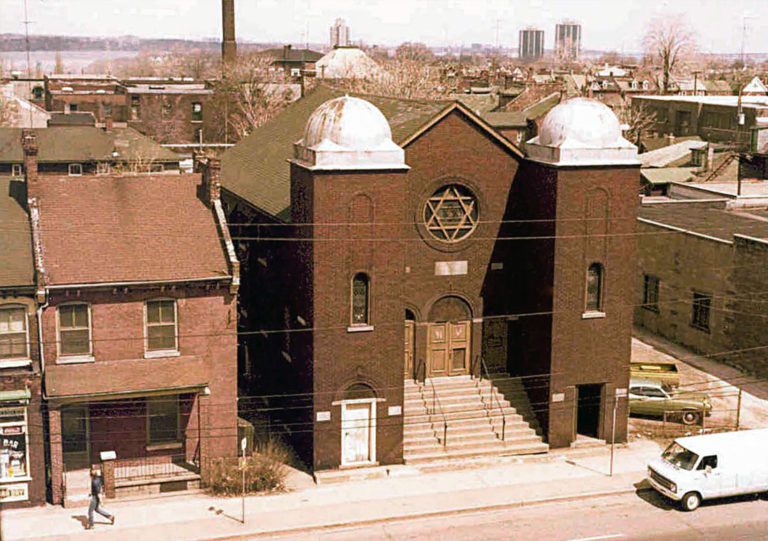
Adas Israel, an Orthodox congregation, was formed by immigrants from central Poland and Galicia. In 1914 they adopted the name Adas Israel Anshe Poilen,…
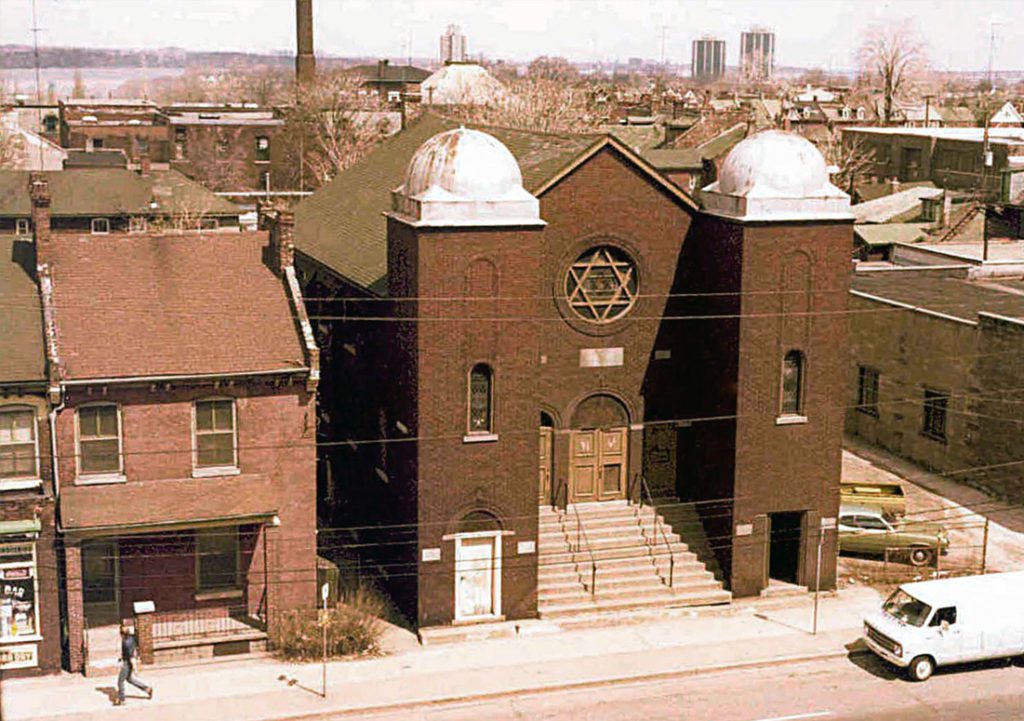
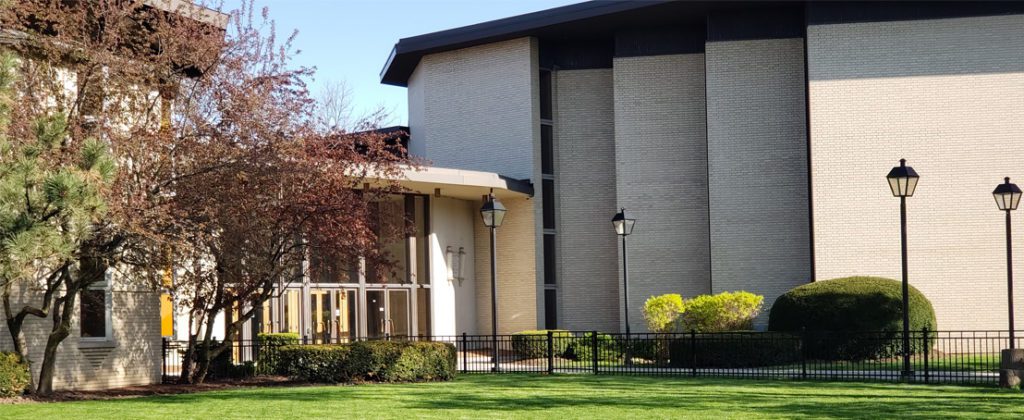
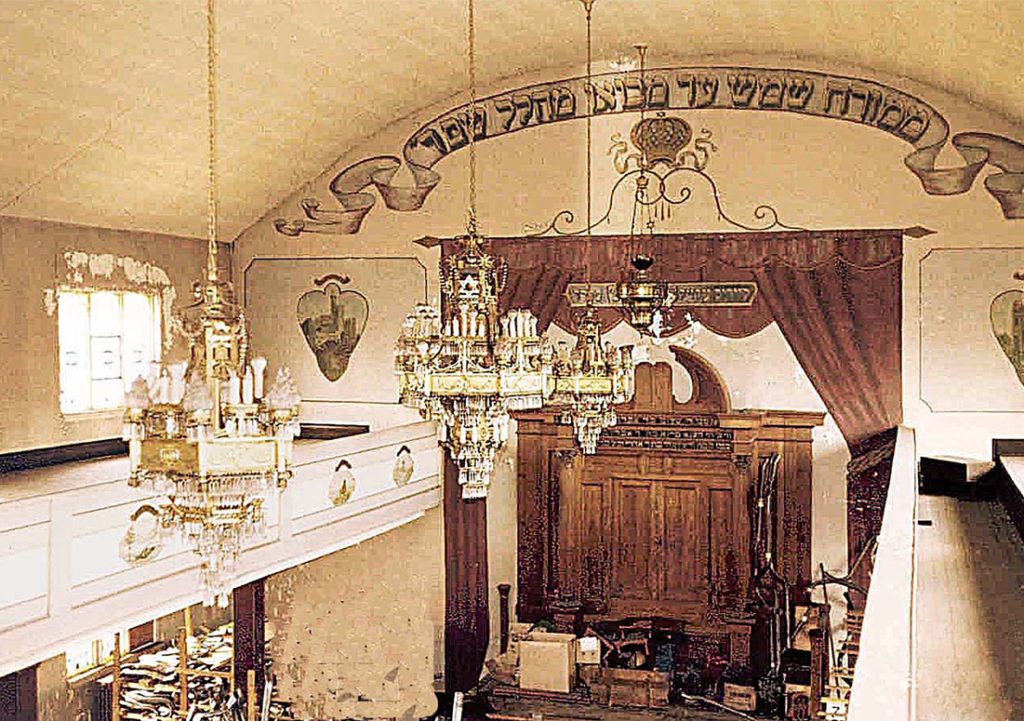
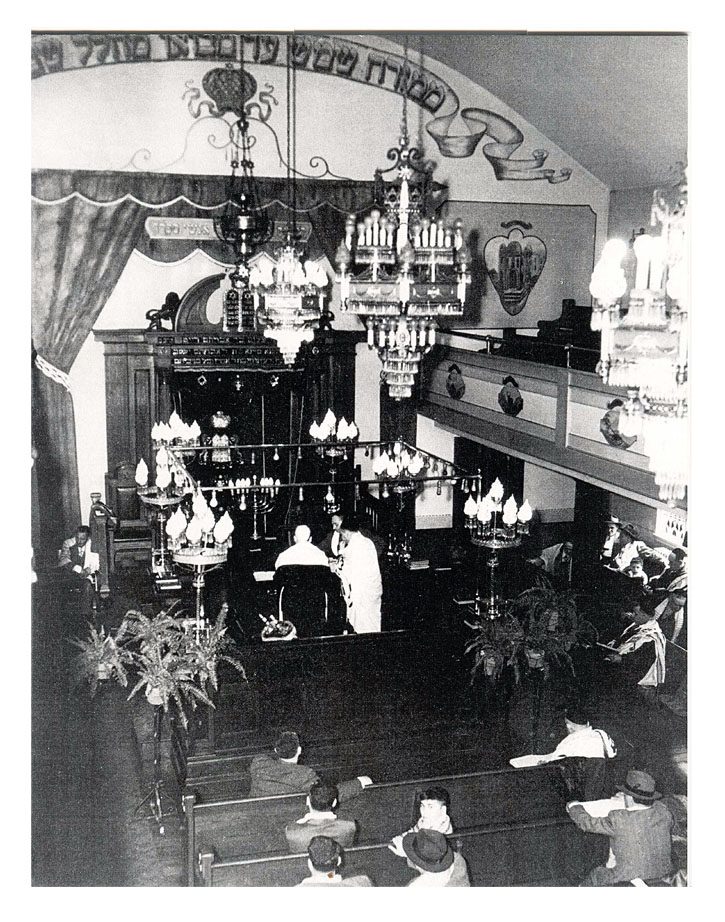
Adas Israel, an Orthodox congregation, was formed by immigrants from central Poland and Galicia. In 1914 they adopted the name Adas Israel Anshe Poilen, also known as the Cannon Street Shul. The Adas Israel moved to its current location on Cline Ave. S. Adas Israel is an orthodox congregation that was founded in the 1920s. The original building was on Cannon Street in downtown Hamilton. After the arrival of Rabbi Morton Green in 1958, a decision was made to move the synagogue to the western suburbs of Hamilton. The new building was built in 1961 on Cline Ave. S. and also included the Hamilton Hebrew Academy Day School. (Content Courtesy of the Hamilton Jewish Federation.)
Location: 25 Cline Ave S., Hamilton, ON L8S 1W4
adasisrael.ca
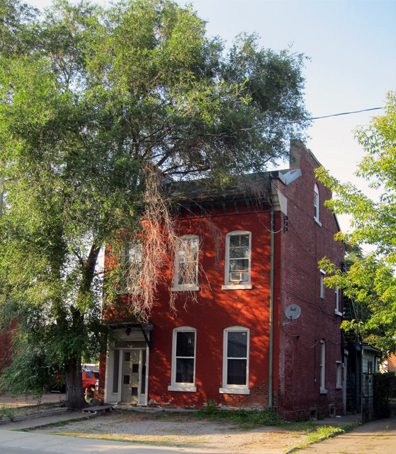
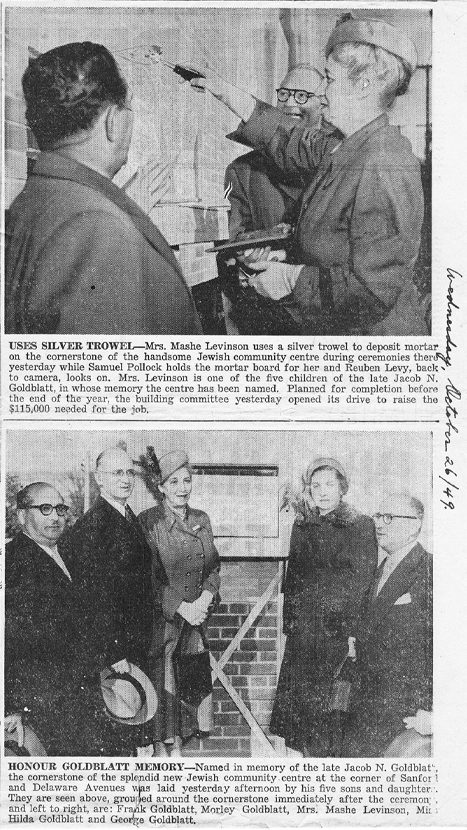
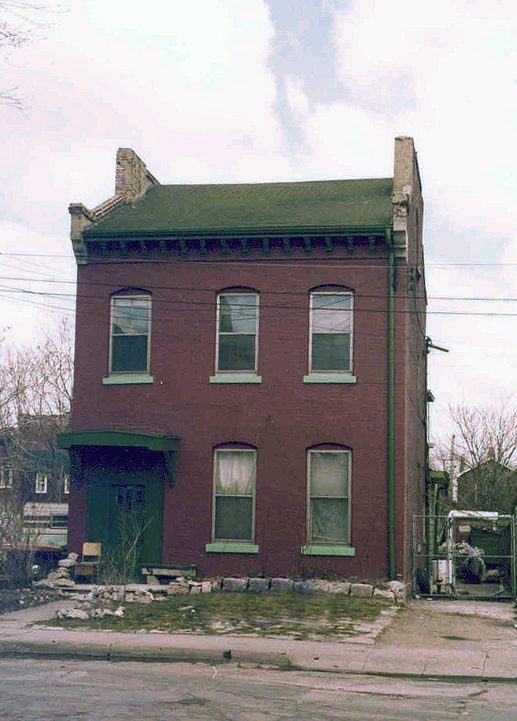
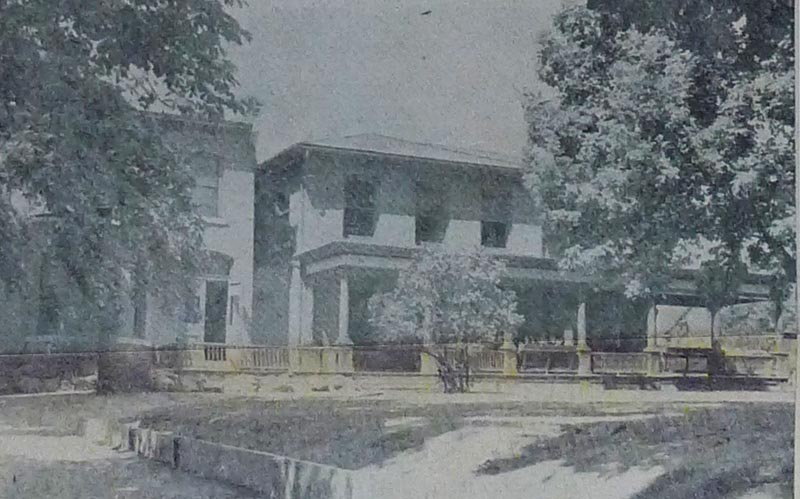
Hamilton’s first Jewish community building, known as the United Hebrew Association, was established at 58 Vine Street in 1916. In 1941, it moved to…
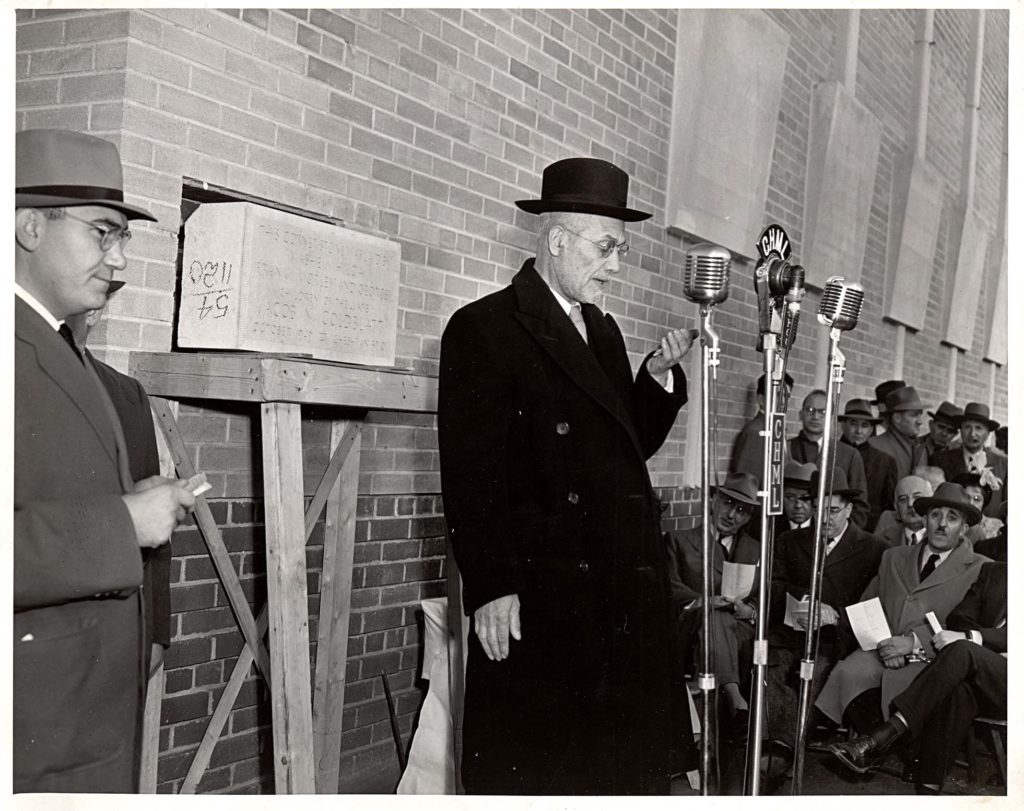
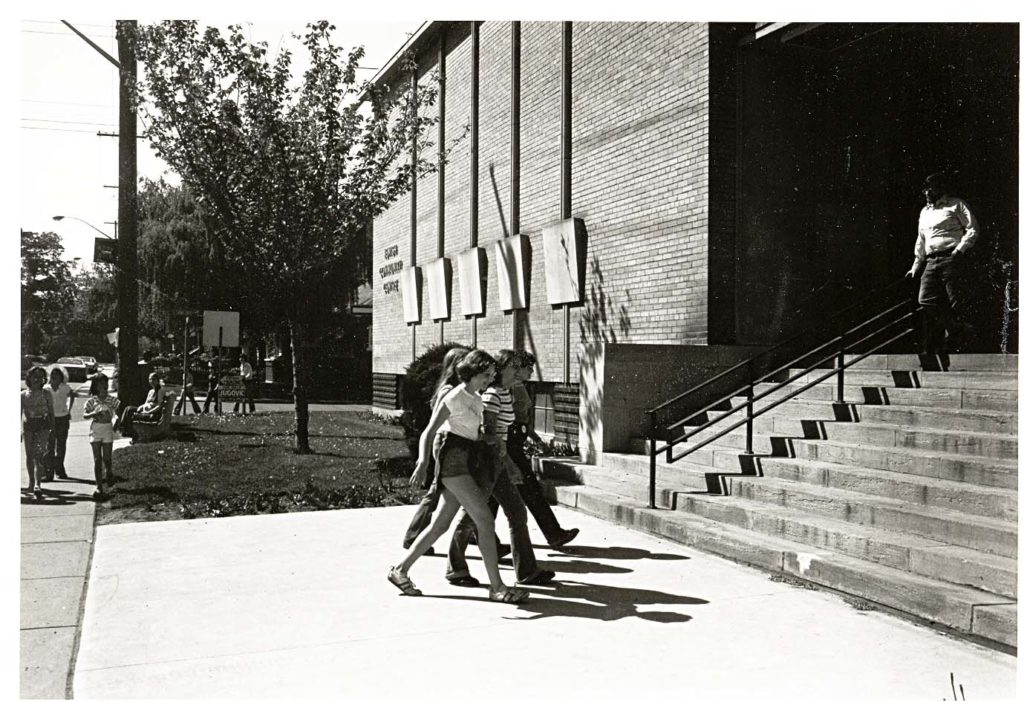
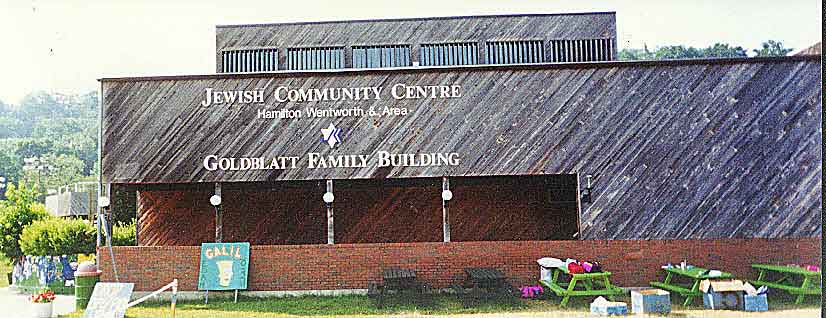
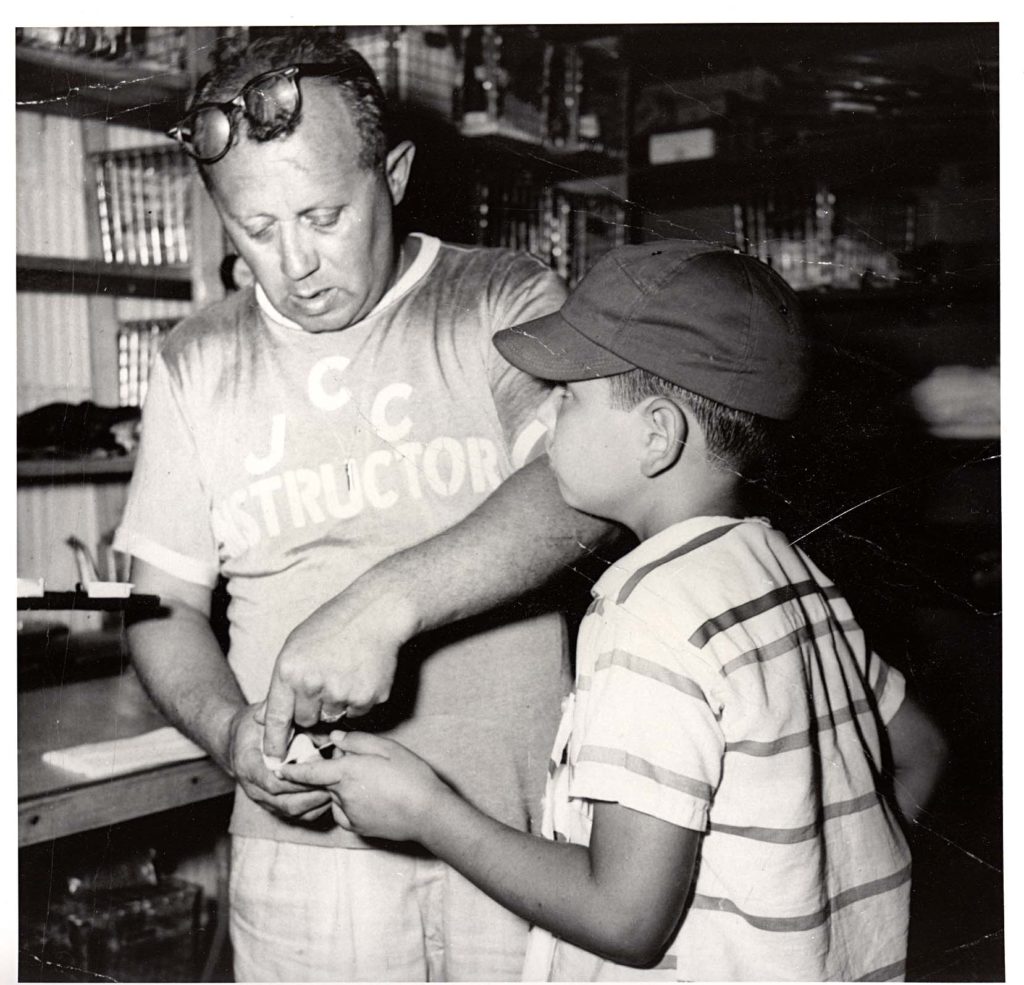
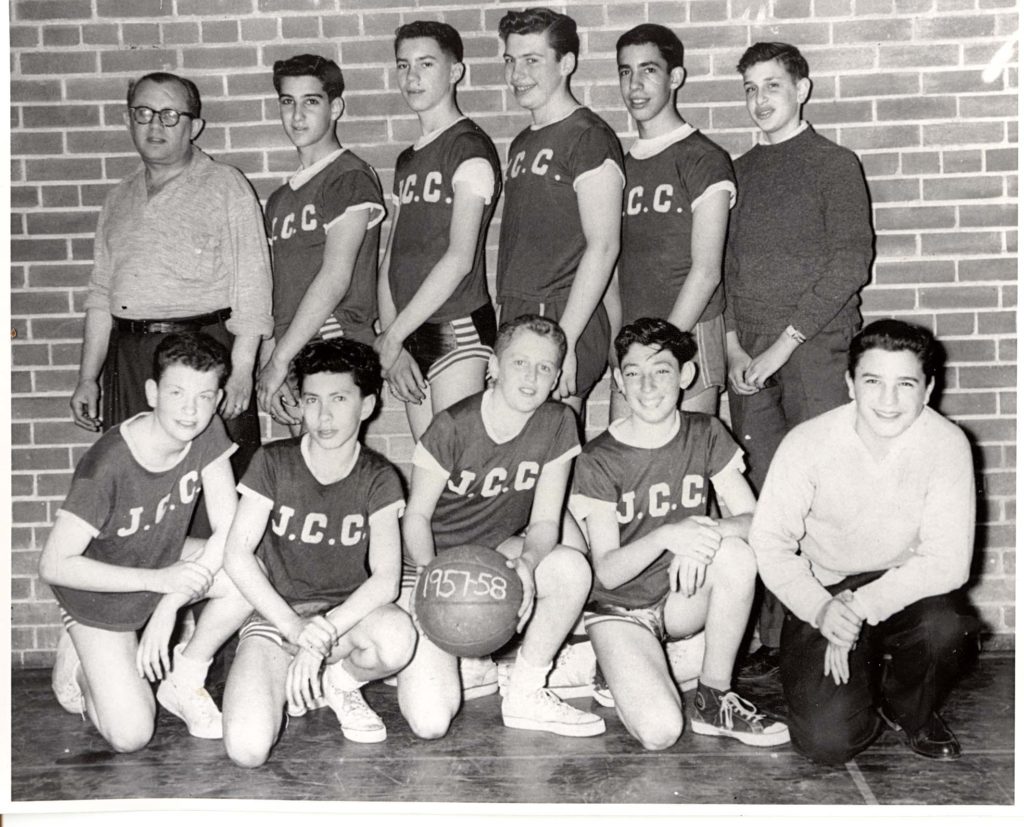
Hamilton’s first Jewish community building, known as the United Hebrew Association, was established at 58 Vine Street in 1916. In 1941, it moved to John Street to accommodate youth groups with their expanding activities, and to provide still more meeting rooms. In November 1950, the state-of-the-art Jacob N. Goldblatt Jewish Community Centre was dedicated at 57 Delaware Ave, which became a hub of activity for kids and adults of all ages. The Centre was home to Camp Kadimah and the community Talmud Torah and the annual Hadassah Bazaar, among many other events. Along with his colleagues, Bill Stern, executive director of the Council of Jewish Organizations and JCC athletic director Max Rotman, JCC youth director, Sam Brownstone turned the JCC into a true community centre, which offered a multiplicity of services to everyone. (Content Courtesy of the Hamilton Jewish Federation.)
Location: 1605 Main St. W. Hamilton, ON L8S 1E6

hamiltonjewishnews.com
jewishhamilton.org
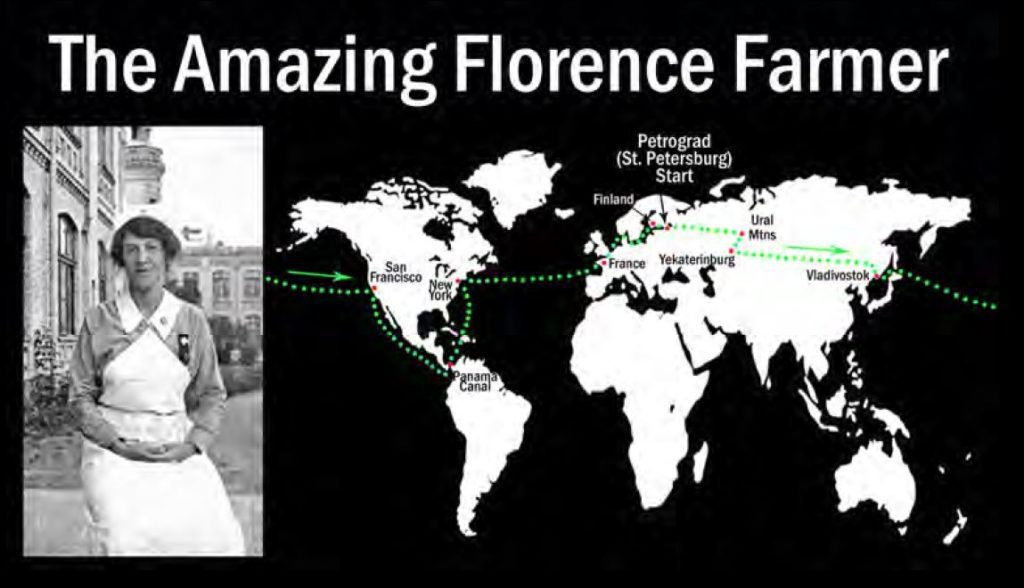
Florence Farmer of Ancaster (1879-1974) trained as a nurse at Brooklyn Hospital, New York, before taking a staff position with the New York City…
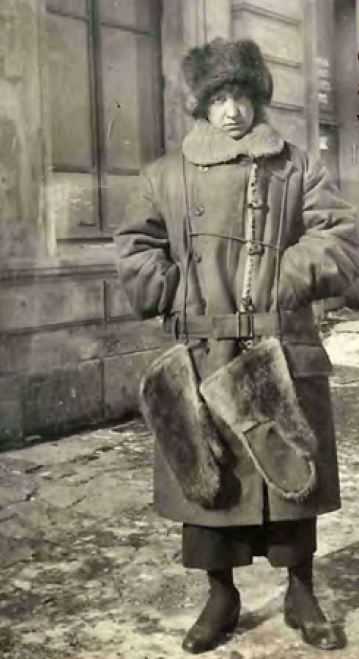
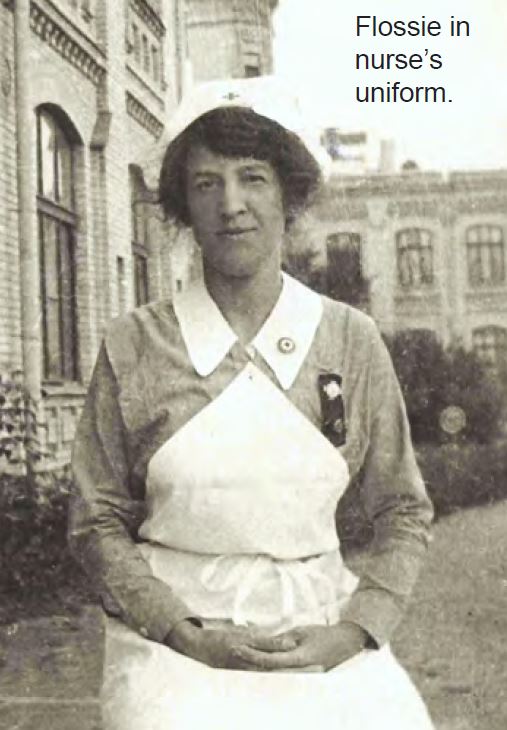
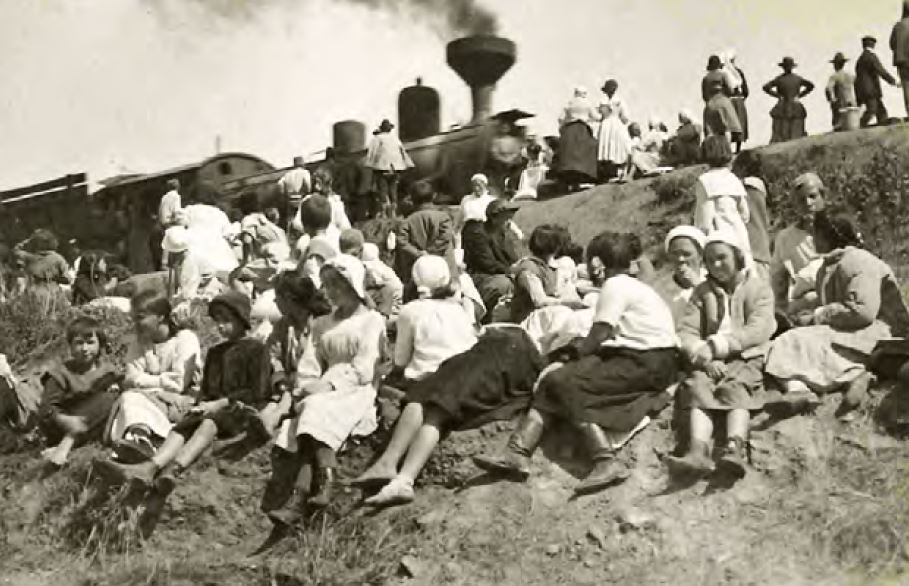
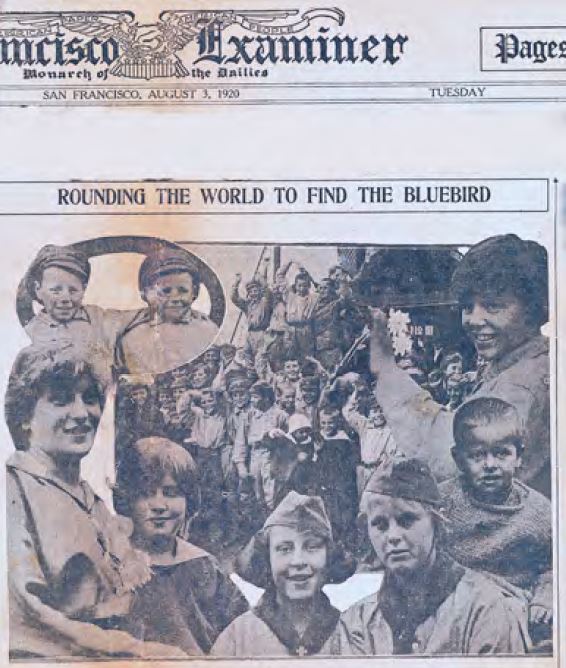
Florence Farmer of Ancaster (1879-1974) trained as a nurse at Brooklyn Hospital, New York, before taking a staff position with the New York City Dept. of Health and later the American Red Cross. In 1914 she was assigned to a Red Cross Mercy Ship sailing to Russia. In the spring of 1918, with the Russian Revolution in progress, children & counsellors from a summer camp in the Ural Mountains were forced to flee eastward, across Russia and into Siberia. The Red Cross was determined to rescue them and Florence became part of the mission to transport 780 children to safety., Florence received her discharge from the Red Cross in Paris in 1921. She died at 95 and is buried at St John’s Churchyard in Ancaster. (Content courtesy Fieldcote Memorial Park and Museum; Farmer Family.)
100 acres of land, including what is now Gage Park, was earlier known as Jubilee Farms, and the house located there as The Retreat.…
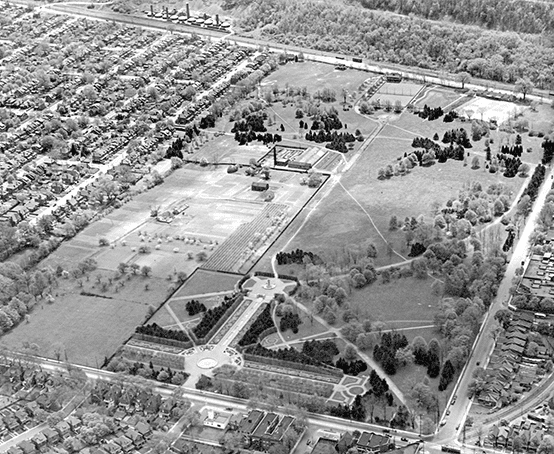
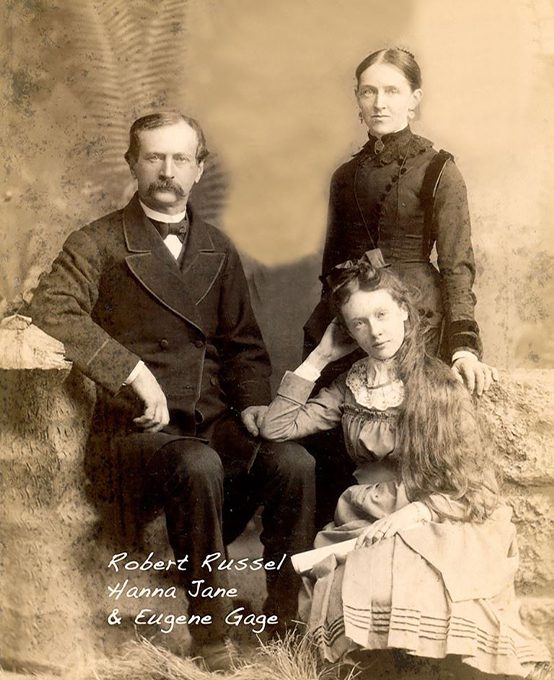
100 acres of land, including what is now Gage Park, was earlier known as Jubilee Farms, and the house located there as The Retreat. It was the home of Robert Russell Gage (1840–1918), his wife Hannah (1842-1925) and their daughter Eugenie (1872-1952). In 1875 the family moved into the home now known as the Hamilton Children’s Museum. As described in 1887 by the Hamilton Spectator; this “tidy little garden of one hundred acres” flourished resplendently. The article describes the orchard and farm as having “fruits of unusual size and beauty”, and 10 acres of tomatoes growing. On March 25, 1918 Robert signed a deed agreeing to sell 64 acres of the original farm to the city. Robert intended for the land to be used as a public park. Robert, his wife and daughter would be allowed to live in the house and retain 13 acres of the original land for the rest of their days. After Eugenie’s death in 1952 the final 13 acres of the Gage farmland and the house became part of Gage Park. (Content courtesy of Hamilton Children’s Museum; Friends of Gage Park; HPL Local History and Archives).
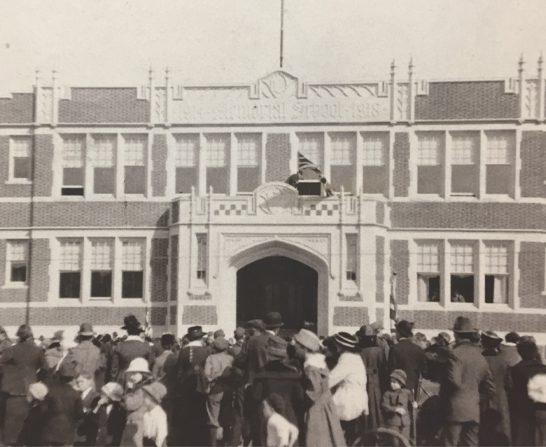
On this date, Memorial Elementary School was officially opened. Edward VIII, then Prince of Wales, officiated the event during his visit to Hamilton, with…
On this date, Memorial Elementary School was officially opened. Edward VIII, then Prince of Wales, officiated the event during his visit to Hamilton, with roughly 1000 students in attendance. The school replaced nearby institutions such as Ottawa Street School and Trolley Street School. The construction began in 1918 and at a cost of $258,800. The architect was Gordon J. Hutton, later of Hutton & Souter, known for such Hamilton landmarks as Delta Collegiate, Cathedral Secondary, Christ the King Basilica and the Royal Connaught Hotel. Memorial was the first school in Hamilton to feature an 'open concept' auditorium on the first floor. Across the top of the auditorium stage is written, “That our youth may ever remember the valiant men of Hamilton who died in the Great War, this school is a memorial.” The school was also the site of many city-wide events due to its centre auditorium and stage. Sir Arthur Currie, who led the Canadian Army at Vimy Ridge, spoke to students from across the city in 1925. (Courtesy of the Hamilton-Wentworth District School Board)
Location: 1175 Main St E, Hamilton, ON L8M 1P3
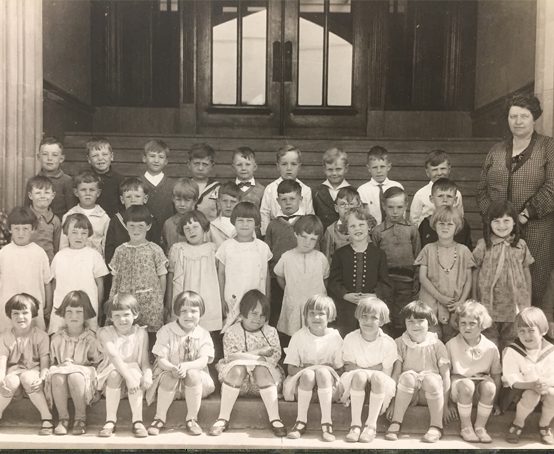
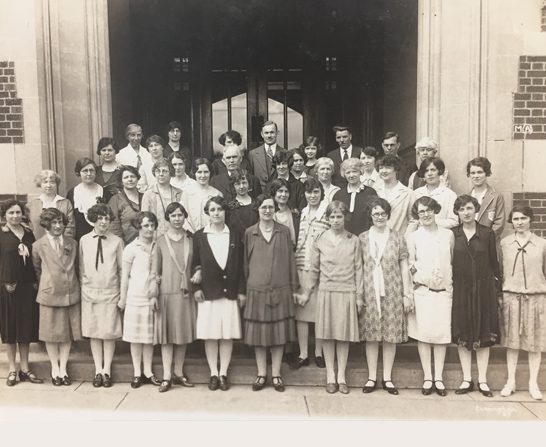
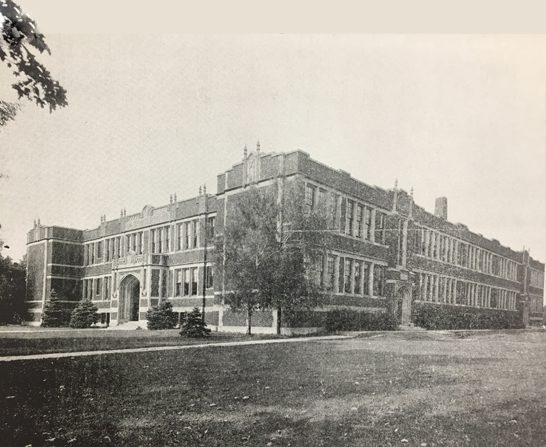
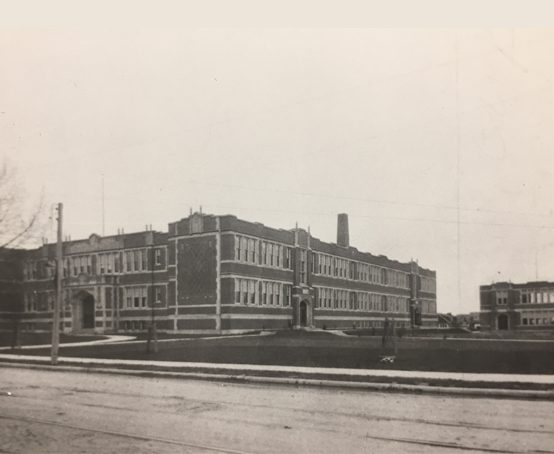
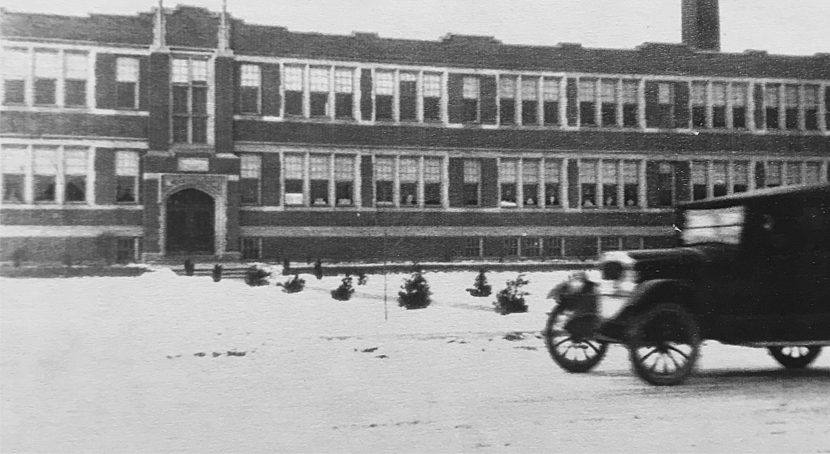
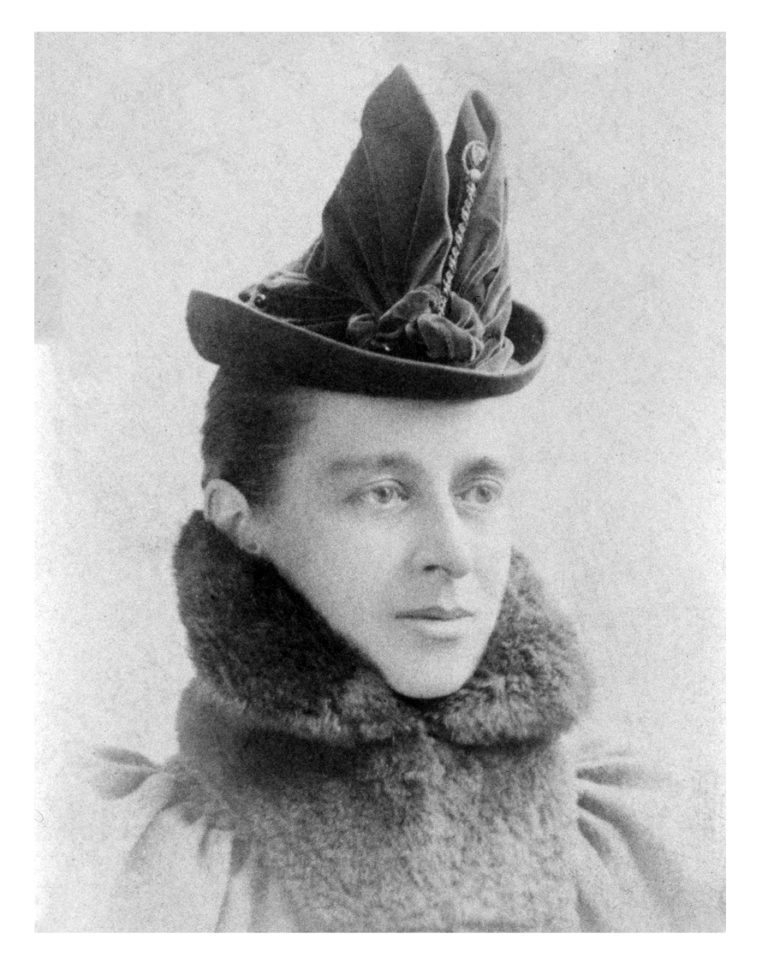
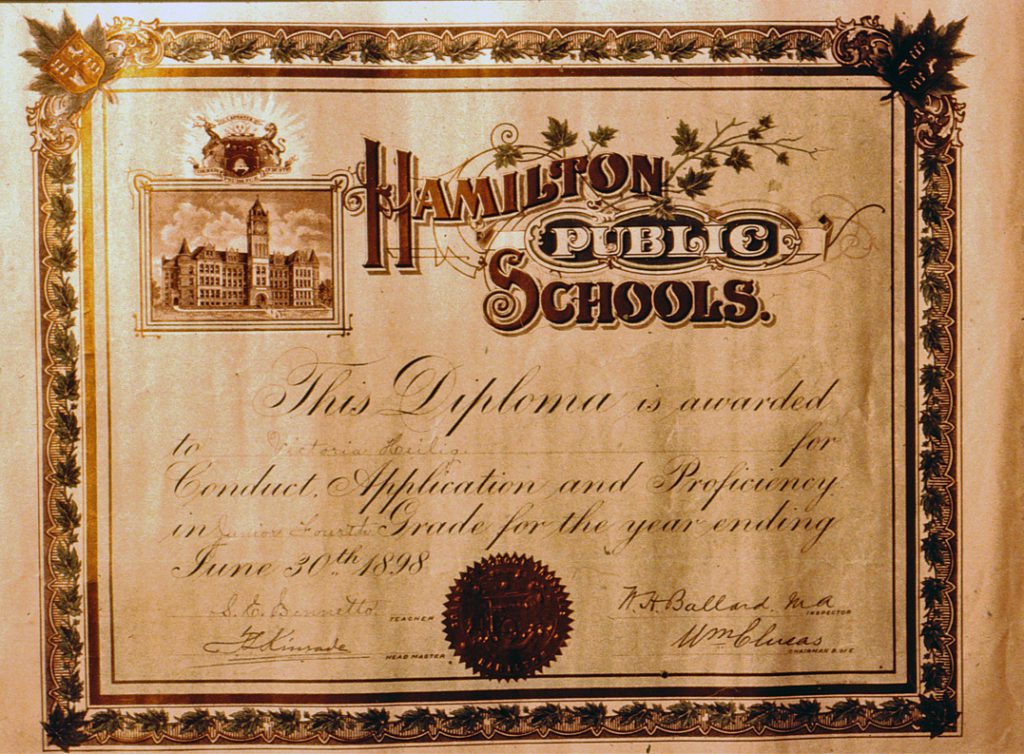
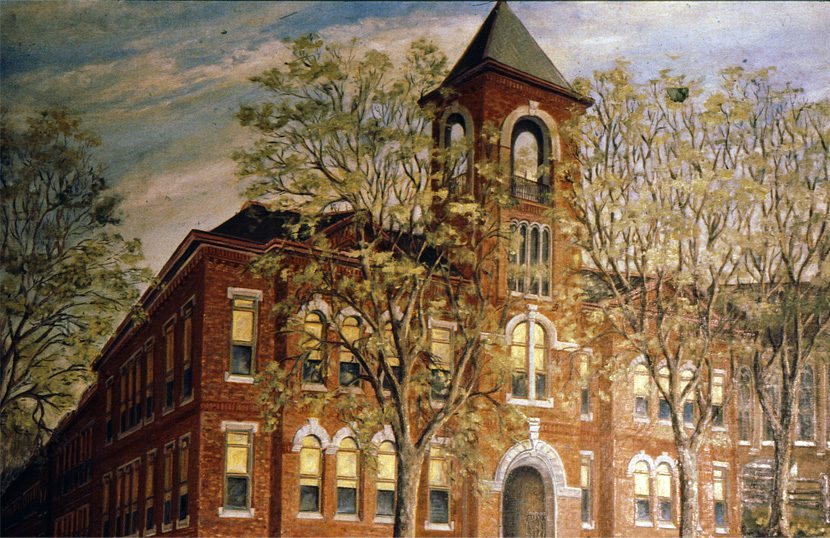
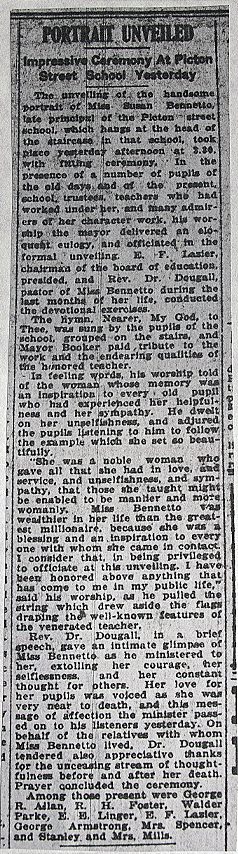
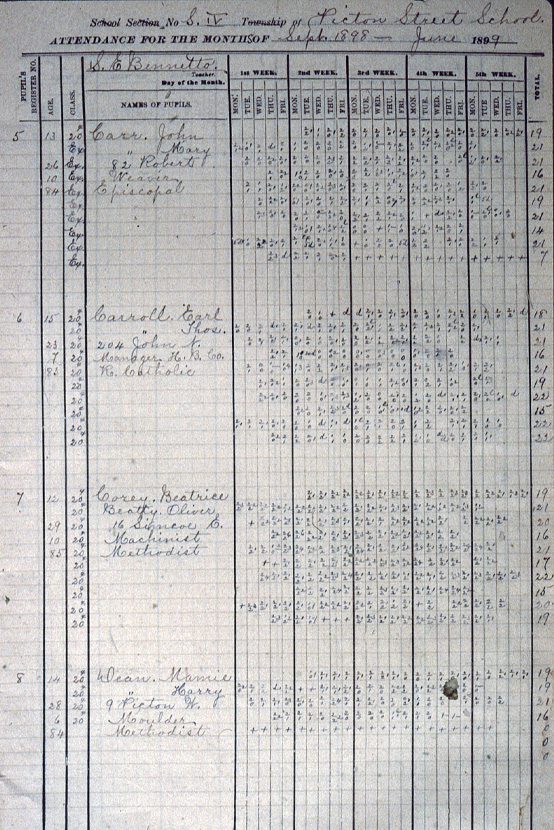
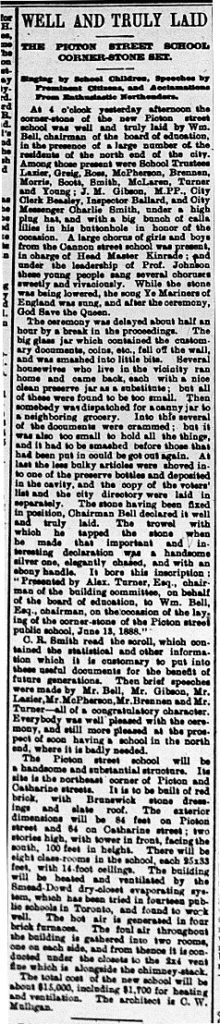
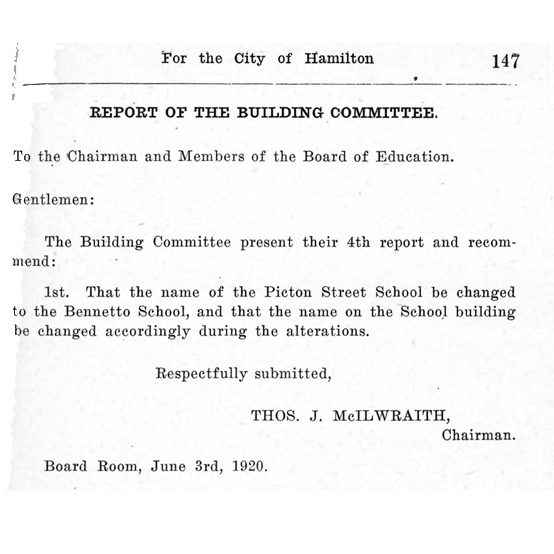
On June 3, 1920, Board members formalized the decision to rename Picton Street School to Bennetto, in honour of former Principal Susan Elizabeth Bennetto.…
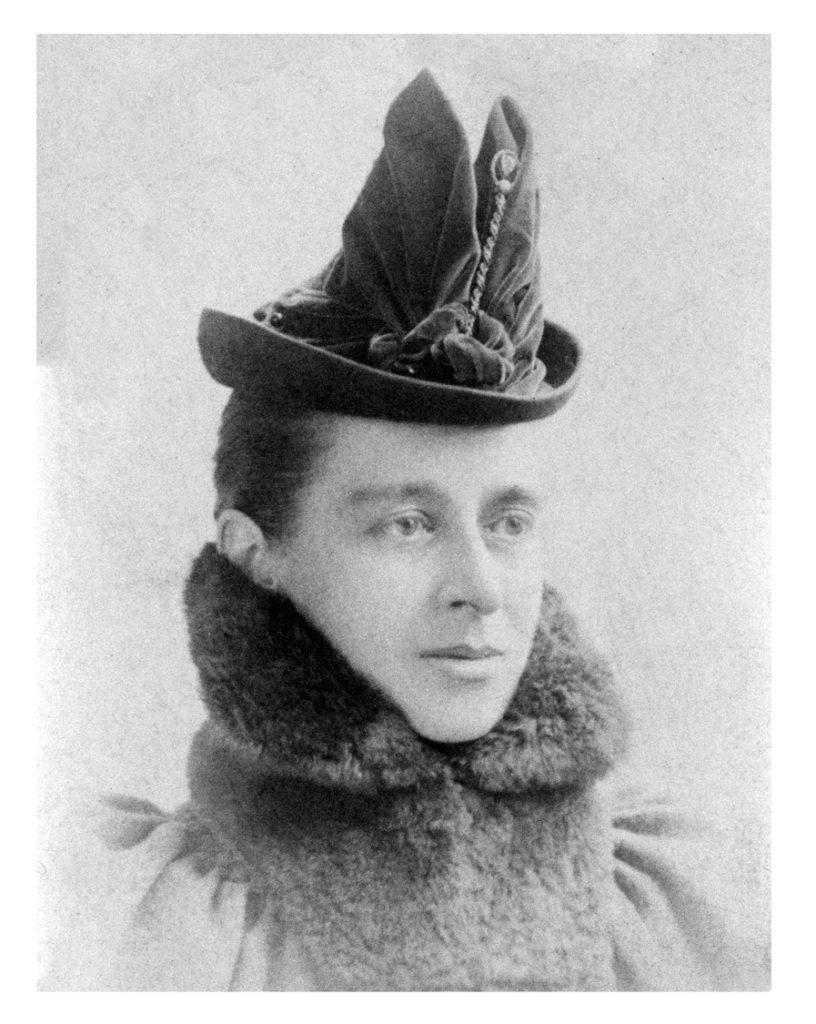
On June 3, 1920, Board members formalized the decision to rename Picton Street School to Bennetto, in honour of former Principal Susan Elizabeth Bennetto. Born in 1850 in London, England, Susan moved to Hamilton as a young child and graduated with a First Class Teaching Certificate at 17. In 1888, after periods spent at Central Elementary, Cannon Street School and Central Collegiate Institute, she became Head Teacher (Principal) for the new Picton Street School, located at 89 Picton Street in Hamilton's North End. At age 38, Susan was the first female Principal in Hamilton's history, and continued in her role for the next 30 years. She died at home on October 23, 1919 and is buried in the Hamilton Cemetery. The City of Hamilton continues to present the 'Susan E. Bennetto' Award to Grade 11 and 12 students who demonstrate achievements in history and local heritage within their schools and communities.
Location: 47 Simcoe St E, Hamilton, ON L8L 3N2
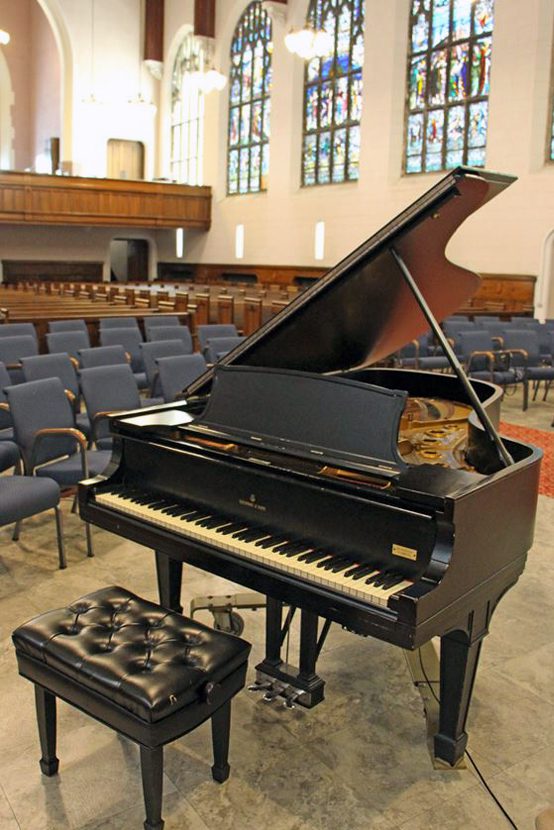
The Duet Club of Hamilton, founded by Ellen Ambrose in 1889, is today the longest running women’s musical group of its kind in Canada.…
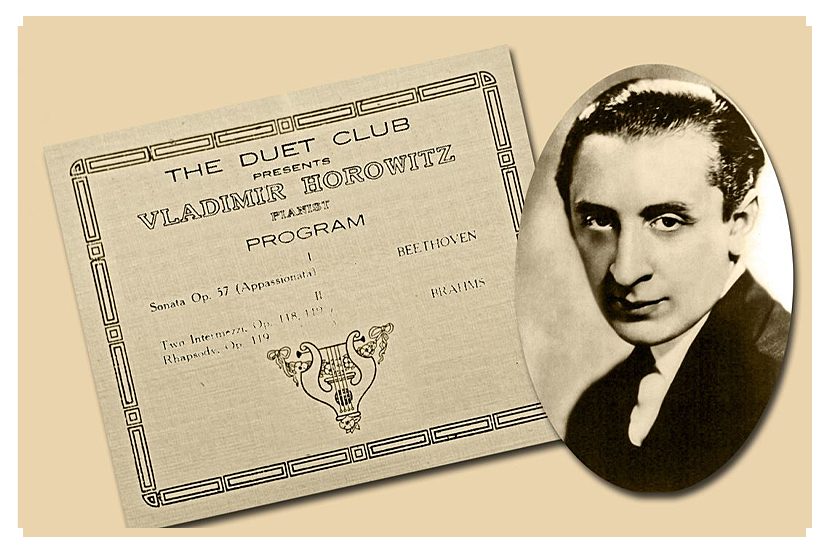
The Duet Club of Hamilton, founded by Ellen Ambrose in 1889, is today the longest running women’s musical group of its kind in Canada. In 1922, the Club sought to purchase a piano, and a Steinway Grand Piano was purchased in New York City. Vladimir Horowitz, one of the finest pianists of the 20th century, advised the Club on its selection. The money was raised by Club members, and Annual Piano Parties held to support its maintenance., The piano now resides at Melrose United Church, where the Club still practises and holds concerts. (Content courtesy The Duet Club of Hamilton.)

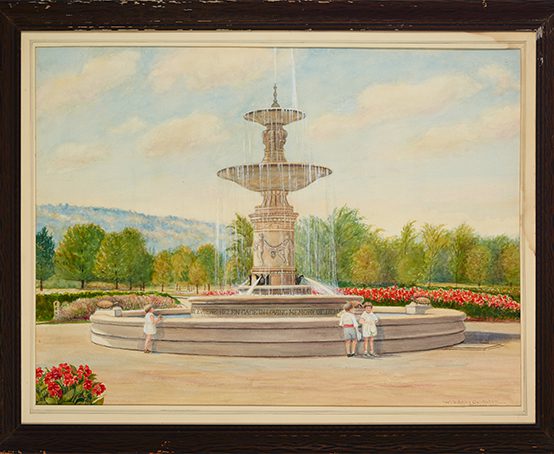
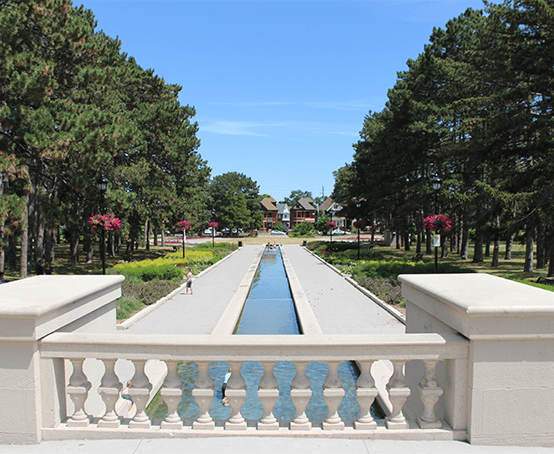
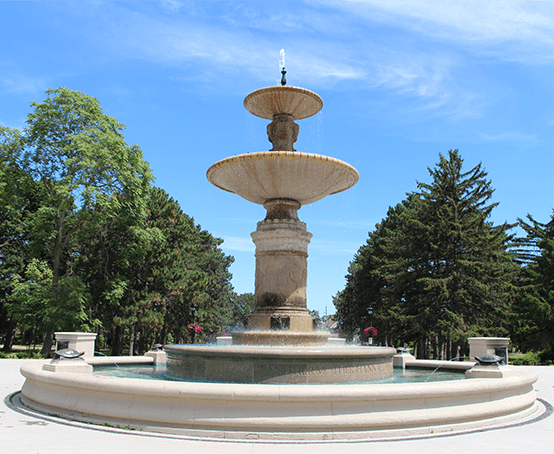
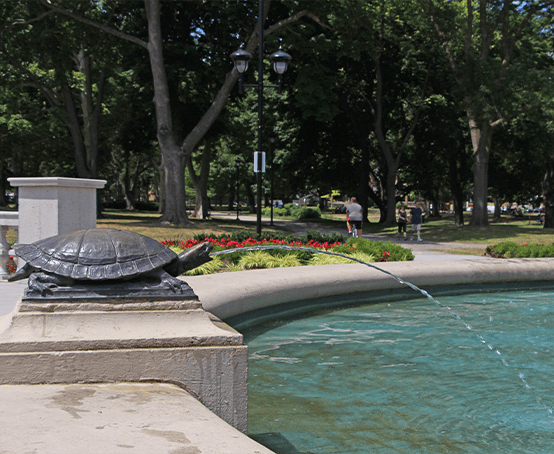
The Gage Park Fountain was commissioned in 1926 by Eugenia Gage to honour her parents. It was designed by John M. Lyle, who studied…
The Gage Park Fountain was commissioned in 1926 by Eugenia Gage to honour her parents. It was designed by John M. Lyle, who studied the Beaux Arts style in Paris and New York, and who also designed Toronto’s Royal Alexandra Theatre and Union Station. It was unveiled in 1927 in honour of Hannah Jane and Robert Russell Gage by the Governor-General , Lord and Viscount Willingdon, as part of the celebrations for the Diamond Jubilee of Confederation. The fountain has been a focal point of Hamiltonians ever since. It was recently restored for the enjoyment of future generations, it’s 100 metre watercourse and steps acting as a processional gateway into Gage Park’s landscape, designed by Dunington and Grubb. (Content courtesy of City of Hamilton; C. Redford).
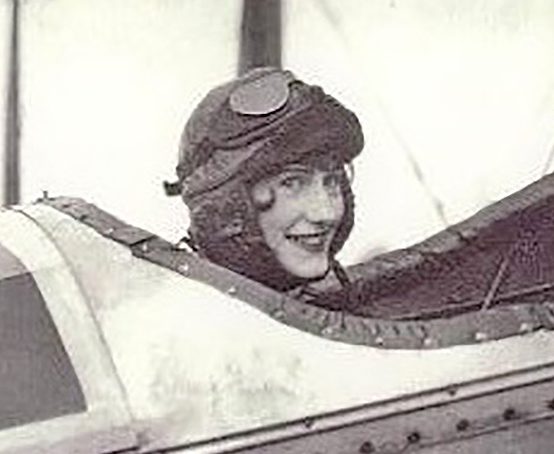
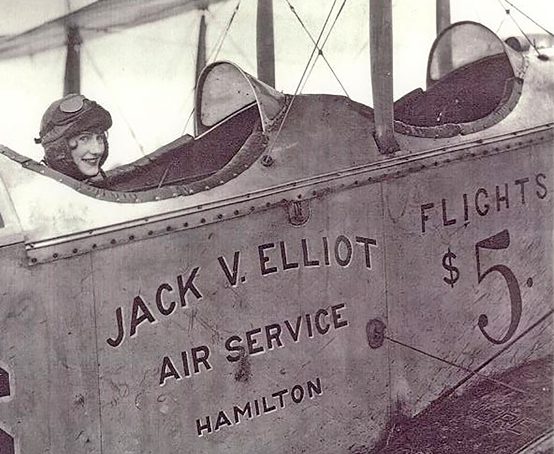
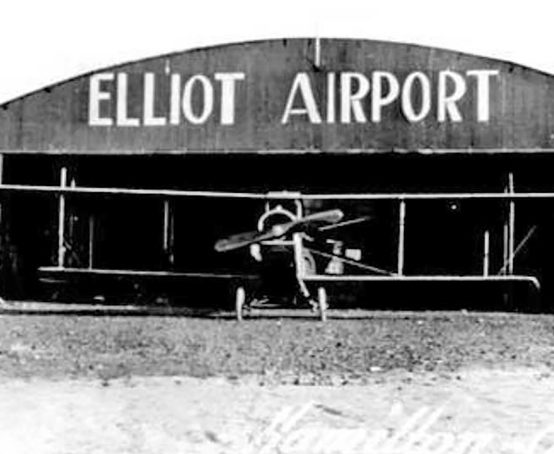
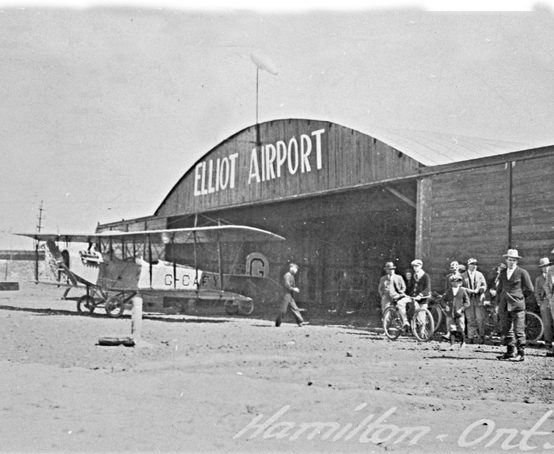
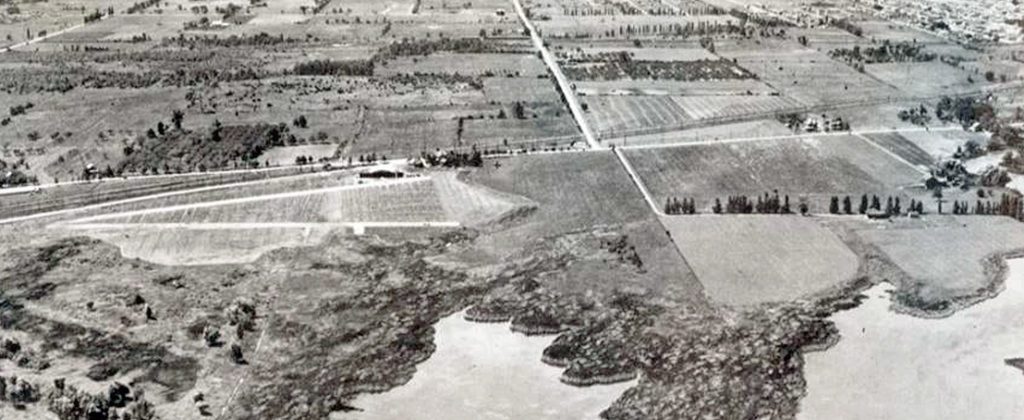
Hamilton’s First airport opened in 1920 in what is today West Hamilton, when Jack Elliot began Elliot Air Service, a training school for pilots.…
Hamilton’s First airport opened in 1920 in what is today West Hamilton, when Jack Elliot began Elliot Air Service, a training school for pilots. In 1922, Elliot moved his airstrip to Beach Road near Strathearne Ave, by the Windemere Basin, and by 1926 had a fleet of 11 planes. Many of the planes were built at his factory on Burlington Street. His most celebrated pupil was Eileen Vollick, first woman pilot in Canada. Vollick had watched takeoffs and landings of Elliot's Air Service from her bedroom window in West Hamilton. When she turned 19 in 1927, Vollick began flying lessons before work at the Hamilton Cotton Company. A year later in 1928 Eileen obtained her license. A provincial plaque marking her achievement inspires all who enter the Warplane Heritage Museum at Mount Hope. (Content courtesy National Aviation Museum/National Air Photo Library; Margaret Houghton; Canadian Warplane Heritage Museum.)
canadashistory.ca
thisdayinaviation.com
readtheplaque.com
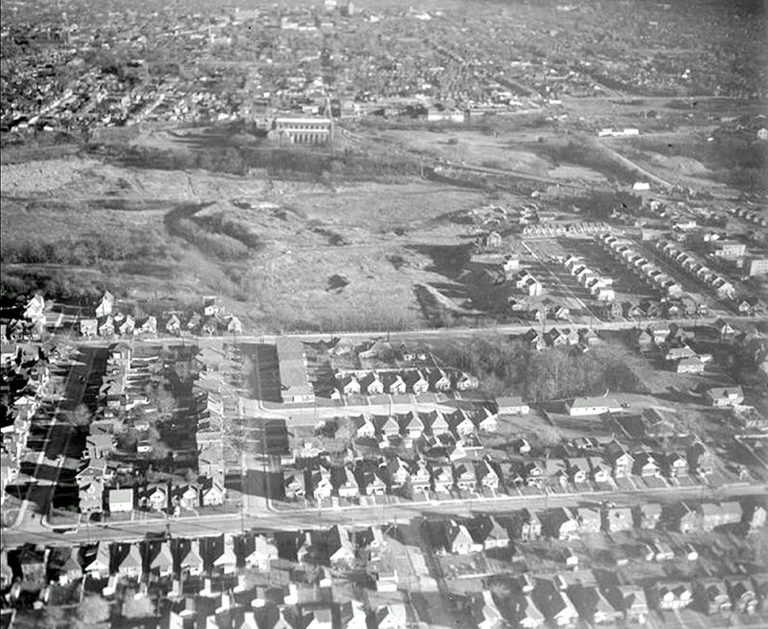
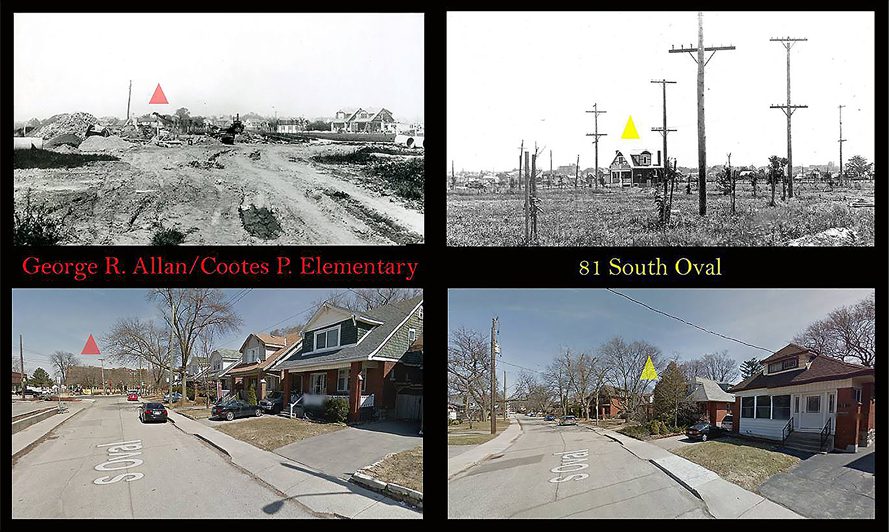
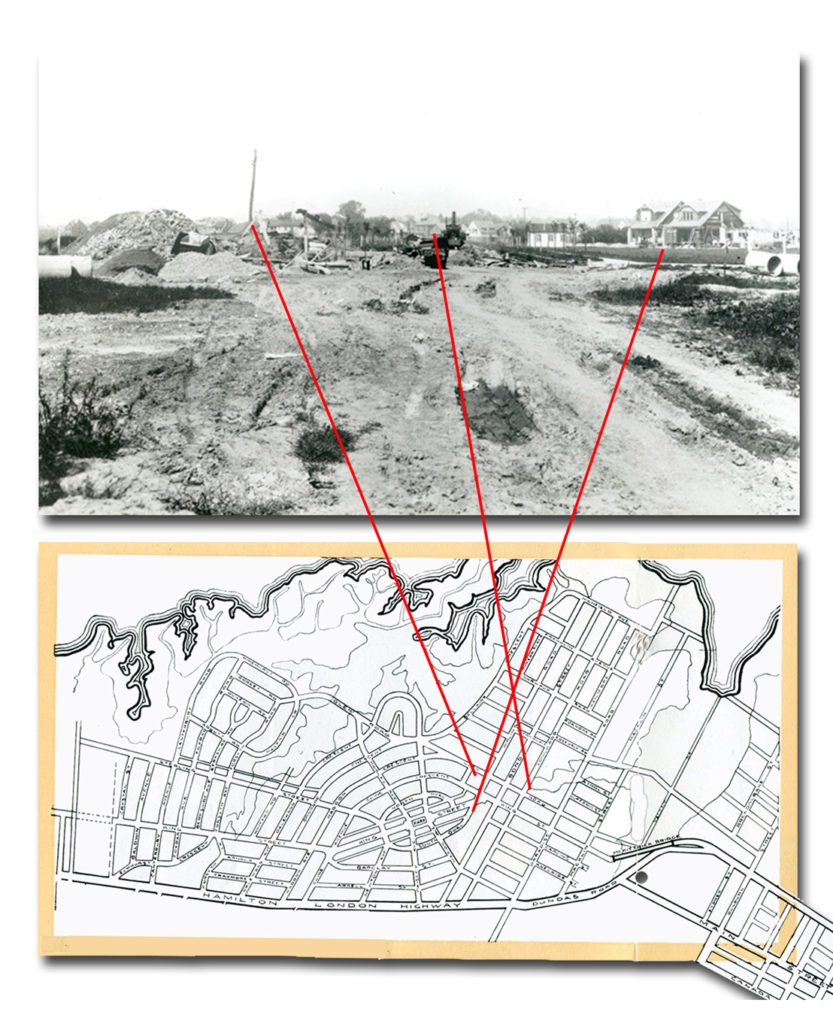
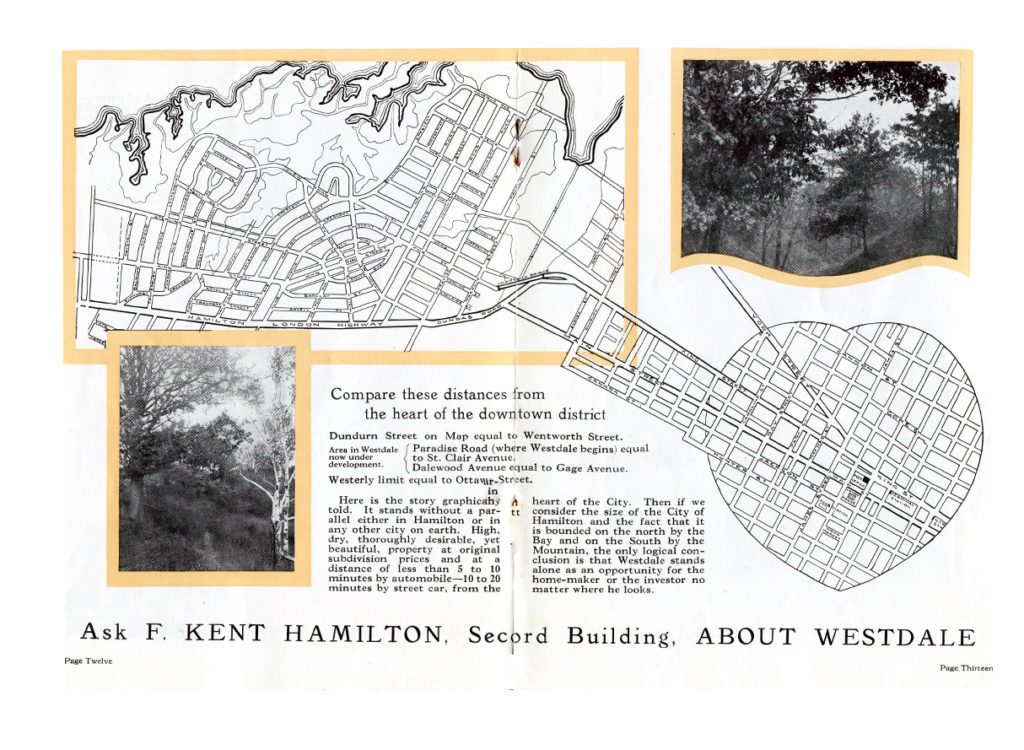
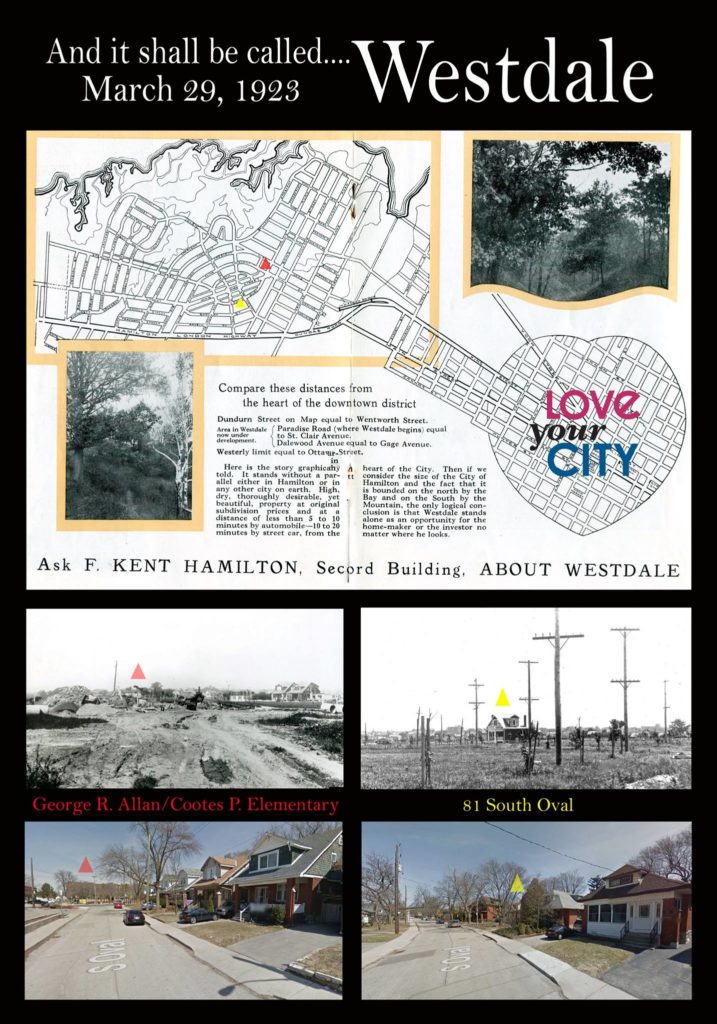
Westdale is one of Canada’s first suburbs, designed as an integrated, self-contained community. In 1911 contractor J. J. McKittrick purchased 100 acres of land…
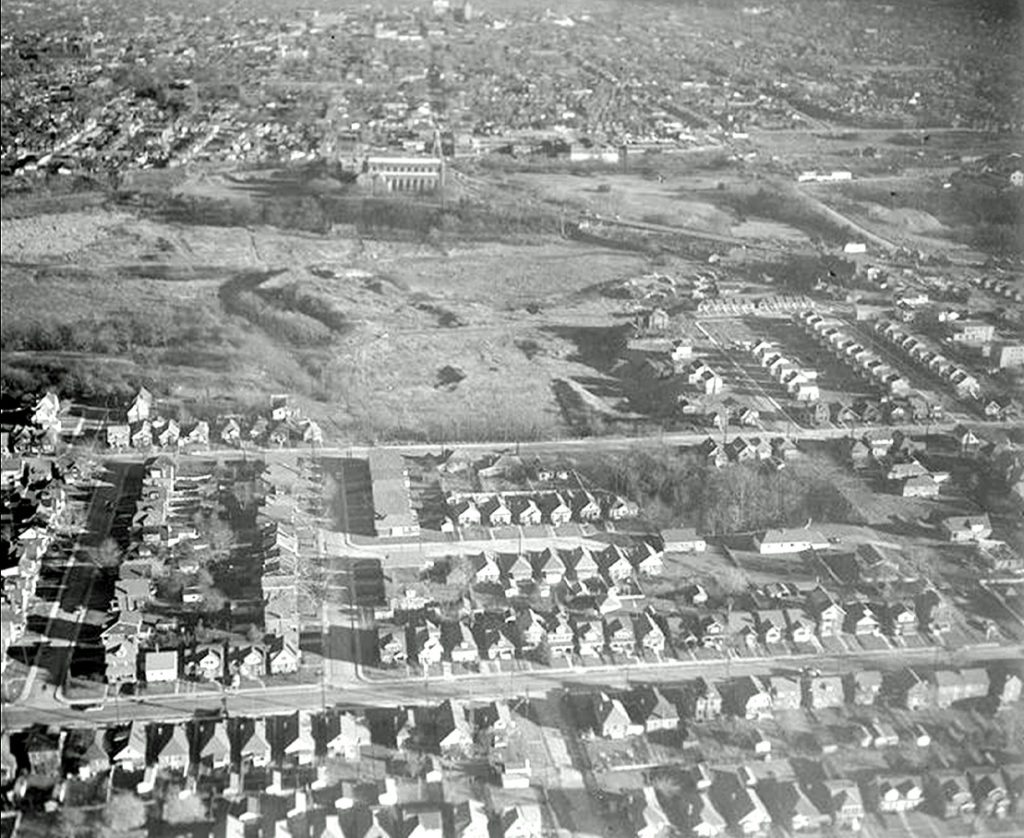
Westdale is one of Canada’s first suburbs, designed as an integrated, self-contained community. In 1911 contractor J. J. McKittrick purchased 100 acres of land to promote the development of “Hamilton Gardens”. The “garden city” idea was taken from a new town-planning movement in the UK which promoted self-contained communities with proportional amounts of land set aside for residences, industry, parks and businesses. A contest was held to name the new community, and on 29 March 1923, the winning name in the `Name the neighbourhood contest' was announced. Rev. Canon Spencer won $200 for the name `Westdale'. Names not chosen included Vimy Ridge, Woodlands Park, and Bridgeview. Early Westdale required that buyers sign racist, restrictive deeds. An example read: “None of the lands shall be used or occupied by, or let, or sold to Negroes, Asiatics, Bulgarians, Austrians, Russians, Serbs, Rumanians, Turks, Armenians, whether British subjects or not, or foreign-born Italians, Greeks or Jews.” (Content courtesy HPL Local History and Archives; City of Hamilton; C. Redford)
hamiltoncivicmuseums.ca
hamiltonlaw.on.ca
hamilton.ca
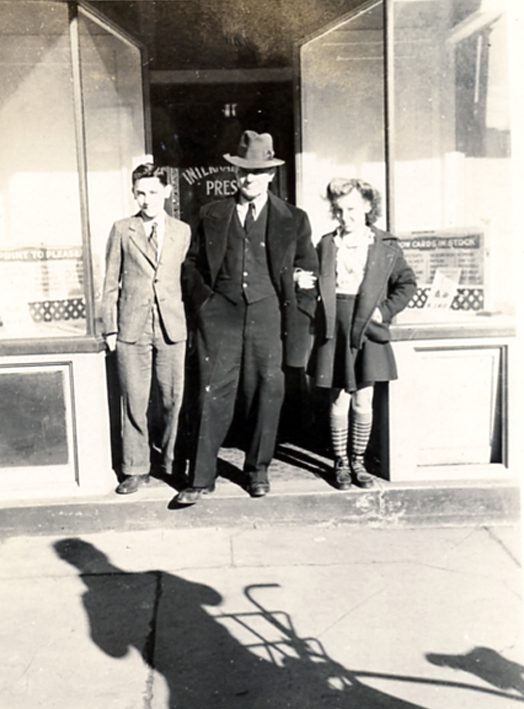
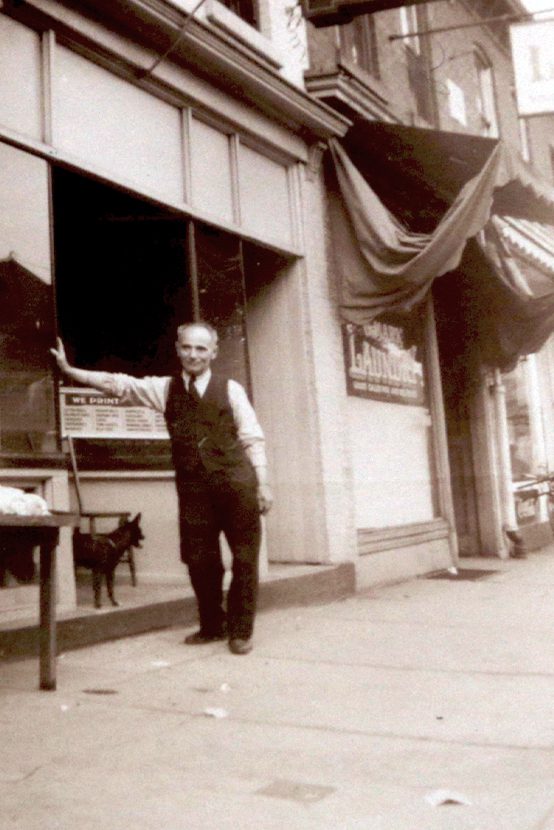
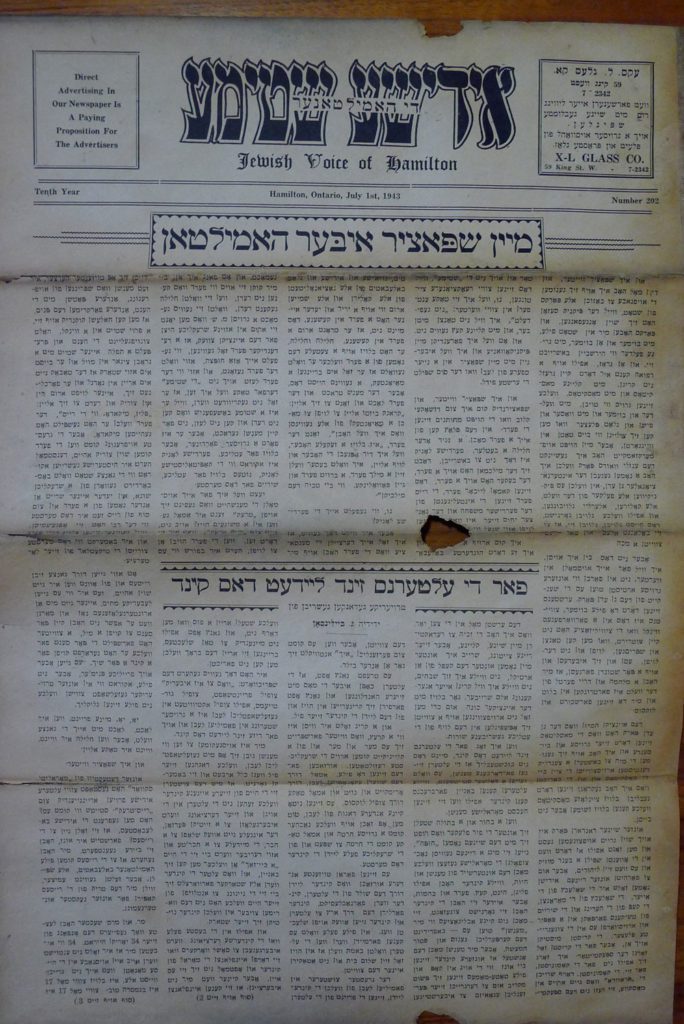
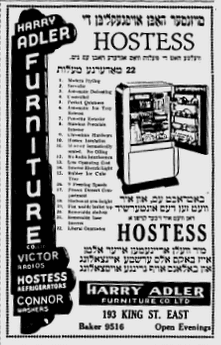
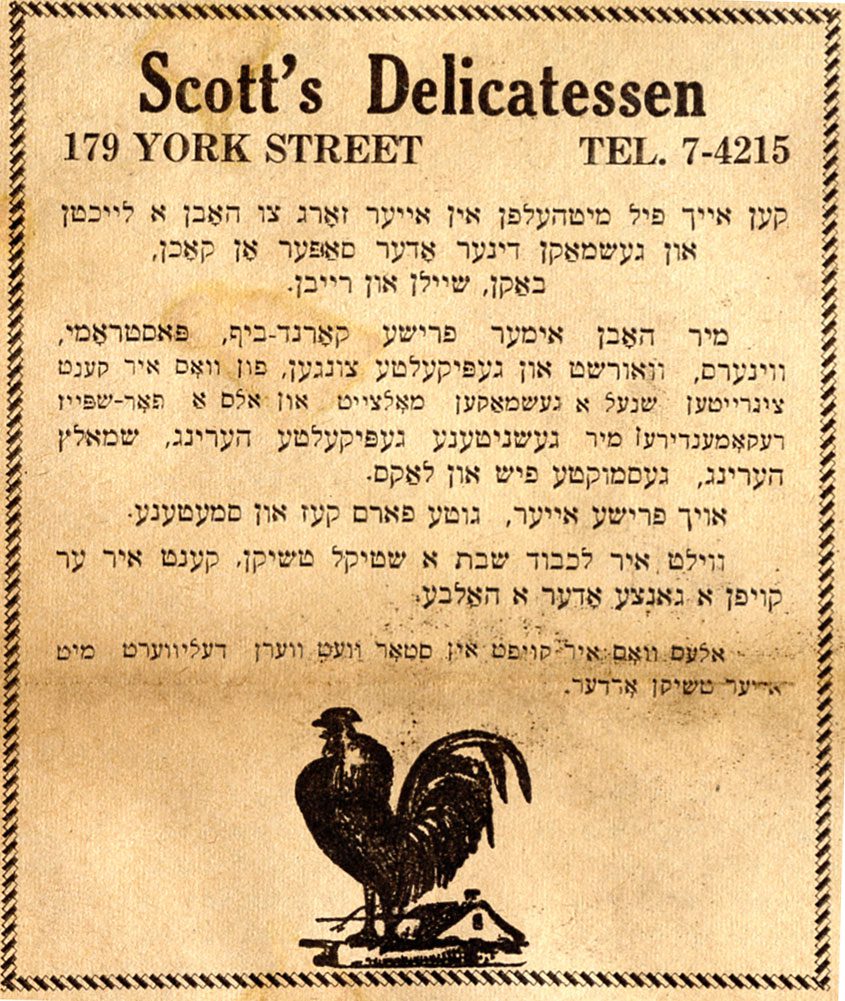
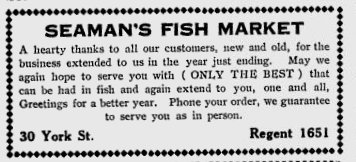
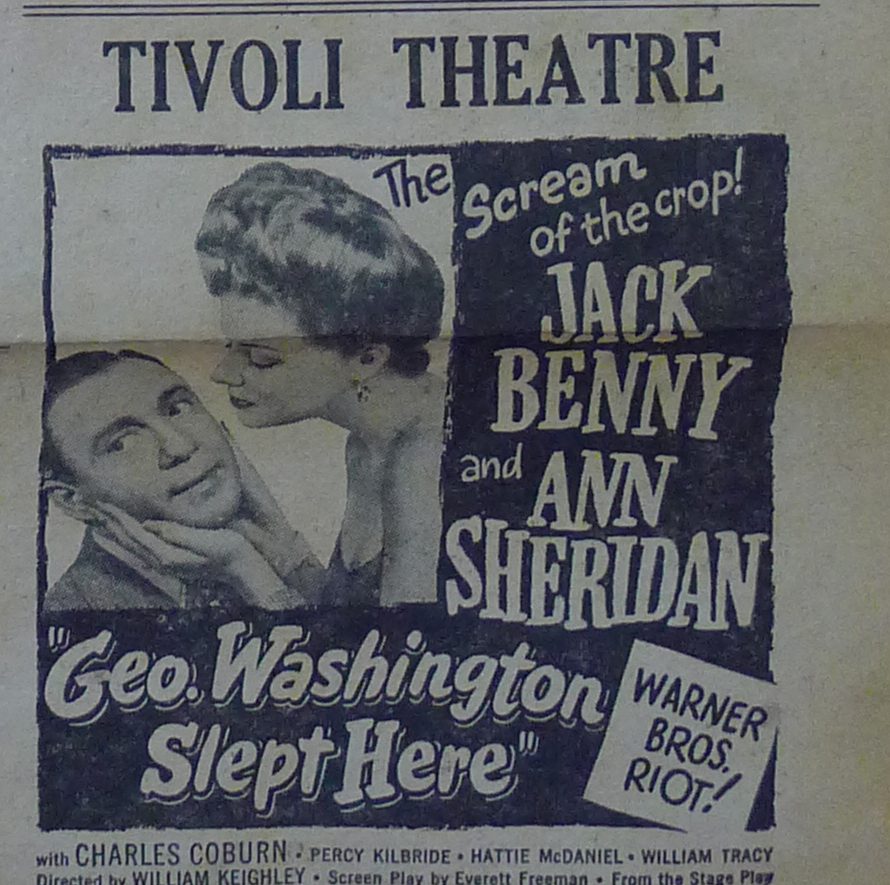
Not many people remember that Hamilton once had a thriving Yiddish-language newspaper. Its editor, Henry Balinson, an ambitious, self-educated 23-year-old aspiring writer, poet and…
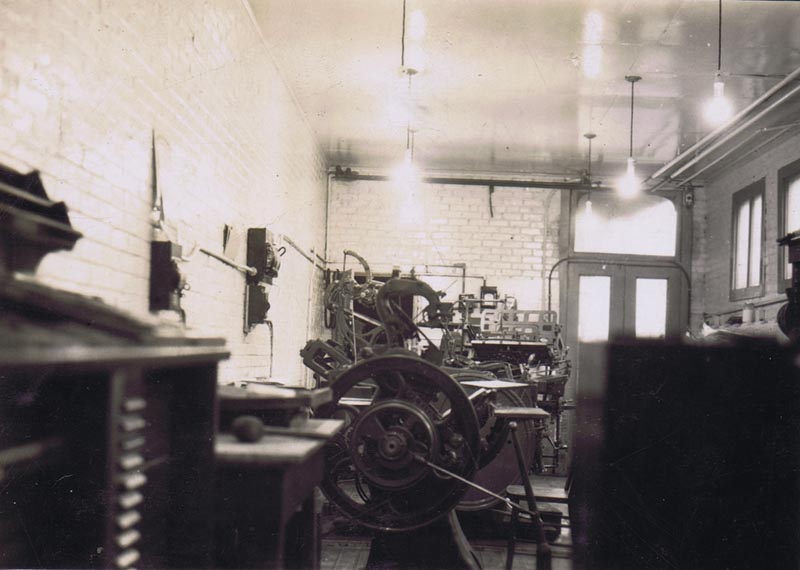
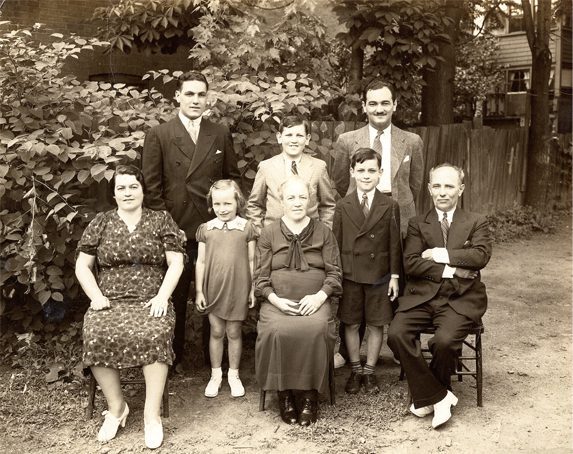
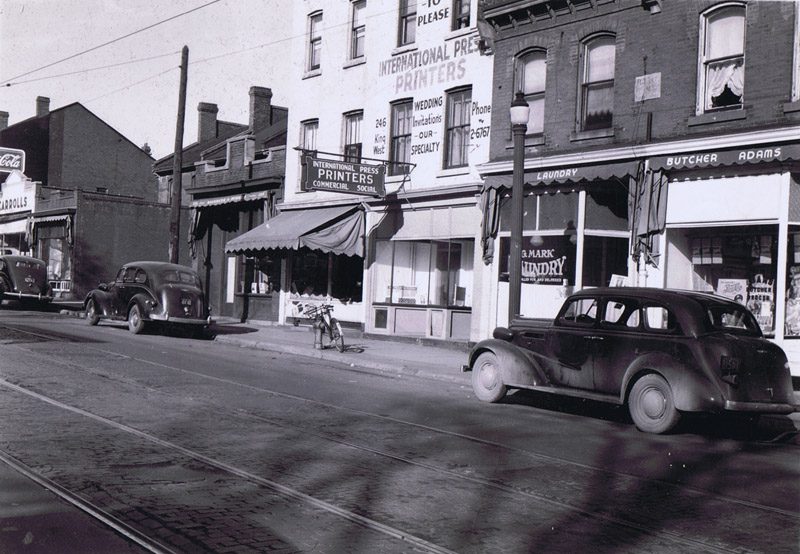
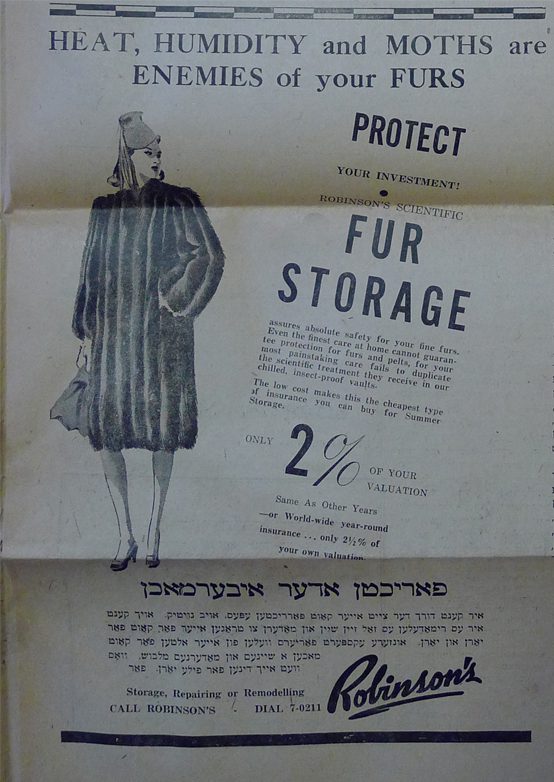
Not many people remember that Hamilton once had a thriving Yiddish-language newspaper. Its editor, Henry Balinson, an ambitious, self-educated 23-year-old aspiring writer, poet and voracious reader who spoke seven languages, immigrated from the Ukraine in 1911. In 1912 he estabIished International Press, which printed the Jewish Voice of Hamilton Yiddish language newspaper and myriad other items for the Jewish community as well as for the Polish, Hungarian, Ukrainian, Latvian and other communities. (Content courtesy of the Hamilton Jewish Federation.)
samizdatpress.typepad.com
hamiltoncivicmuseums.ca
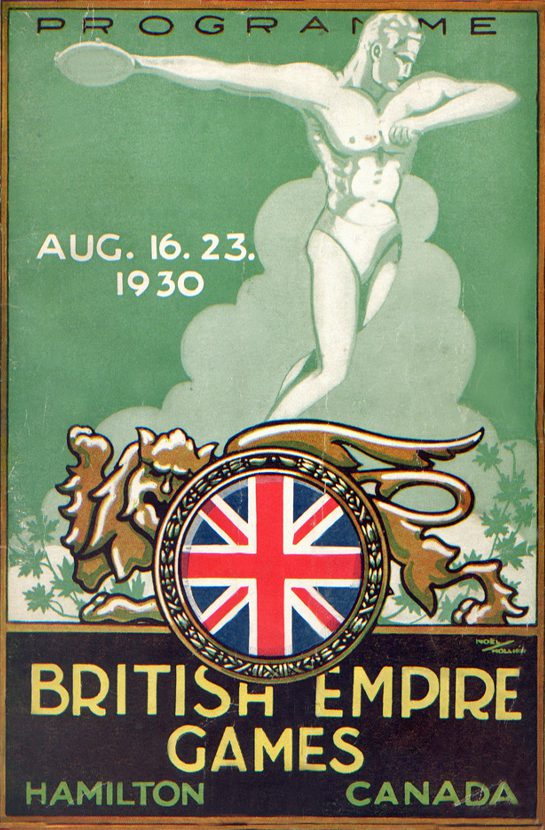
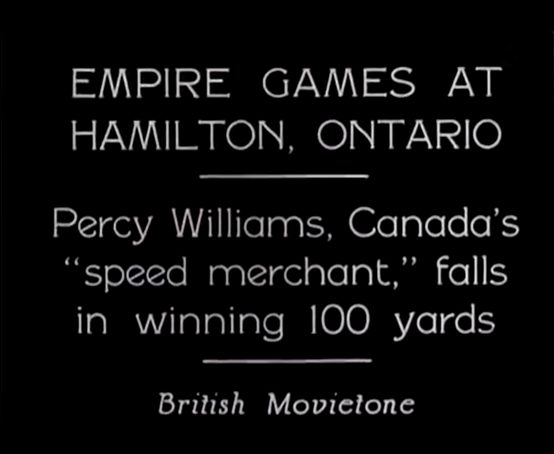
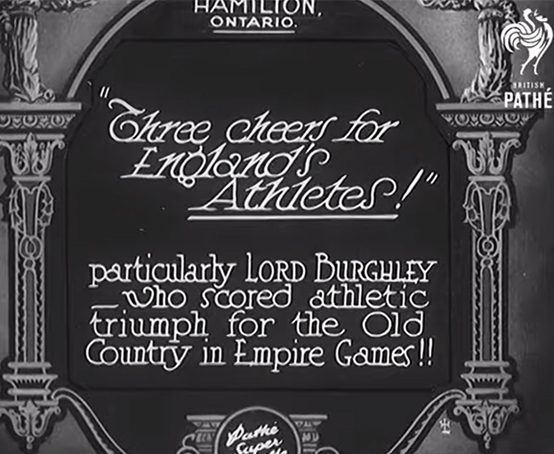
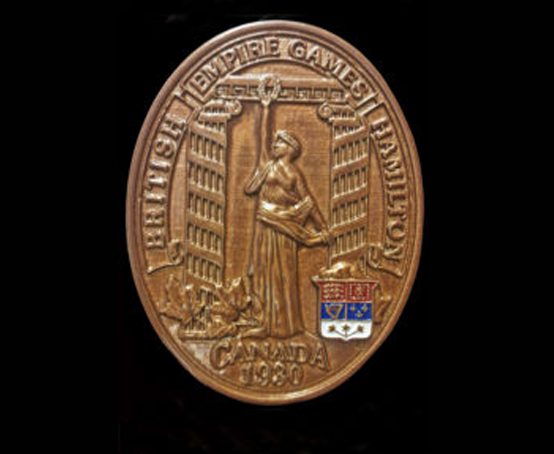
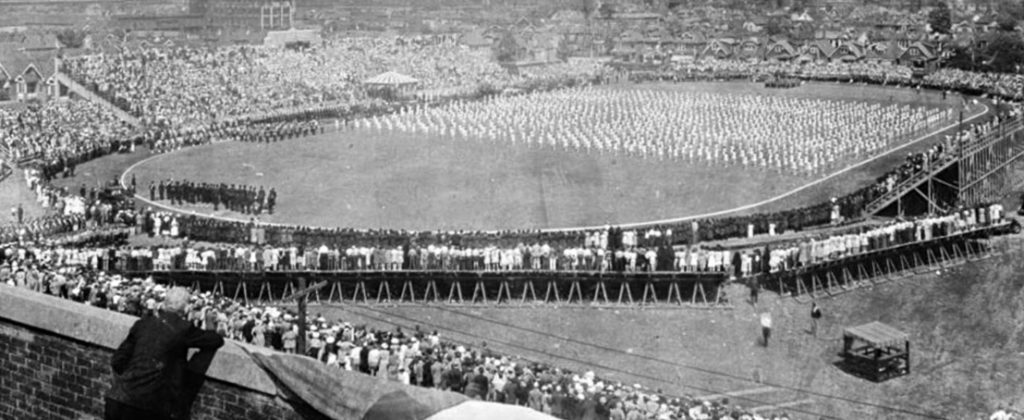
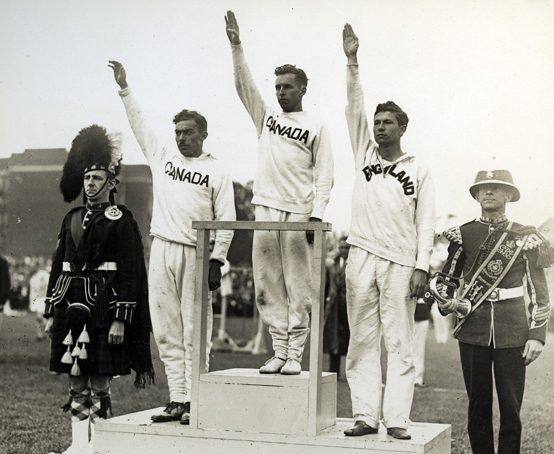
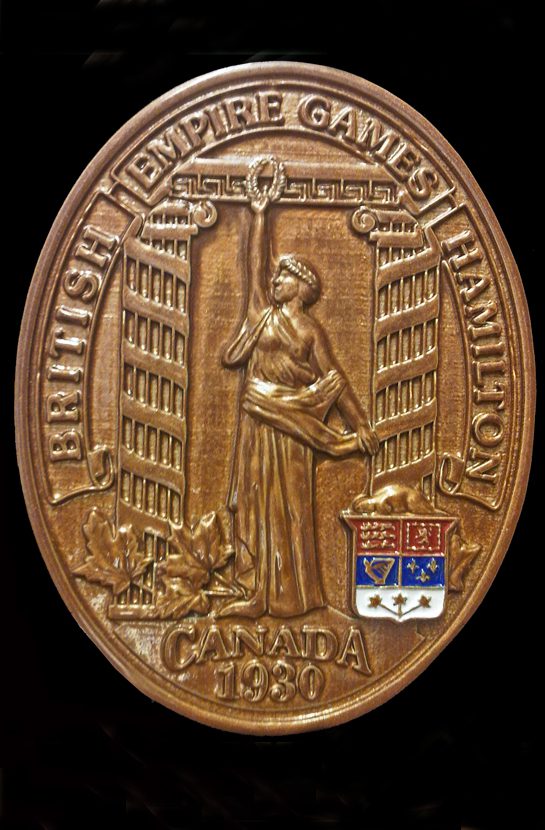
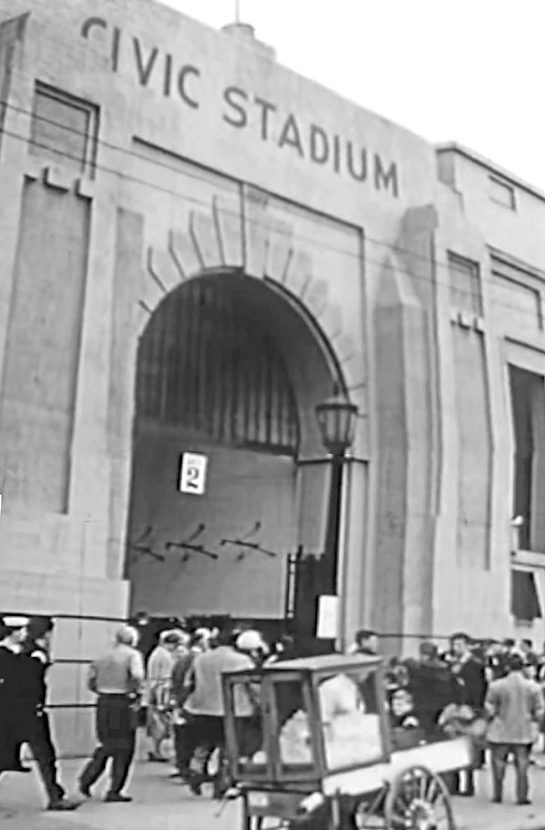
Hamilton hosted the first British Empire Games (now known as the Commonwealth Games) at the new Civic Stadium in 1930. The games were the…
Hamilton hosted the first British Empire Games (now known as the Commonwealth Games) at the new Civic Stadium in 1930. The games were the brainchild of Hamilton sportsman M.M. (Bobby) Robinson and were praised by the Times of London. Hamilton's facilities were built during the depression and hosted 400 athletes from 11 countries. Many slept on cots in a local school. Medal winners were celebrated on the first tri-level podium, a Hamilton first later adopted by the Olympics. The games launched a golden era, as top international athletes migrated to the city to train. Civic Stadium became home to the Hamilton Tiger-Cats, and was the venue for royal visits, rock concerts and political rallies. The Commonwealth Games are still staged every four years. (Content courtesy National Aviation Museum/National Air Photo Library; Margaret Houghton; Canadian Warplane Heritage Museum.)
youtube.com
youtube.com
thecgf.com
hpl.ca
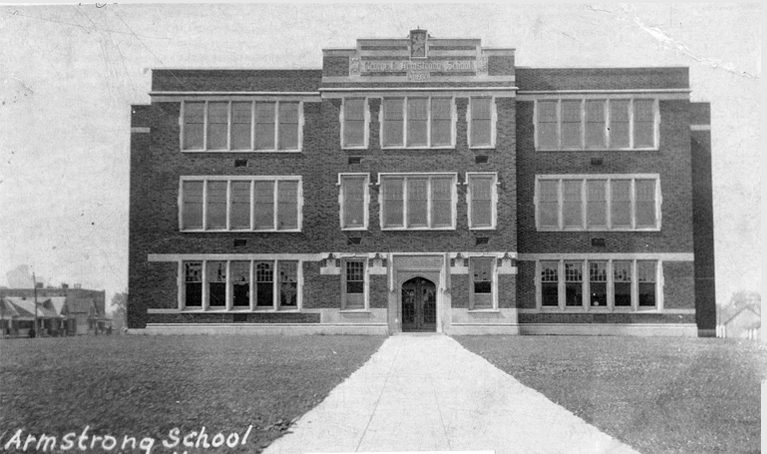
In September of 1930, a large new school building opened its doors on Concession Street. Named after George Loftus Armstrong, a Board Trustee for…
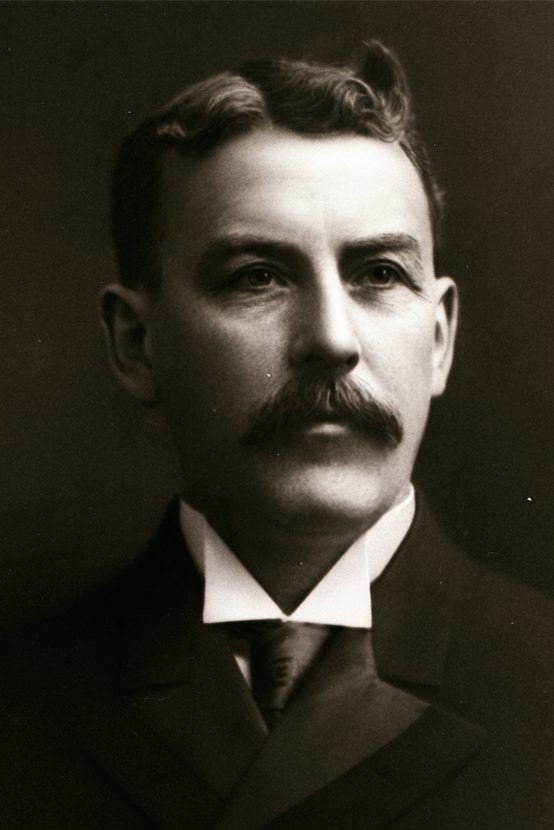
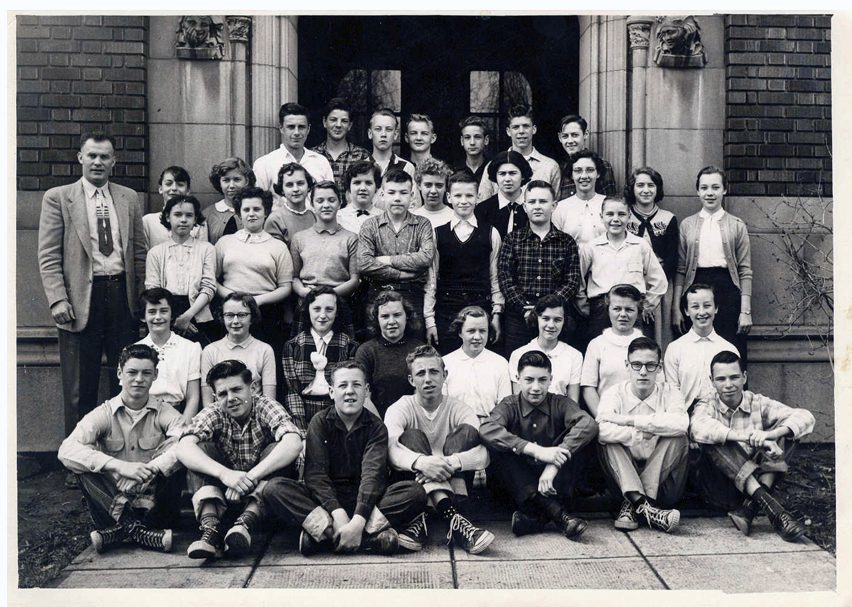
In September of 1930, a large new school building opened its doors on Concession Street. Named after George Loftus Armstrong, a Board Trustee for 29 years and Chairman in 1914, the school was designed by Dundas-born architect Walter Grayson-Brown. With its placement in the middle of Concession Street, Armstrong became a well-known sight for residents traveling to and from the lower city. Over the ensuing decades, the school changed a few times from K-8 to Senior levels but has remained open and is now the oldest elementary school on the Mountain in its original building. (Content courtesy of the Hamilton-Wentworth District School Board.)
Location: 460 Concession St, Hamilton, ON L9A 1C3
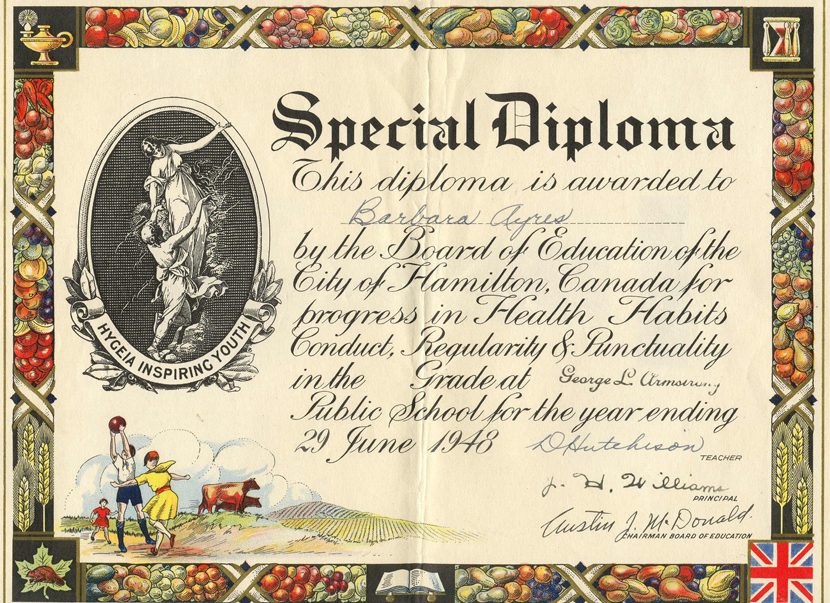
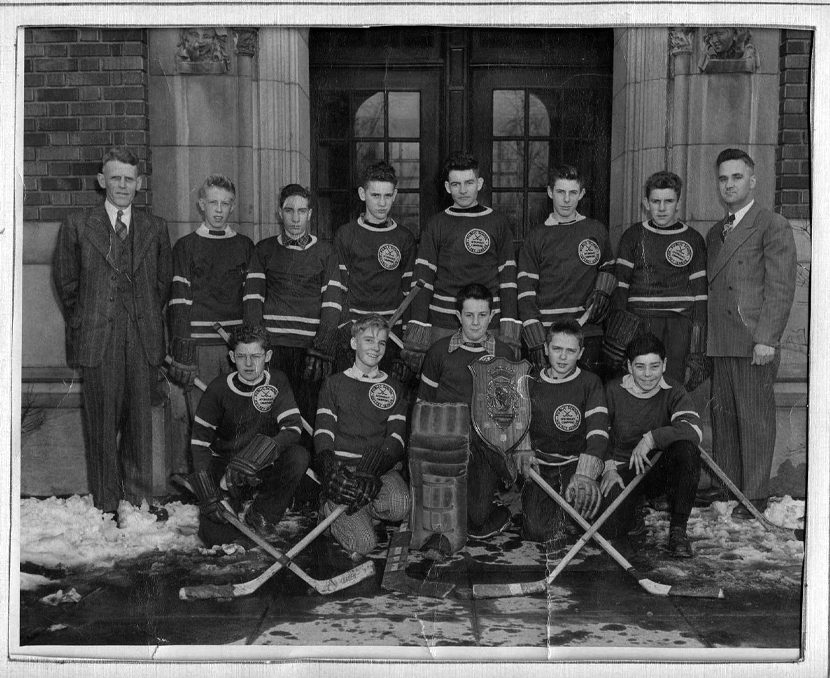
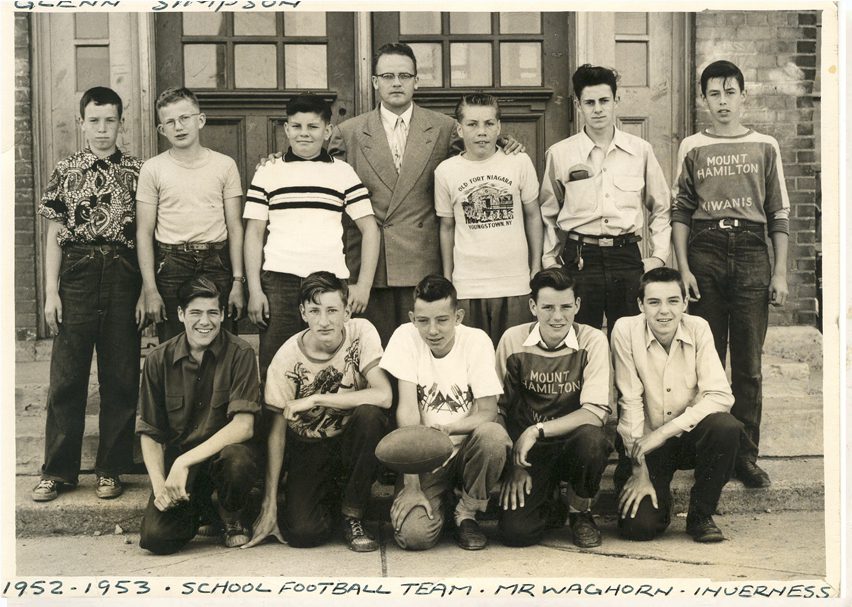
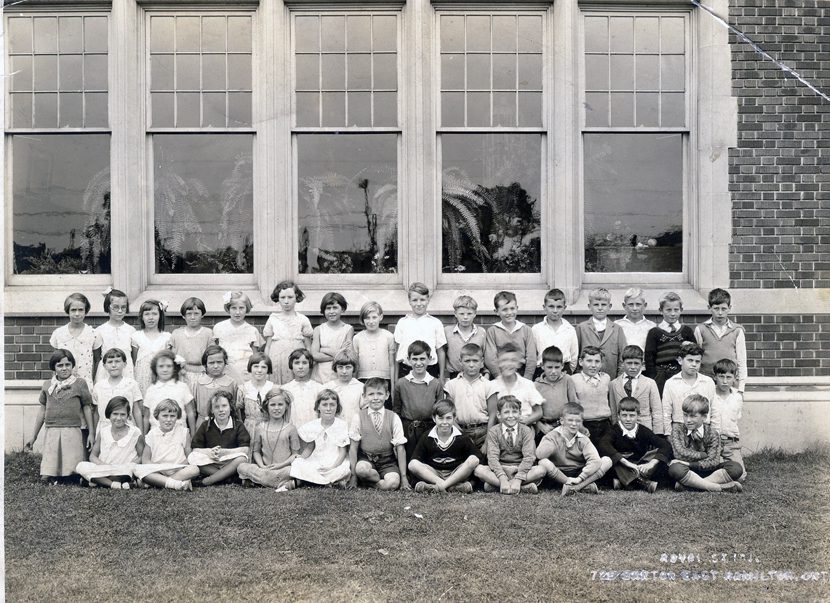
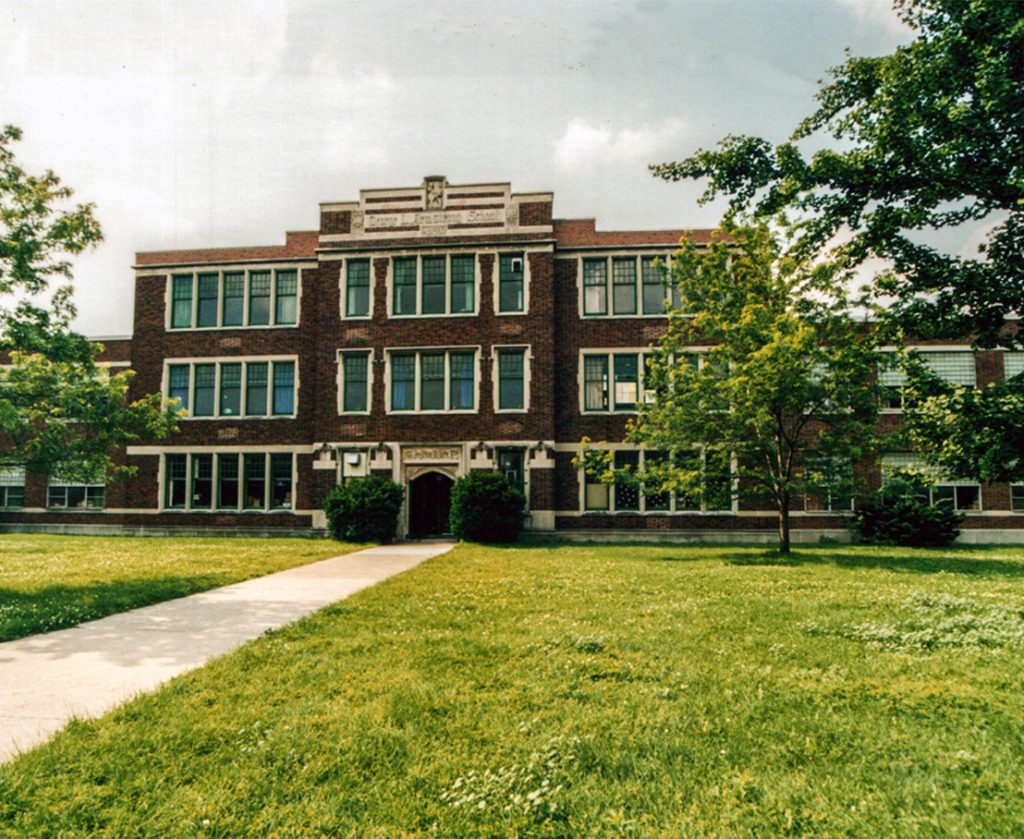
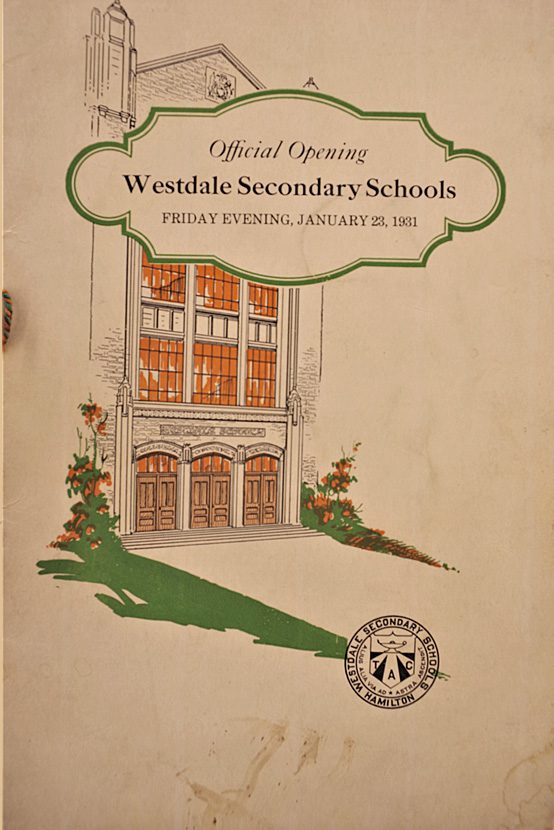
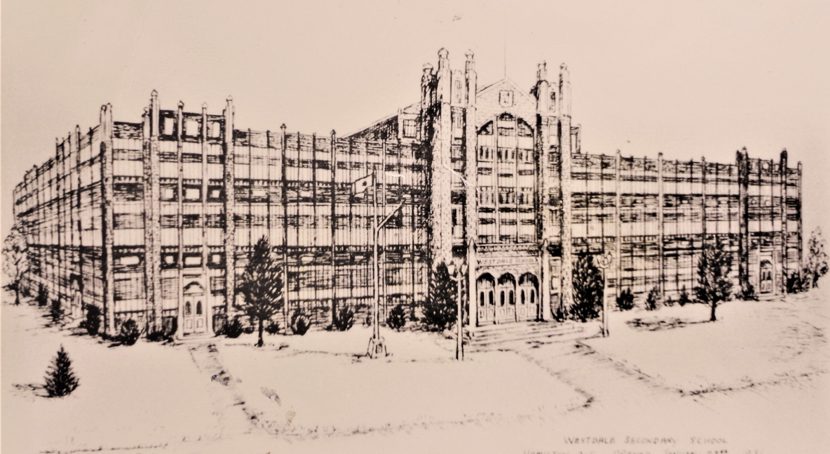
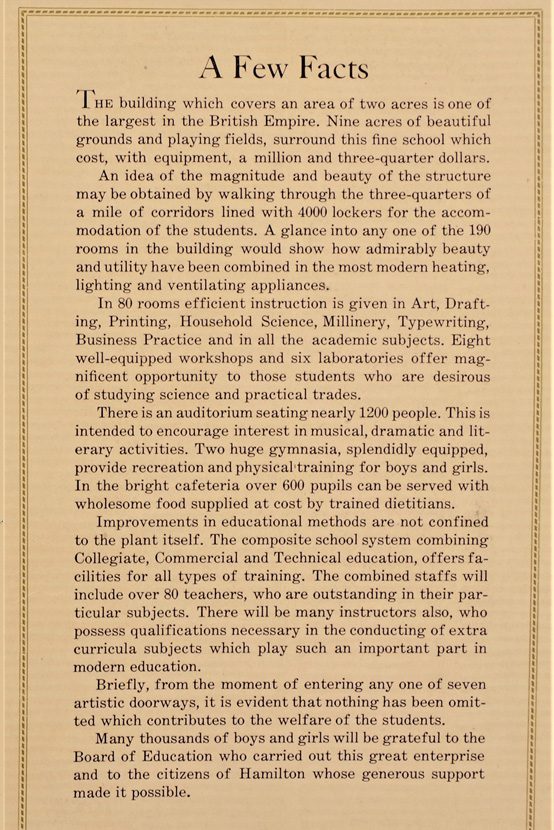
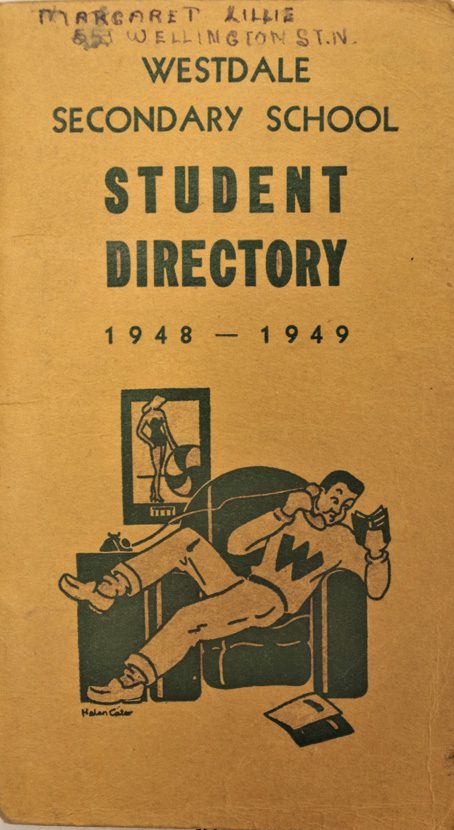
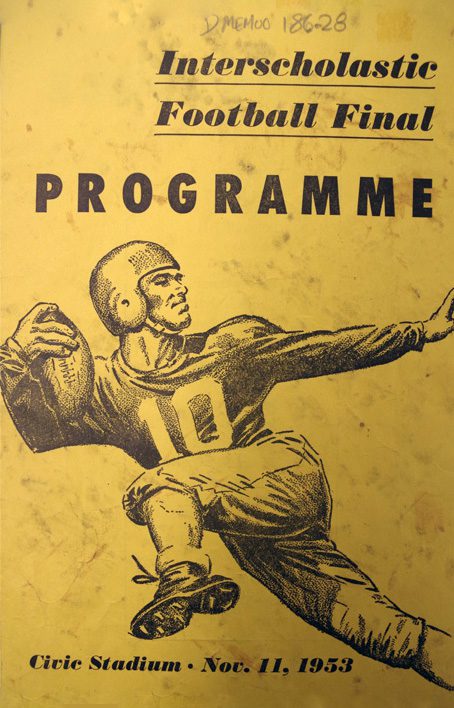
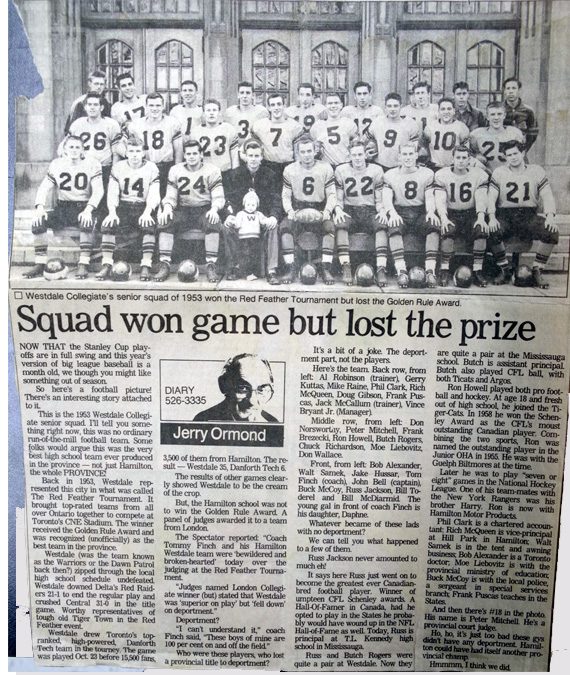
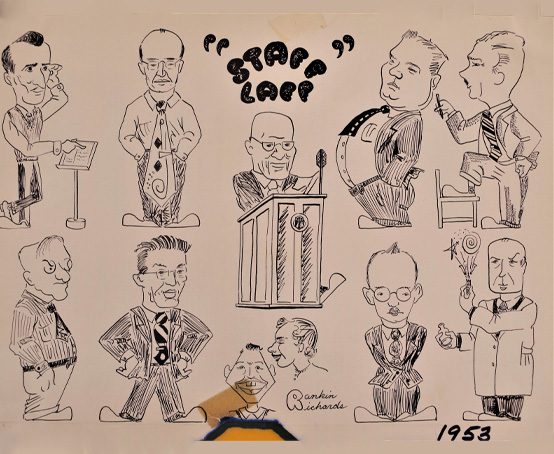
On this date, students and members of the public attended the official opening ceremonies for Westdale Secondary School. Designed by architectural firm Prack &…
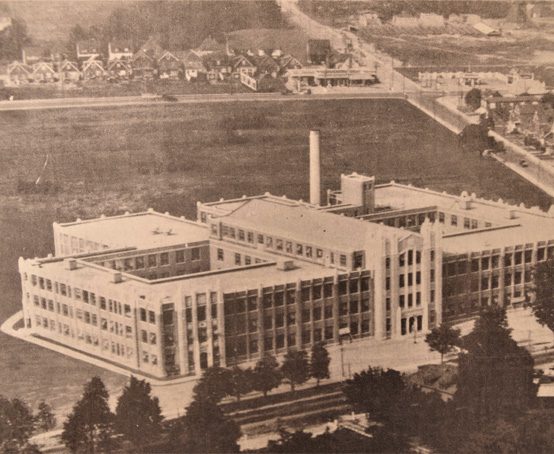
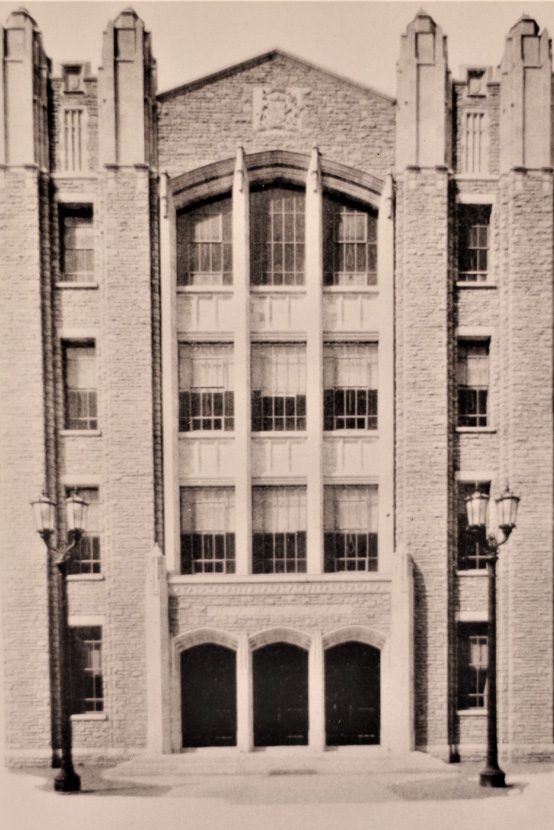
On this date, students and members of the public attended the official opening ceremonies for Westdale Secondary School. Designed by architectural firm Prack & Prack at a cost of just over a million, the school was the largest of its kind in the British Empire. It also marked the first attempt by the Board to house three separate program streams within one building; academic, commercial, and technical. The school's triplicate nature was indicated on the exterior of the building by the separate entrances at each wing. By 1932, rotary scheduling was introduced to cut costs, and by 1936 an integrated curriculum saw the creation of a Grade 9 course that offered teaching in all three areas. Westdale provided a notable change to the community, as students living in the west end were able to stay within their own neighbourhoods to attend school.(Courtesy of the Hamilton-Wentworth District School Board)
Location: 700 Main St W, Hamilton, ON L8S 1A5
youtube.com
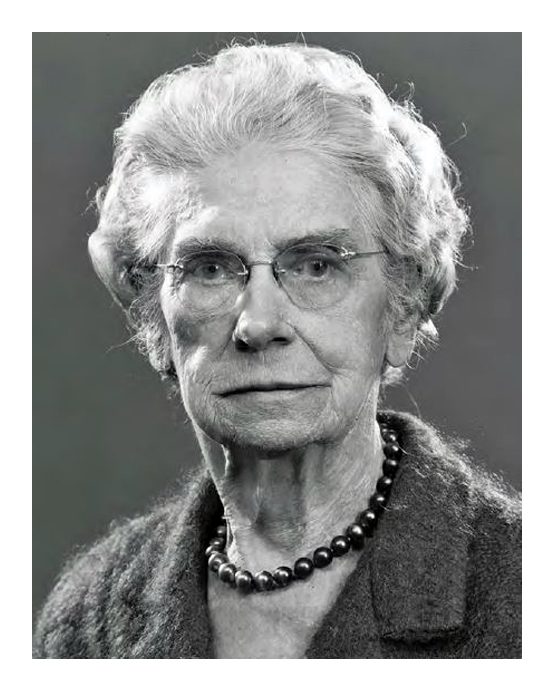
For much of the 1920s, Dr. Elizabeth Bagshaw signed more birth certificates than any other physician in Hamilton. In 1932, a local doctor provided…
For much of the 1920s, Dr. Elizabeth Bagshaw signed more birth certificates than any other physician in Hamilton. In 1932, a local doctor provided an unused Walnut Street surgery for a fledgling (and illegal) birth control clinic. And Bagshaw became the physician at the first birth control clinic in Canada. The clinic aimed to meet the birth control needs of people whose health and family lives suffered during the Depression, Even though Canada’s criminal code banned any means of preventing contraception By the end of its first year of operation, some 398 local women had been helped. In 1934, the number rose to approximately 2,000. Hamilton’s maternal death rate began to drop from being the highest to the lowest of any Canadian city. (Content courtesy International Order of Daughters of the Empire Bagshaw Chapter; LAC 3606783.)
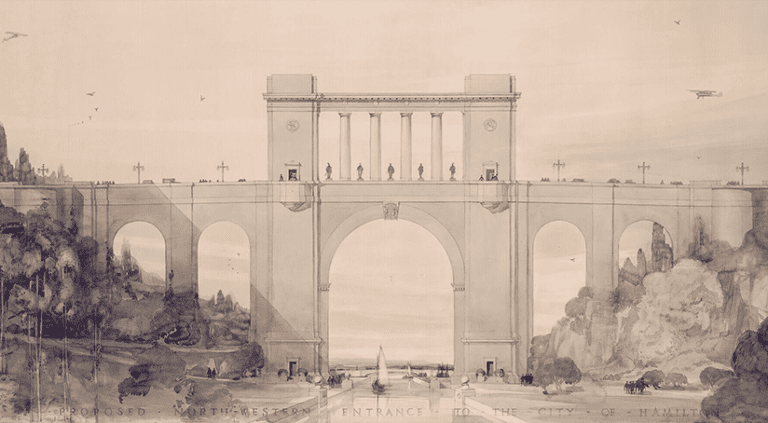
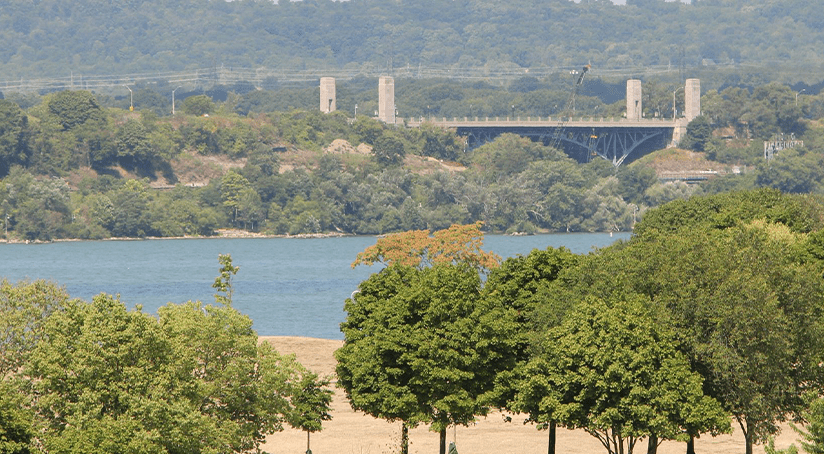
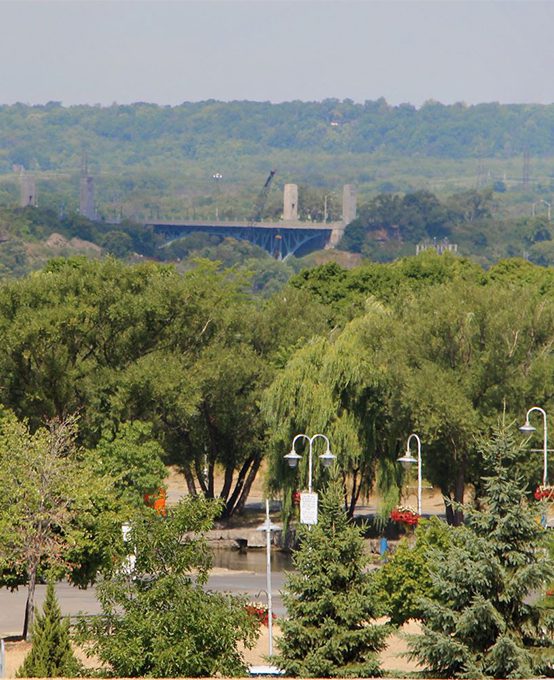
Hamilton architect John Lyle designed the high level bridge, completed 1932, as part of a new City Beautiful `gateway’ into Hamilton associated with a…
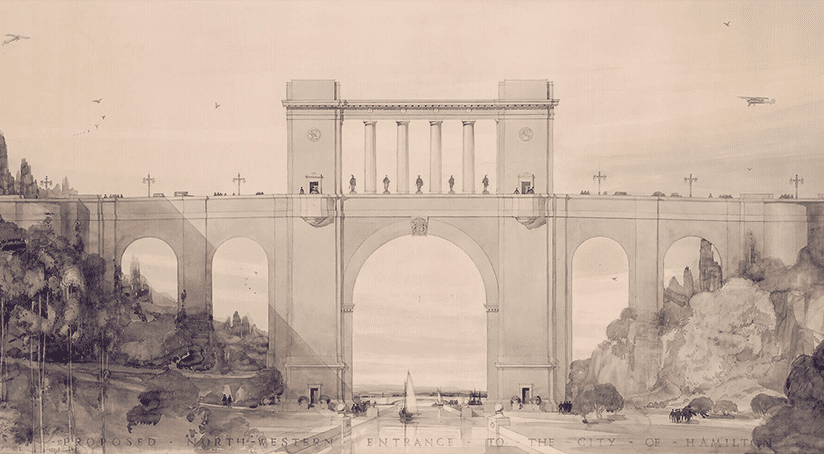
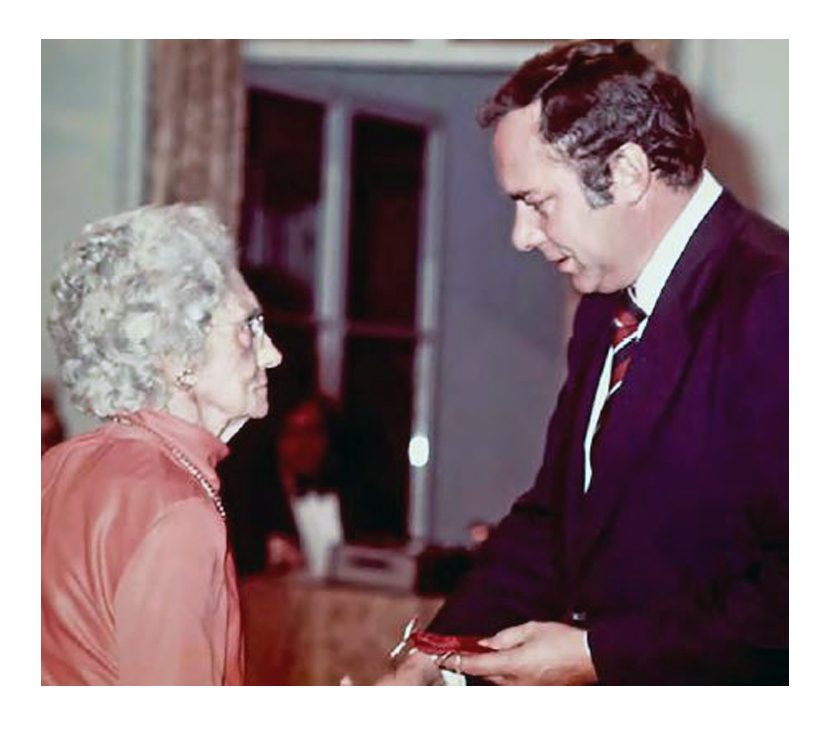
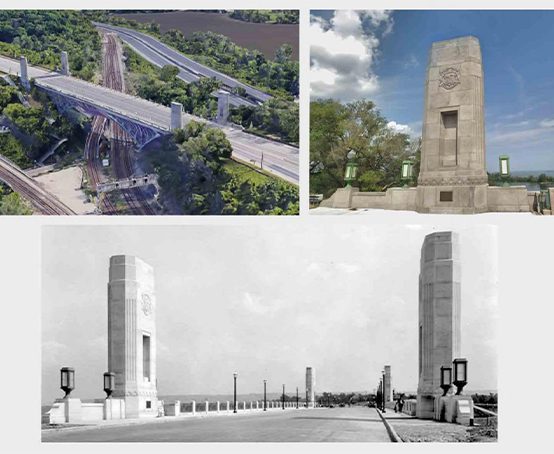
Hamilton architect John Lyle designed the high level bridge, completed 1932, as part of a new City Beautiful `gateway’ into Hamilton associated with a Dunnington-Grubb Master Plan for the northwest entrance of the City. The bridge contains four niches built into its corners. These were to house statues of historically prominent Hamiltonians. Parks Board member Thomas B. McQuesten nominated four men for consideration, all Presbyterian. The other denominations were less than enthused, and the proposal died. The idea was resurrected in 1949, with Nora Frances Henderson being proposed as a subject for a statue. Again, no statues were created. McQuesten himself was floated for a statue when the subject was revived in the 1950s. Most recently, Dr. Mary Anderson (T.B. McQuesten’s biographer) urged the city to again take up the idea in 2015, suggesting McQuesten and Joseph Brant. Today, the original problem remains: who should be represented? The niches remain empty. (Content courtesy of City of Hamilton; HPL Local History and Archives; Royal Botanical Gardens; C. Redford).
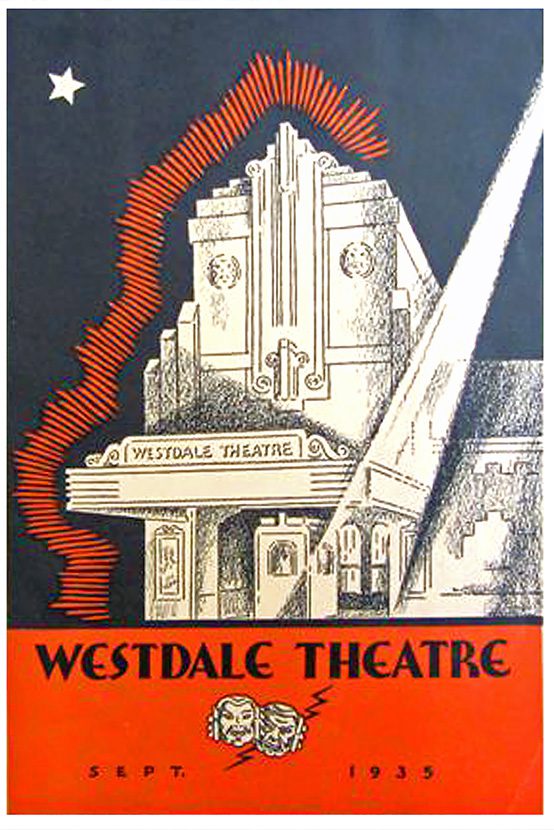
The Westdale Theatre is a single-screen, neighbourhood movie house that opened in 1935. It was `state of the art’ at the time, the first…
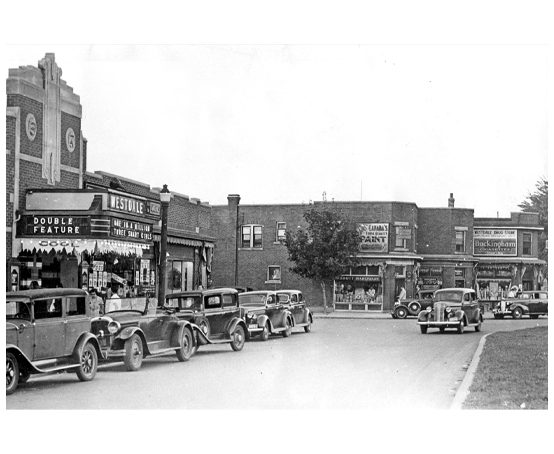
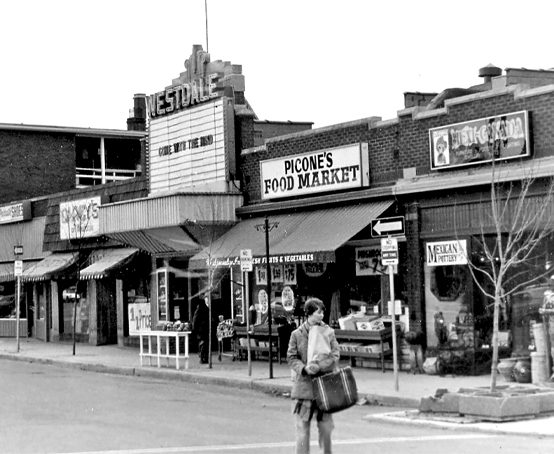
The Westdale Theatre is a single-screen, neighbourhood movie house that opened in 1935. It was `state of the art’ at the time, the first theatre in Hamilton built for sound motion pictures. The theatre features Art Deco cornices, mouldings, and trim, scalloped ceilings, and ornate double doors. “Dunlopillo” seats (newly invented foam rubber), air conditioning, and RCA Victor Photophones High Fidelity sound ensured maximum viewing comfort. The Northern Electric Company of Canada supervised construction at a cost of approximately $100, 000. The original programs consisted of a double feature and short subjects. Saturdays featured children’s matinees. Evening admission was 25 cents, matinees 17 cents, and children 10 cents. The first motion picture to be screened was the musical, “Dance Band”, starring Buddy Rogers. The Westdale Theatre has been the pride of Westdale since the day it opened. (Content courtesy HPL Local History and Archives; City of Hamilton; Creative Commons.)

thewestdale.ca
globalnews.ca
library2.utm.utoronto.ca
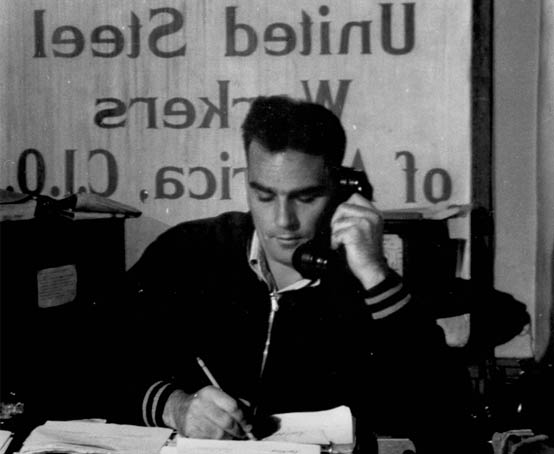
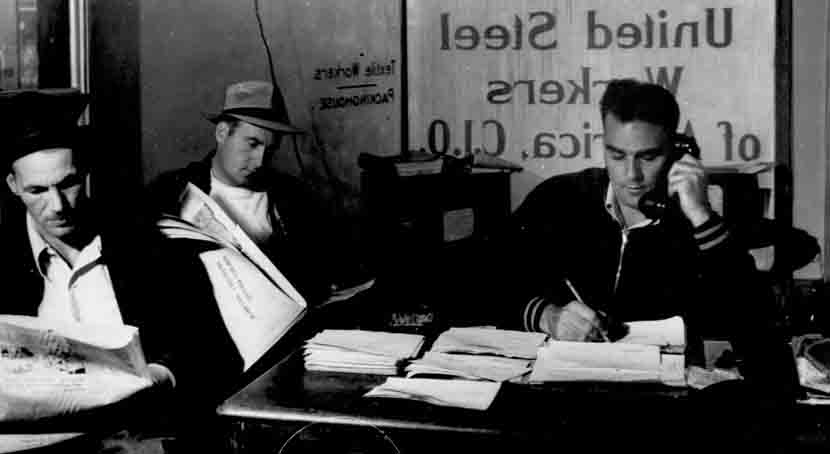
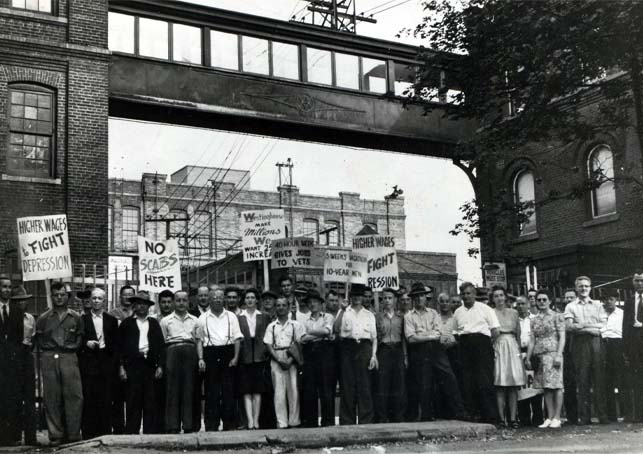
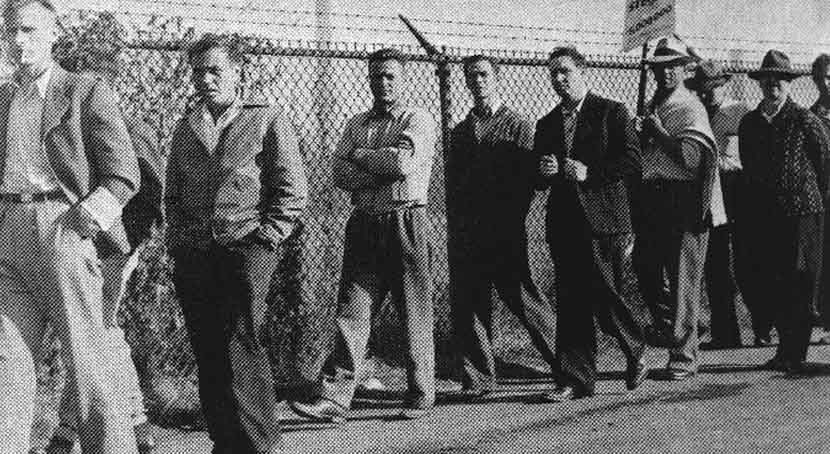
By the 1930s a growing number of union activists had come to question whether craft unionism – where workers in the same craft were…
By the 1930s a growing number of union activists had come to question whether craft unionism – where workers in the same craft were organized into separate unions and the unskilled were left unorganized – was the best model for unionism in the large new 20th century plants. Rather, they advocated for ‘industrial unionism’ – where all workers at a plant were organized into one union. The creation of the U.S.-based Congress of Industrial Organizations (CIO) led to a major new unionization push. After 1935 Hamilton labour organizers started organizing in a number of Hamilton plants, including Stelco, Westinghouse and Dofasco. But these workers would have to wait until after the Second World War to solidify these gains in the form of permanent industrial unions at many Hamilton workplaces. (Content courtesy of Workers' City.)
workerscity.ca
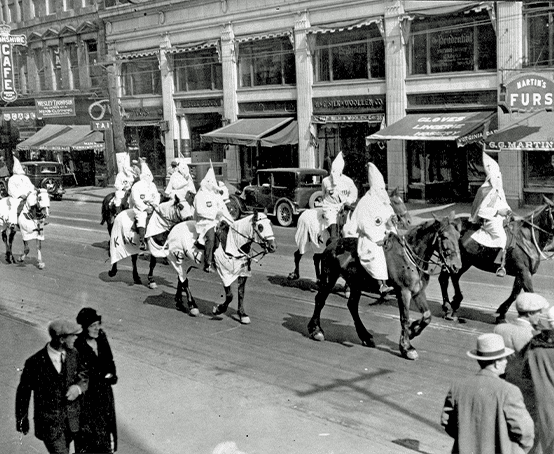
The film `Birth of a Nation’ was released in Canada during the First World War, glorifying the Ku Klux Klan as an organization dedicated…
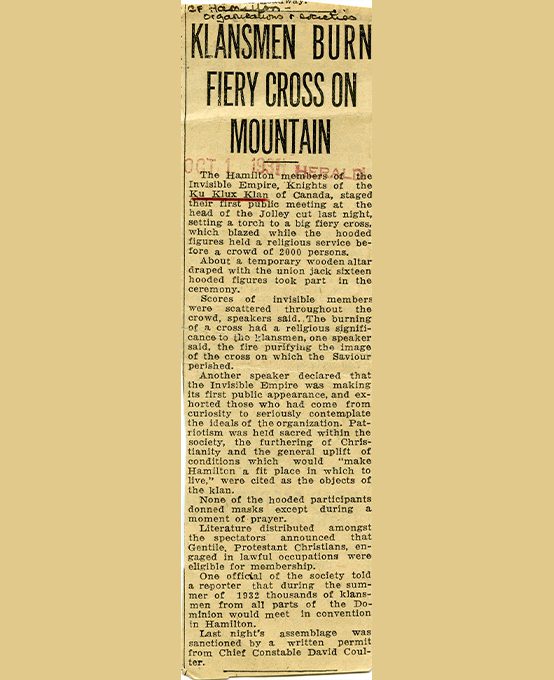
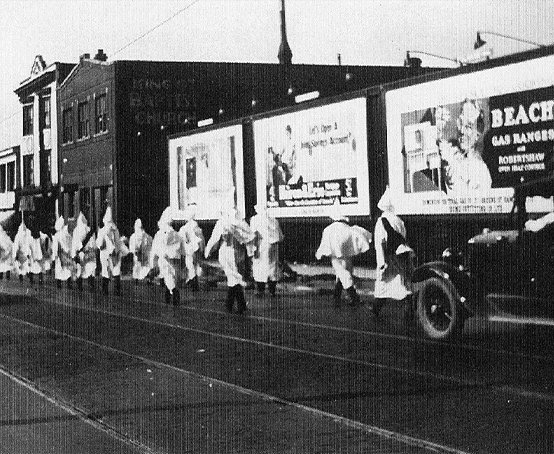
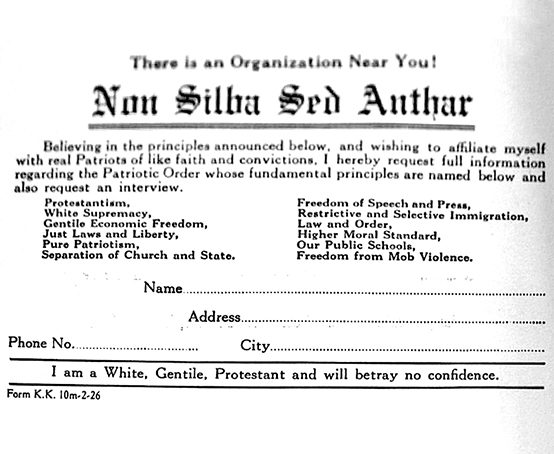
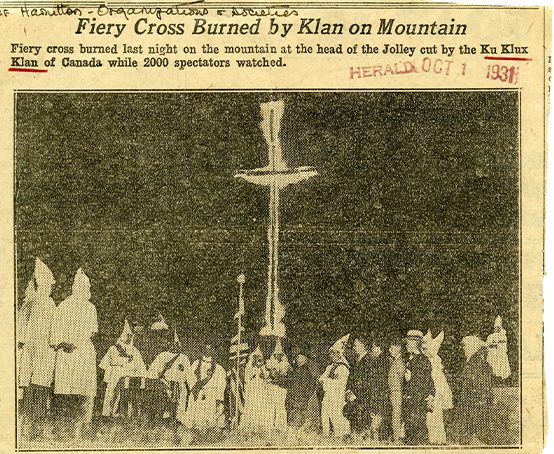
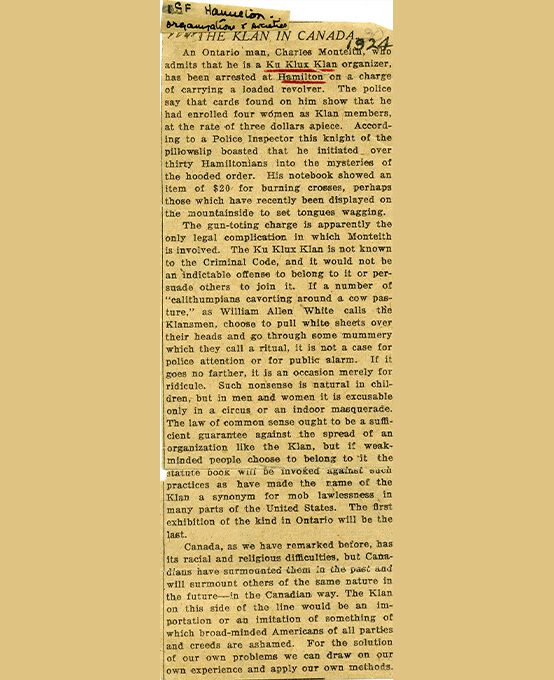
The film `Birth of a Nation’ was released in Canada during the First World War, glorifying the Ku Klux Klan as an organization dedicated to law, order and white supremacy. Between 1915 -1920 the movie enjoyed great success, and Klan recruitment in Canada followed. Groups sprang up across the country through grass roots membership sales. The Klan’s stated `fundamental principles’ included Protestantism, White Supremacy, Gentile Economic Freedom, and Restrictive and Selective Immigration. Men who had returned from the war and struggled to reintegrate proved receptive to the messaging. Rallies in the 1920s saw thousands in attendance. By 1924 Hamilton reported the arrest of a local Klan recruiter on firearms charges. The 1920s and early 1930s saw cross burnings on Hamilton Mountain, and Klan marches on King Street and James Street. By 1935 however, the Hamilton Herald could report: `From an organization which once numbered its members in the hundreds, and with which was affiliated a women’s branch said to consist of 1000 members, the Ku Klux Klan of Hamilton has crumbled in the past five years until nothing is heard or seen of it now.” The Klan’s membership diminished throughout the country into the 1940s, with groups in Saskatchewan and the Maritimes holding on longer than elsewhere. (Content courtesy of Margaret Houghton; HPL Local History and Archives).
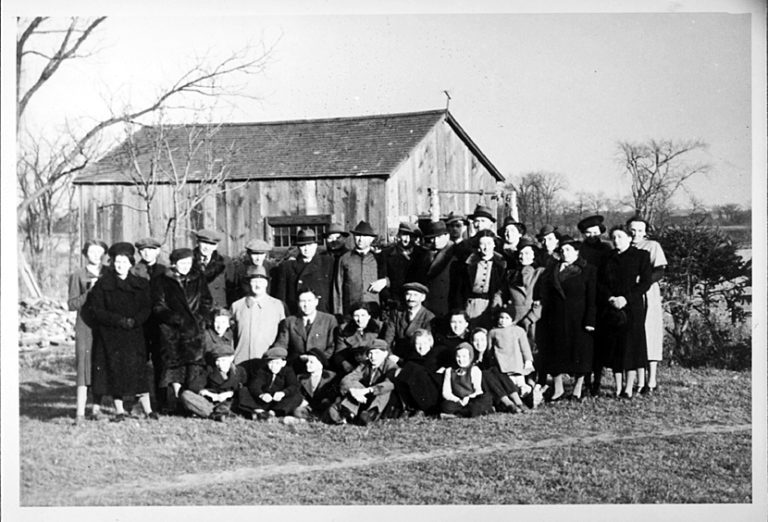
In 1938, Nazi Germany annexed the Sudeten region of Czechoslovakia, creating a refugee movement of 80,000 people. Canada agreed to Britain's request to waive…
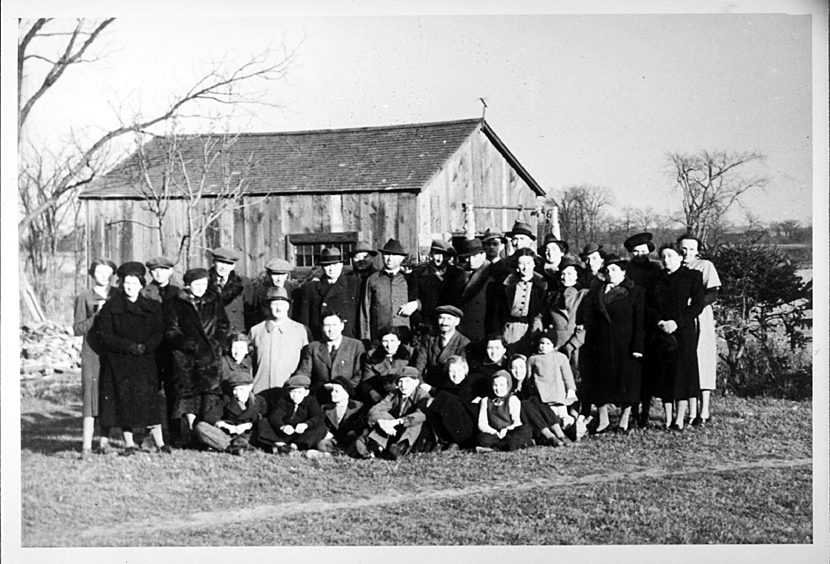
In 1938, Nazi Germany annexed the Sudeten region of Czechoslovakia, creating a refugee movement of 80,000 people. Canada agreed to Britain's request to waive its strict immigration regulations and take in a small number of Czech refugees under the assurance that most would be Christian farmers. Among the 303 families and 72 single men admitted to Canada were Jewish families who settled on farms in South-Western Ontario. Among them was Karl Abeles, who, with the help of some of his business contacts in the Hamilton area, was able to secure 39 farming permits from the Canadian Pacific Railway. Eight decades later, significant portions of the family are still farming in the Mount Hope area. (Content courtesy of the Hamilton Jewish Federation.)
hamiltonjewishnews.com
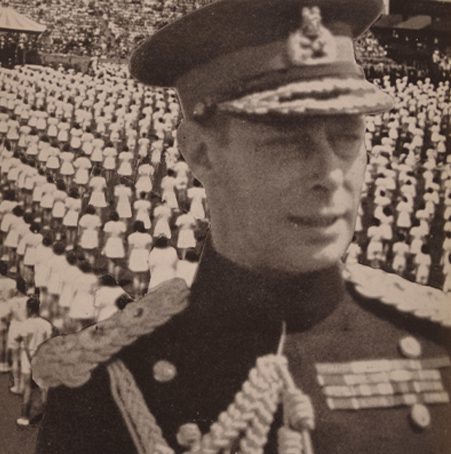
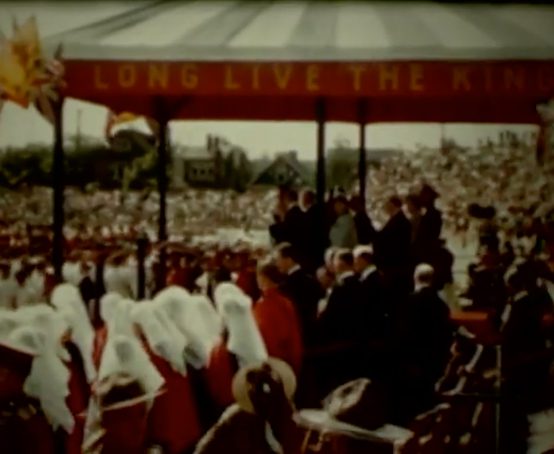
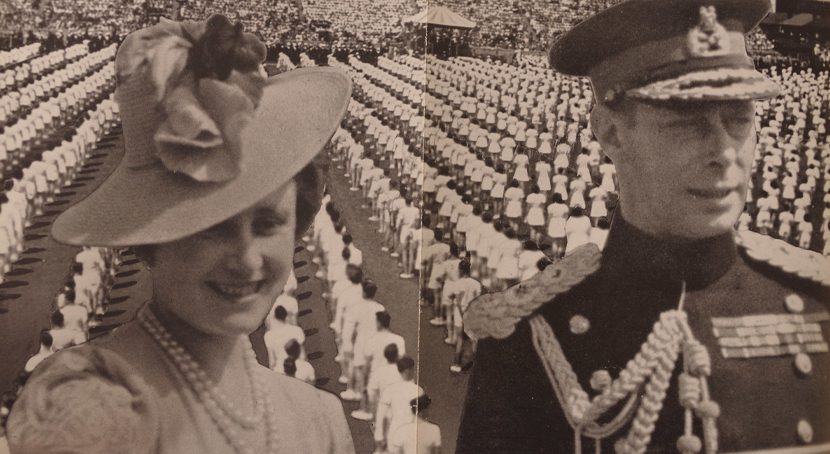
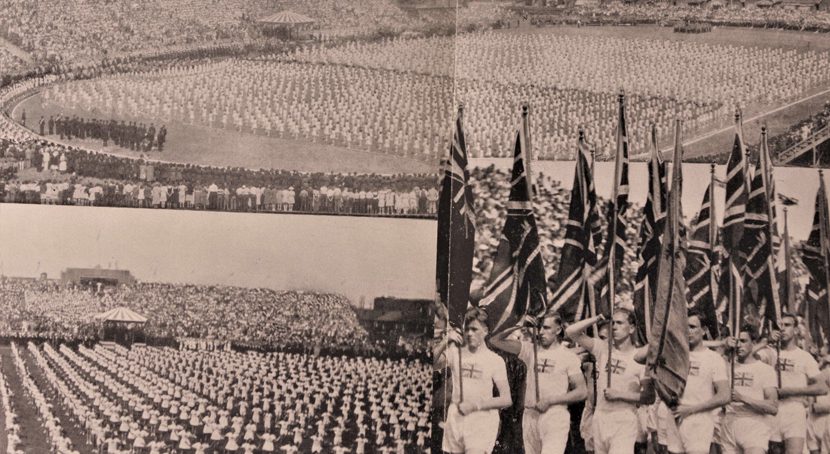
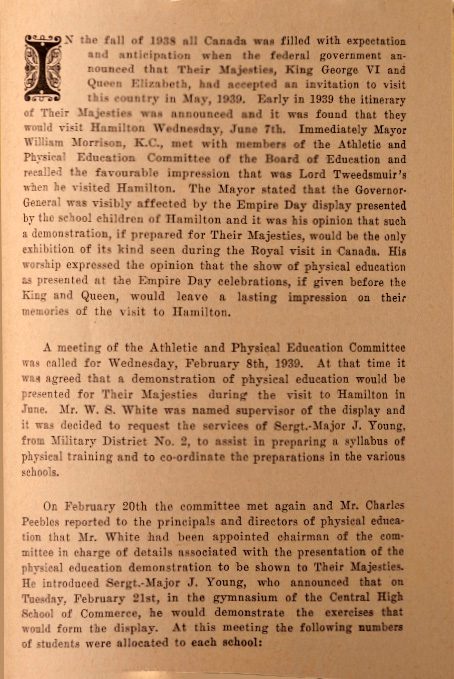
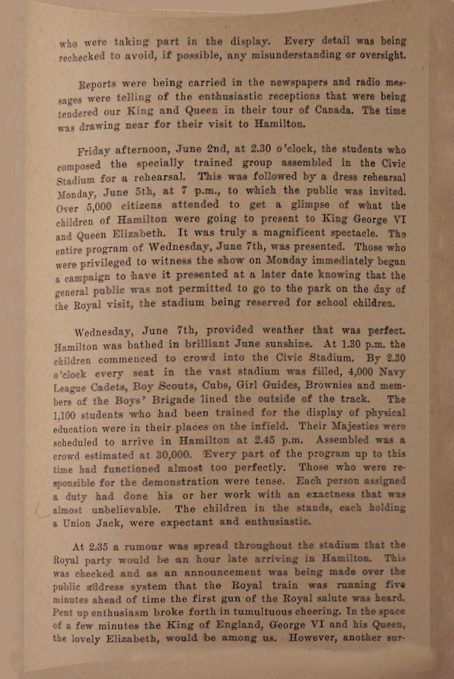
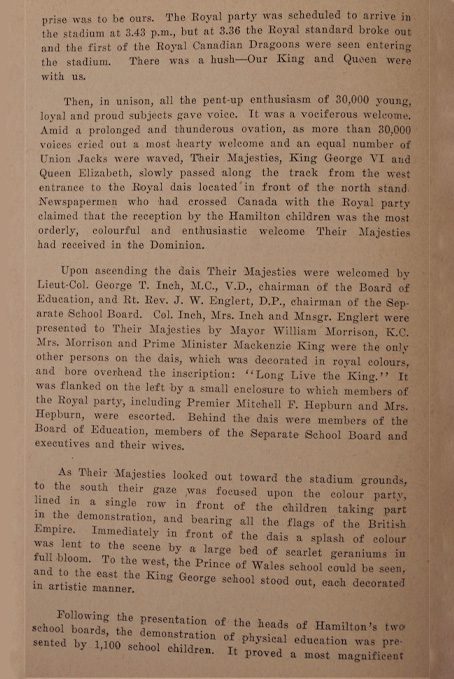
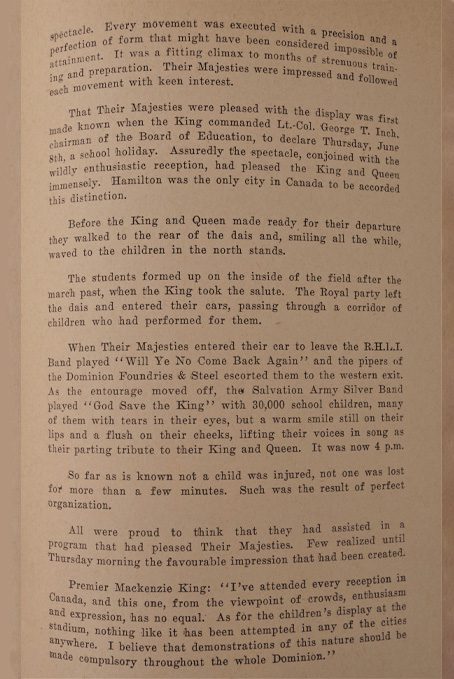
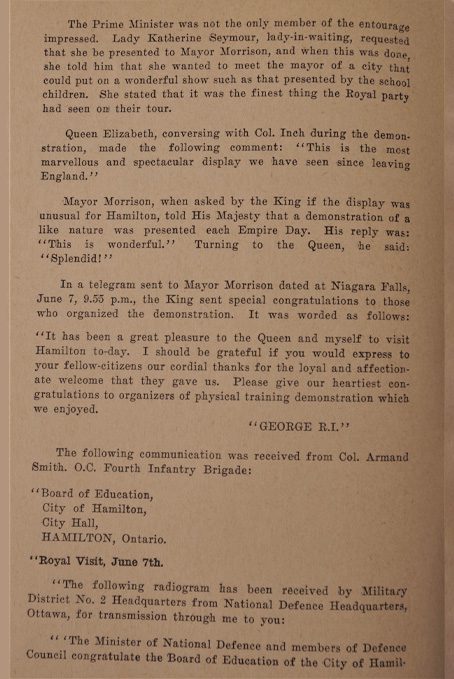
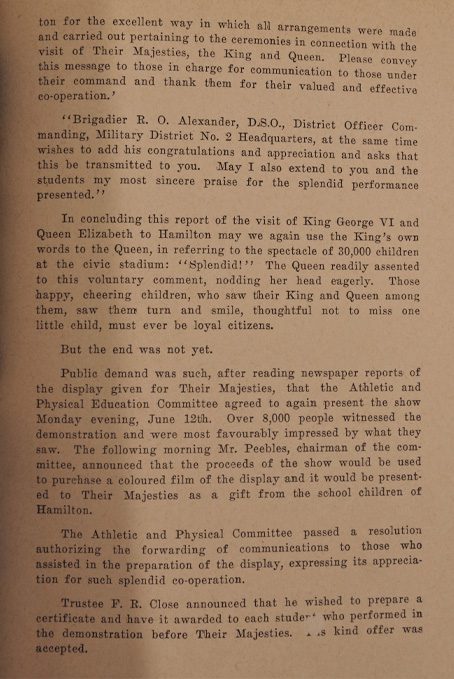
On June 6, 1939, King George VI and Queen Elizabeth visited Hamilton during their Royal Tour of Canada. Like every participating city, residents came…
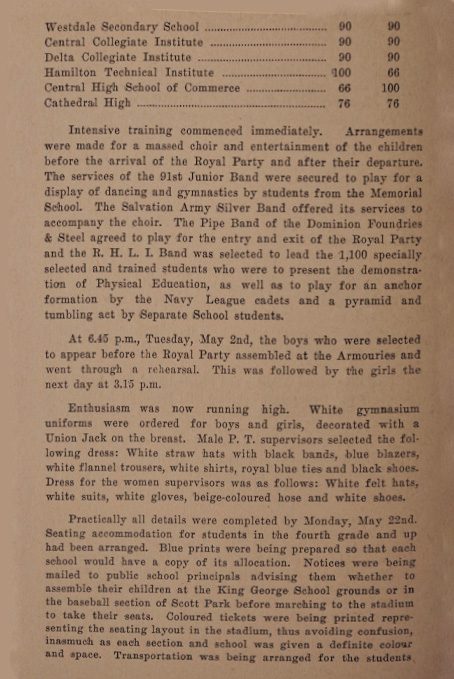
On June 6, 1939, King George VI and Queen Elizabeth visited Hamilton during their Royal Tour of Canada. Like every participating city, residents came out in the thousands to greet the monarchs, but Hamilton had an added attraction. 1,100 selected students, ranging from elementary to secondary ages, spent months training and choreographing a display of athletic prowess, as well as performances by choirs and school bands. The event was held at Civic Stadium (later renamed Ivor Wynne), to a crowd of roughly 30,000. The King was impressed enough to declare June 8th a school holiday, while Prime Minister William McKenzie King later wrote to the Board to say that, "I've attended every reception in Canada, and this one has no equal." A 16mm film was produced by the Board of the day's events and features rare shots of schools such as Central Collegiate and the Technical Institute. (Content courtesy of the Hamilton-Wentworth District School Board)
youtube.com
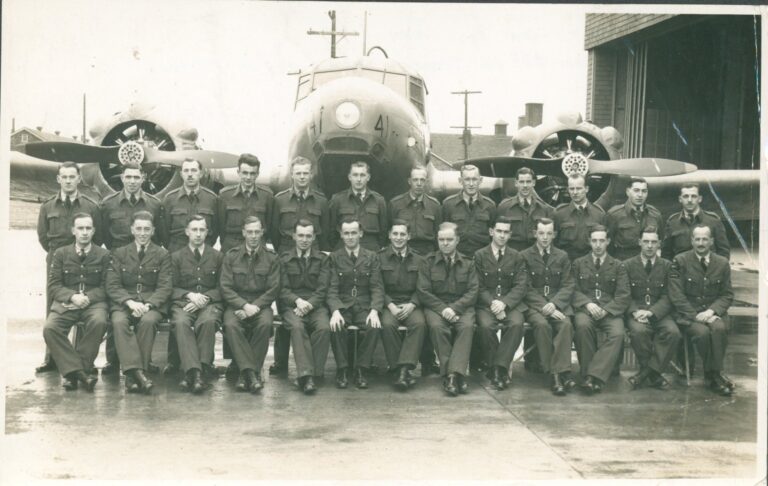
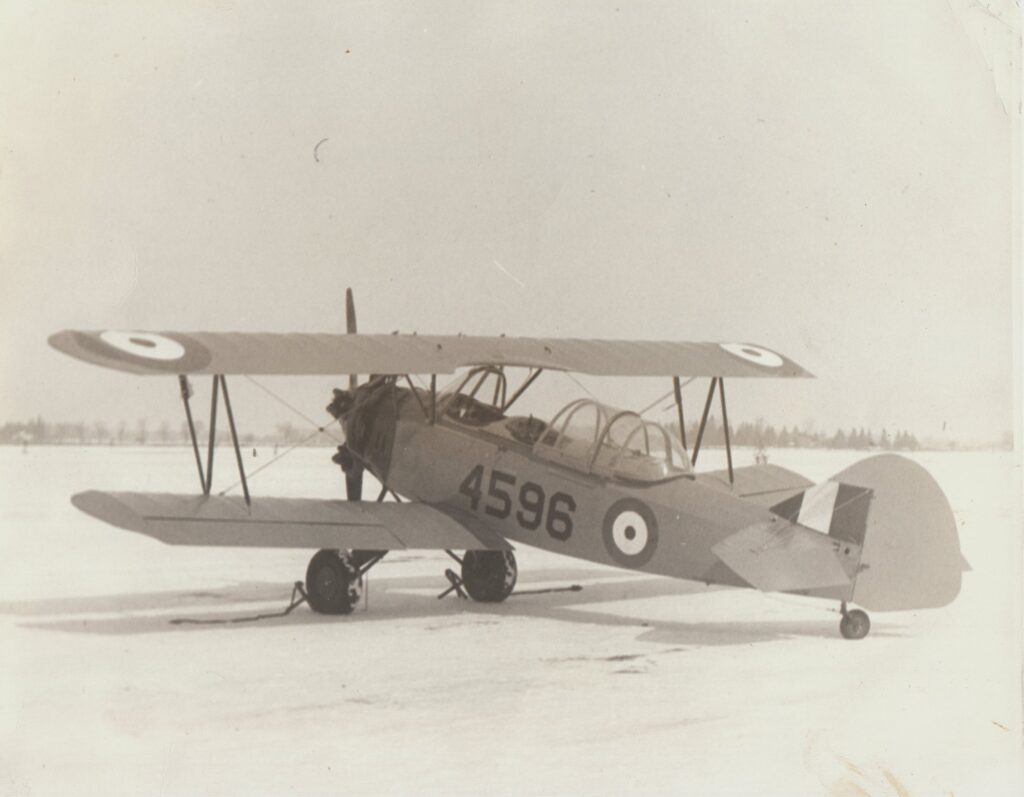
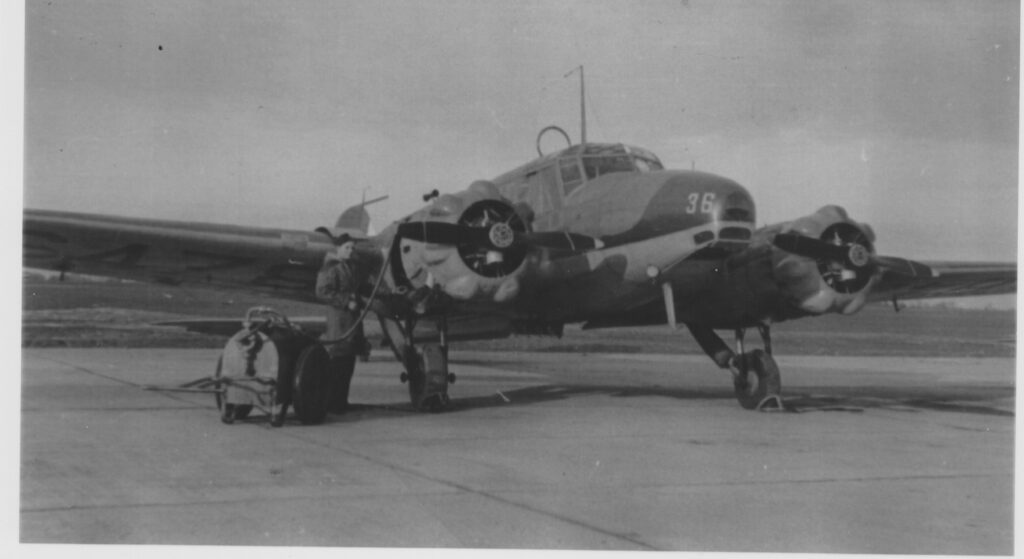
The Mount Hope Airfield began operations during the Second World War. Originally built as a Commonwealth Air Training base, three training schools operaed out…
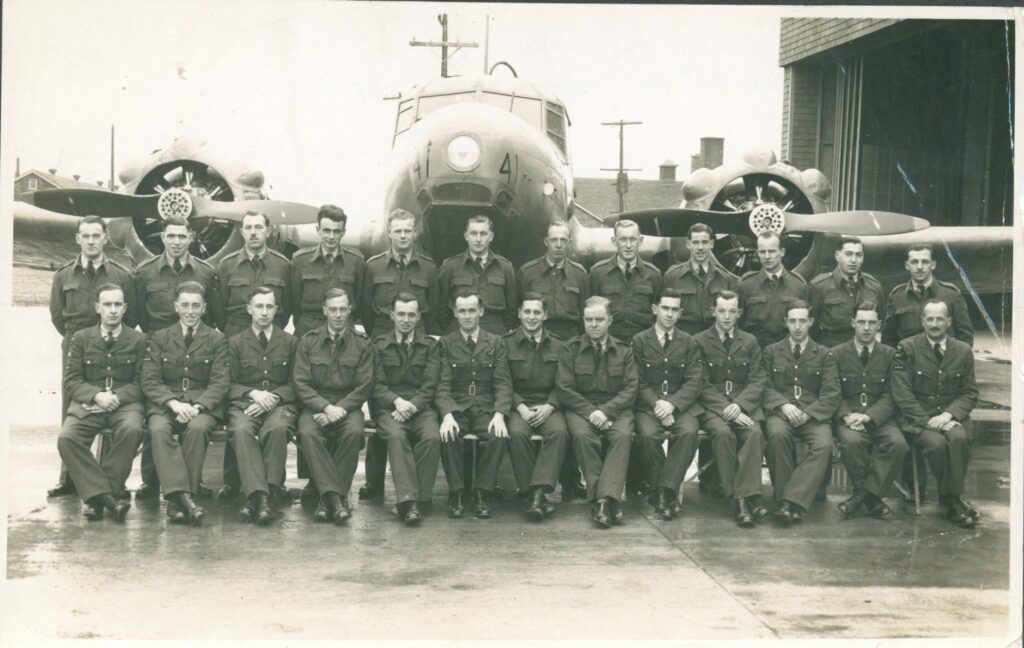
The Mount Hope Airfield began operations during the Second World War. Originally built as a Commonwealth Air Training base, three training schools operaed out of the site between 1940-1945. The three schools were, Number 10 Elementary Flying School, Number 33 Air Navigation School, and Number 1 Wireless School (radio operators). Many aviators from across the Commonwealth trained here in support of the Allied war effort including personnel from the Canadian, British, Australian and New Zealand Air Forces.
Following the War, the airfield was home to RCAF 424 Light Bomber Squadron, until the base was declared surplus in1964 . Since then, the airfield has been used for commercial operations, with a busy passenger terminal and one of the largest cargo operations in the country. The Mount Hope Airfield was renamed the John C. Munro Airport in 1998.
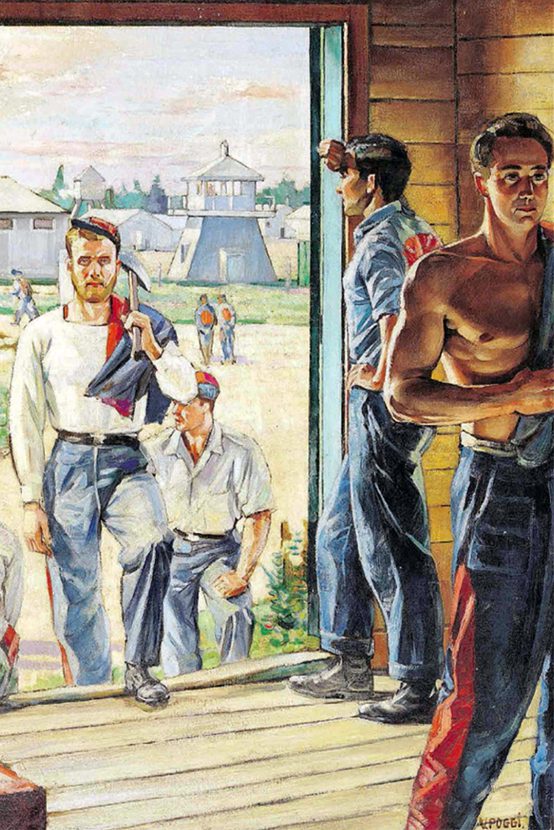
On June 10, 1940 Italy declared war on Great Britain and its allies. The Canadian Government, under the War Measures Act, ordered the detention…
On June 10, 1940 Italy declared war on Great Britain and its allies. The Canadian Government, under the War Measures Act, ordered the detention and internment of Canadian citizens of Italian descent who were considered a threat to Canada. Over 31,000 Italian Canadians were identified as enemy aliens and nearly 600 interned. In Hamilton, 74 Italian Canadians, many of them business leaders and sole sources of family income, were arrested without due process and interned for up to 5 years. Others were put under house arrest, having to report daily to the local jail. Although lives were disrupted, reputations damaged and incomes jeopardized, not one internee was charged with a crime. Today, Canadians of Italian descent continue to be an important and contributing part of Canada’s multicultural identity and success. The Italian Canadian community acknowledges Canada's Charter of Rights and Freedoms: “Everyone has a legal right not to be arbitrarily detained or imprisoned”; a right not recognized in 1940. (Content courtesy HPL Local History and Archives; Vincenzo Poggi/Canadian War Museum; City of Hamilton.)
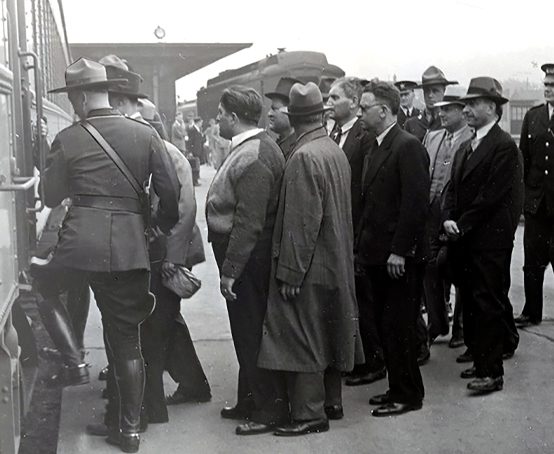
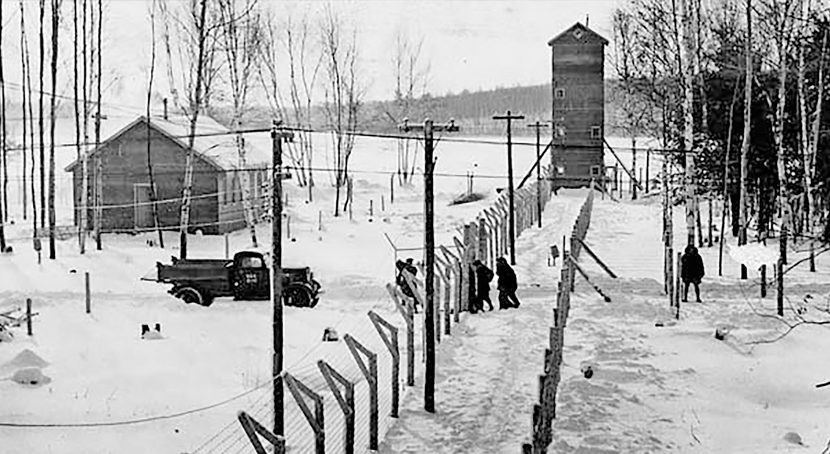
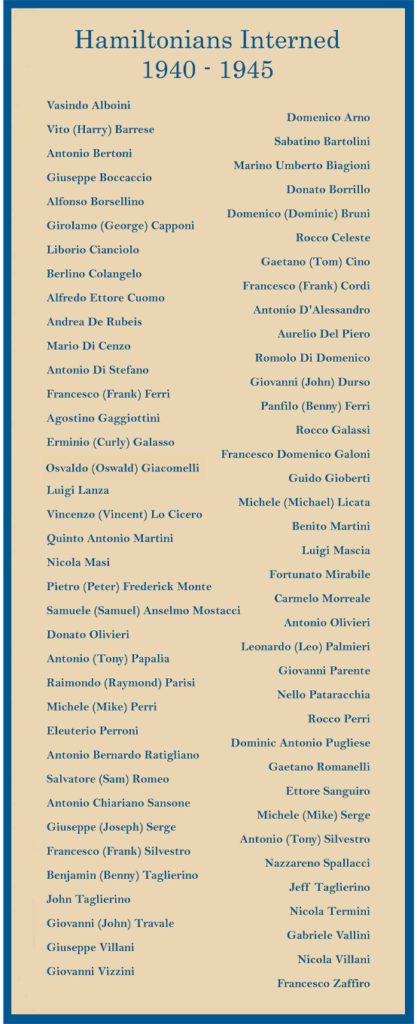
italiancanadianww2.ca
thecanadianencyclopedia.ca
youtube.com
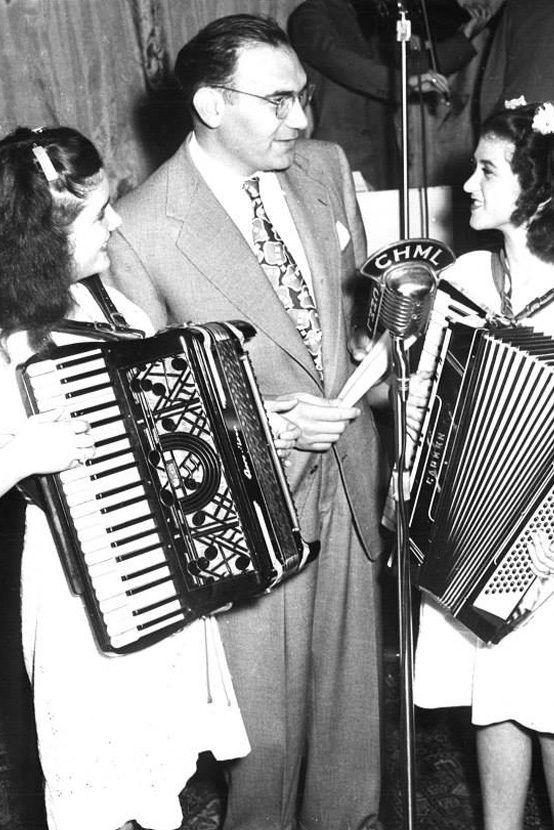
Kenneth Soble was a radio actor, a program packager and manager of CHML, and director of the Canadian Association of Broadcasters. He brought to…
Kenneth Soble was a radio actor, a program packager and manager of CHML, and director of the Canadian Association of Broadcasters. He brought to Hamilton a new radio centre and frequency modulation and was the first to apply for a TV license. He developed the Amateur Radio Hour, the first audience participation broadcast and on-the-spot programs. Under his management, CHCH withdrew from the CBC Television Network in 1961 to become Canada's first independent television station. He was also the original applicant for what would eventually become Canada's Global Television Network, although the application underwent numerous changes before being transferred to a separate company, unrelated to Soble's Niagara Television, in 1970. One indication of the esteem in which he was held was that the Canadian Broadcasting Corporation offered him the job of president of the network in late 1966; but he decided to turn it down.(Courtesy of the Hamilton Jewish Federation)
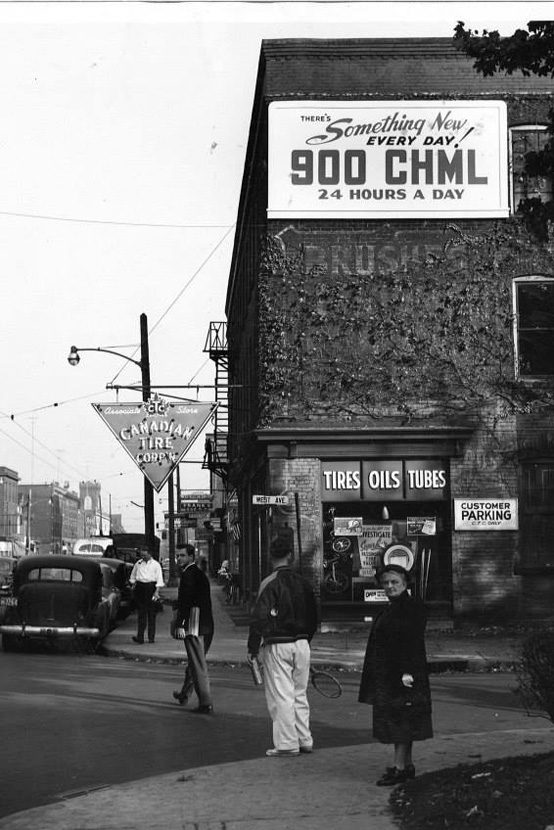
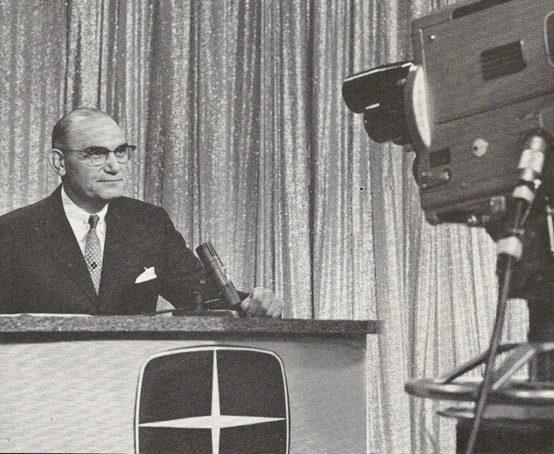
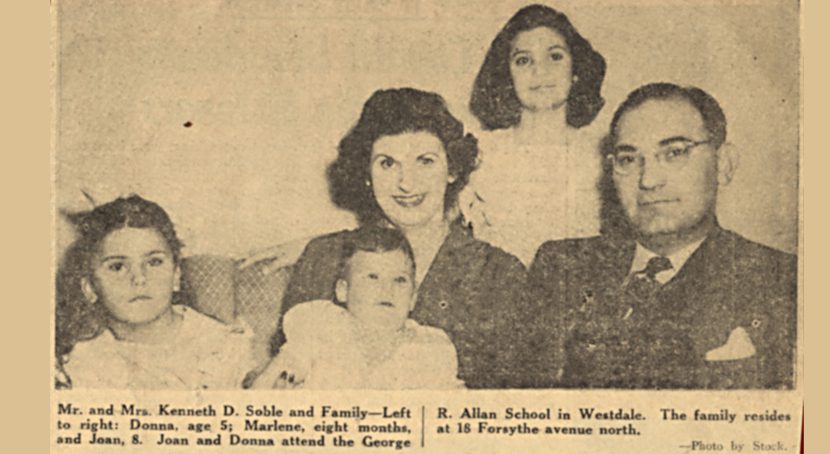
peoplepill.com
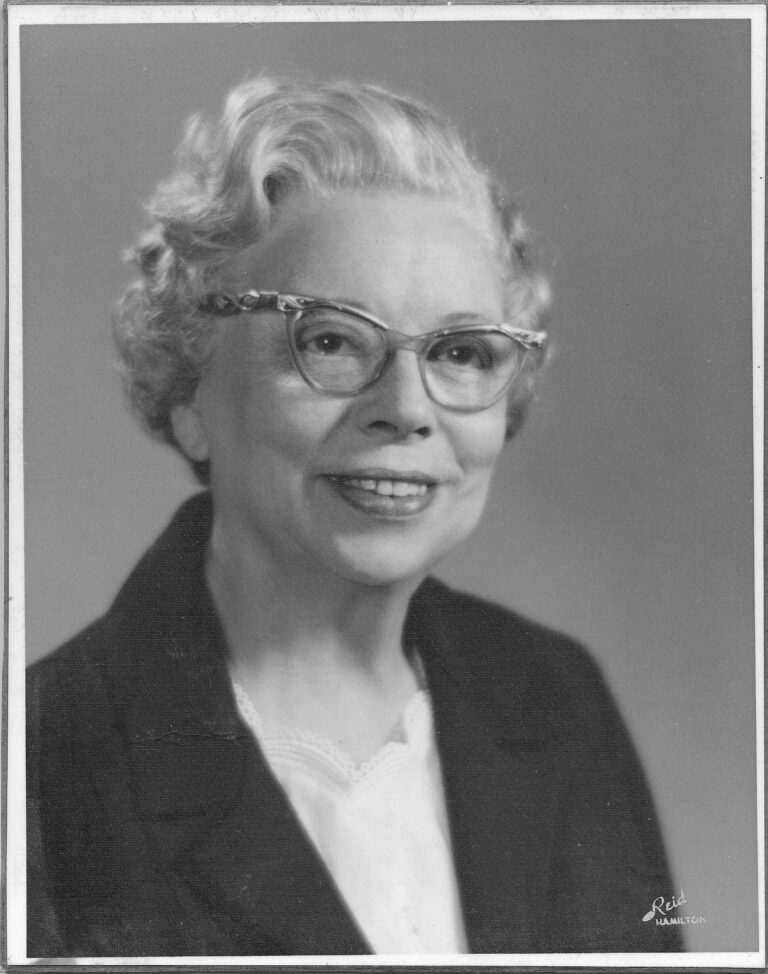
From 1942 to 1989 the Lister Block at 28 James Street North was home to the Anne Foster Music shop. Anne, a pianist originally…
From 1942 to 1989 the Lister Block at 28 James Street North was home to the Anne Foster Music shop. Anne, a pianist originally from Winnipeg, started the store to fill a need. Before the Internet every choir, orchestra or musical group needed a place to find the music they wished to play. Anne Foster Music became the place in Hamilton where any piece music from the rare and obscure to the latest hits could be found.
In operation almost 50 years Anne’s shop be-came a mainstay of the business and arts communities in Hamilton. Although Anne died in 1969, so successful was her vision that the new owner, John Taylor, a former employee of Anne’s kept the business largely unchanged until it closed. Anne Foster’s Music Shop reflects Anne’s Entrepreneurial spirit and her desire to bring music to the world.
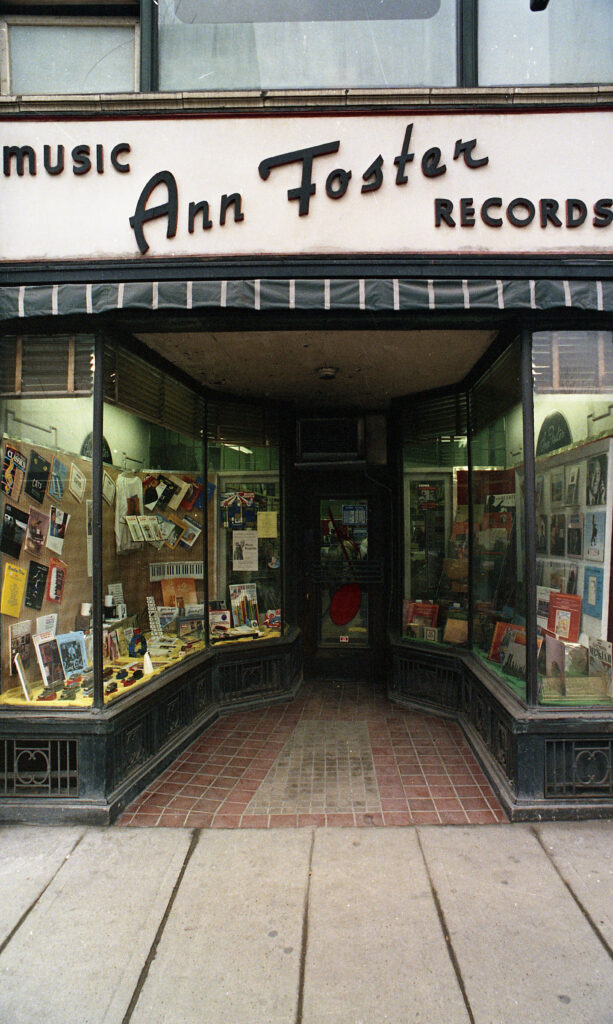
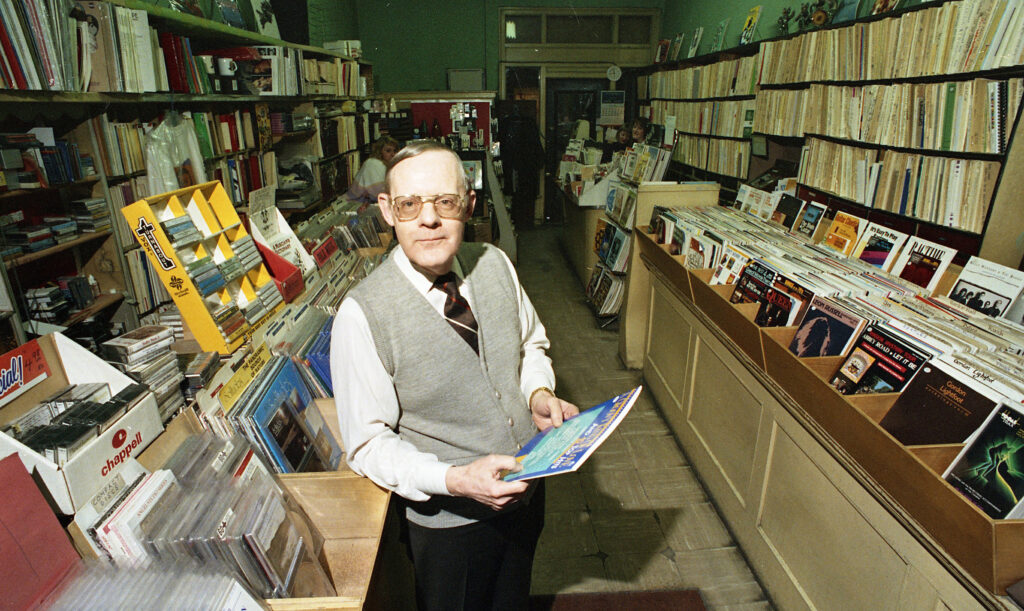
A fixture on CHML Radio’s morning show from 1945 to 1982, Paul Hanover, CHML’s Mayor of the Morning, spent a total of 41 years…
A fixture on CHML Radio’s morning show from 1945 to 1982, Paul Hanover, CHML’s Mayor of the Morning, spent a total of 41 years at the station. Generations of Hamiltonians woke up to his voice. And unlike many radio personalities, they knew his face as well, due to his tireless participation in community events and his television presence on CTV as a game show host. (Courtesy of the Hamilton Jewish Federation)
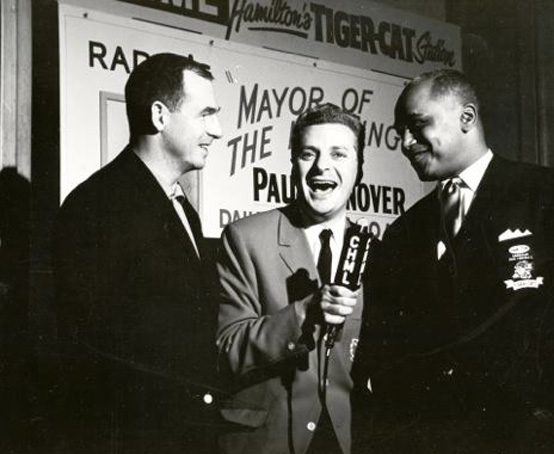
hamiltonjewishnews.com
youtu.be
youtu.be
youtu.be
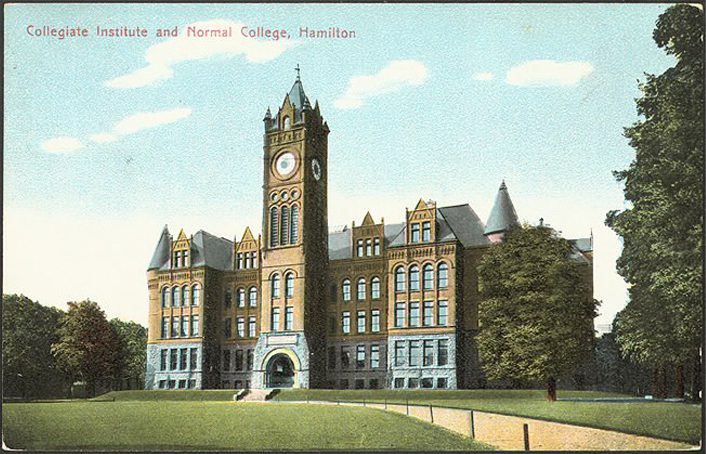
On June 7, 1946, at 10:42 P.M., the Hamilton Fire Department received a call informing them that the Central Collegiate Institute facility at 298…
On June 7, 1946, at 10:42 P.M., the Hamilton Fire Department received a call informing them that the Central Collegiate Institute facility at 298 Hunter Street East was on fire. Arriving on scene, they discovered a "mass of flames [...] with its many windows glowing red before thousands of spectators, it was a skeleton of ruin, its tower standing [but] its walls and flooring collapsed into the inferno within" (from a contemporary Spectator article). After this, the second fire to strike the building, the Board decided to raze the property, leaving only the gymnasium that had survived intact (renamed Central Memorial Recreation Centre, it is still open at present). In the aftermath of this event, students were forced to move to Central High School of Commerce at 149 Sanford Avenue North, which ran on shifts until 1950, when the school joined with the nearby Technical Institute on Wentworth to become Central Secondary School. (Content courtesy of the Hamilton-Wentworth District School Board.)
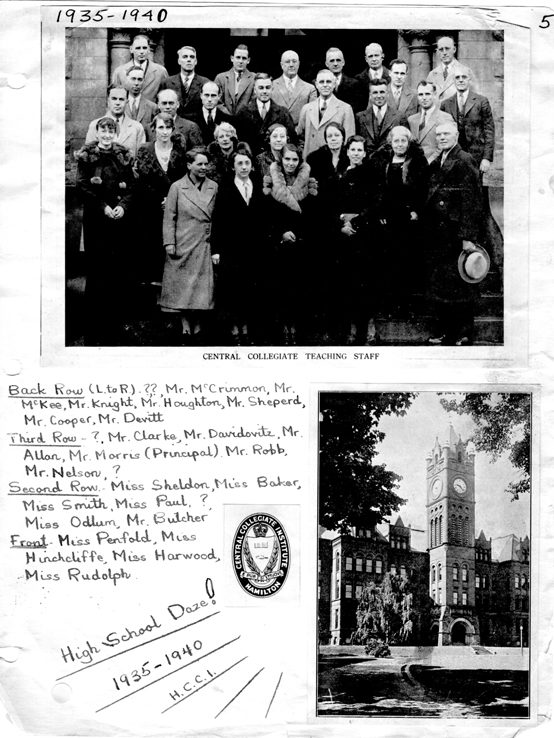
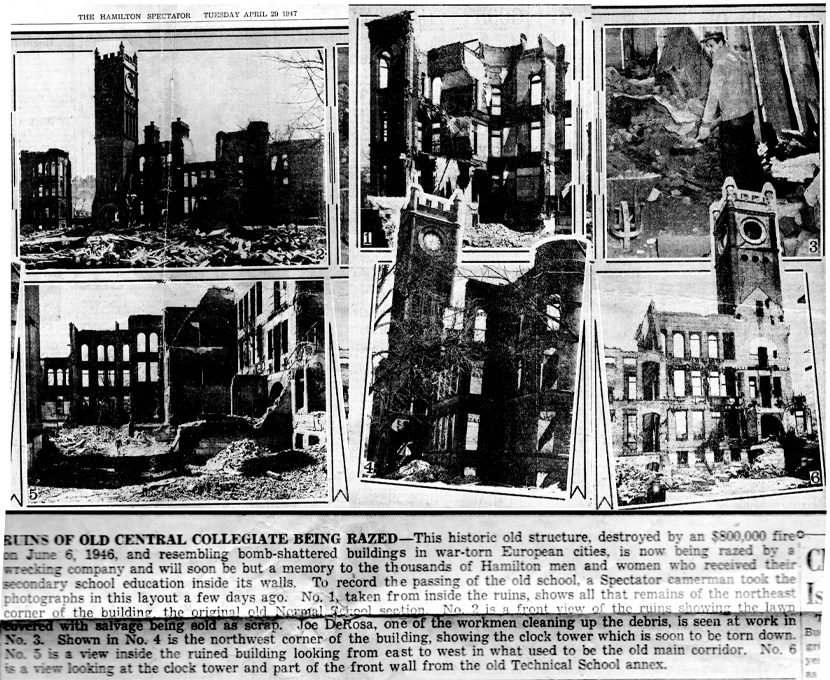
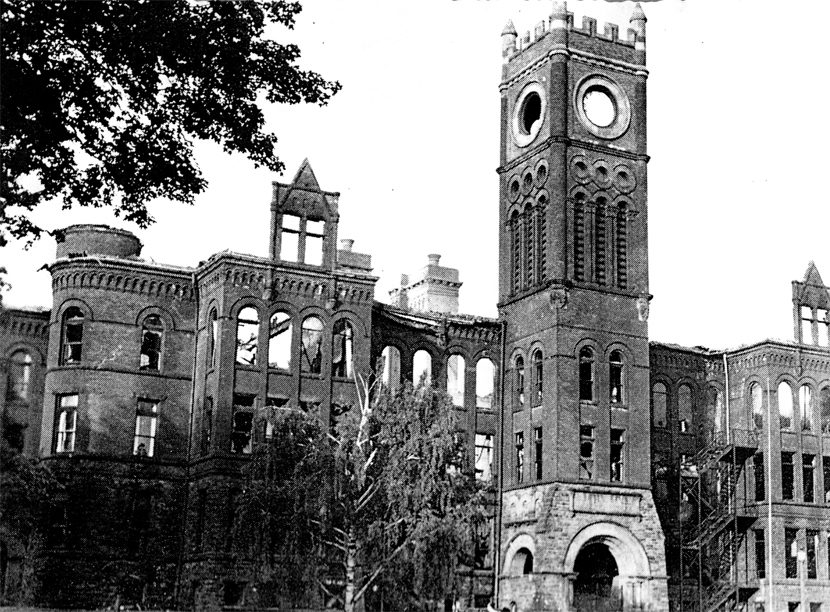
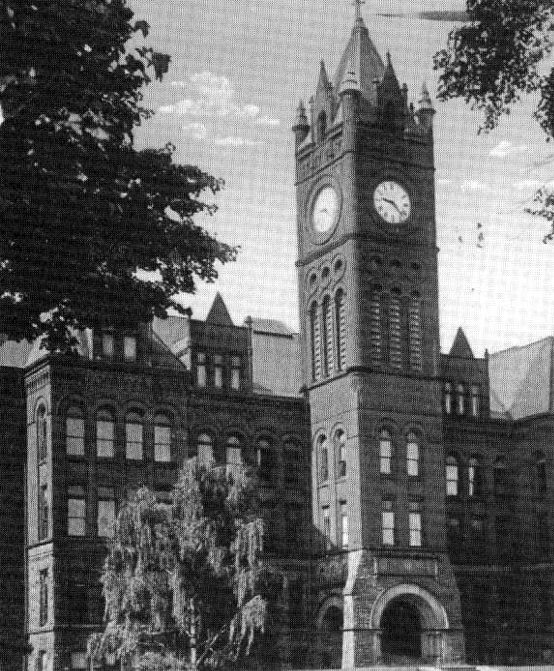
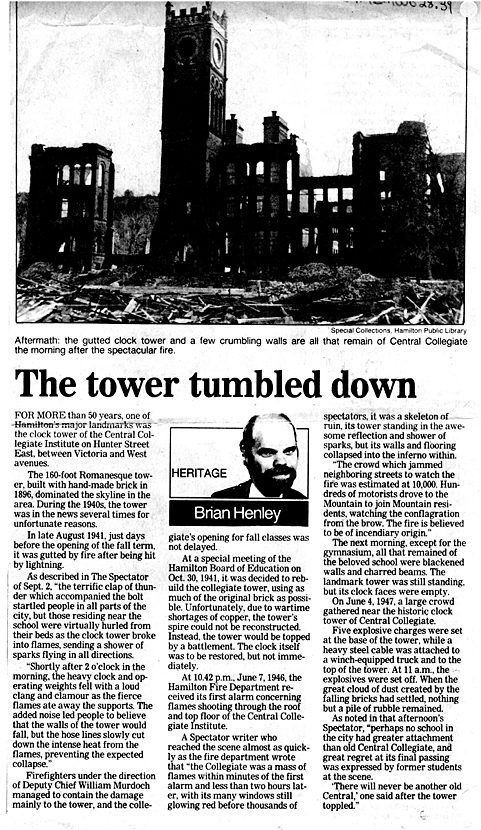
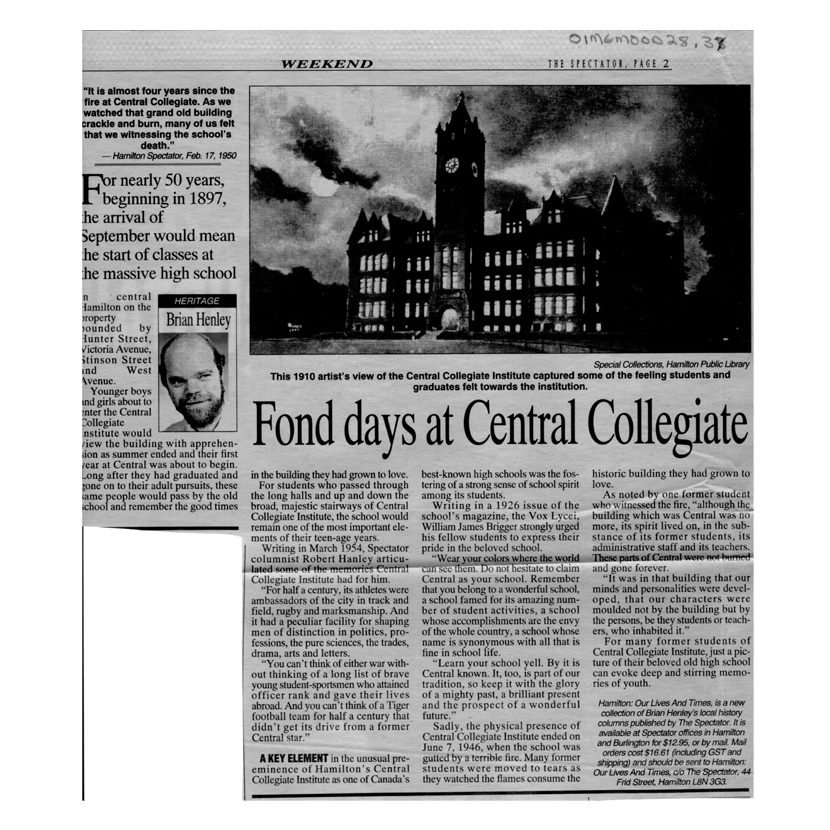
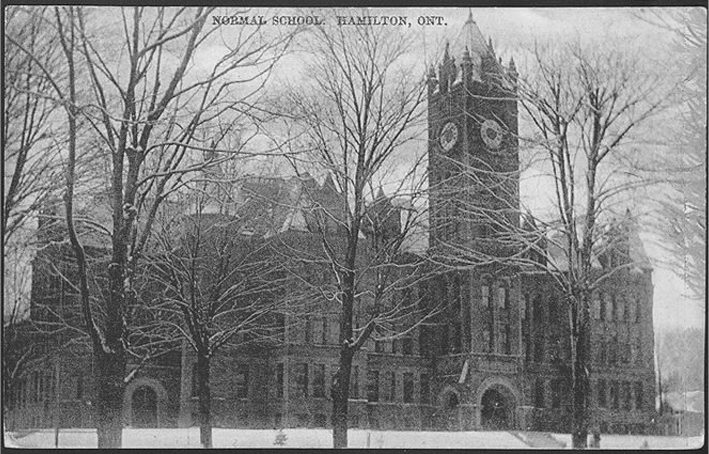
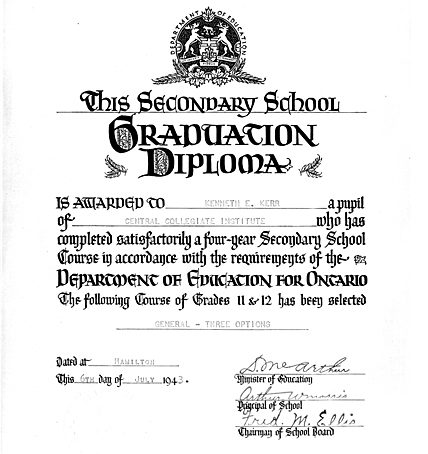
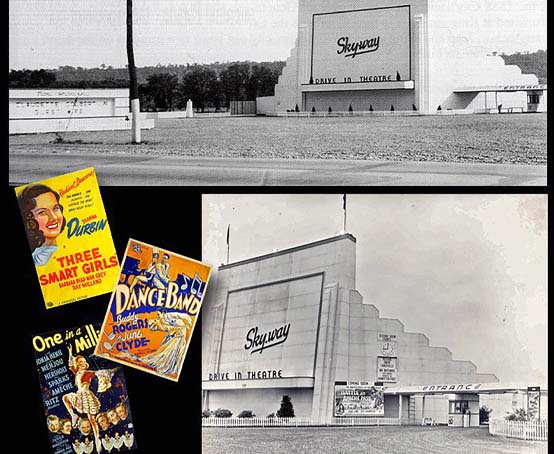
On July 10, 1946 the first drive-in movie theatre in Canada opened its gates in Stoney Creek. "The Skyway” Stoney Creek was the first…
On July 10, 1946 the first drive-in movie theatre in Canada opened its gates in Stoney Creek. "The Skyway” Stoney Creek was the first of a number of Skyway drive-ins in Ontario (top pic is Stoney Creek, bottom pic is Windsor). Operated by Famous Players, it could accommodate 705 cars in front of a 100 x 50 foot screen. The Skyway closed in 1975, but The Starlite Drive-In (originally opened as The Scenic in 1955) continues to offer family viewing fun to this day. (Photos courtesy HPL Local History and Archives.)
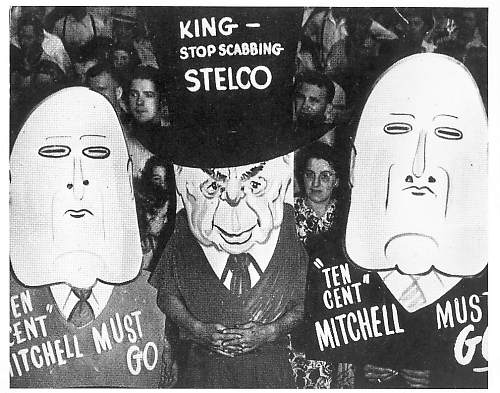
On July 15, 1946, over 2000 employees at Stelco went on strike over hours of work, wages, a dues check-off and union recognition. The…
On July 15, 1946, over 2000 employees at Stelco went on strike over hours of work, wages, a dues check-off and union recognition. The strike at Stelco lasted for more than 80 days and became the lynchpin in the battle for industrial unionism in Canada. After completely closing their plants, striking workers at Firestone and Westinghouse joined members of Local 1005 of the United Steelworkers of America (USWA) on their picket line to help thwart Stelco’s attempt to continue production. The wider community also provided support in such forms as fund-raising concerts and wrestling matches and other donations. Residents carted hot food made in their homes directly to the picket line to feed hungry strikers. Hamilton Mayor Sam Lawrence, himself a union stone-cutter, led a solidarity march of more than 10,000 people through city streets. With the community on their side, the strikers emerged victorious from the long and divisive battle, winning recognition for their union, modest wage increases and better working conditions. The 1946 strike is widely acknowledged as one of Canada’s most significant work actions, paving the way for a whole new labour relations system in post-war Canada.
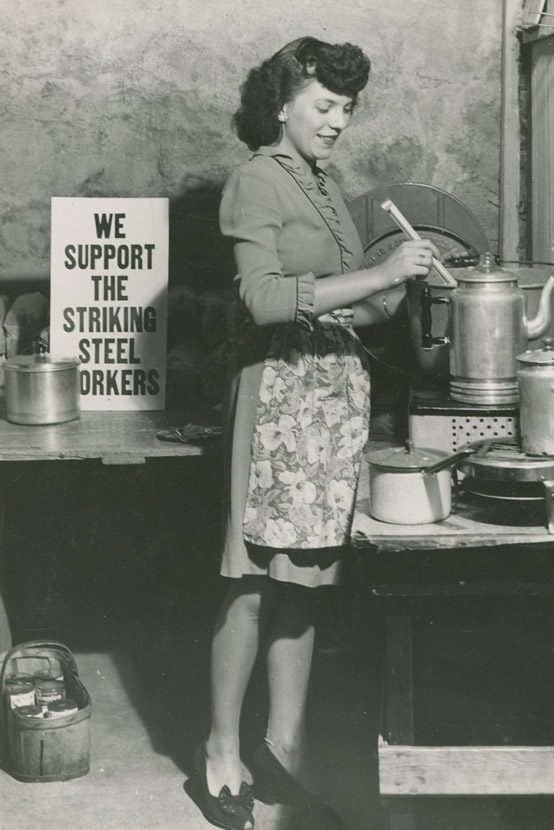
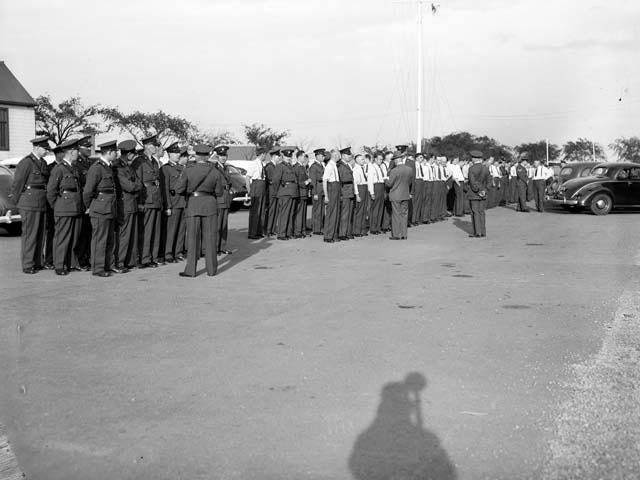
socialsciences.mcmaster.ca
thespec.com
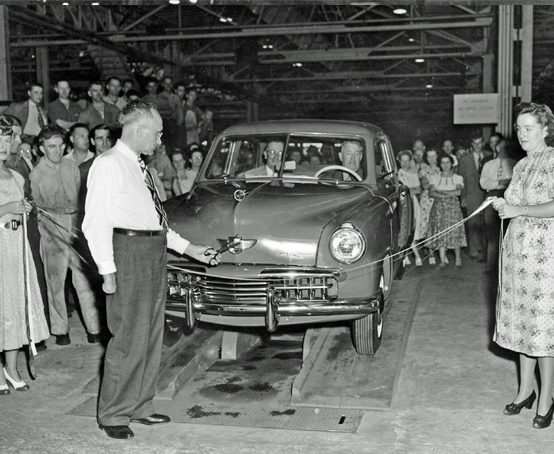
In 1948 a 320,000 square foot facility formerly used to make anti-aircraft guns during World War II became the post-war Canadian assembly plant for…
In 1948 a 320,000 square foot facility formerly used to make anti-aircraft guns during World War II became the post-war Canadian assembly plant for Studebaker vehicles. Thousands of Hamilton area workers, members of CAW Local 525, were gainfully employed producing nearly 200,000 Champion, Commander, President, Hawk and Lark Studebaker models as well as trucks. The harsh realities of the automobile industry from the 1950s onwards played heavily upon Studebaker and the few remaining manufacturers other than General Motors, Ford, and Chrysler. But Studebaker successfully transformed into a diversified company with several divisions. In late 1963 the decision was made to close the main plant in South Bend Indiana. The following three years saw the Hamilton plant, now the last Studebaker factory, producing Studebakers for the world. Despite great local effort, the Corporation ended all operations and the last Studebaker was produced in Hamilton on March 17th, 1966. (Content courtesy Studebaker National Museum of South Bend Indiana; Stu Chapman; Hamilton Chapter Studebaker Drivers Club.)
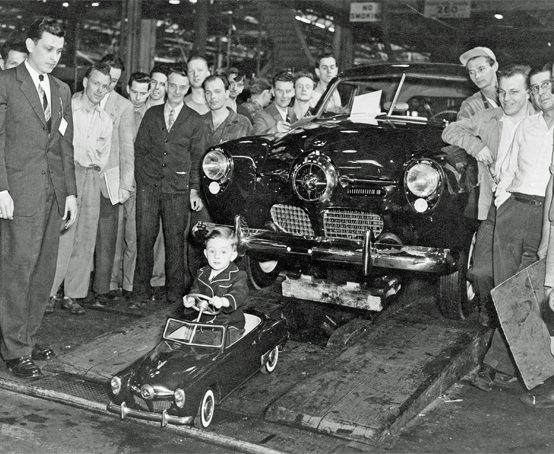
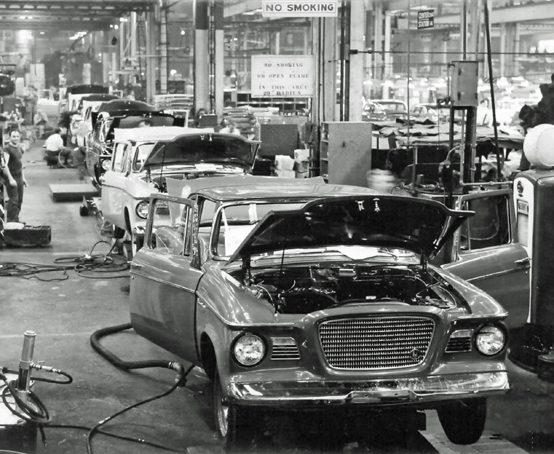
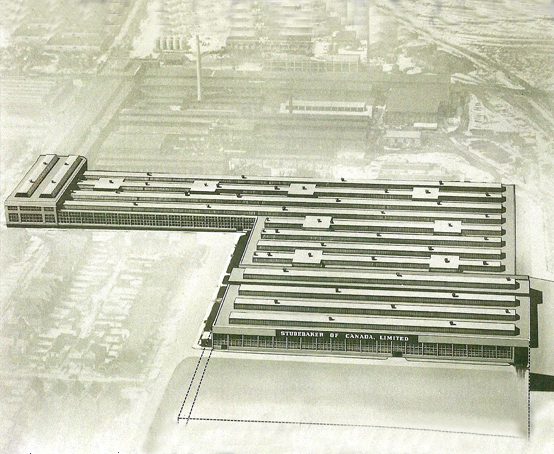
driving.ca
wheels.ca
facebook.com
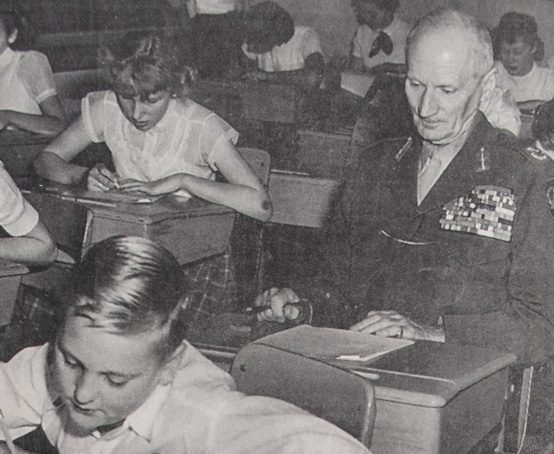
On April 15, 1953, Viscount Montgomery Elementary School held its official opening events. Located at 1525 Lucerne Avenue, the school was built to serve…
On April 15, 1953, Viscount Montgomery Elementary School held its official opening events. Located at 1525 Lucerne Avenue, the school was built to serve the needs of the expanding population in Hamilton's lower east end, it became one of several nearby schools, such as Parkdale, Rosedale, Bartonville and Roxborough Park. The school was designed by Hamilton architect George T. Evans, at a cost of roughly $526,000. The opening ceremony was a major event for city residents, with the presence of Viscount Bernard Montgomery, then serving as NATO's Deputy Supreme Allied Commander Europe. (Content courtesy of the Hamilton-Wentworth District School Board.)
Location: 1525 Lucerne Ave, Hamilton, ON L8K 1R3
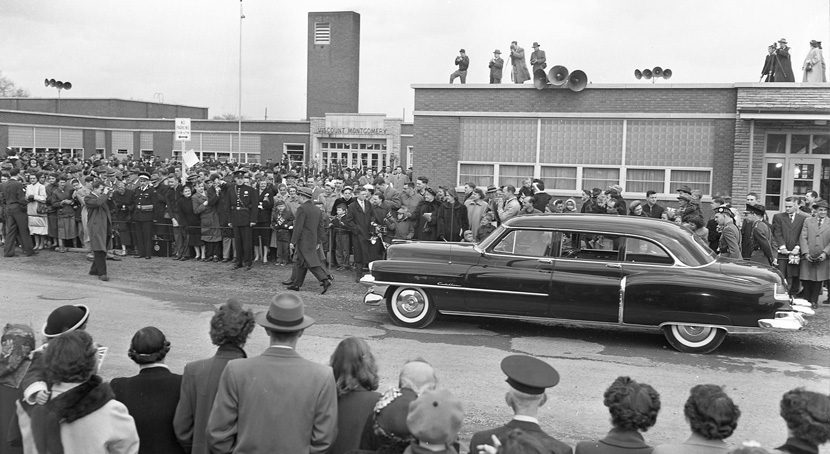
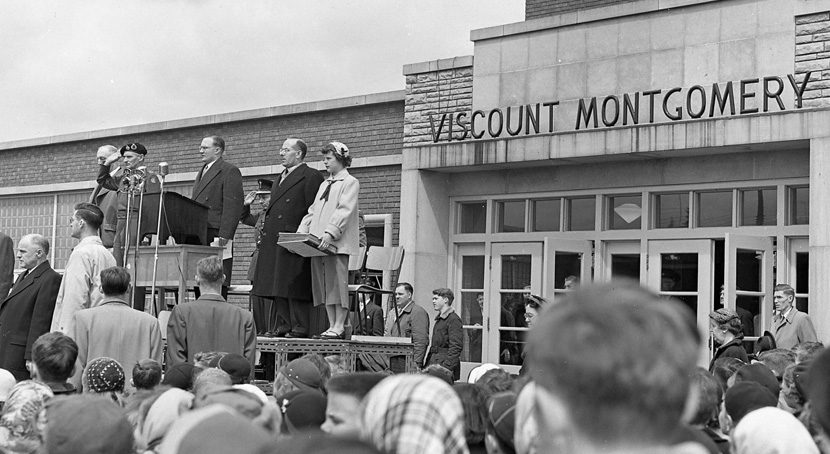
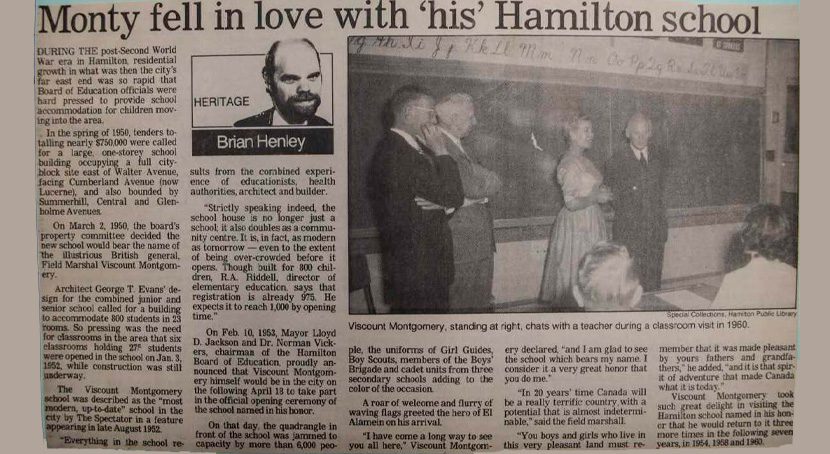
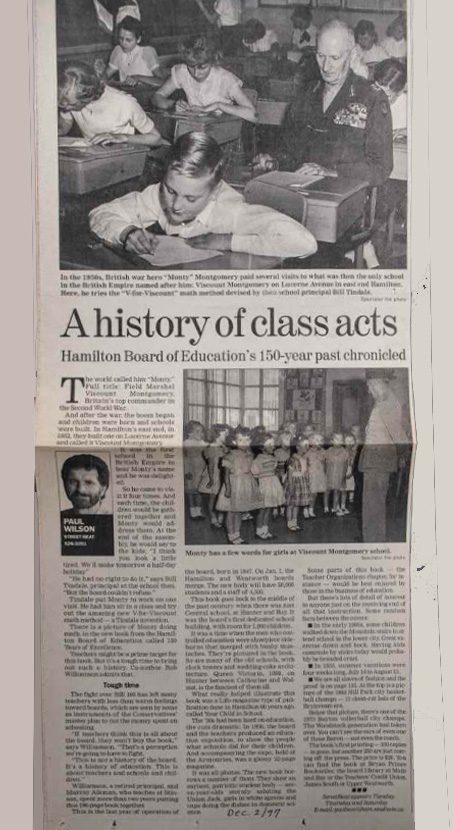
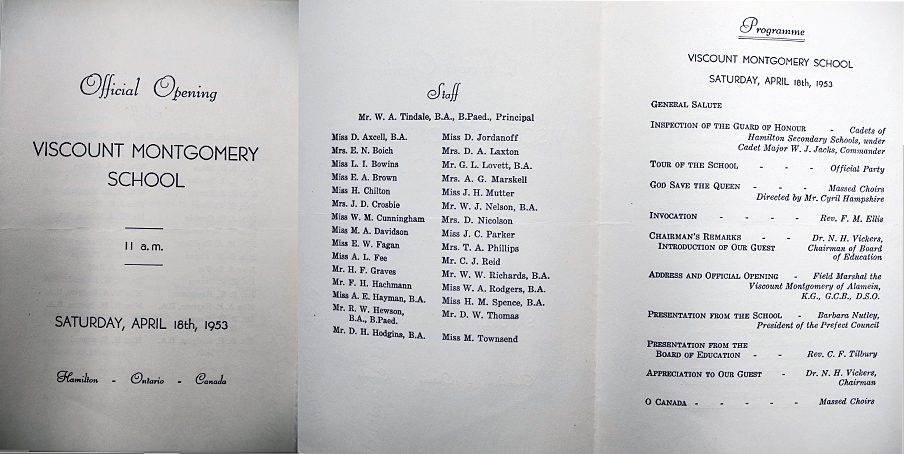
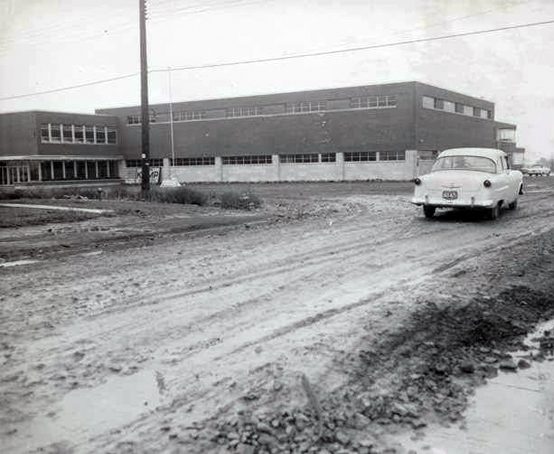
In September 1955, Hill Park Secondary School opened to students. Located at 465 East 16th Street, it was the first high school to be…
In September 1955, Hill Park Secondary School opened to students. Located at 465 East 16th Street, it was the first high school to be built on the Hamilton Mountain. Prior to its development, students living on the Mountain, or farther regions such as Ancaster, were forced to travel to schools in the lower city like Delta, Westdale or Central Secondary. The new school demonstrated a commitment to the changing needs of the city population, Principal Ernie Hutton was given full reign to have the school designed exactly to his ideas, from selecting the best available site, planning with the architects (Prack & Prack), to hand-selecting the entire staff. Having anticipated 700 students, Hutton and teachers were surprised when 900 students arrived for class. Plans were quickly put in motion for more secondary schools on the Mountain; Barton followed in 1960, Southmount in 1961, Westmount in 1962, Sherwood in 1967 and Sir Allan Macnab in 1969.(Content courtesy of the Hamilton-Wentworth District School Board.)
Location: 465 E 16th St, Hamilton, ON L9A 4K6
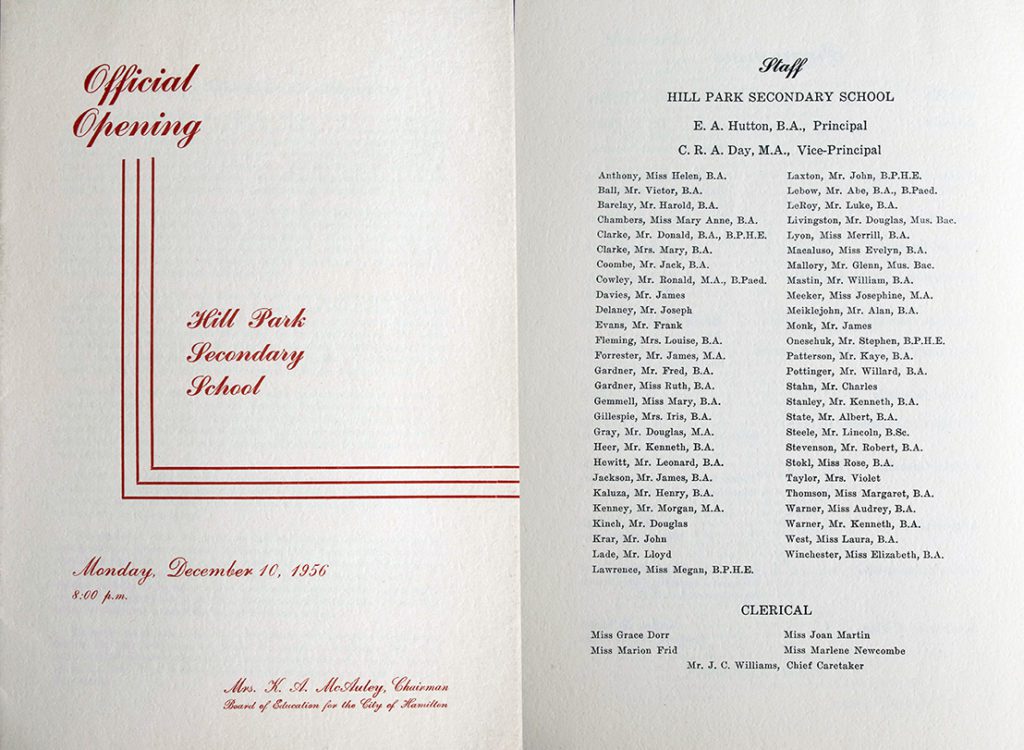
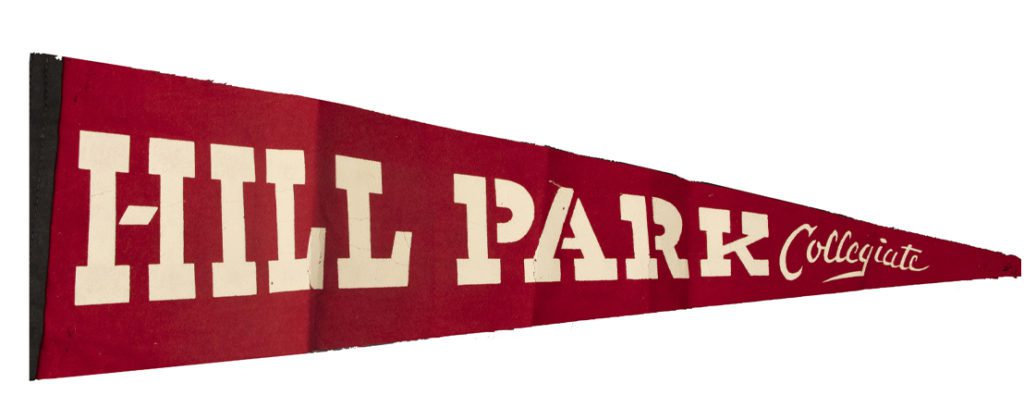
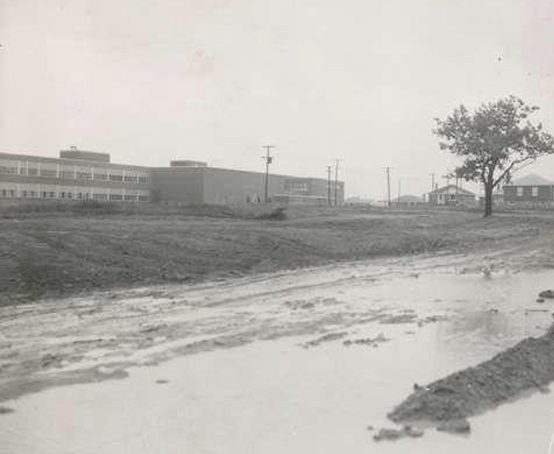
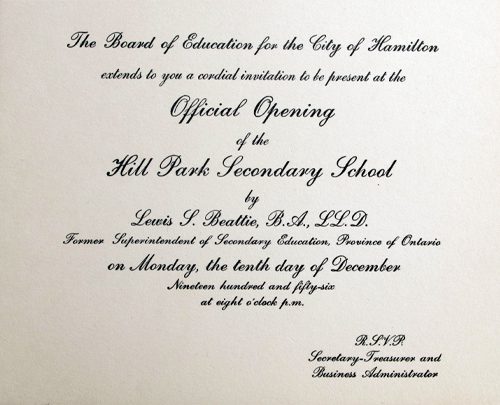
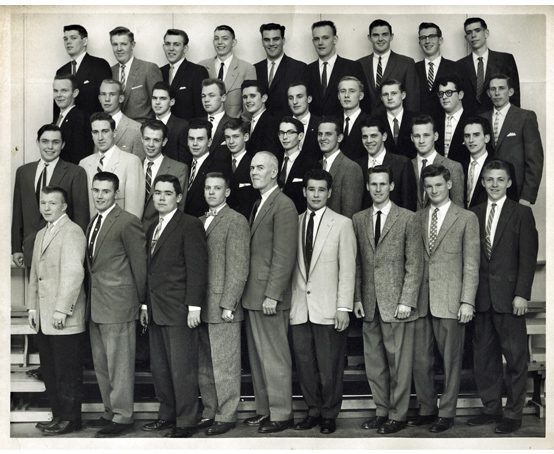
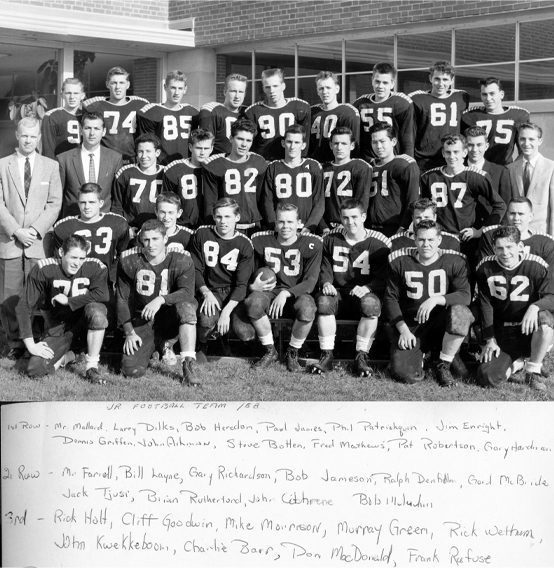
June 25, 1958, Vincent Massey Elementary School held its official opening event. Named after Canada's 18th Governor General, the school was located at 155…
June 25, 1958, Vincent Massey Elementary School held its official opening event. Named after Canada's 18th Governor General, the school was located at 155 Macassa Avenue and was built to serve the expanding needs of developing suburban enclaves on the Hamilton Mountain. Other schools built around this time in the area include Eastmount Park, Linden Park, Burkholder, Highview and Norwood Park. Vincent Massey attended the opening of his namesake school, and an 8mm film of the proceedings exists in the Educational Archives' collection. The school operated in multiple forms until 1991, before becoming home to the Educational Archives from 1998 to 2018. (Content Courtesy of the Hamilton-Wentworth District School Board.)
Location: 147 Macassa Ave, Hamilton, ON L8V 2B5
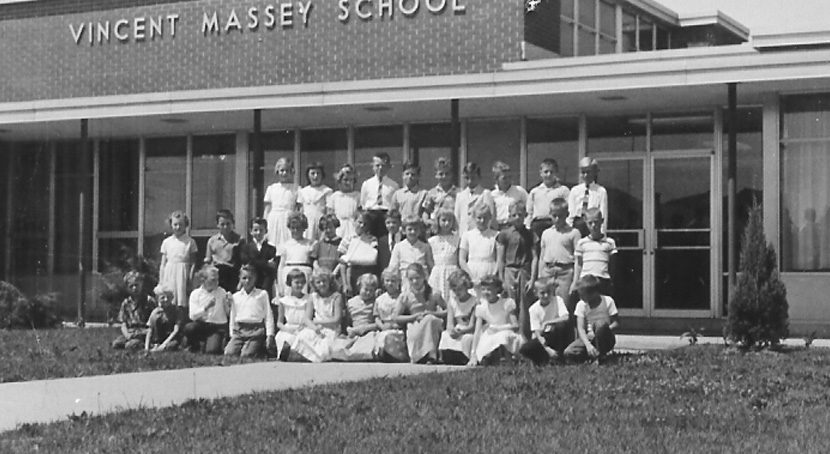
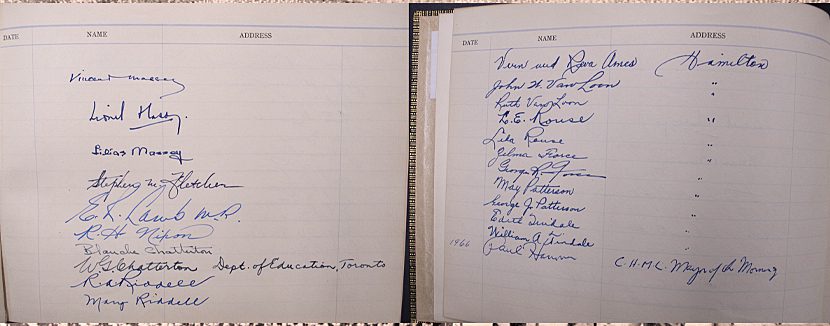
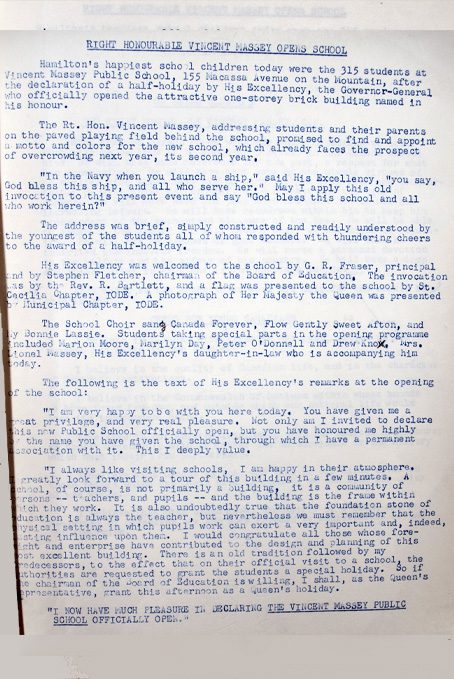
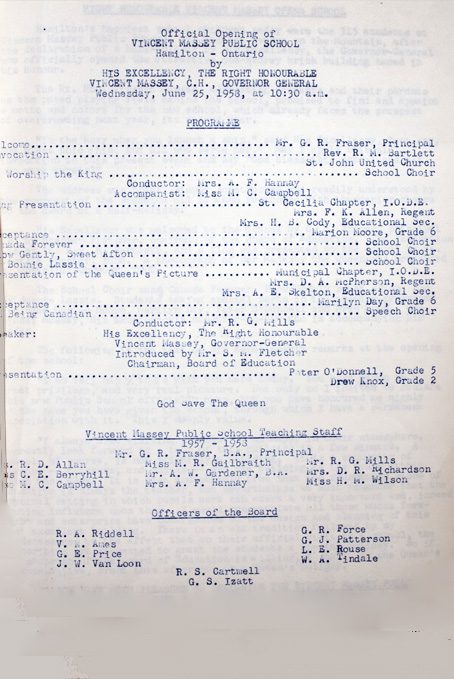
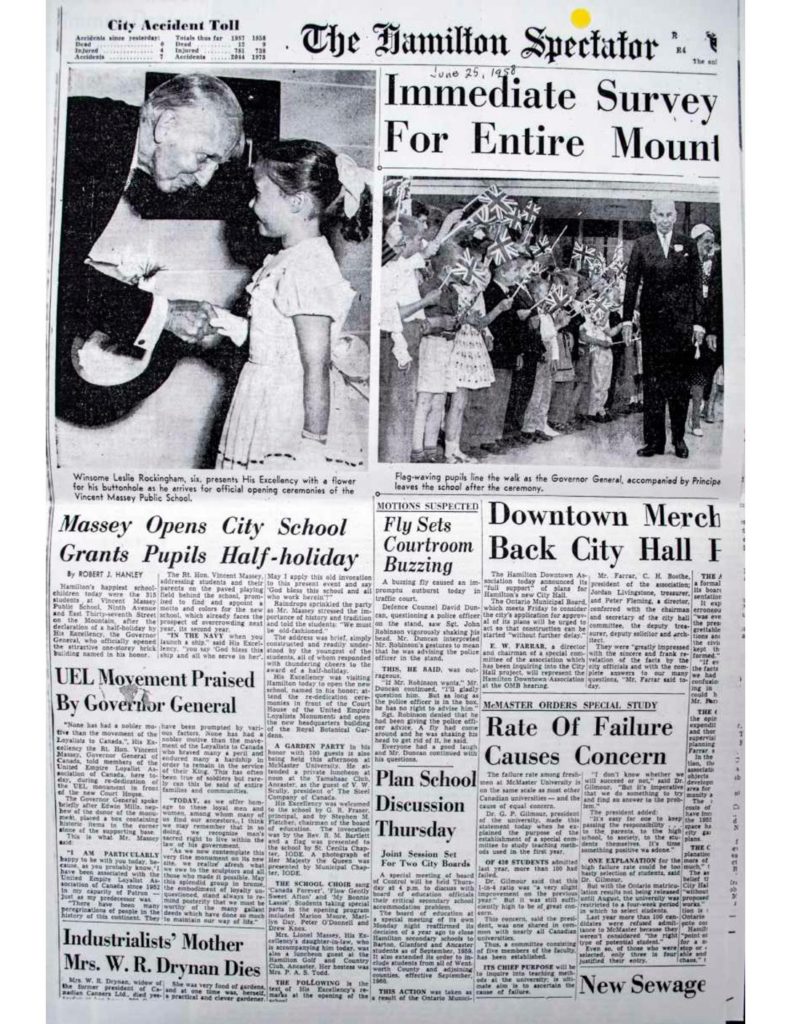
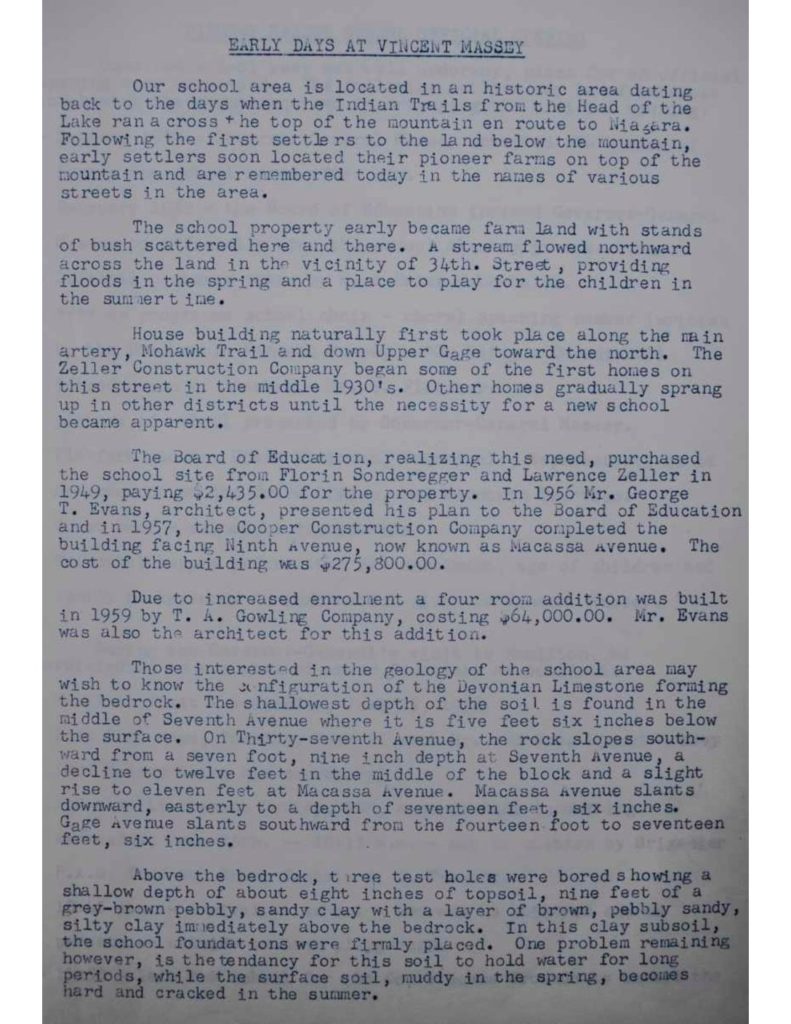
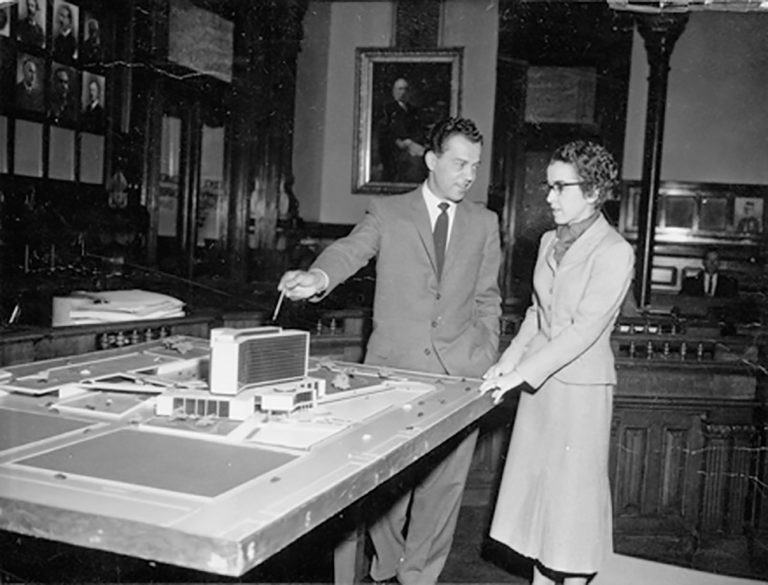
Hamilton’s `New’ City Hall was officially opened November 21, 1960. Designed in 1956 by City Architect Stanley Roscoe, the International Style structure was dramatically…
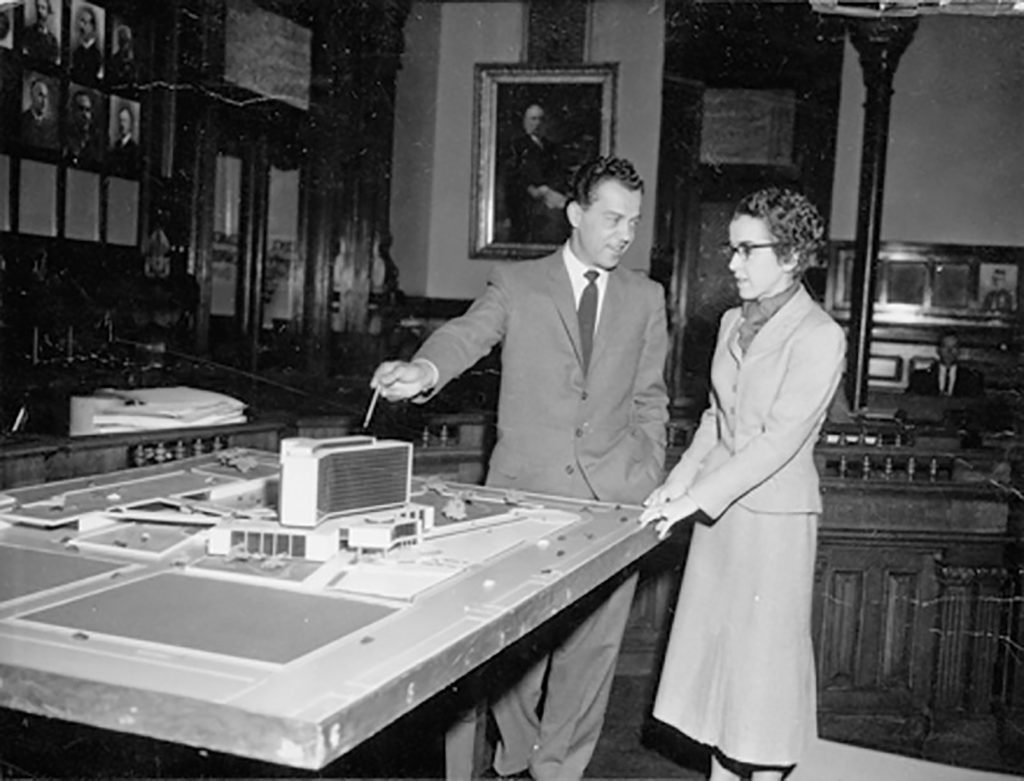
Hamilton’s `New’ City Hall was officially opened November 21, 1960. Designed in 1956 by City Architect Stanley Roscoe, the International Style structure was dramatically different from the old City Hall on James Street. The style offers rectilinear structures with open spaces, little decoration, and the use of cantilever construction like that of the central staircase in City Hall. The building was constructed by the Pigott Construction Company for just under ten million dollars. The Hamilton Spectator published a full-page preview of the building featuring rave reviews from municipal staff. In order to build the Hall a number of existing buildings were demolished, among them the Beth Jacob Synagogue. City Hall still elicits discussion today, with some appreciating the style more than others. (Content courtesy City of Hamilton; HPL Local History and Archives; C. Redford.)
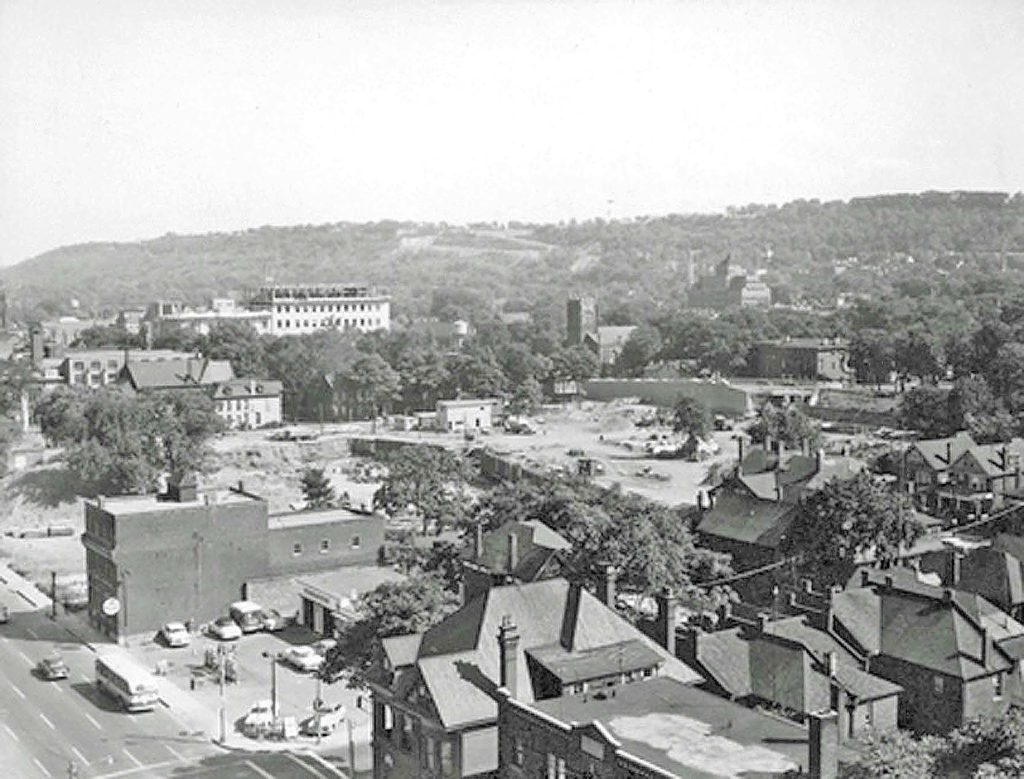
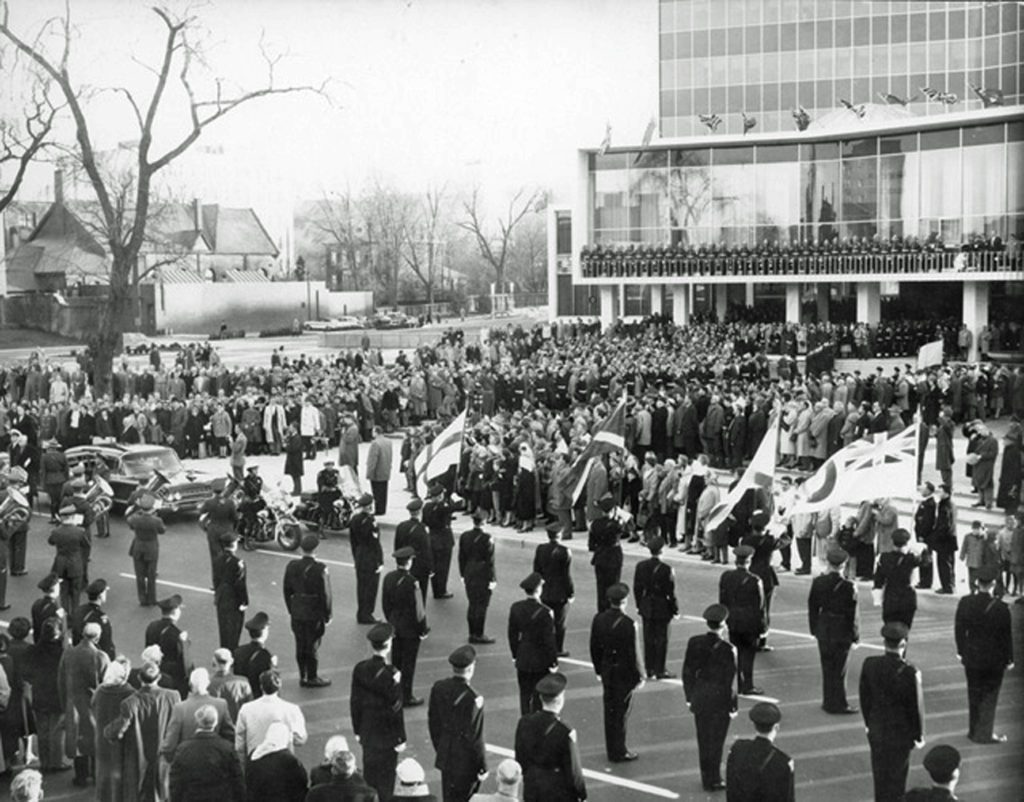
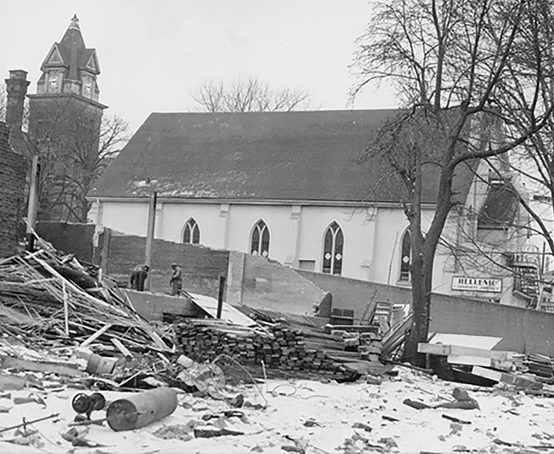
spatialsolutions.hamilton.ca
dalspace.library.dal.ca
urbanicity.com
mccallumsather.com
hamiltoncivicmuseums.ca
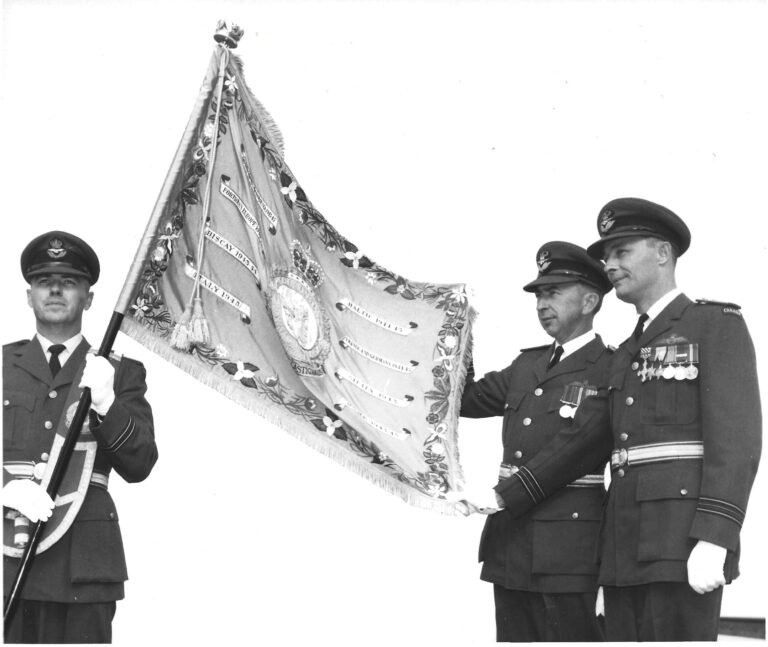
A squadron standard was presented to 424 “City of Hamilton” Squadron (Auxiliary) by Lieutenant-governor J. Keiller MacKay in 1961. Bearing battle honours, the standard…
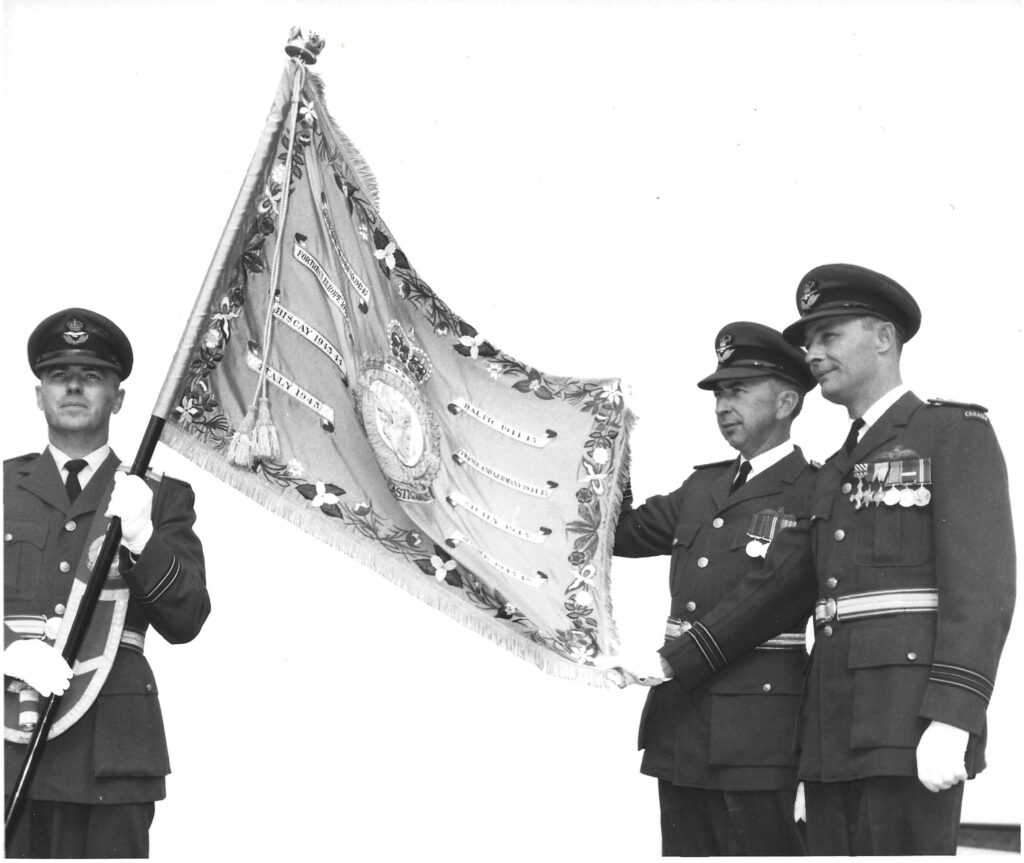
A squadron standard was presented to 424 “City of Hamilton” Squadron (Auxiliary) by Lieutenant-governor J. Keiller MacKay in 1961. Bearing battle honours, the standard is presented only to those squadrons which have been is existence for more than 25 years and have been distinguished in battle. The 424 Squadron has battle honors from English Channel and North Sea operations 1943-1945, Baltic campaigns 1944-1945, Fortress Europe operations 1943-1944, Biscay Ports 1943-1944, Ruhr 1943-1945, Berlin 1944, German Ports 1943-1945, Normandy 1944, and Sicily 1943.
Originally formed on 15 May 1935 as a bomber squadron it was numbered 424 “Tiger” Squadron, after the City of Hamilton Football team. After exceptional performance in Europe in World War II, the Squadron stood down on 15 October 1945. It was reactivated shortly after in 1946 now flying light bomber aircraft out of Mt Hope (Now John C. Munro) airport. Deactivated again in 1964 the squadron was relocated to CFB Trenton in 1968 and reactivated as a communications and transport squadron, a role it still fills today.
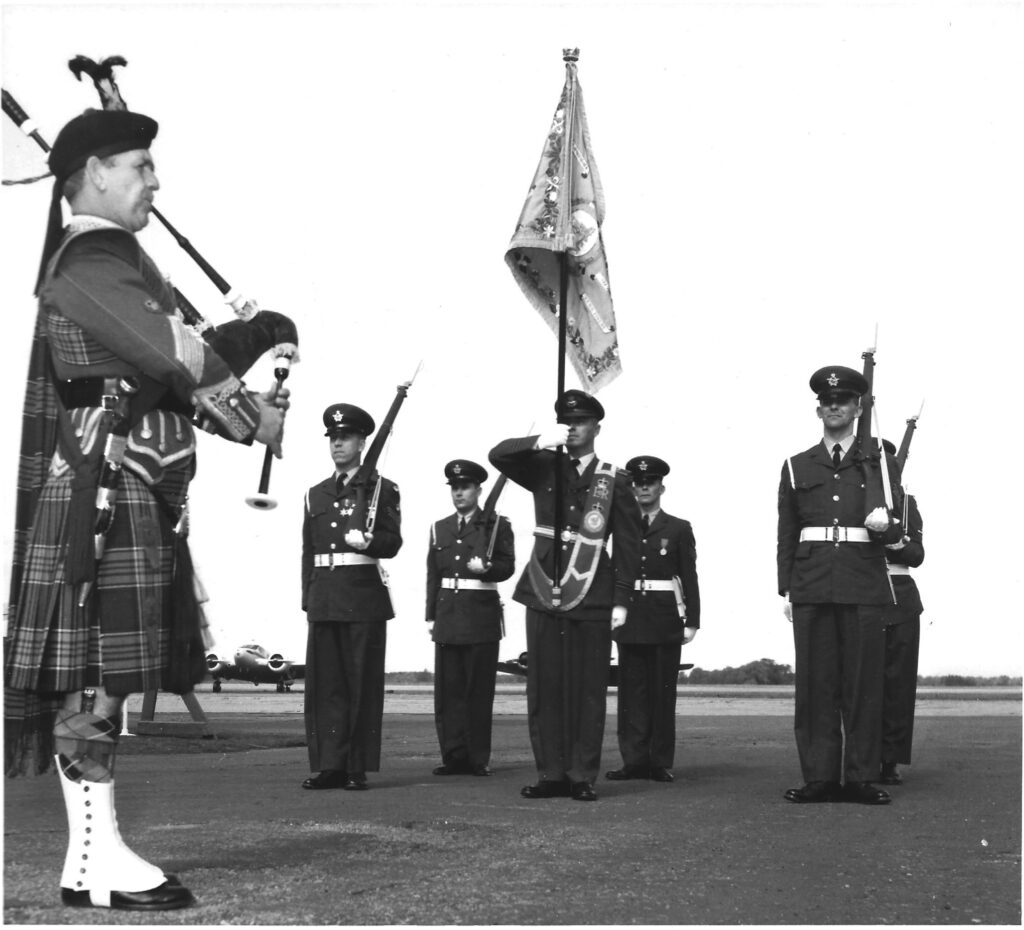
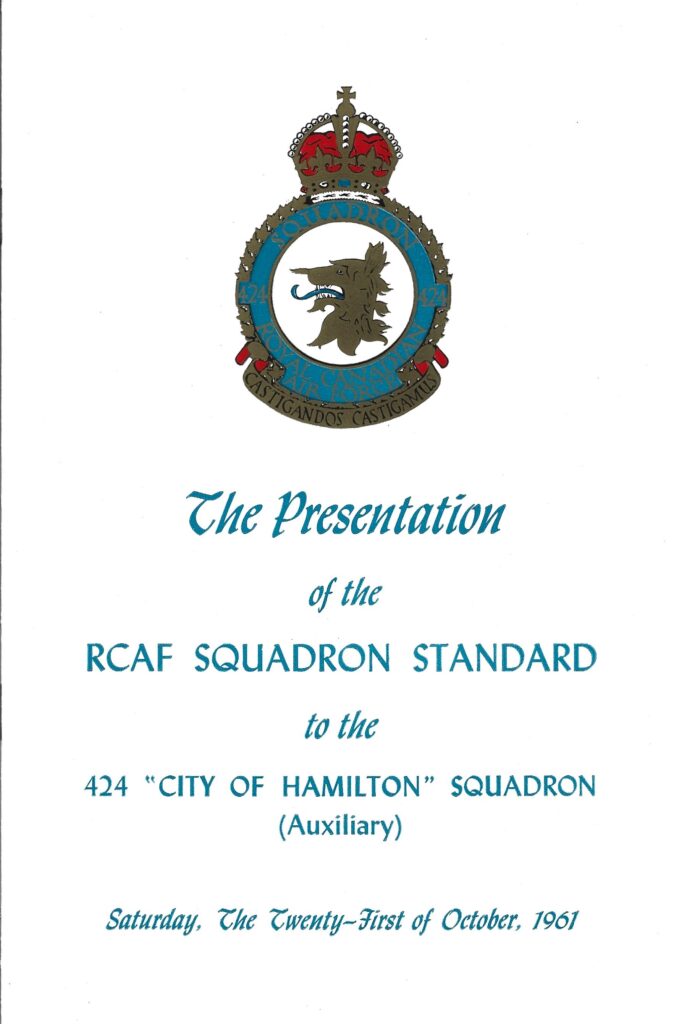
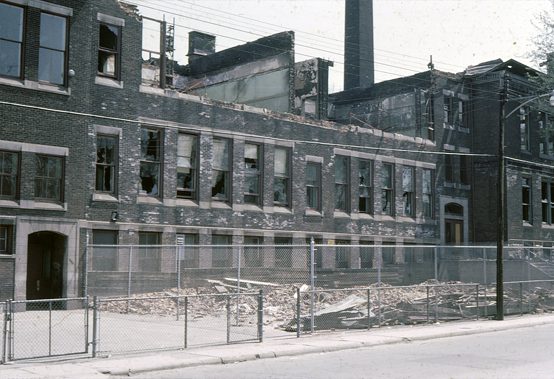
The first fire alarm rang out at 11:11 P.M., and by the following morning "empty shells" remained of the central and south wings of…
The first fire alarm rang out at 11:11 P.M., and by the following morning "empty shells" remained of the central and south wings of Bennetto School; only the north wing was left relatively unharmed. The loss of the original Bennetto was mirrored by the closing and replacement of other Victorian-era elementary schools, such as the original Queen Victoria in 1964 and King Edward in 1971. A sod-turning ceremony for the new Bennetto was held on June 25th, where it was announced that a new school would be the first in Canada to be built under the Urban Renewal Project, an agreement between the Federal, Provincial and Civic levels of government. The new building was designed by Hamilton architect Joseph B. Singer and had its official opening on November 14th, 1966. This second iteration remained in use until 2002 when the building was sold to the City and the nearby Centennial School became the third site of Bennetto school. (Content courtesy of the Hamilton-Wentworth District School Board.)
Location: 47 Simcoe St E, Hamilton, ON L8L 3N2
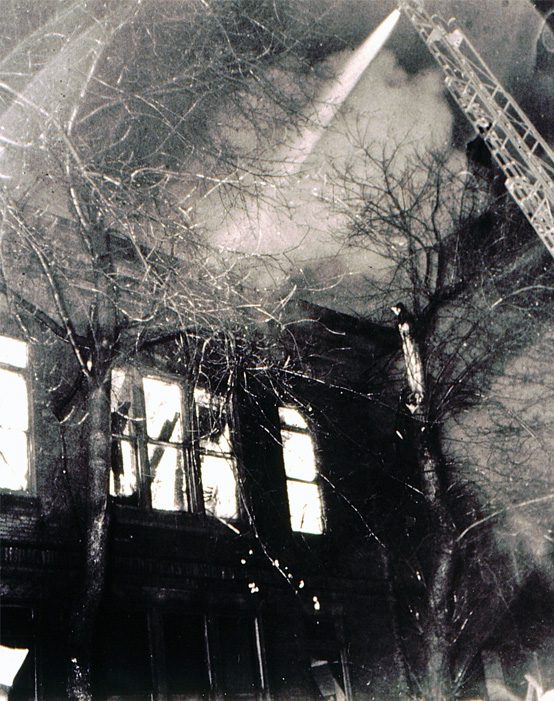
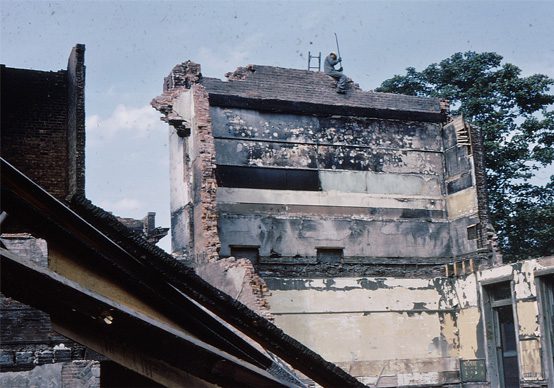
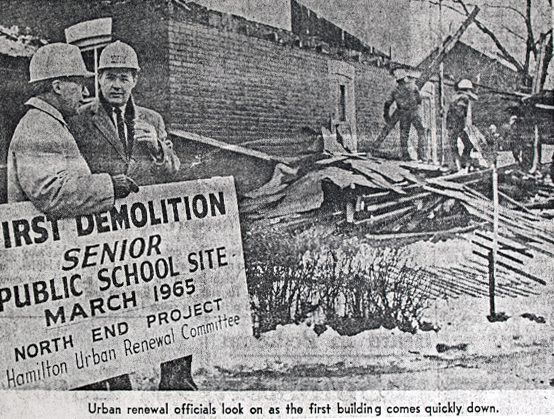
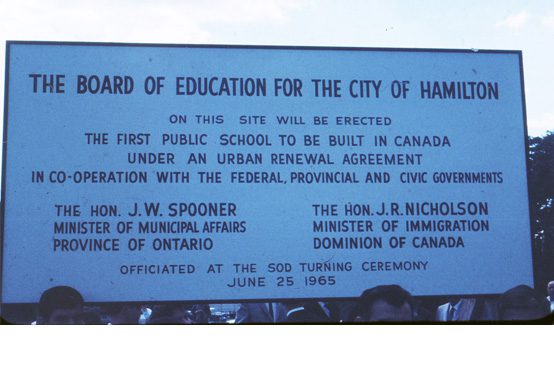
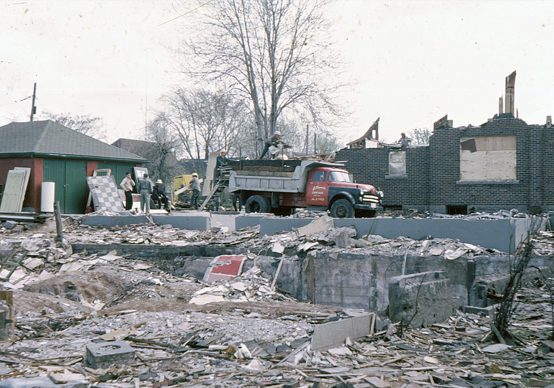
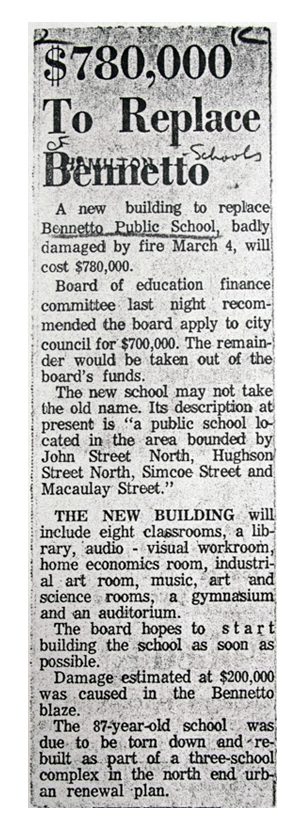
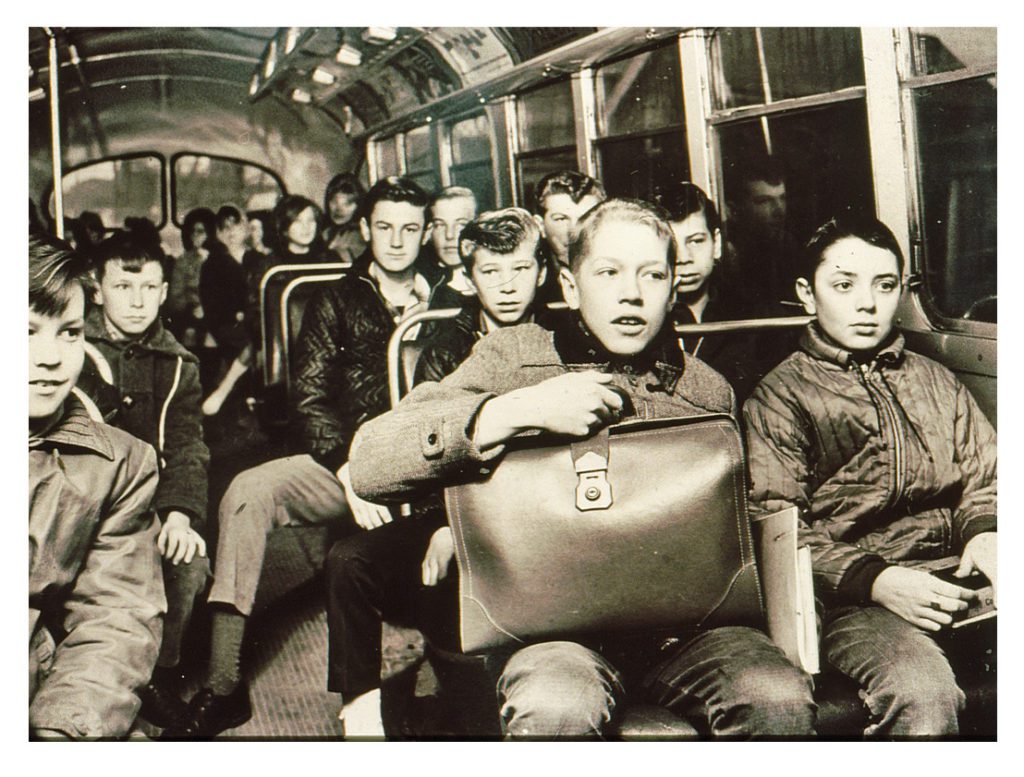
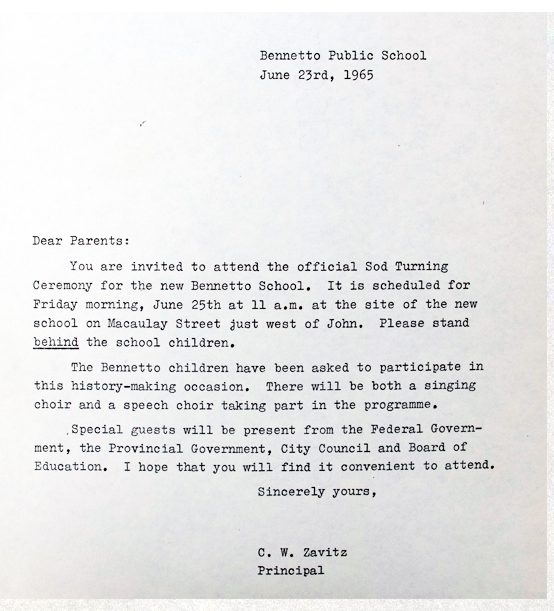
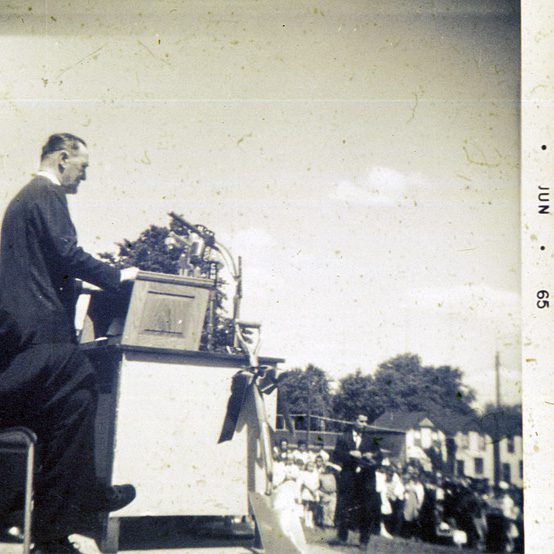
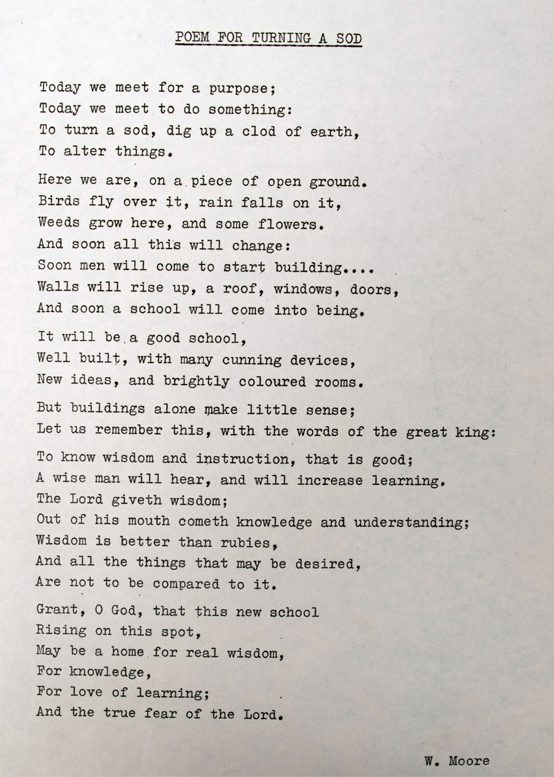
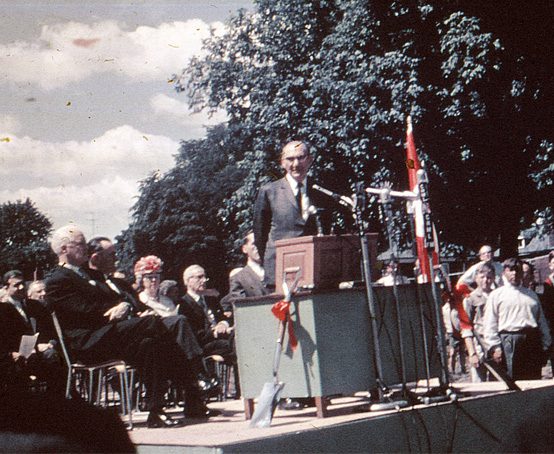
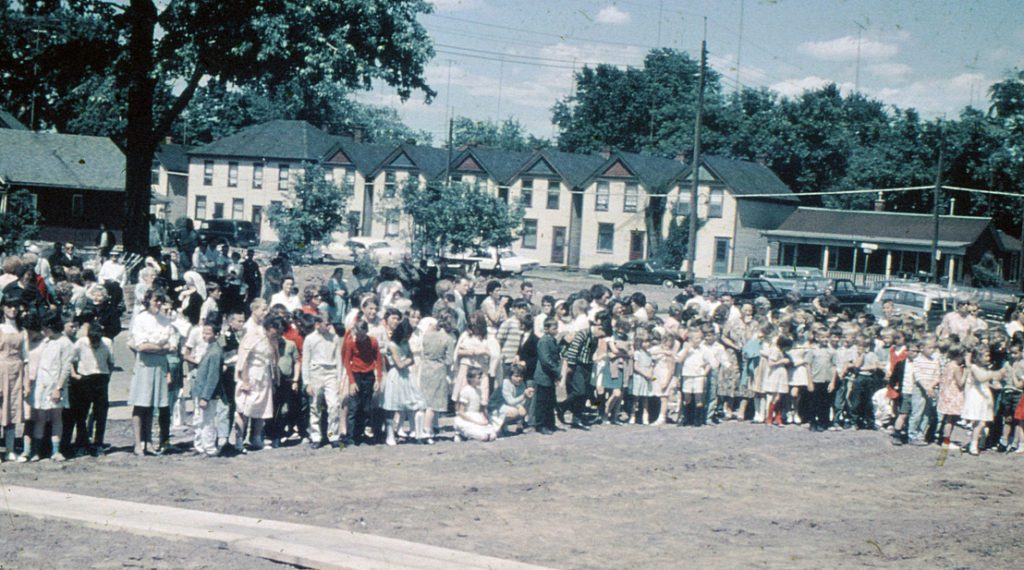
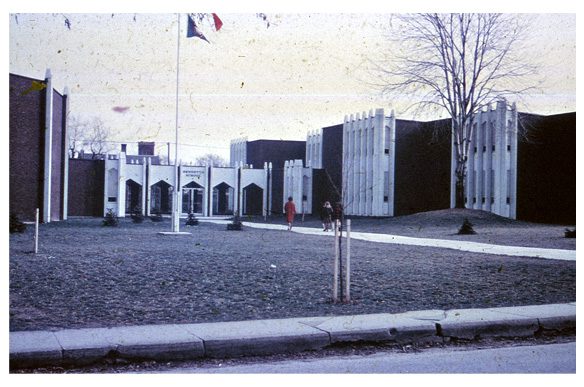
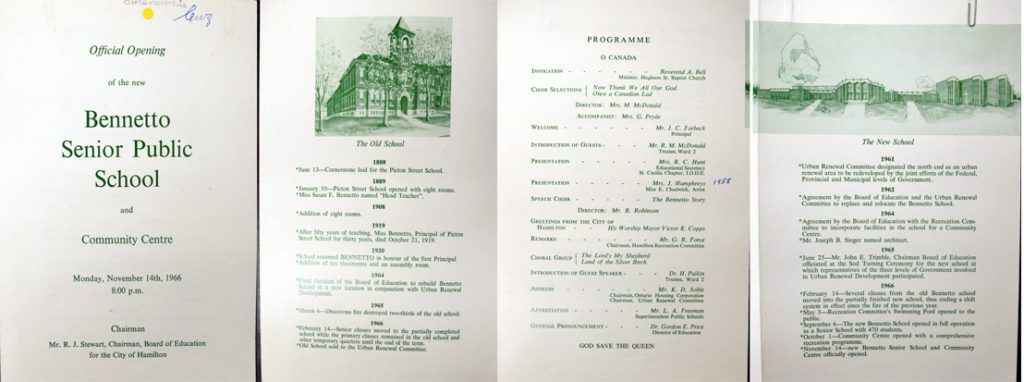
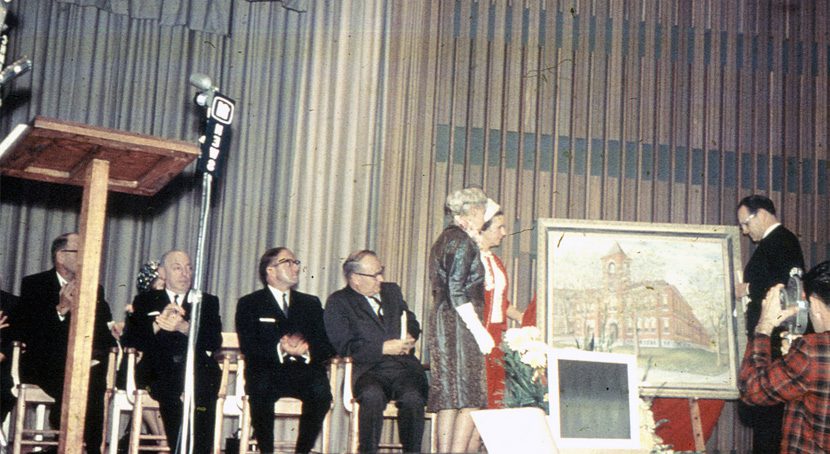
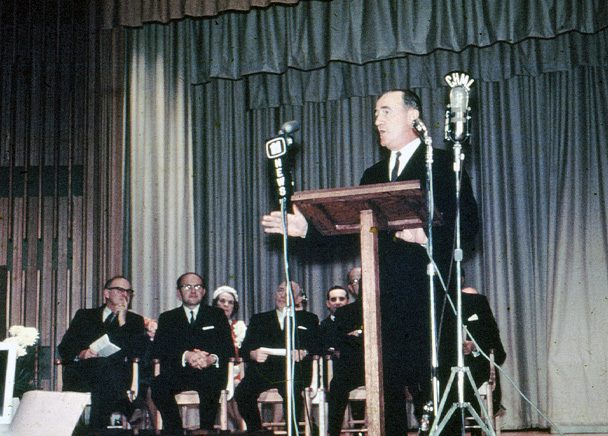
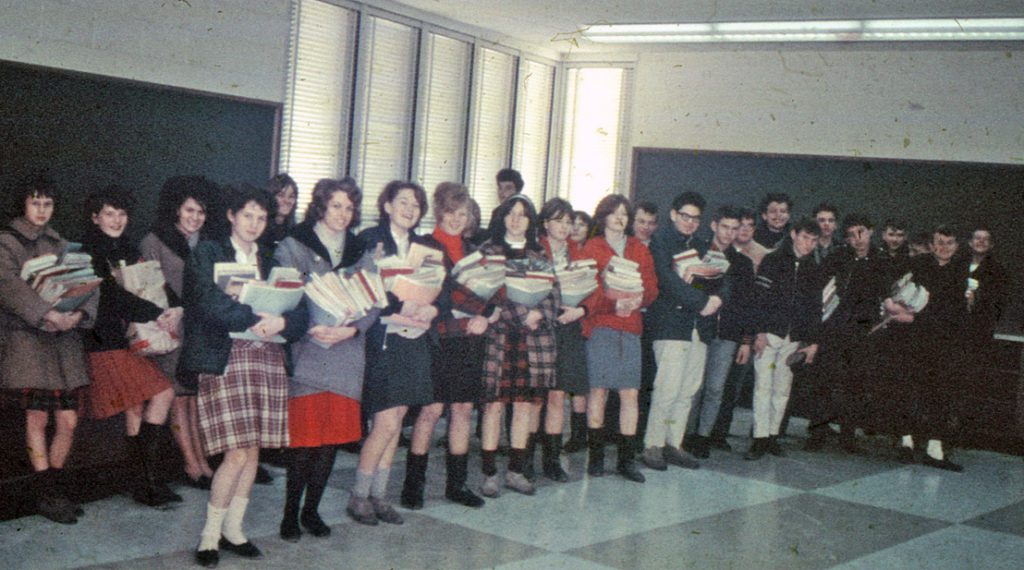
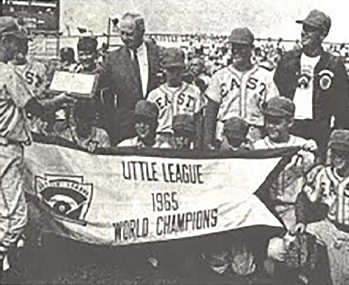
The 1965 Stoney Creek Little League team was the first team to win the new All Canadian Little League Championship. At the 1965 Little…
The 1965 Stoney Creek Little League team was the first team to win the new All Canadian Little League Championship. At the 1965 Little League World Series they were the first team to raise Canada's new flag in an International Sports Competition. They were the first Canadian team to win a game at the Little League World Series, and the first and only Canadian team to defeat an American team at the Little League World Series. They remain the only Canadian team to play in the final game of a Little League World Series (a 3-1 loss to the USA). The team never trailed in a game untiI the last 2 innings of World Series Championship game, and never committed a defensive error in their 11 games played. The team were hosted by Prime Minister Lester B Pearson and Premier of Ontario John Robarts. (Content courtesy Jimmy Vlajkov.)
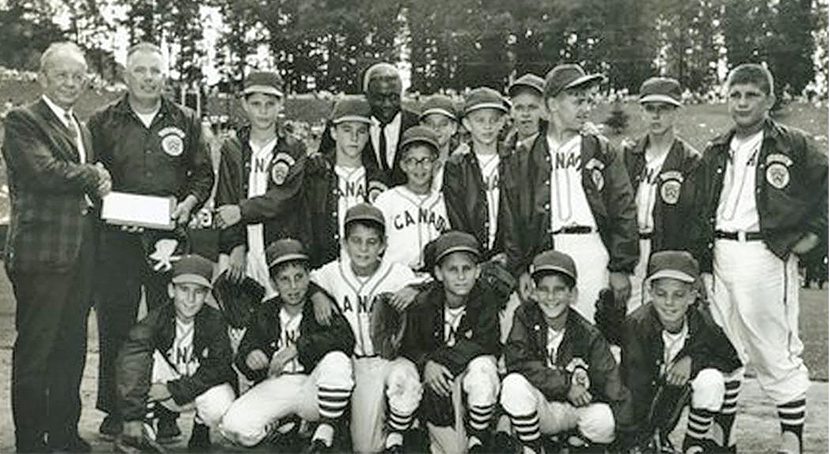
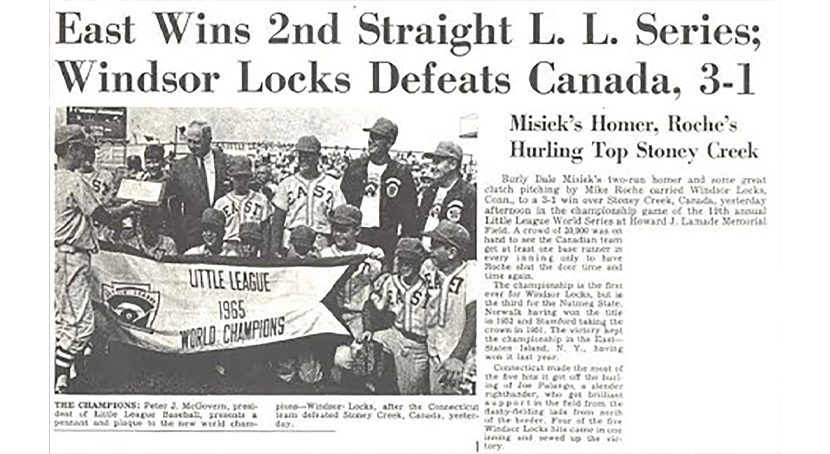
In September 1970, the Sir John A. Macdonald Secondary School opened. Located at 130 York Boulevard, the building offered 55 different classrooms spread about…
In September 1970, the Sir John A. Macdonald Secondary School opened. Located at 130 York Boulevard, the building offered 55 different classrooms spread about five floors, along with multiple gyms, workshops and a modern auditorium. Though the official opening events were not held until February 17th, 1972, students began attending in September 1970 upon the closure of Central Secondary. Although new high schools were opening consistently on the Mountain, this one was only the third 'new' high school to be opened for decades in the lower city. The new school was also a sign of how much change would come to the landscape of the lower city over the next ten years, with the development of buildings such as Jackson Square, the new Art Gallery, and Stelco Tower. The school was in operation until closing in 2019. (Content courtesy of the Hamilton-Wentworth District School Board)
Location: 130 York Blvd, Hamilton, ON L8R 1Y5
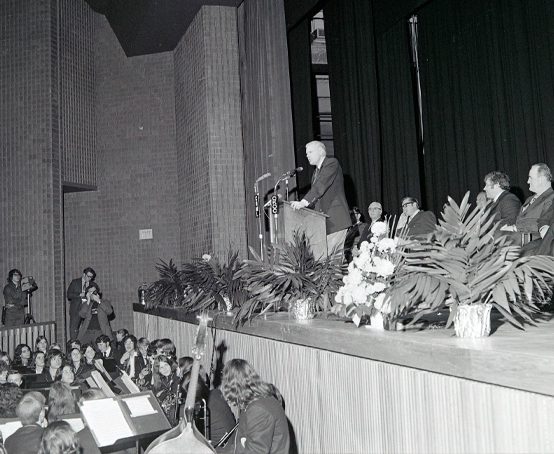
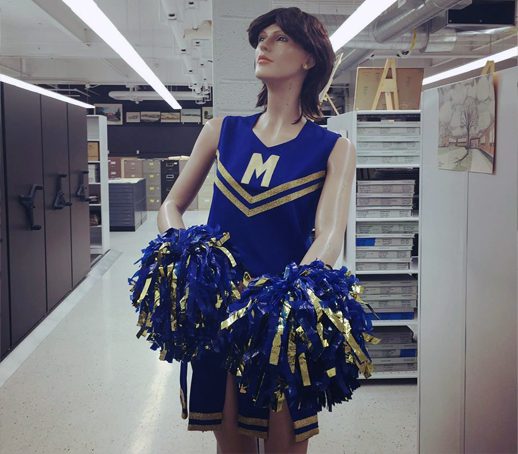
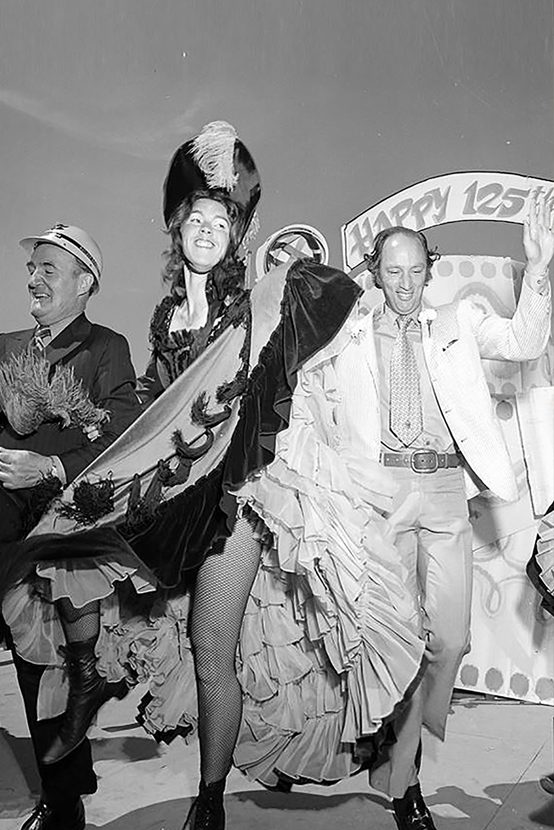
The most famous visit to a Hamilton museum since the 1860 Royal visit took place in June, 1971. Hamilton was celebrating its 125th birthday.…
The most famous visit to a Hamilton museum since the 1860 Royal visit took place in June, 1971. Hamilton was celebrating its 125th birthday. Newlyweds Pierre and Maggie Trudeau arrived, and the city went wild. A Tiger Cat game saw Trudeau dancing with Mayor Victor Copps and dancers. Casual attire was worn during the day. Evening wear at night for Hamilton’s 125th Anniversary Ball at the Royal Connaught. Almost a thousand attended the Ball. Officials asked the public to refrain from hounding the couple for autographs so they might dance. And as they danced, baby Justin Trudeau was dancing too. He was born 7 months later. (Content courtesy Dundurn Castle; HPL Local History and Archives.)
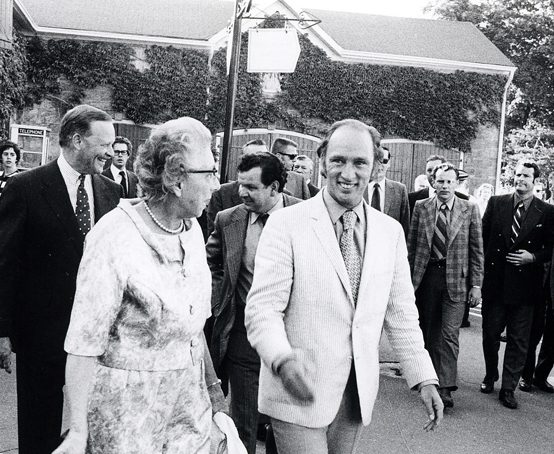
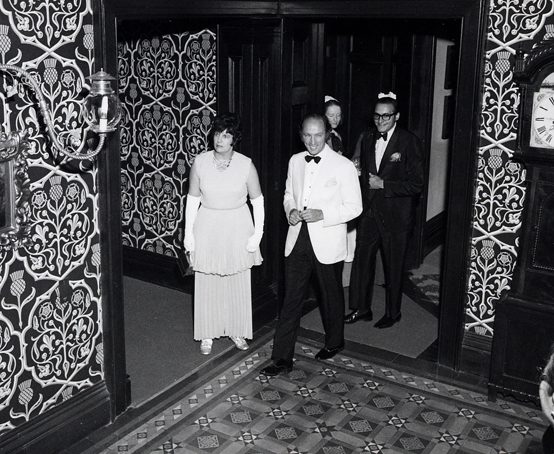
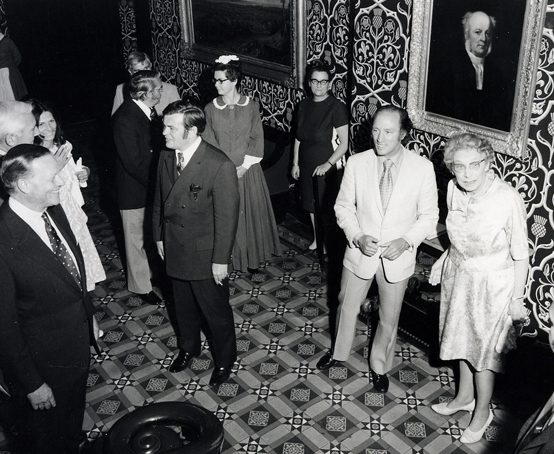
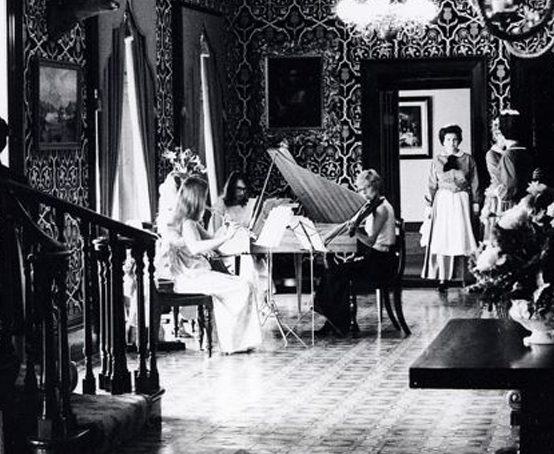
youtube.com
twitter.com
toronto.com
digitalarchive.tpl.ca
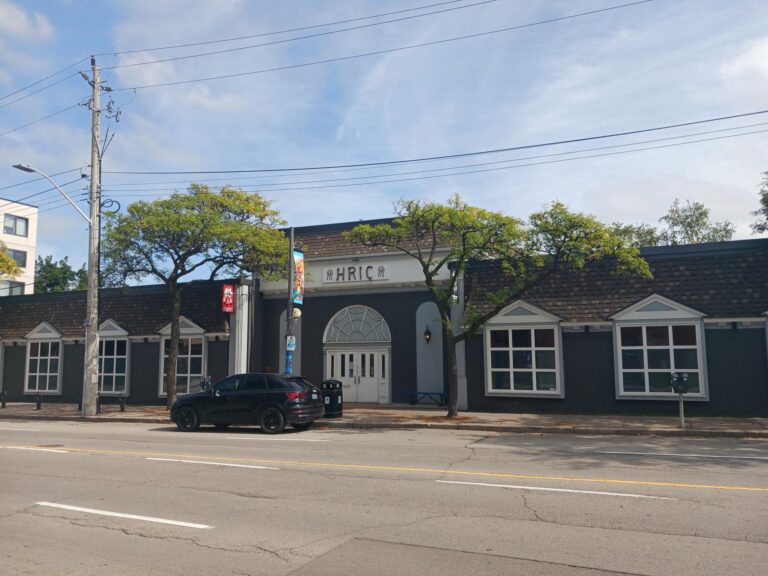
In 1972, a group of Indigenous people in Hamilton established a temporary cultural centre, on Park St. South. These individuals felt that there was…
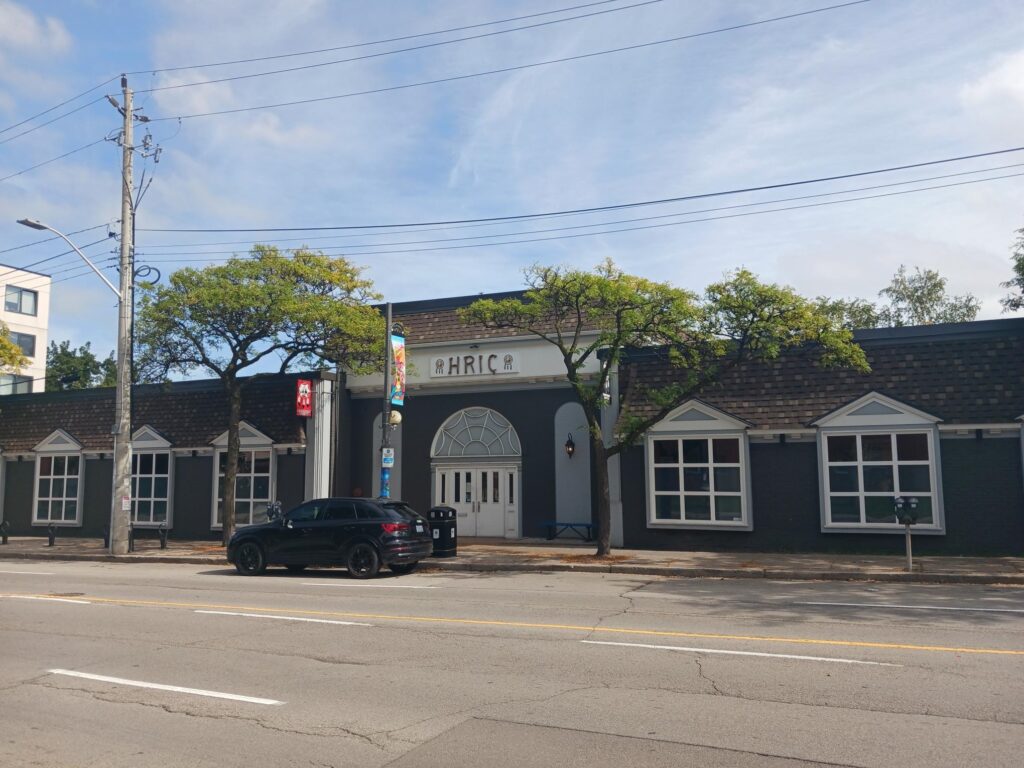
In 1972, a group of Indigenous people in Hamilton established a temporary cultural centre, on Park St. South. These individuals felt that there was a need for a “Gathering Place” in the Hamilton community. Receiving its letters patent in 1973 the new centre was named the Hamilton Regional Indian Centre (HRIC). The founding members were: Steward Victor Longboat, Helen Van Norman Probert, and Elwood Cecil Montour.
The Hamilton Regional Indian Centre provides wholistic, culturally safe, and appropriate services to support Indigenous peoples in Hamilton. This support is provided regardless of gender, nation, and status. HRIC has now been a staple in the Hamilton Community for over 50 years, and continues to act as a gathering place for Indigenous people to access services related to culture, housing, social support, and much more. It is now located at 34 Ottawa St N, Hamilton.
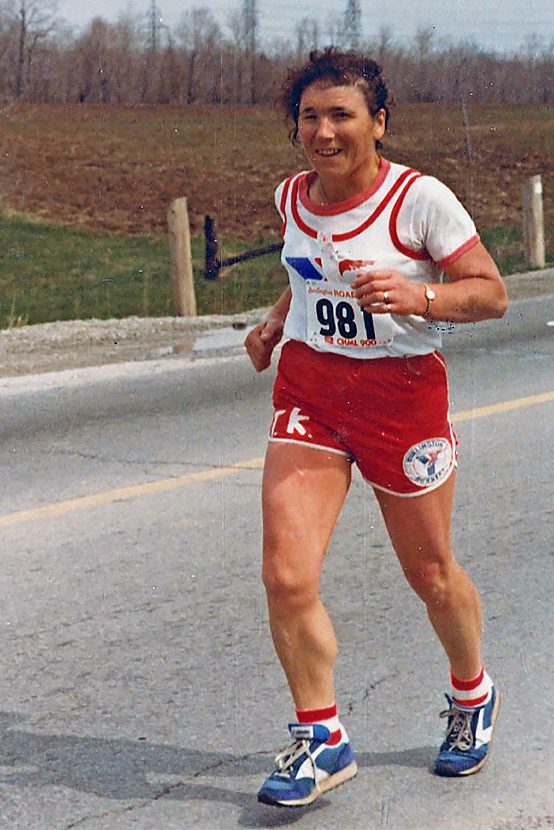
Hamilton’s Around the Bay Road Race, established 1894, is the oldest road race in North America, but for the first 85 years it was…
Hamilton’s Around the Bay Road Race, established 1894, is the oldest road race in North America, but for the first 85 years it was closed to women. That is, until Tersilla Komac came along. Born Tersilla Beraldo in Italy, she came to Canada in 1954. In the early 1970s Tersilla was suffering the painful effects of Bell’s Palsy, a condition affecting the facial nerve. Sleeping was difficult, so she took to running. At first Tersilla ran alone, but later joined a group of men running out of the Burlington YMCA called the ‘Magnificent 7’. The group ran the Around the Bay Road Race annually, so in 1975 Tersilla decided to run it too. Women were not allowed to register, but she just showed up and ran along with all the men, later saying, “once it started, they couldn’t stop me”. In 1979 the race officially opened to women. Today, those who run the oldest road race in North America each March are evenly split between men and women. (Content courtesy Tersilla Komac; C. Redford.)
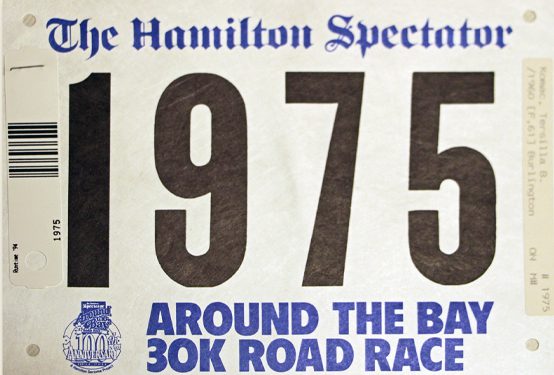
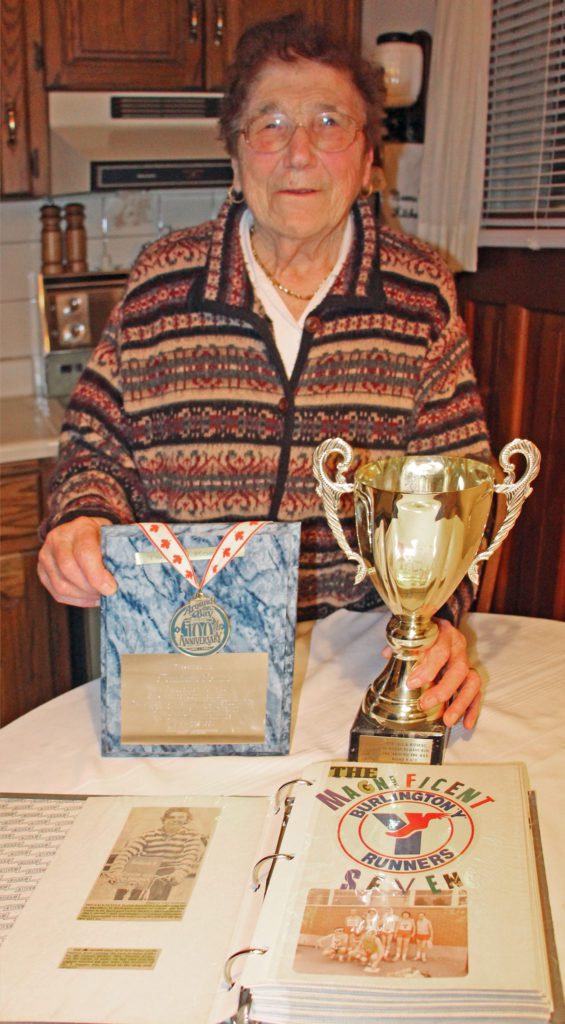
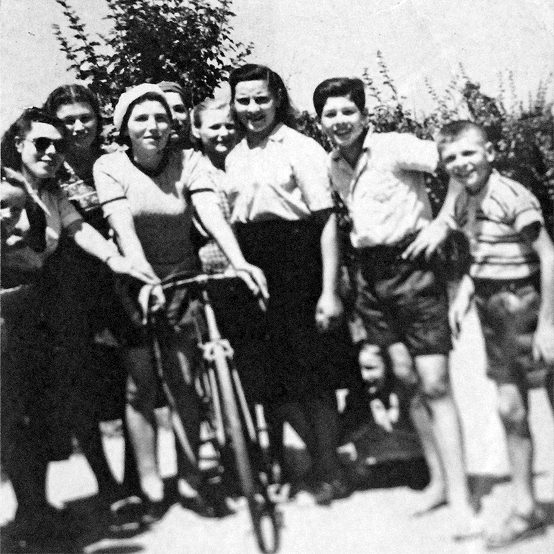

In the darkness of the early hours of August 8, 1813, the United States’ warships Hamilton and Scourge foundered in Lake Ontario during a…
In the darkness of the early hours of August 8, 1813, the United States’ warships Hamilton and Scourge foundered in Lake Ontario during a squall. Coming to rest in 90 metres of water, they would remain lost for 160 years. In 1971, avocational archaeologist and dentist Dr. Dan Nelson and Professor A. Douglas Tushingham of the Royal Ontario Museum began searching for them. Using the logbook of the Royal Navy flagship on Lake Ontario, Nelson estimated the location of their sinking. A search area was delineated north of Port Dalhousie, and sonar and magnetometer surveys were conducted. Captain Archie Hodge commanded the research vessel in 1972 & 1973 without success. Travelling home in his ship in the fall of 1973, Hodge decided to put down the sonar one last time. His instincts paid off when he picked up two likely targets. In 1975, a remotely operated vehicle carrying a camera revealed the first images of the Hamilton. The best preserved War of 1812 shipwrecks in the world had been found. The City of Hamilton now owns the vessels and is responsible for their study and stewardship. (Content courtesy ASI Group Ltd; Hamilton and Scourge Project; Parks Canada Underwater Archaeology Service.)

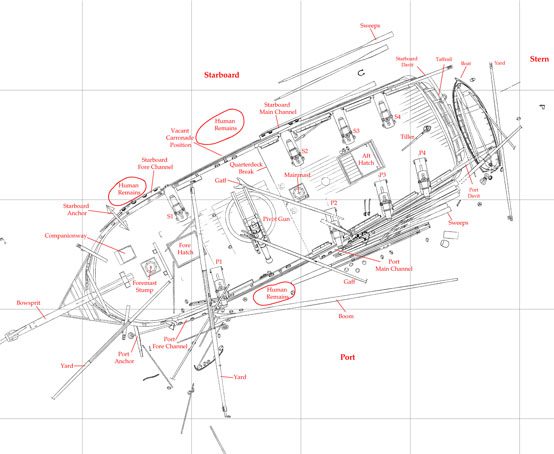
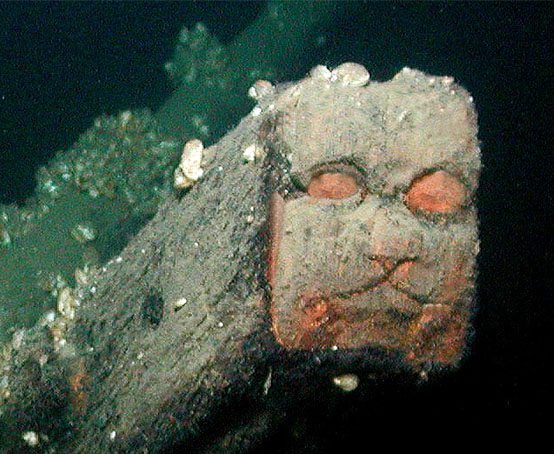
The first woman in North America to hold a senior executive position in a steel workers union, Norma Bertie was elected Financial Secretary of…
The first woman in North America to hold a senior executive position in a steel workers union, Norma Bertie was elected Financial Secretary of United Steel Workers’ Local 1005 in 1976. Her journey to union involvement began with the Stelco strike in 1946 when a 21-year-old Norma joined her husband on the picket line. Following the strike, she applied to Stelco for a job and was hired to work in the Tin Mill. At the time there were only about 200 women working in the entire plant compared to more than 12,000 men.
Norma was motivated to run for the position of union steward once she saw the discrimination women faced in the workplace. This discrimination included job security - women were laid off first - and scheduling, as men were given preferential treatment with daytime shifts, which meant women often had little choice but to work nights.
Norma won her first election and followed it up by becoming the secretary of the grievance committee. She was elected Financial Secretary in 1976. She continued to work on social justice and equity issues until her death in 2001. To commemorate her achievements the Women of Steel host an annual breakfast in her honour.
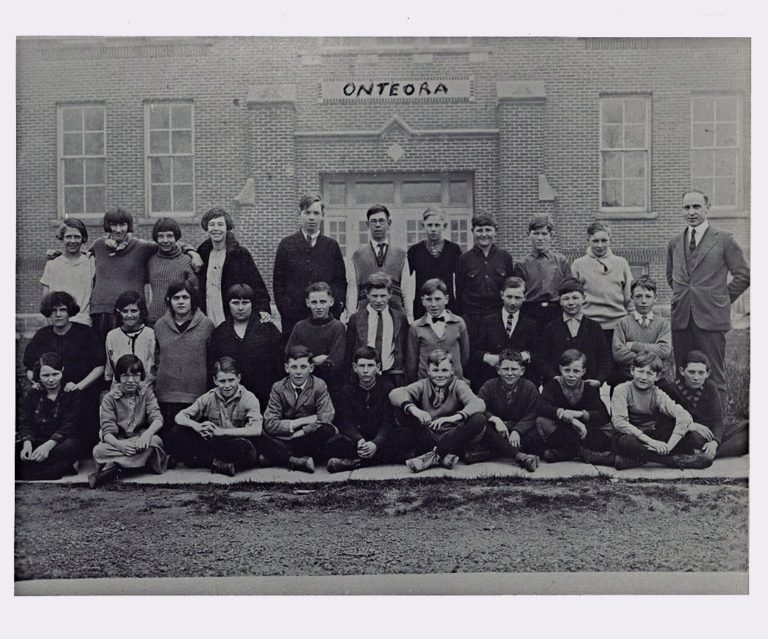
Much like the lower city, the landscape of Hamilton Mountain had undergone a significant change since the first wave of contemporary school buildings had…
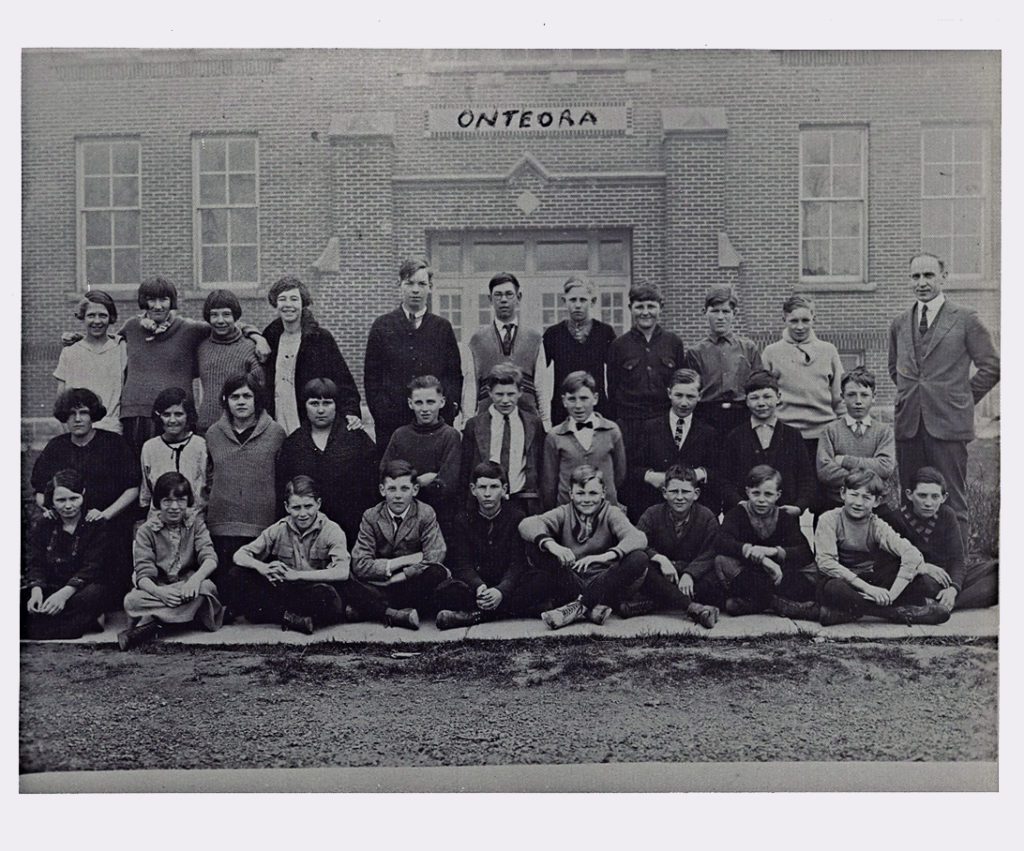
Much like the lower city, the landscape of Hamilton Mountain had undergone a significant change since the first wave of contemporary school buildings had arrived in the late 40s-early 50s. Changes to boundaries had allowed much larger areas of land to come under the jurisdiction of the City, and post-War population growth had been met with extensive suburban housing and new schools. The flipside of this was the closure of many of the earliest Mountain schools around this time, such as Onteora. Having opened in 1897 at the corner of Fenell and Upper Wellington, the school served the community for over 70 years. By 1978, the Board decided that the school would be closed for good, despite neighbourhood community protests. (Content courtesy of the Hamilton-Wentworth District School Board.)
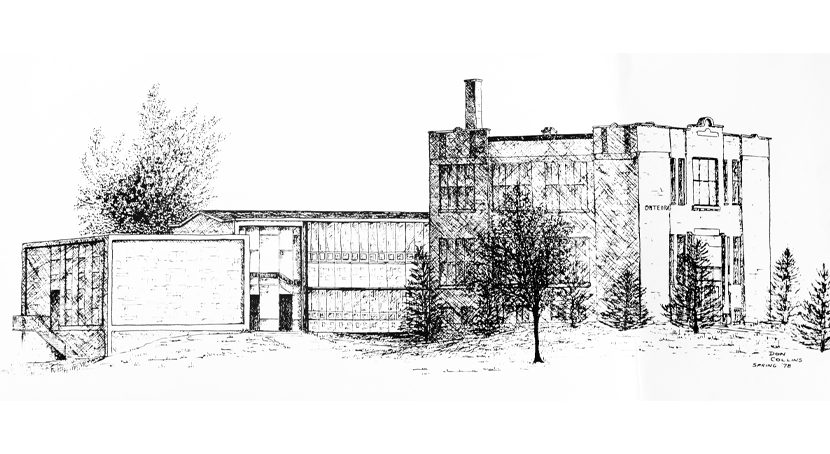
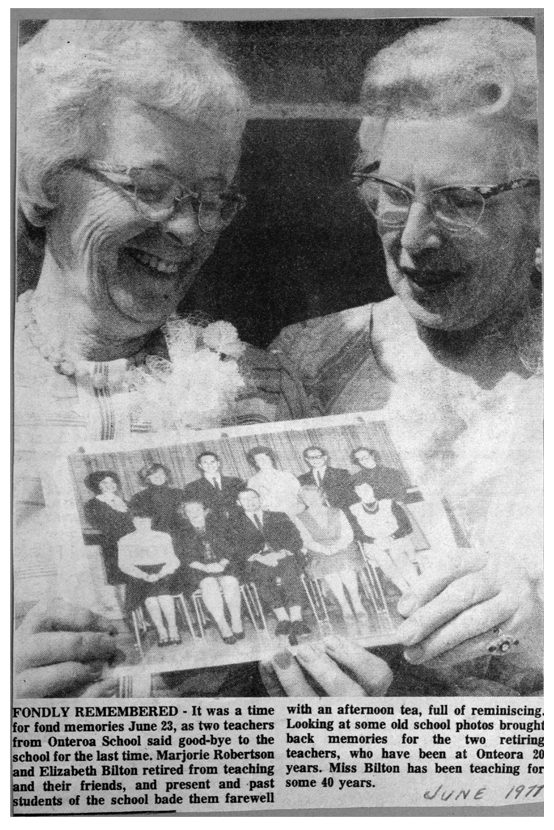
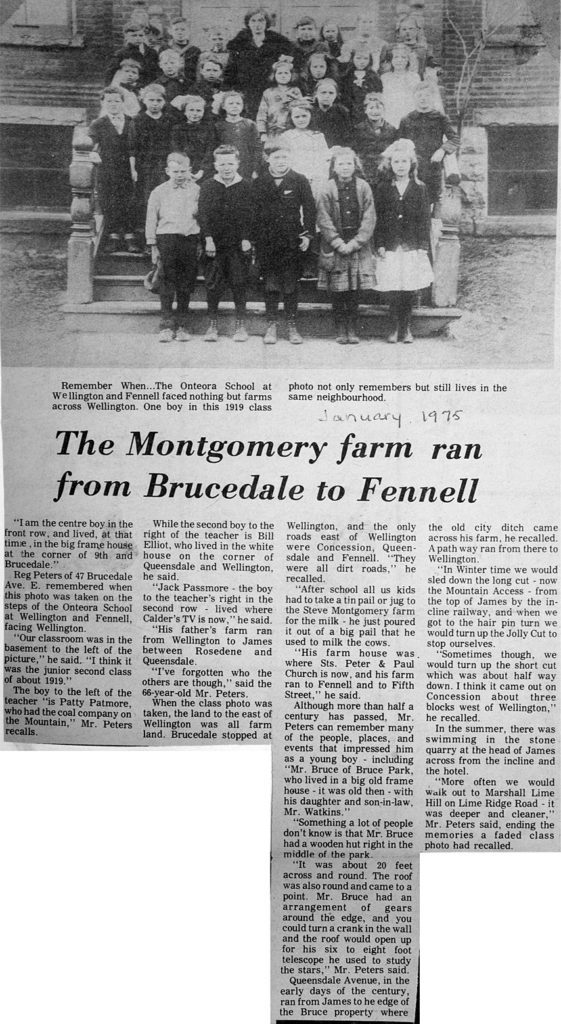
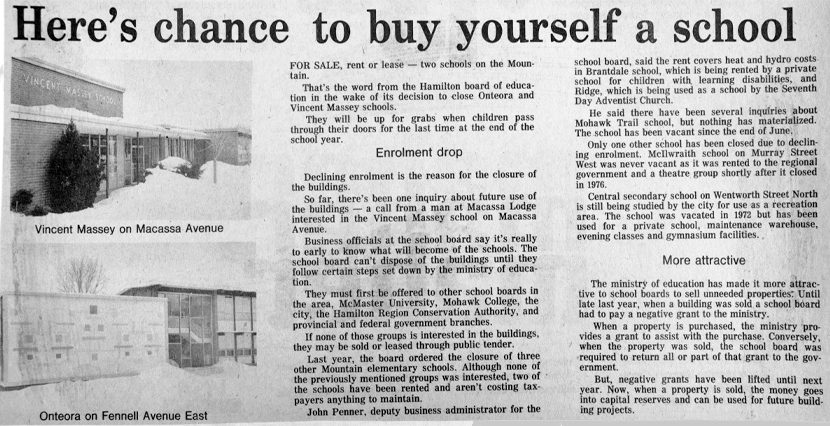
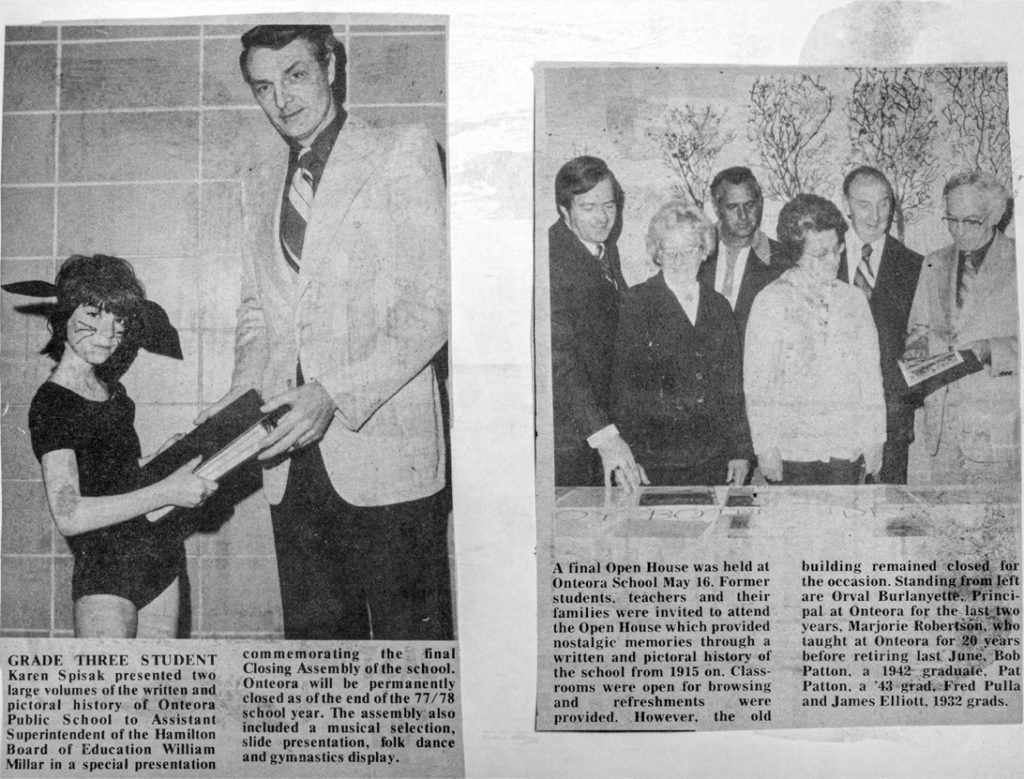
In 1970, a Hamilton Jewish home for the aged was only a dream. But thanks to a core group of visionaries including Shalom Village’s…
In 1970, a Hamilton Jewish home for the aged was only a dream. But thanks to a core group of visionaries including Shalom Village’s first executive director, Sheila Burman, and volunteers Ludwig Benario and Sam Smurlick, and many others, for whom foremost in their thinking was the importance of preserving and promoting health, independence, dignity, Jewish culture and values, and participation in community life, Shalom Village came into being in 1982. In the years since, Shalom Village has become a model for other groups and communities seeking to establish residences where older adults can maintain active and independent lives, yet all have all the necessary support services at hand. In 1989, the fulfilment of a 15-year dream came to reality when Shalom Village was allocated 60 nursing home beds, allowing it to build a nursing home adjacent to its seniors’ residence. When it opened in May 1990, the Shalom Village nursing home became the only Jewish, fully kosher extended care facility in Ontario, outside Toronto and Ottawa. (Content courtesy of the Hamilton Jewish Federation.)

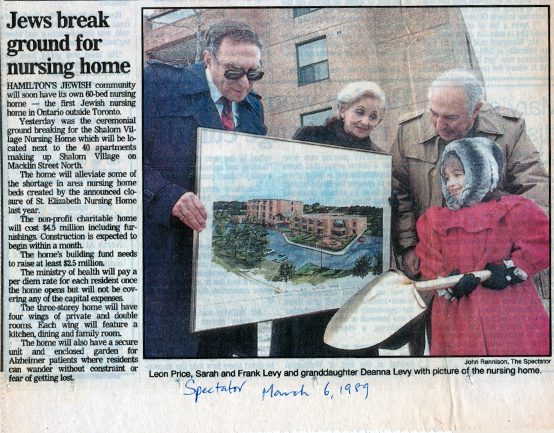

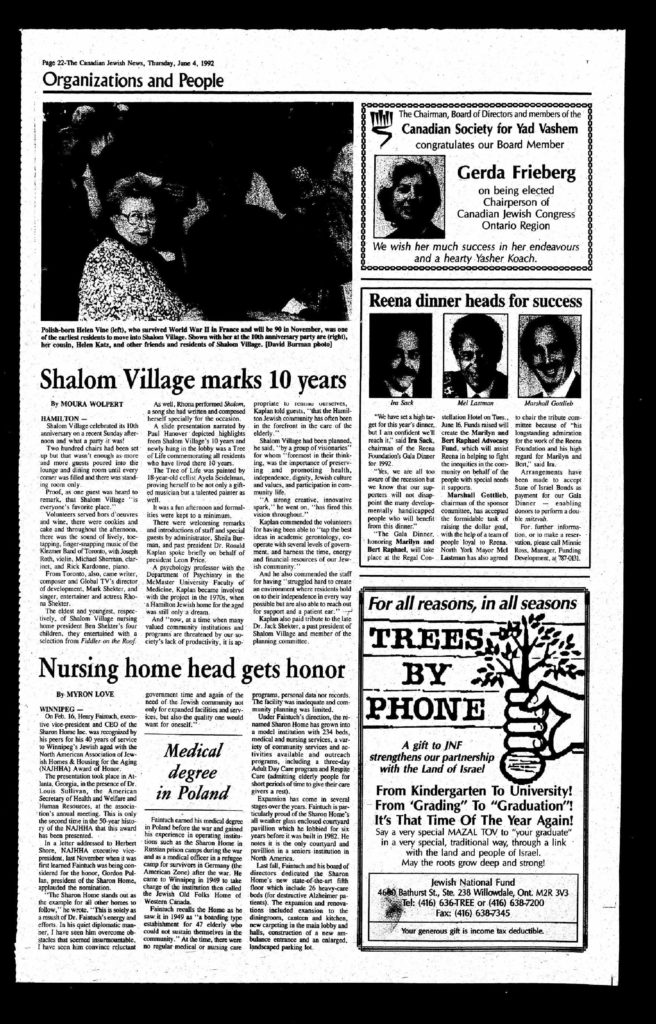
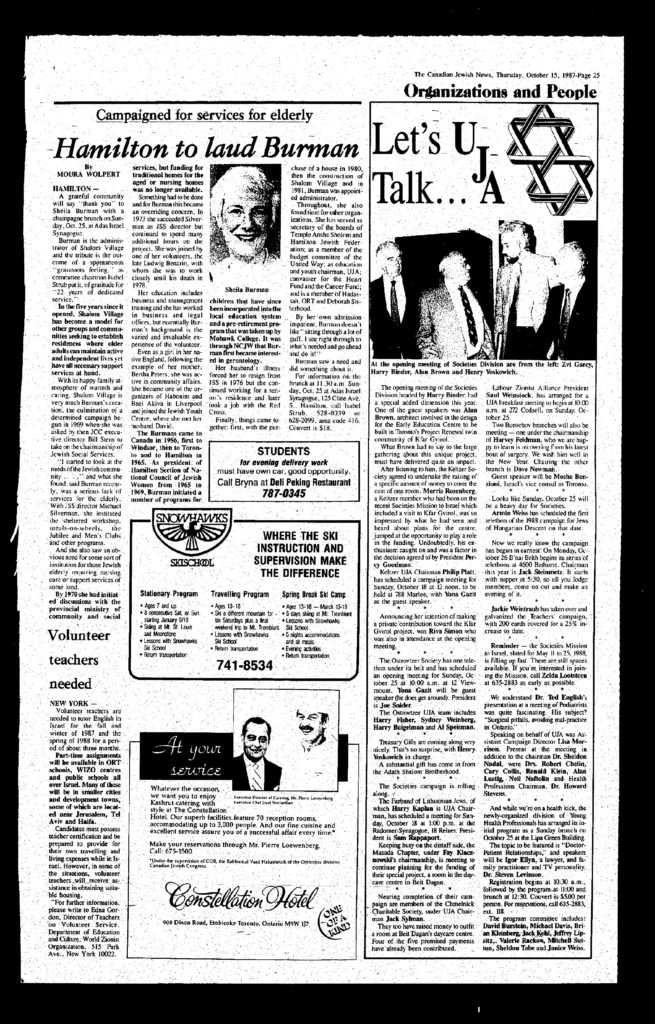
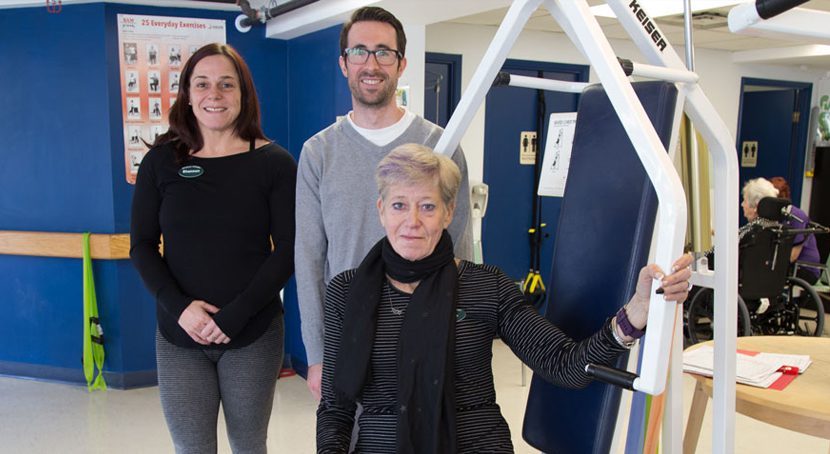
shalomvillage.ca
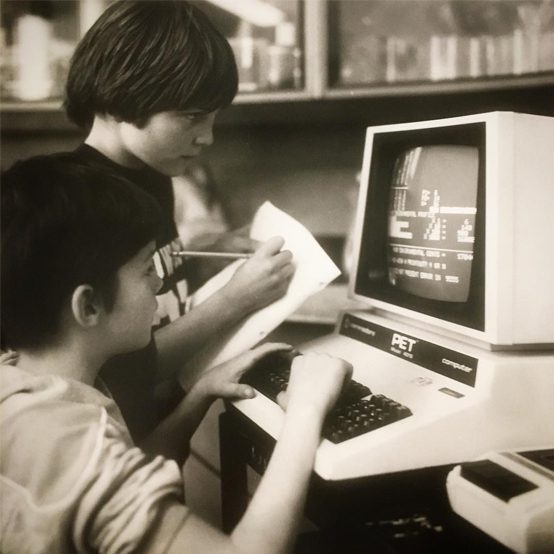
Technology had long been a regular feature of the classroom and by the early 1980s. The introduction of personal computers at a viable price…
Technology had long been a regular feature of the classroom and by the early 1980s. The introduction of personal computers at a viable price point for consumers brought about the development of Computer Studies guidelines from the Ministry of Education in 1983, which led the Hamilton Board to purchase products like the Commodore PET. In 1984, Cable 14 (then Cable 4) presented a series entitled 'Camera on the Classroom.' One episode of 'Computers in the Classroom', featured students from Queen Mary, Holbrook and Lawfield who were engaged in writing their own programs and helping to integrate modern technology into the classroom. (Content Courtesy of the Hamilton-Wentworth District School Board.)

In 1991, 18-year-old Clara Hughes moved to Dundas to take advantage of the challenging terrain of the Niagara Escarpment, pedalling up and down Sydenham…
In 1991, 18-year-old Clara Hughes moved to Dundas to take advantage of the challenging terrain of the Niagara Escarpment, pedalling up and down Sydenham Hill hundreds of times as she trained to become Canada’s most accomplished Olympian. At the 1996 Summer Olympics in Atlanta, she captured two bronze medals in cycling. On the ice, she skated to bronze in the 5000 Metres at the 2002 Winter Olympics and both gold and silver at the 2006 Turin Winter Olympics. She was the Canadian flag bearer for the Opening Ceremonies at the 2010 Winter Games, where she skated to a bronze in the 5000 Metres. Hughes is the only athlete in Olympic history to win multiple medals in both the Summer and Winter Games.
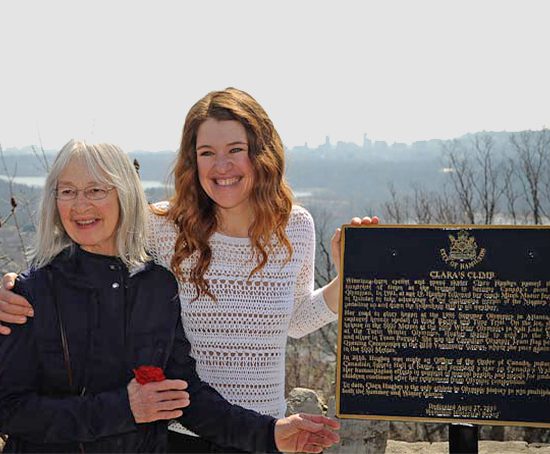
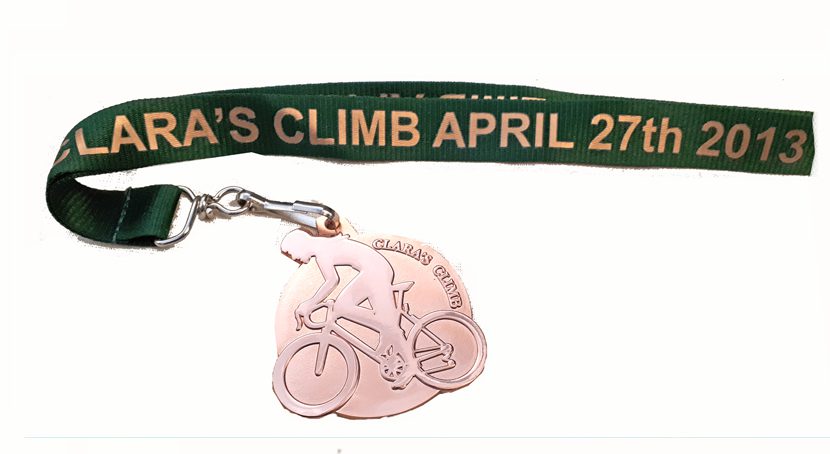
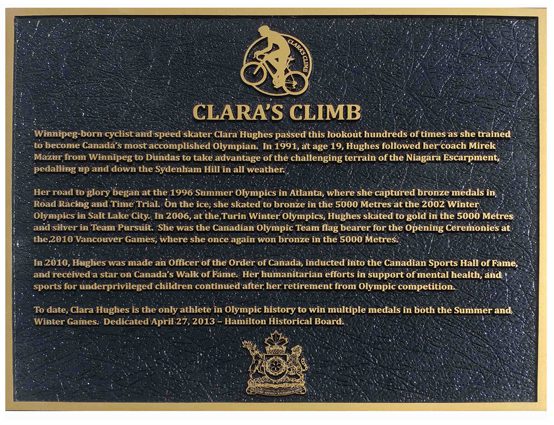
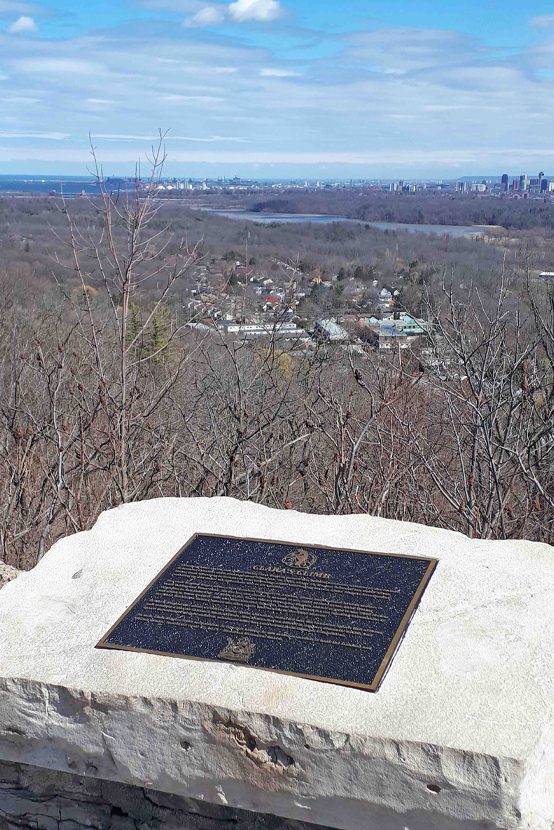
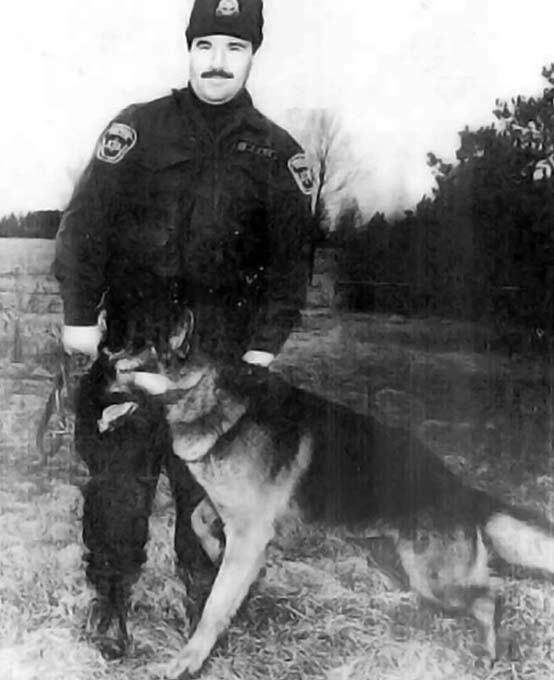
"He heard the call, he did his duty." Troy was killed on February 26, 1992. He was the first member of the Canine Unit…
"He heard the call, he did his duty." Troy was killed on February 26, 1992. He was the first member of the Canine Unit of the Hamilton Police Service to be killed in the line of duty. Troy distracted a gunman pointing a rifle at an officer and was shot and killed instantly. Informal use of dogs in regional policing began in 1878 when a local stray named Bob was adopted and routinely taken on patrol as a deterrent to those who might create trouble. A formal canine unit was created in 1960. Troy was laid to rest at the Ancaster Pet Cemetery, April 22, 1992. (Content courtesy Hamilton Police Service; Fieldcote Memorial Park and Museum.)
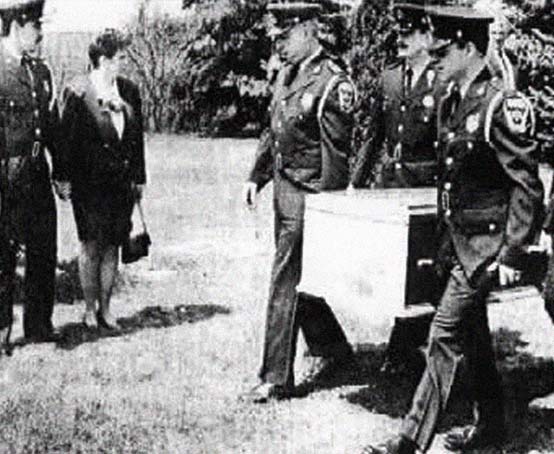
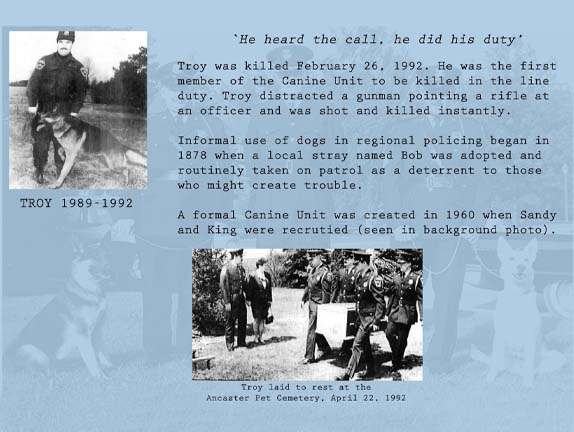

Established in 1992, the Indigenous Studies program at McMaster University has its roots in the inaugural Drumbeat conference of 1989. This conference, organized by…

Established in 1992, the Indigenous Studies program at McMaster University has its roots in the inaugural Drumbeat conference of 1989. This conference, organized by Indigenous students and co-hosted by the Six Nations Confederacy, marked the beginning of efforts to address the educational needs of Indigenous students.
Responding to a request from Dawn Martin-Hill, then an undergraduate student, leaders of the Six Nations Confederacy supported the development of courses tailored to Indigenous students. Over the years, the program has expanded significantly, introducing a range of courses that emphasize language, culture, and history, with a particular focus on the Haudenosaunee people.
Dr. Dawn Martin-Hill, who initiated the program in 1992, has since earned her Ph.D. and served as the Director of Indigenous Studies for many years. She continues to contribute to McMaster University as a dedicated educator.
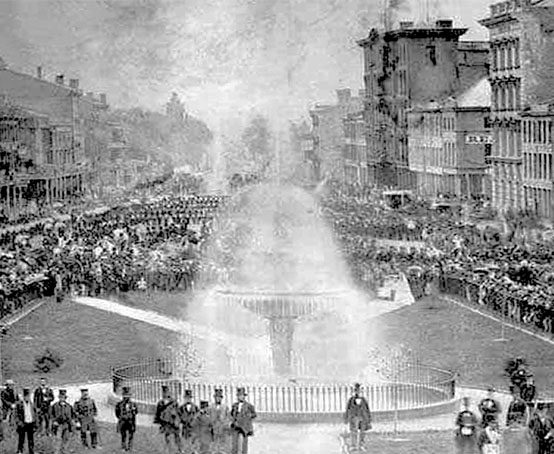
The first fountain in Gore Park was installed to coincide with the construction of Thomas Keefer’s waterworks system bringing fresh water to the homes…
The first fountain in Gore Park was installed to coincide with the construction of Thomas Keefer’s waterworks system bringing fresh water to the homes of Hamiltonians (who could afford to connect) in 1859. Wishing to improve the business core for the dedication, merchants entered into an agreement with civic officials to develop the Gore as a landscaped park. The Bank of British North America donated the fountain as a symbol of the City’s progressive nature. The design selected was that of a suspended, two bowl type with the main bowl measuring fifteen feet in diameter. The structure stood twenty-five feet high within its thirty-five foot diameter fenced pool. In poor repair, the fountain was removed in 1959. The present fountain was erected as a Sesquicentennial project in 1996. It is an exact replica and incorporates the small bowl and spire of the original. (Content courtesy HPL Local History and Archives; City of Hamilton; C. Redford.)
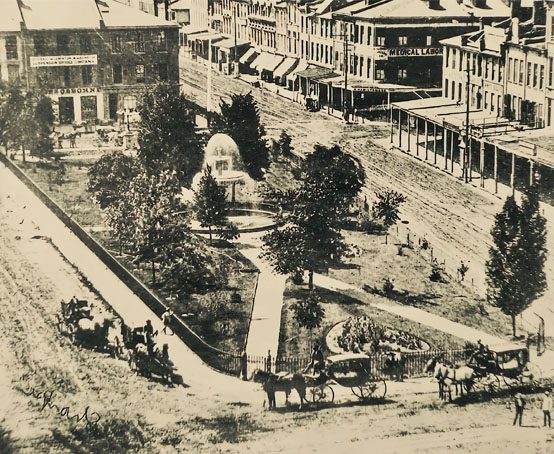
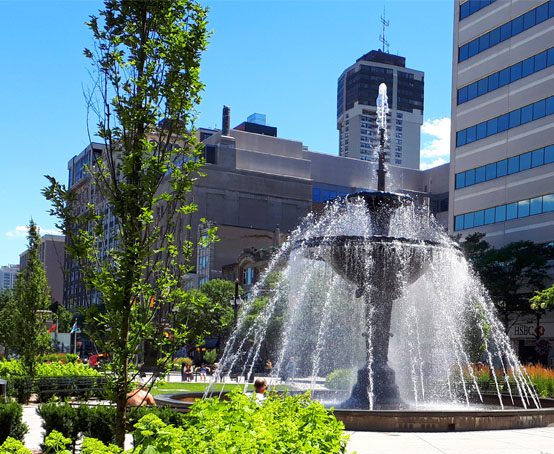
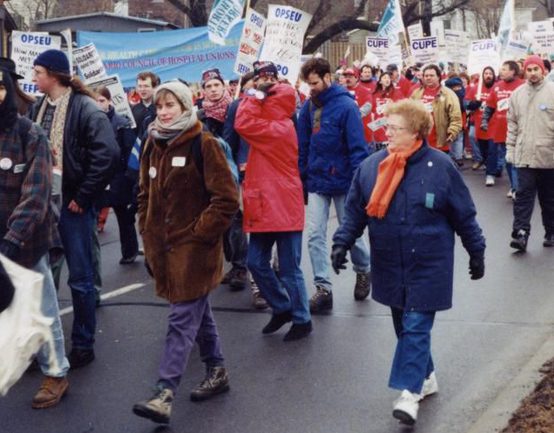
Hamilton Days of Action was one of the largest labour marches to have ever taken place in Canada. This two-day event was part of…
Hamilton Days of Action was one of the largest labour marches to have ever taken place in Canada. This two-day event was part of a series of rotating city-wide strikes coordinated by the provincial labour movement working in conjunction with local social justice and community organizations to protest the policies of Mike Harris’ provincial Conservative government. On February 23, 1996 thousands of local workers skipped work to protest. The next day they were joined by working people from other towns and cities to stage a massive parade of more than 100,000 people through the city’s downtown. The march followed part of the same parade route of the Hamilton Nine Hours League in 1872. Unionized teachers marching beside unionized steelworkers and members of many other unions symbolized a new unity in the labour movement. The Hamilton Days of Action also served as an important step in connecting the labour movement with other social justice organizations in the community, an allyship that has continued to build over recent decades. (Content courtesy of Workers' City.)
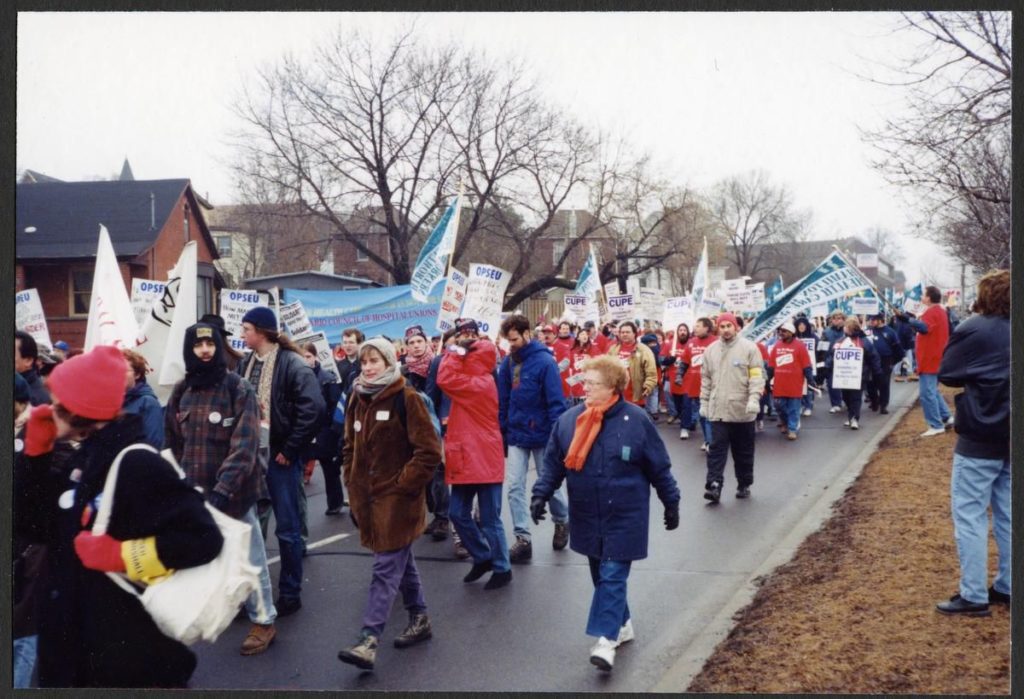
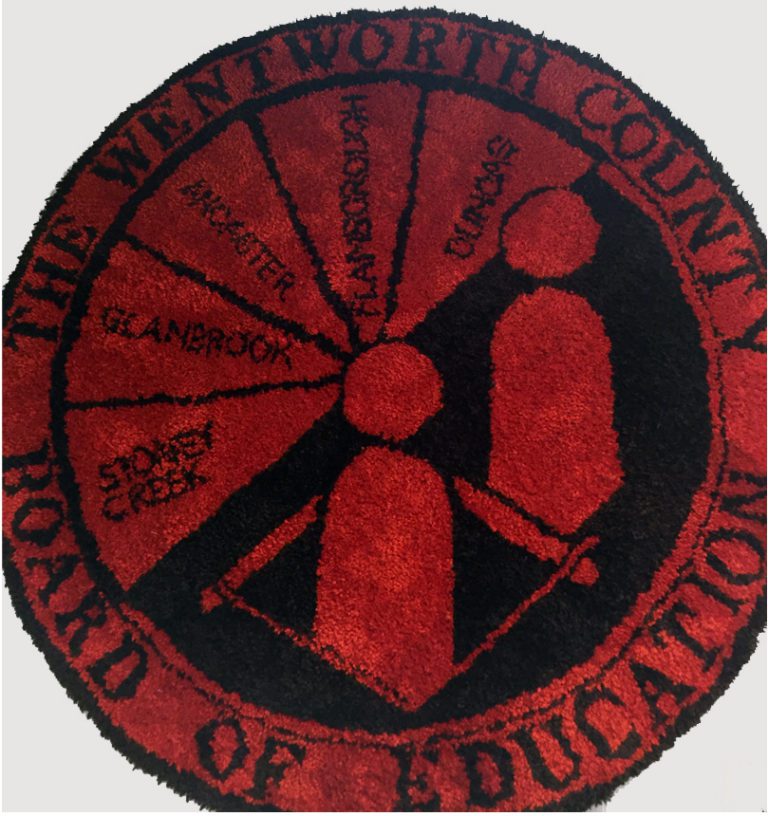
New Years Day 1998 marked the official start to the amalgamation of the Hamilton and Wentworth Boards of Education, which mirrored the City amalgamations…
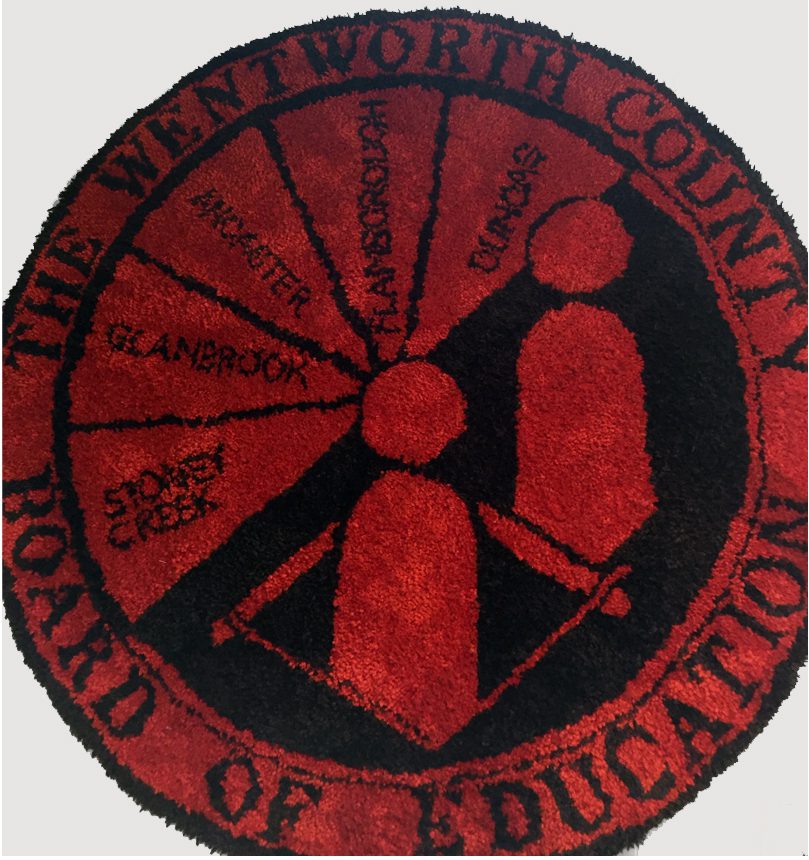
New Years Day 1998 marked the official start to the amalgamation of the Hamilton and Wentworth Boards of Education, which mirrored the City amalgamations in 2001. Joining the two Boards marked a significant change to the nature and scope of education in Hamilton. (Content courtesy of the Hamilton-Wentworth District School Board.)

In 2001, City Council approved a new Coat of Arms for the municipality created through the amalgamation of the former Cities of Hamilton, Stoney…
In 2001, City Council approved a new Coat of Arms for the municipality created through the amalgamation of the former Cities of Hamilton, Stoney Creek, Towns of Ancaster, Dundas, Flamborough and the Township of Glanbrook. The Coat of Arms contains elements symbolic of Hamilton and Hamiltonians. The Coronet contains two wheat sheaves, symbolizing rural and urban. Coronets around the necks of the Tiger and the Buck represent Loyalists who settled the region. The six larger links in the Chain symbolize the communities joined. The chain also symbolizes steel, an element in the City’s identity. The Buck symbolizes wilderness in the Dundas Valley and other parts of the city. The tiger shows Hamilton’s early fame as ‘Tiger Town’ prior to the naming of the Hamilton Tiger Cats. The Cinquefoil, a heraldic flower of five petals, is the badge of the Clan Hamilton. It represents the name of the city. The Ground at bottom represents the escarpment and Hamilton Bay. (Content courtesy of City of Hamilton.)
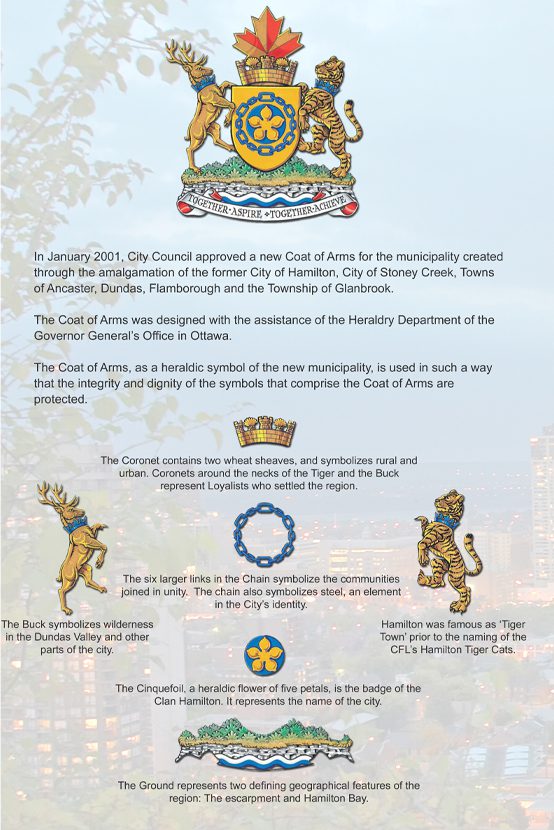
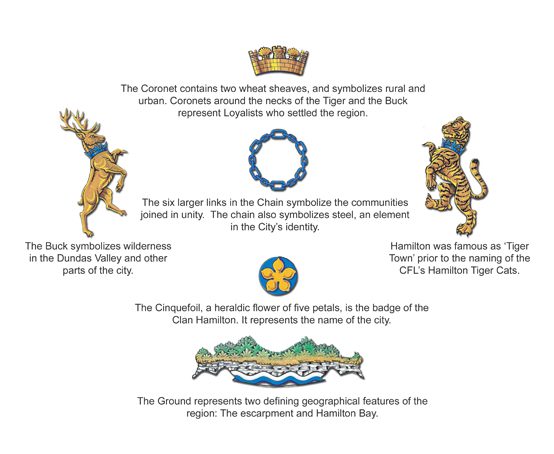
Wendy Schneider and McMaster professor Billy Shaffir launch the Jewish Hamilton Project, an oral history of Jewish life in Hamilton in the first half…
Wendy Schneider and McMaster professor Billy Shaffir launch the Jewish Hamilton Project, an oral history of Jewish life in Hamilton in the first half of the 20th century. While many of the memories are delightful – Rabbi Morton Green recalling his first Shabbat at Adas Israel, tea dances on Sunday afternoons, the contributions of remarkable people like Max Rotman – there are also painful memories of anti-Semitism and restrictions on property sales and club memberships. What emerges from the disk is a picture of a complex and varied community struggling to find its footing in a world that wasn’t always welcoming – a community both united and divided by a common religion. (Content courtesy of the Hamilton Jewish Federation)
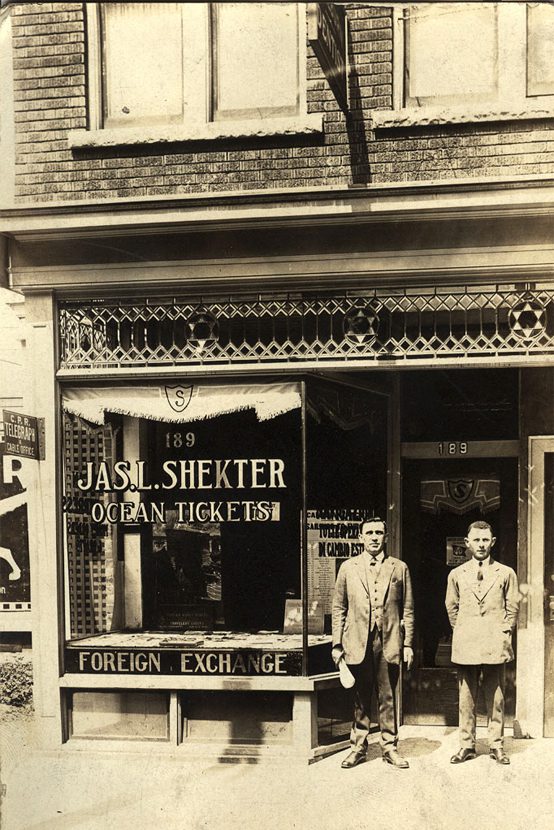
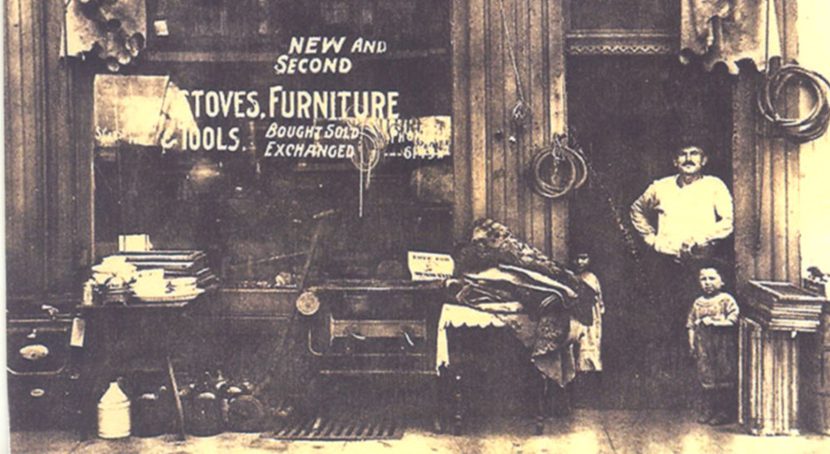
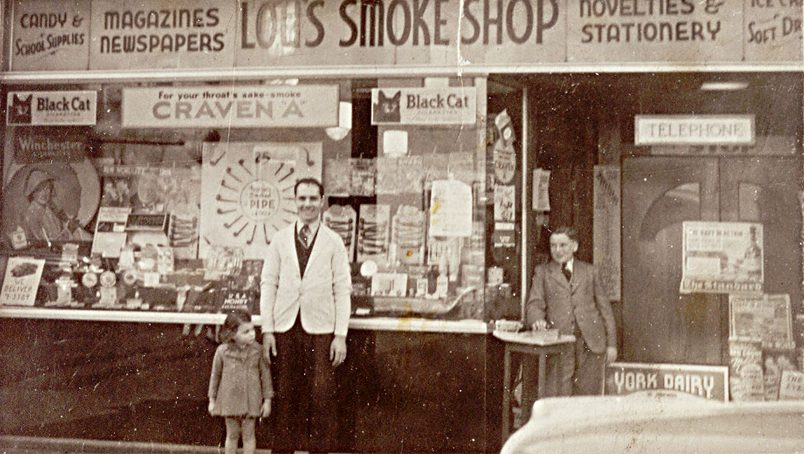
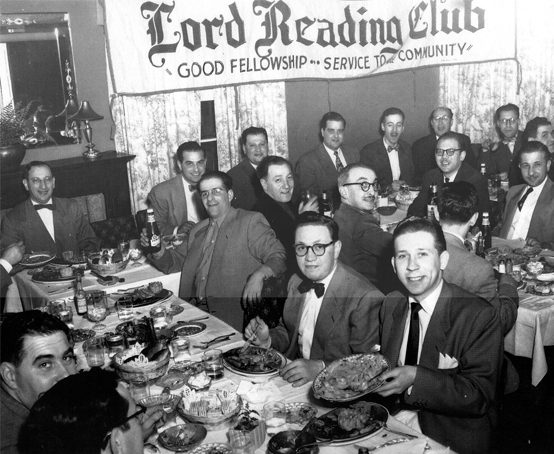
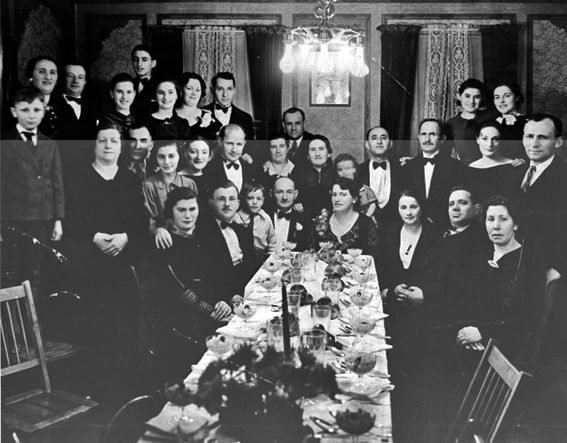
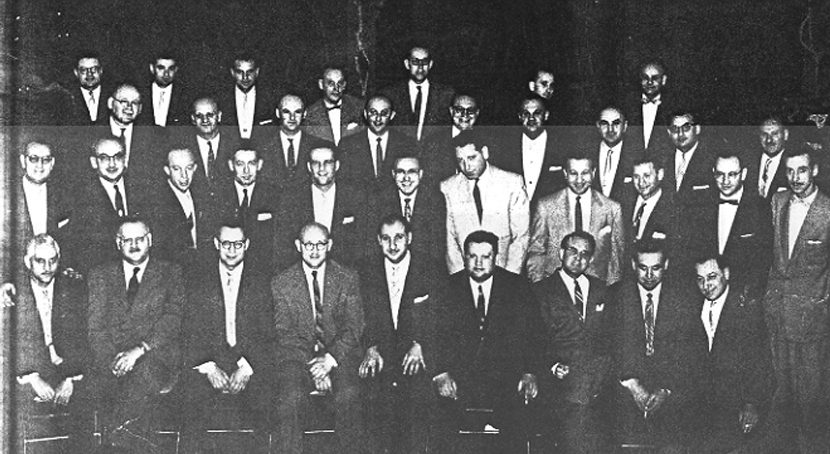
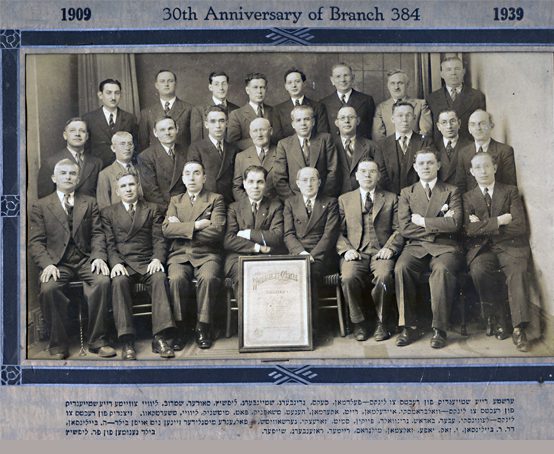
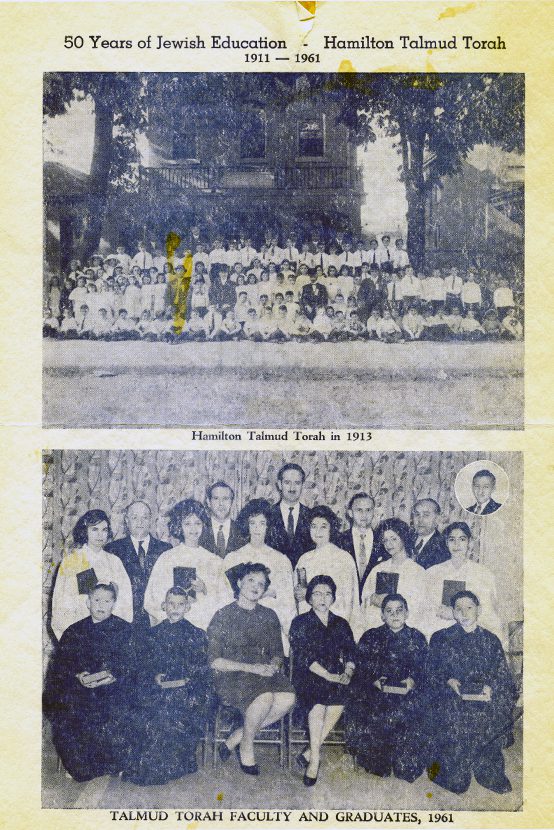
hamiltonjewishnews.com
youtube.com
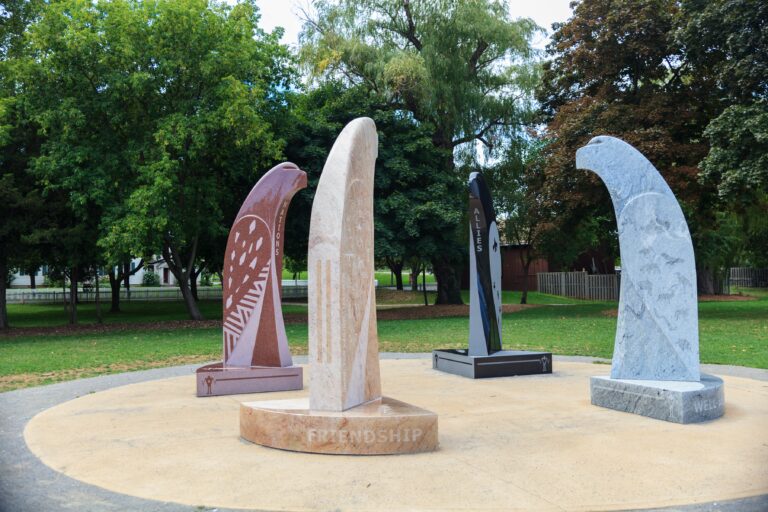
Honour, Allies, Sovereignty, Nations, Peace and Reconciliation, the themes of the Eagles Among Us public art installation are more relevant now than ever. Designed…
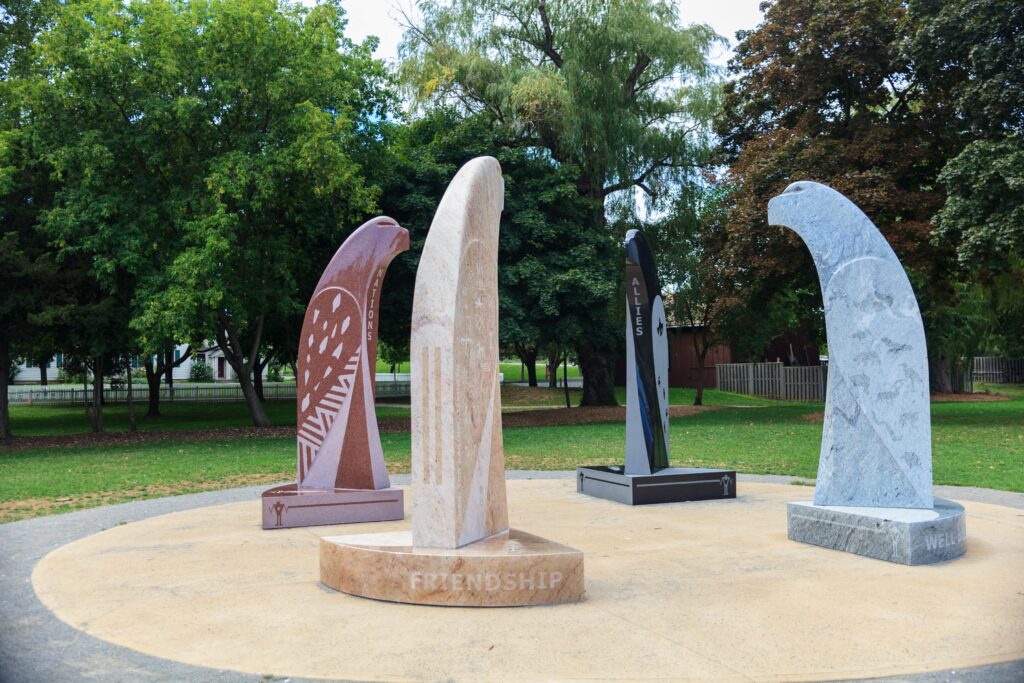
Honour, Allies, Sovereignty, Nations, Peace and Reconciliation, the themes of the Eagles Among Us public art installation are more relevant now than ever. Designed to commemorate the indigenous contribution to the War of 1812 and the battle of Stoney Creek, Eagles Among Us reminds us that all wars must end in peace and healing.
The artwork by David M. General consists of four, nine-foot-high granite eagle figures, each formed from a different colour of marble, and inscribed with symbols representing our shared commitment to each other. The statues are mounted on a circular plaza in the shape of a medicine wheel and keep a tireless vigil watching for anything which might threaten the hard-won peace. The artist uses interpretations of the cultural traditions of the Haudenosaunee and Anishinabek communities to address the universal themes of healing and reconciliation. The work was commissioned as part of the City of Hamilton's War of 1812 Bicentennial commemoration.
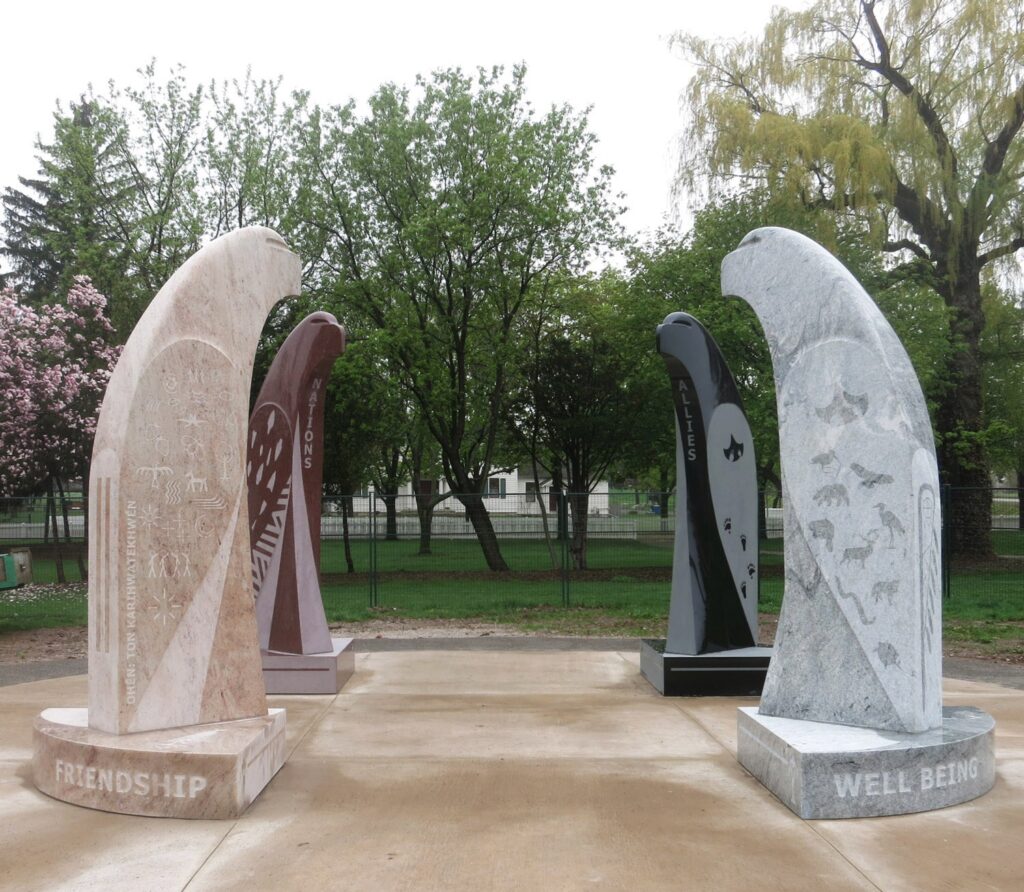

The Canada 150 Art Mural “Journey of Hope” was sponsored by the Fraternity Hispanic Association with the support of the Hamilton-Wentworth Catholic District School…
The Canada 150 Art Mural “Journey of Hope” was sponsored by the Fraternity Hispanic Association with the support of the Hamilton-Wentworth Catholic District School Board and funded by the Government of Canada and City of Hamilton. The Mural is displayed on the external wall at St Charles School East 5th Street, Hamilton, was created in in honour of Canada’s 150th Anniversary and in recognition of the many and significant contributions by newcomer Canadians to Hamilton’s diverse and multicultural community.
Artist and muralist Pamela Rojas with the assistance of more than 60 volunteers worked on this mural that depicts the process of adapting to a new country from the struggle and heartache that immigrants experience in leaving their homeland to the excitement and joy of beginning a new life in a new and welcoming land. The mural is divided into 3 sections: the departure, the invitation and the settlement. (Content courtesy of the Fraternity Hispanic Association.)
Location: 150 E 5th St, Hamilton, ON L9A 2Z8



afhhamilton.ca
hwcdsb.ca
gottarent.com
thespec.com
youtube.com
JHamilton, is a hub for the Hamilton Jewish community. Opened in September 2018 the Centre conducts workshops for Hamilton area students, teachers, politicians, and…
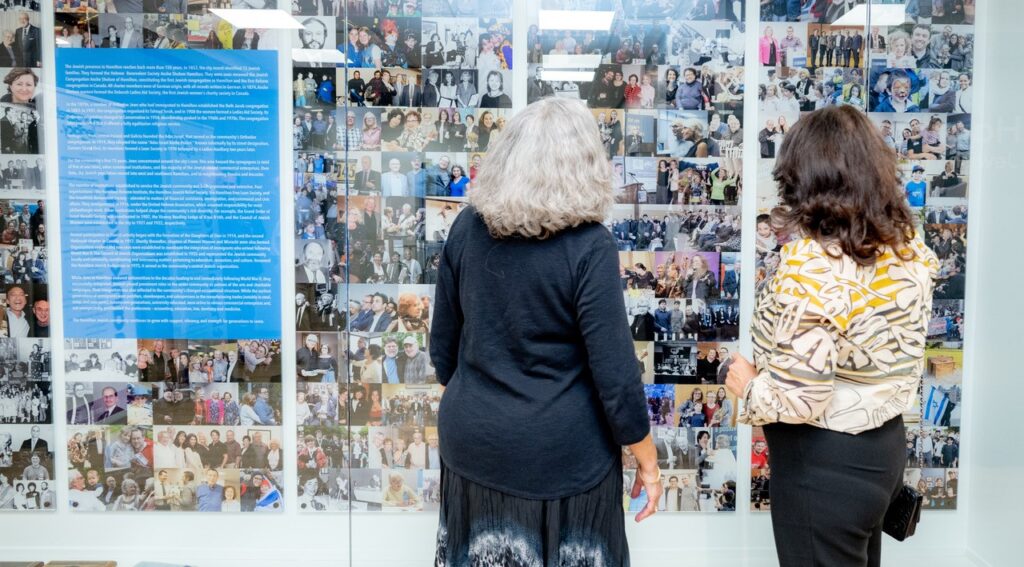
JHamilton, is a hub for the Hamilton Jewish community. Opened in September 2018 the Centre conducts workshops for Hamilton area students, teachers, politicians, and representatives from different religious communities to learn, reflect, and engage in dialog about the ultimate consequences of antisemitism, hate, and intolerance. The centre houses the Hamilton Jewish Federation, the Jewish Community Centre, the Jewish National Fund, and the Beth Tikvah Foundation. In May 2024, JHamilton also became home to the Margaret’s Legacy and Jewish Advocacy Centre.
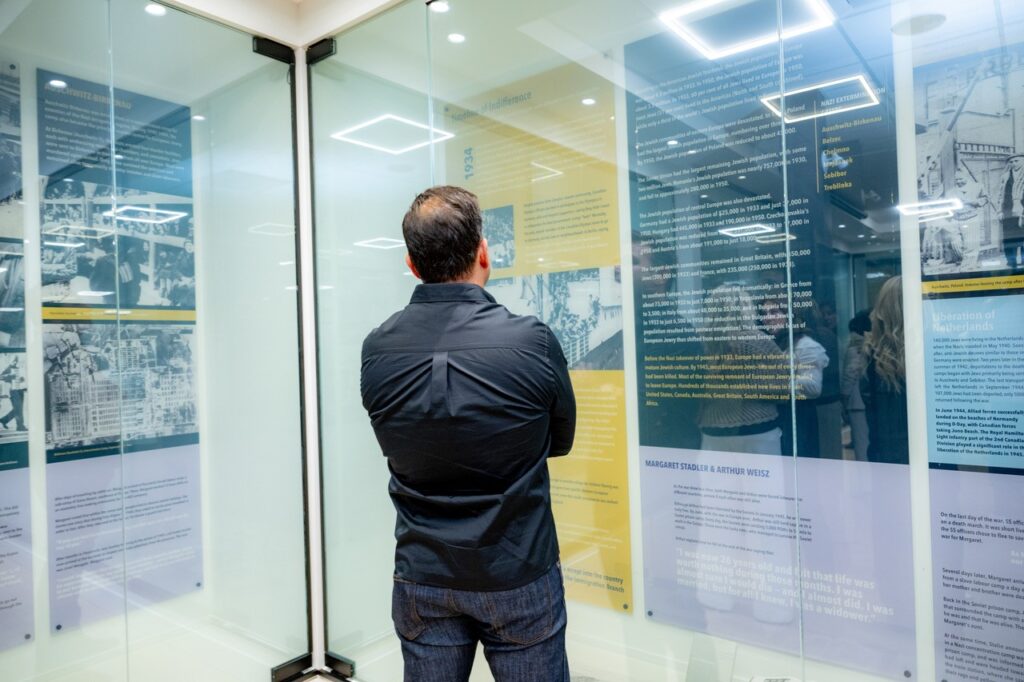
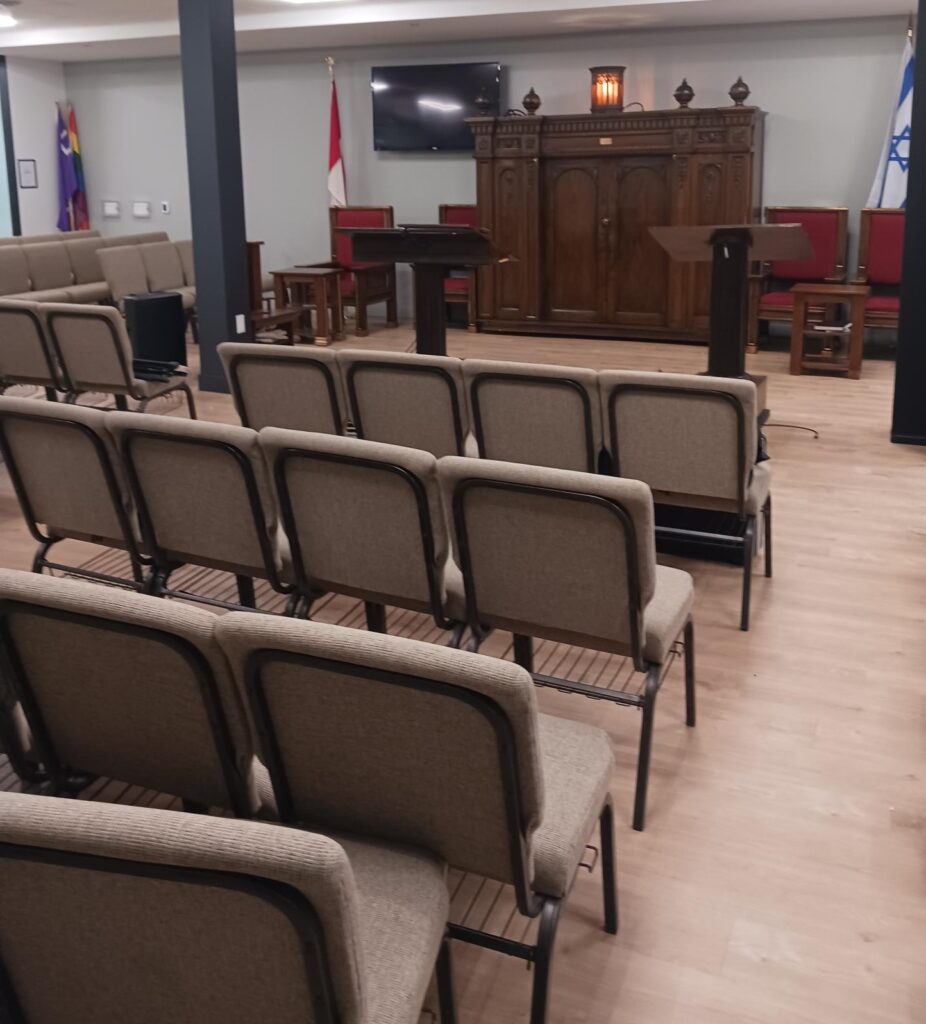

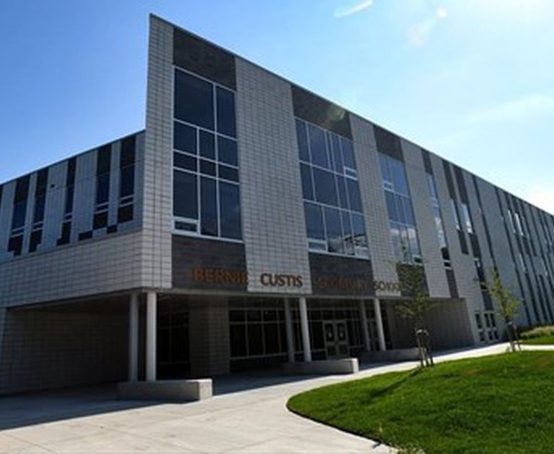
On September 3, 2019, Bernie Custis Secondary School had its official opening. Named after a former Hamilton Tiger Cats player and HWDSB teacher/principal, the…
On September 3, 2019, Bernie Custis Secondary School had its official opening. Named after a former Hamilton Tiger Cats player and HWDSB teacher/principal, the school was built as a way of condensing the student populations of Delta Collegiate and Sir John A. Macdonald School. It was also built on the grounds of the former Scott Park Secondary School. The arrival of Bernie Custis school in the lower city, and the new Nora Frances Henderson Secondary School on the Mountain the following year, marked another transitional period in Hamilton, as population changes led to a revitalization of existing neighbourhoods and expansion into undeveloped regions. (Content courtesy of the Hamilton-Wentworth District School Board.)
Location: 1055 King St E, Hamilton, ON L8M 1E2
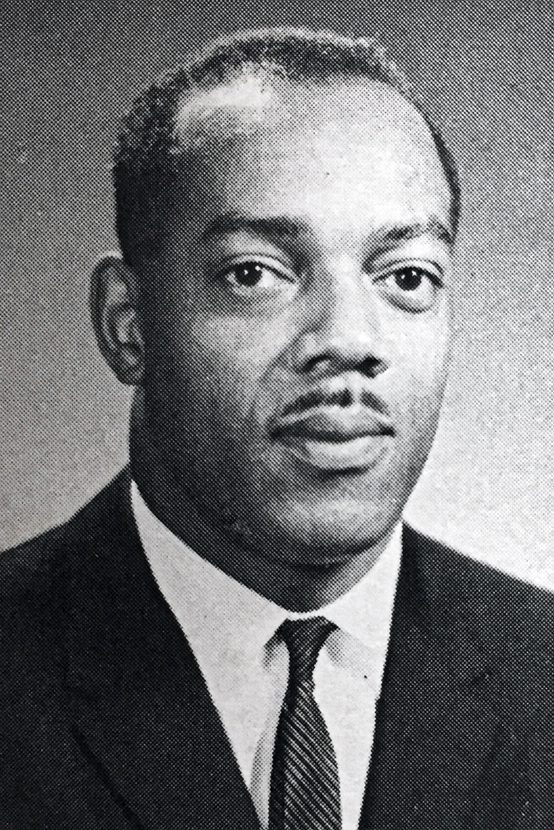
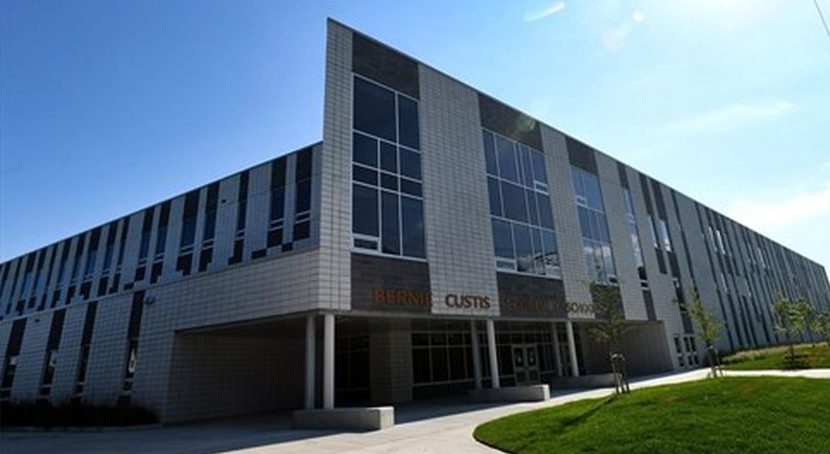

Milestone
June 9, 2021 marked the 175th anniversary of Hamilton’s founding as a city. Beginning long before that official occasion, the land where Hamilton now…
June 9, 2021 marked the 175th anniversary of Hamilton’s founding as a city. Beginning long before that official occasion, the land where Hamilton now stands has witnessed many stories. Whether about belonging and settlement, triumph and tragedy or human and industrial history, these memories are woven into the fabric of the city’s people and places.
To mark the ocassion, the City of Hamilton launched a new digital storytelling website, HamiltonCivicMuseums.ca. Opening with a lineup of seven exhibitions on November 30, 2021, the website will grow into a virtual platform for Hamilton communities to preserve and share their heritage, histories and narratives. This facilitation of the telling of Hamilton stories through online content is the first step in developing a virtual Museum of Hamilton to complement the existing Hamilton Civic Museum sites.

thespec.com
pub-hamilton.escribemeetings.com
No entries match. Try another theme, or .
This virtual exhibition interface launched in 2021 as part of Hamilton 175, a digital commemoration of the 175th anniversary of Hamilton’s incorporation as a city. It is an infinitely expandable timeline to explore the multifaceted history of the land we now call Hamilton, which extends beyond 175 years.
YOU have a role to play in highlighting Hamilton’s past, present and future. Send us your content contributions and help us expand Hamilton’s History Timeline.
Have any questions? Send us a message via Contact Us and choose the category ‘Timeline Exhibition’ from the drop-down menu.
We would like to thank the Hamilton 175 Advisory Group, City of Hamilton staff and everyone who submitted historic event entries for their invaluable contributions to the exhibition.
Sign up for the Hamilton Civic Museums eNewsletter.
By submitting this form, you are consenting to receive marketing emails from: City of Hamilton - Hamilton Civic Museums, 28 James Street North, 2nd Floor, Hamilton L8R 2K1, CA, https://hamiltoncivicmuseums.ca. You can revoke your consent to receive emails at any time by using the Unsubscribe link, found at the bottom of every email.

Guided by our commitment to sustainability, accessibility, inclusion and engagement, we preserve and present the many untold stories of Hamilton and Hamiltonians.
For questions about our museums, events, exhibitions or other inquiries, contact us at 905-546-3168 or [email protected].