Plum Cakes and Motherhood at Dundurn Castle
From the Historic Kitchen team in Dundurn National Historic Site.
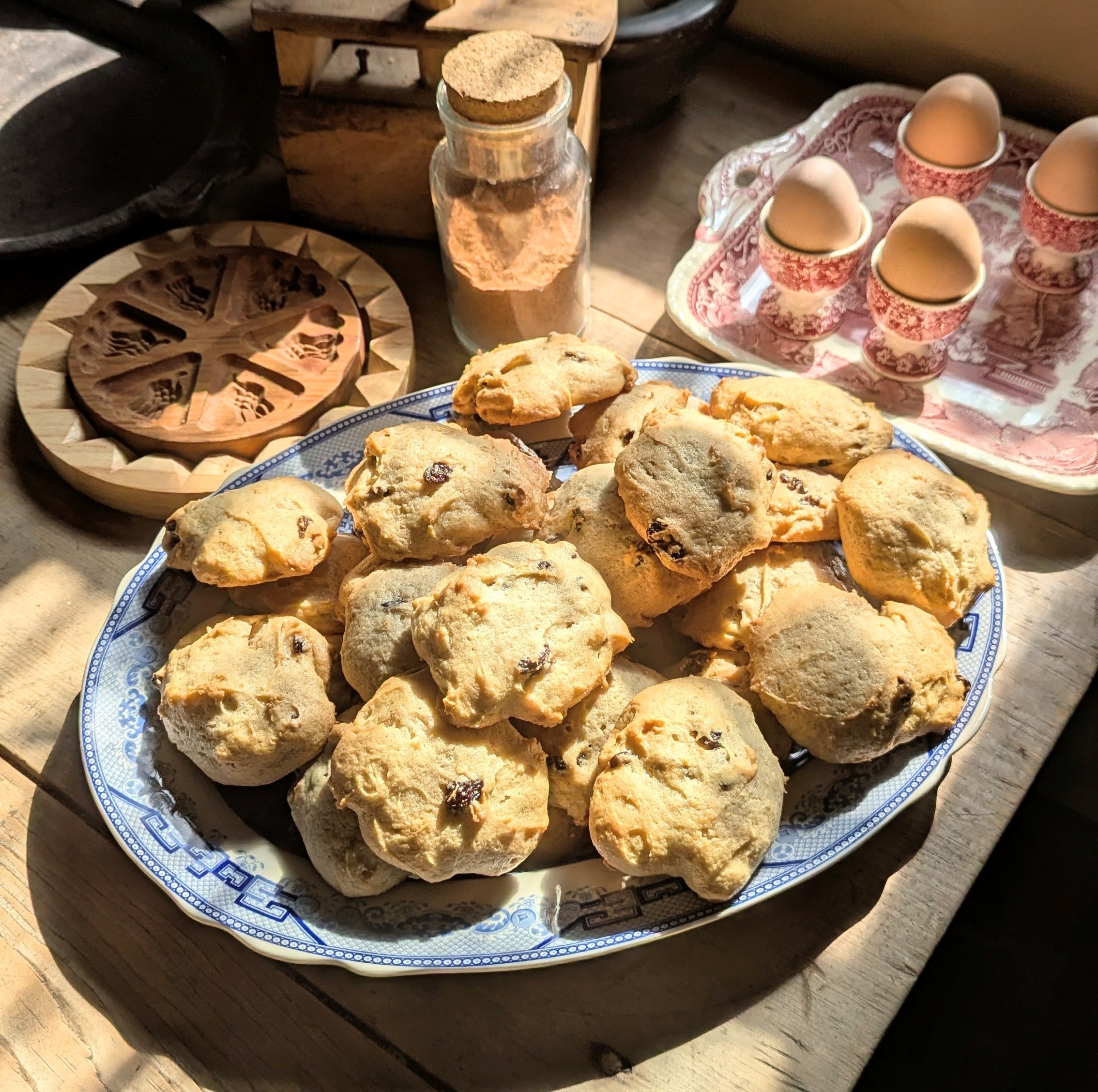
Plain Plum Cakes are quick and easy to make. City of Hamilton.
At Dundurn Castle, the MacNab family faced significant challenges during the years Lady MacNab battled tuberculosis. In an entry dated March 21, 1846, thirteen-year-old Sophia MacNab described her efforts to support her mother. She noted preparing sour cream cakes for her at breakfast—one of the many ways Sophia documented her mother’s condition and tried to provide comfort.
Sophia didn’t provide a recipe, but many historic cookbooks from the early to mid-19th century list sour cream as an ingredient with cakes using baking soda as a leavening agent. The acidity in the sour cream boosts the power of the soda, making a fluffier cake while adding creamy richness and moisture. If a cook only had milk, recipes would augment the leavening using the acidity from cream of tartar instead. The recipe below is from the witty, and distinctive author Catharine Parr-Traill. Her book The Female Emigrants Guide is a wealth of Canadian historical foodways and culinary exploration. While Mother's Day has a longer history than you may think, both Sophia and Catharine wrote their accounts of cake and motherhood long before the modern-day Mother's Day was created.
Mother’s Day has its origins in social activism and peace movements. In North America, early observances grew out of women’s initiatives during the American Civil War, where they provided care to the sick and wounded on both sides. In 1870, Julia Ward Howe issued a Mother’s Day Proclamation calling for an international coalition of women dedicated to peace. Later, the efforts of Anna Reeves Jarvis to establish a day honoring mothers gained national support, leading to the creation of the holiday in 1914. Canada adopted the observance that same year. A distinctly Canadian tradition that followed is the widespread organization of Mother’s Day charity runs and walks.
Indigenous teachings also connect motherhood to the natural world through the concept of Mother Earth, reflecting a deep respect for the land and its life-giving role. Across cultures—from ancient festivals to contemporary celebrations—Mother’s Day acknowledges the essential contributions of women and mothers. While it is a day that celebrates nurturing and compassion, it is equally important to recognize the diverse experiences of motherhood and to approach the day with inclusivity and respect.
While spots are limited in Dundurn National Historic Site's Mother's Day Tea: Historic Cooking Workshop, we hope you try this recipe at home and share it with the maternal figures in your life.
Plain Plum Cakes
Original Recipe:
One pound of flour; quarter pound of sugar; quarter pound butter; half a pound currants or raisins; three eggs; half pint of milk or sour cream and a small teaspoonful of carbonate of soda and spice to taste.
From The Female Emigrant's Guide, Catharine Parr Traill, 1855
Our Interpretation:
Ingredients
2 ½ cups sugar
½ cup butter
3 eggs
1 tsp cinnamon, nutmeg or ginger or preferred spice
1 cup sour cream
1 cup currants or raisins
3 ½ cups flour
1 tsp baking soda
Method
Preheat oven to 350⁰ F. Grease or line a baking sheet.
In a large bowl blend the butter and sugar, add the eggs and spice followed by the sour cream. Mix well.
Blend in the flour, baking soda, and currants.
Spoon the batter into dollops onto the baking sheet and bake for 30 minutes.
Sources
MacNab, S. (1974). The Diary of Sophia MacNab: Written at Dundurn Castle (C. H. Carter and T. M. Bailey, Ed.). W.L. Griffin, Limited.
Parr Traill, C. (1854). The Female Emigrant's Guide and Hints on Canadian Housekeeping. McClear and Company.